- Goldman Sachs forecasts 160% power demand surge from UMaine AI GPU clusters.
- Li-ion BESS provides 250 Wh/kg density, 5,000 cycles, USD 150/kWh per NREL.
- Solar-wind-BESS hybrids deliver 85-90% RTE, LCOS USD 0.10/kWh via IRA.
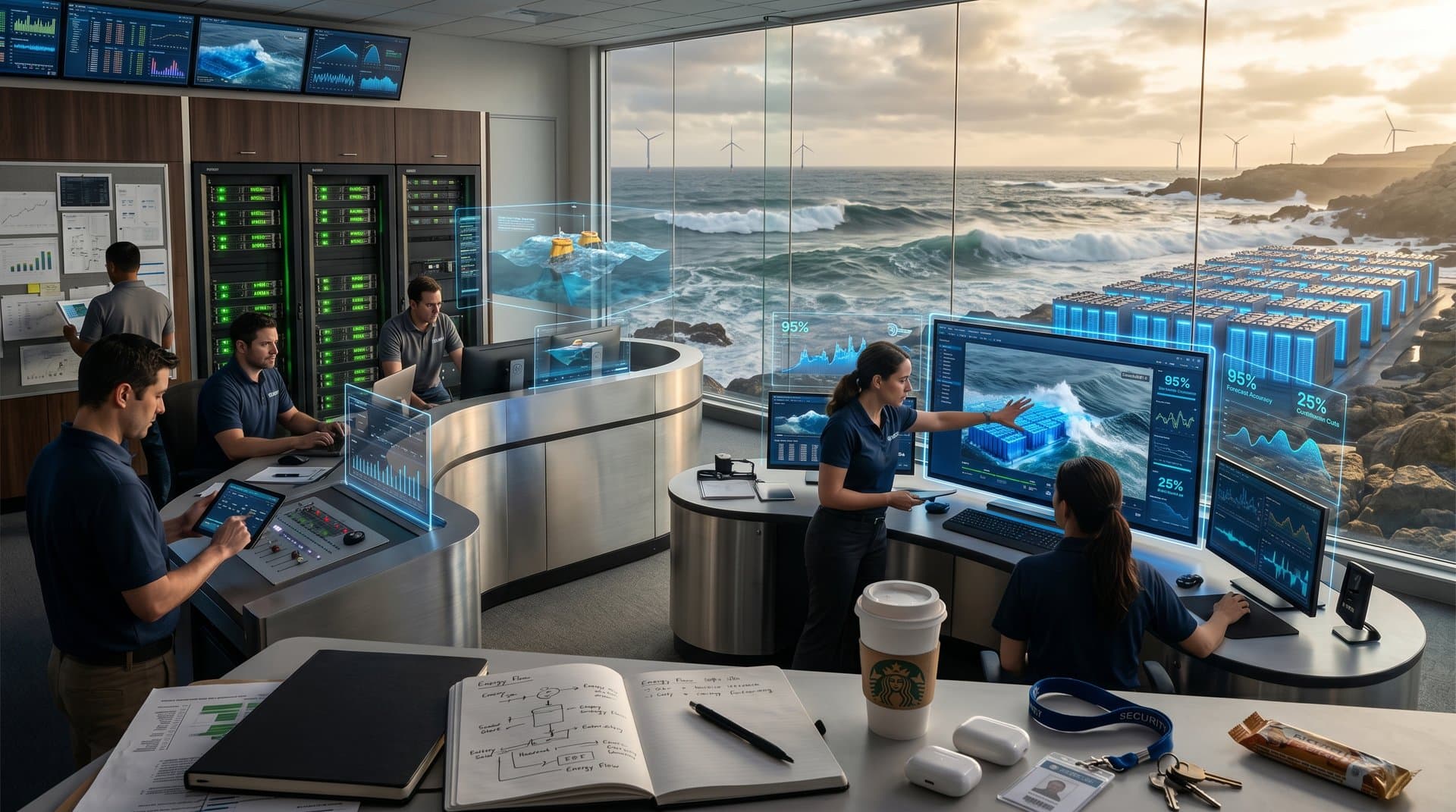
UMaine AI energy crunch from new programs drives 160% campus power demand surge, per Goldman Sachs. Intensive GPU clusters fuel the spike. Battery storage integrates solar and wind to avert grid failures and ensure 24/7 operations.
Campus administrators pinpoint dedicated AI compute facilities as the driver. These run continuous high-performance GPU workloads. Advanced grid tech now pairs renewables with storage to match loads.
The International Energy Agency (IEA) projects AI data centers will double global electricity use to 1,000 TWh annually by 2026. Goldman Sachs predicts 160% U.S. power demand growth from AI by 2030. UMaine mirrors hyperscaler challenges at institutional scale.
UMaine AI Energy Crunch Overloads Legacy Infrastructure
NVIDIA H100 GPUs for AI training consume 700W per unit continuously, 5-10 times more than CPUs. A 100-GPU cluster draws 70 kW nonstop. Student AI projects spike loads 2-5 MW.
Campus substations cap at 5-10 MW. Spikes cause voltage sags below 90% nominal, risking damage. Blackouts threaten peak training without fixes.
Operators deploy Siemens demand response software. Battery storage offsets renewable variability. Maine offers 2,500 sunshine hours yearly and 35% wind capacity factor.
Lithium-Ion BESS Counters AI Power Peaks
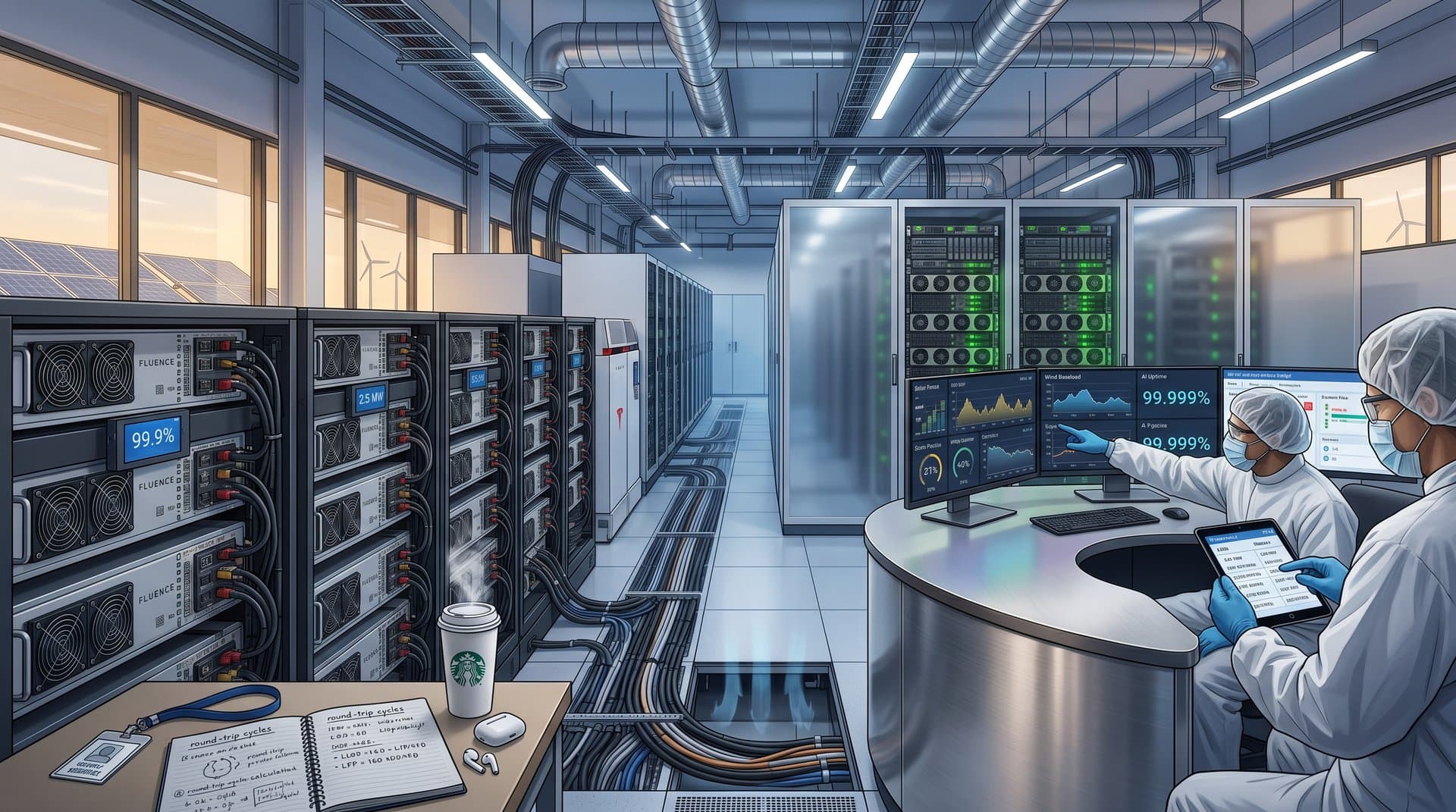
Battery energy storage systems (BESS) store excess solar and wind, discharging in milliseconds for peaks. Lithium-ion delivers 250 Wh/kg gravimetric density, 650 Wh/L volumetric, 5,000 cycles at 80% DoD. Costs reach USD 150/kWh per NREL 2024 benchmarks.
Vanadium flow batteries provide 25 Wh/kg, 30 Wh/L, over 10,000 cycles at 100% DoD, at USD 200-250/kWh. Both hit 85-90% round-trip efficiency in DOE GridLAB-D simulations at 0.5C.
The U.S. Department of Energy (DOE) endorses solar-BESS hybrids for AI loads in 2024 guidance. UMaine shaves peaks to dodge USD 0.20/kWh penalties, targeting LCOS at USD 0.10/kWh.
NREL data confirms BESS scales to 10-50 MW/40 MWh for campuses with 15-minute response.
Offshore Wind and Solar Align with Loads
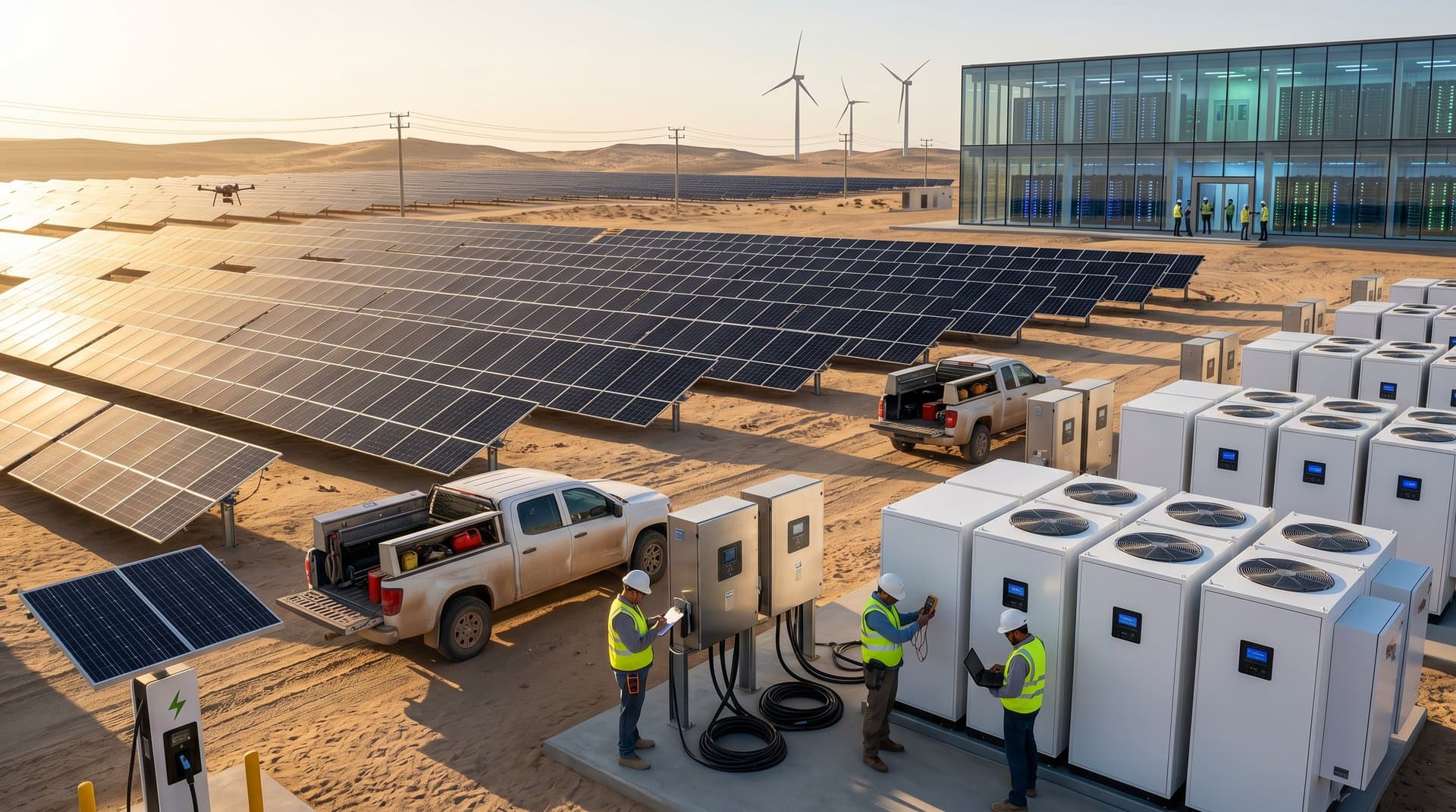
UMaine's Volturnus floating platform demonstrates 15 MW offshore wind at 7 m/s coastal speeds. Onshore solar on 100 acres yields 20 MWp at USD 0.30/Wp.
Solar supports daytime AI inference. Offshore wind powers overnight training. BESS arbitrages, storing at USD 0.03/kWh off-peak.
- Technology: Li-ion BESS · Gravimetric Density: 250 Wh/kg · Volumetric Density: 650 Wh/L · Cycles @80% DoD: 5,000 · Cost (USD/kWh): 150 · UMaine Application: Peak shaving, 4-hr
- Technology: Flow Batt. · Gravimetric Density: 25 Wh/kg · Volumetric Density: 30 Wh/L · Cycles @80% DoD: 10,000+ · Cost (USD/kWh): 200 · UMaine Application: Long-duration, 8+ hr
- Technology: Solar PV · Gravimetric Density: N/A · Volumetric Density: N/A · Cycles @80% DoD: N/A · Cost (USD/kWh): 0.30/Wp · UMaine Application: Daytime inference
- Technology: Offshore Wind · Gravimetric Density: N/A · Volumetric Density: N/A · Cycles @80% DoD: N/A · Cost (USD/kWh): 80/MWh LCOE · UMaine Application: Baseload training
UMaine sources U.S.-made LFP cathodes from Princeton Power Systems. This dodges China tariffs under IRA domestic content rules (40% bonus credits).
Policy and Upgrades Avert Blackouts
Enphase smart inverters synchronize renewables to microsecond grid frequency. Bidirectional EV charging (V2G) from 500 vehicles adds 1-2 MW dispatchable capacity.
UMaine pilots Landis+Gyr smart meters for real-time balancing.
Inflation Reduction Act (IRA) Section 48 offers 30% tax credits for standalone storage, up to 50% with solar. FERC Order 2222 enables DER aggregation into wholesale markets.
Timeline: AI facilities live Q1 2024; 10 MWh BESS pilot Q4 2026; 50 MW/200 MWh microgrid by 2028. LCOS: USD 0.08-0.12/kWh per BloombergNEF.
Benchmarks: UMaine Leads Hybrids
Germany's Fraunhofer Institute deploys 20 MWh solar-BESS for HPC, hitting 92% uptime. Asia's CATL pilots sodium-ion at 160 Wh/kg, USD 100/kWh.
CATL lacks Maine winter performance.
UMaine advantages: Piedmont Lithium refining cuts costs 20%. LCOS undercuts EU averages (USD 0.15/kWh) via IRA.
- Region: UMaine · Technology: Li-ion/Flow Hybrid · Capacity: 10-50 MW/40-200 MWh · LCOS (USD/kWh): 0.10 · Source: NREL/DOE
- Region: EU (Fraunhofer) · Technology: Li-ion · Capacity: 20 MWh · LCOS (USD/kWh): 0.15 · Source: Fraunhofer ISE
- Region: APAC (CATL) · Technology: Na-ion · Capacity: 100 MWh pilots · LCOS (USD/kWh): 0.09 · Source: CATL Reports
UMaine transforms its AI energy crunch into a blueprint for clean-powered campuses. IRA and FERC fast-track BESS, enabling AI without outages.
Frequently Asked Questions
What fuels the UMaine AI energy crunch?
New AI programs deploy H100 GPU clusters at 700W/unit continuously. Spikes overload 5-10 MW substations per Goldman Sachs analysis.
How does BESS mitigate UMaine's power issues?
Lithium-ion and flow batteries store renewables at 85-90% efficiency, scaling to 50 MW for peaks, per DOE and NREL.
Can solar and wind meet UMaine AI demands?
Volturnus offshore wind (15 MW demos) and rooftop solar align with loads. BESS ensures 24/7 via IRA hybrids.
What stops AI blackouts at UMaine?
Smart inverters, V2G, FERC 2222 DERs, and 30-50% IRA credits drive upgrades. LCOS reaches USD 0.10/kWh.