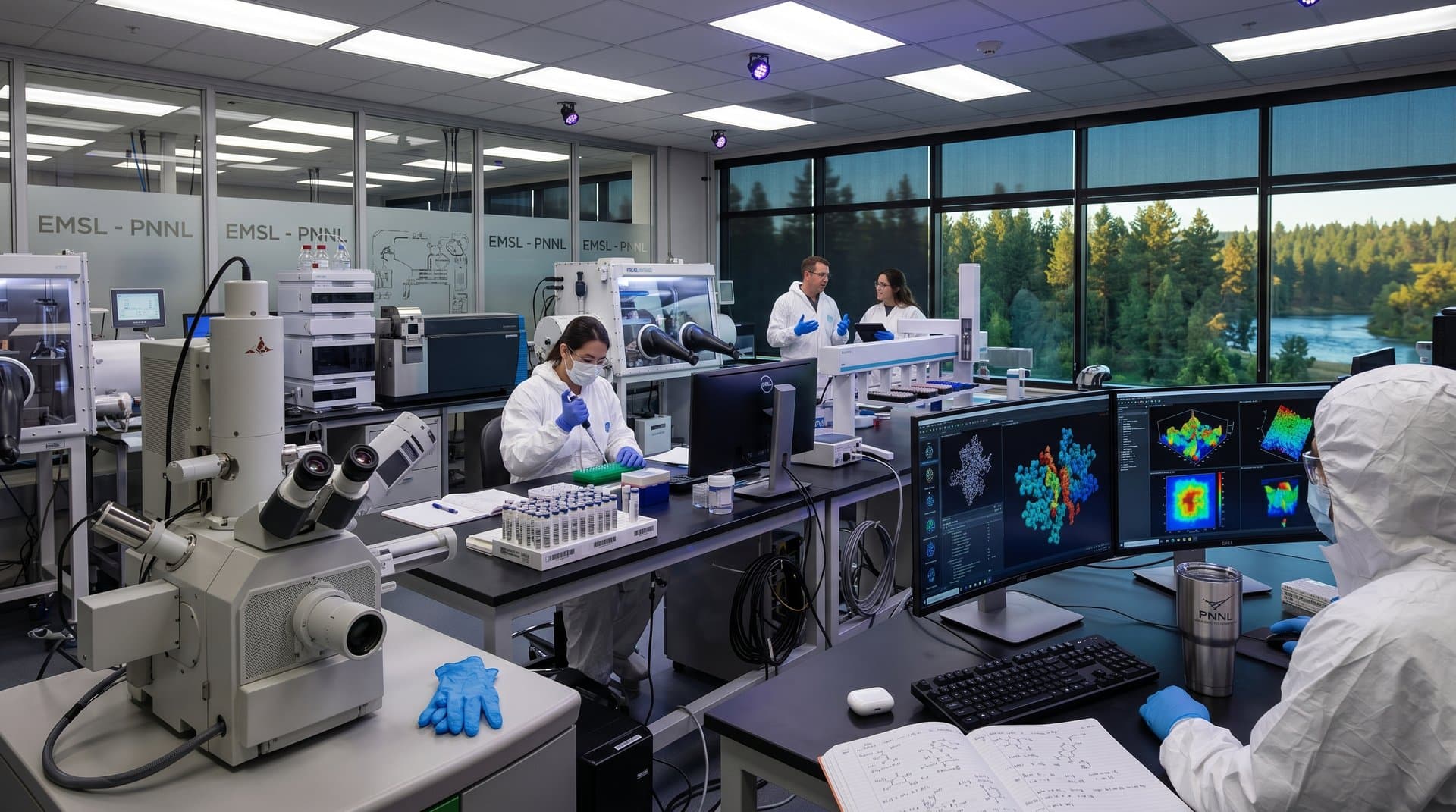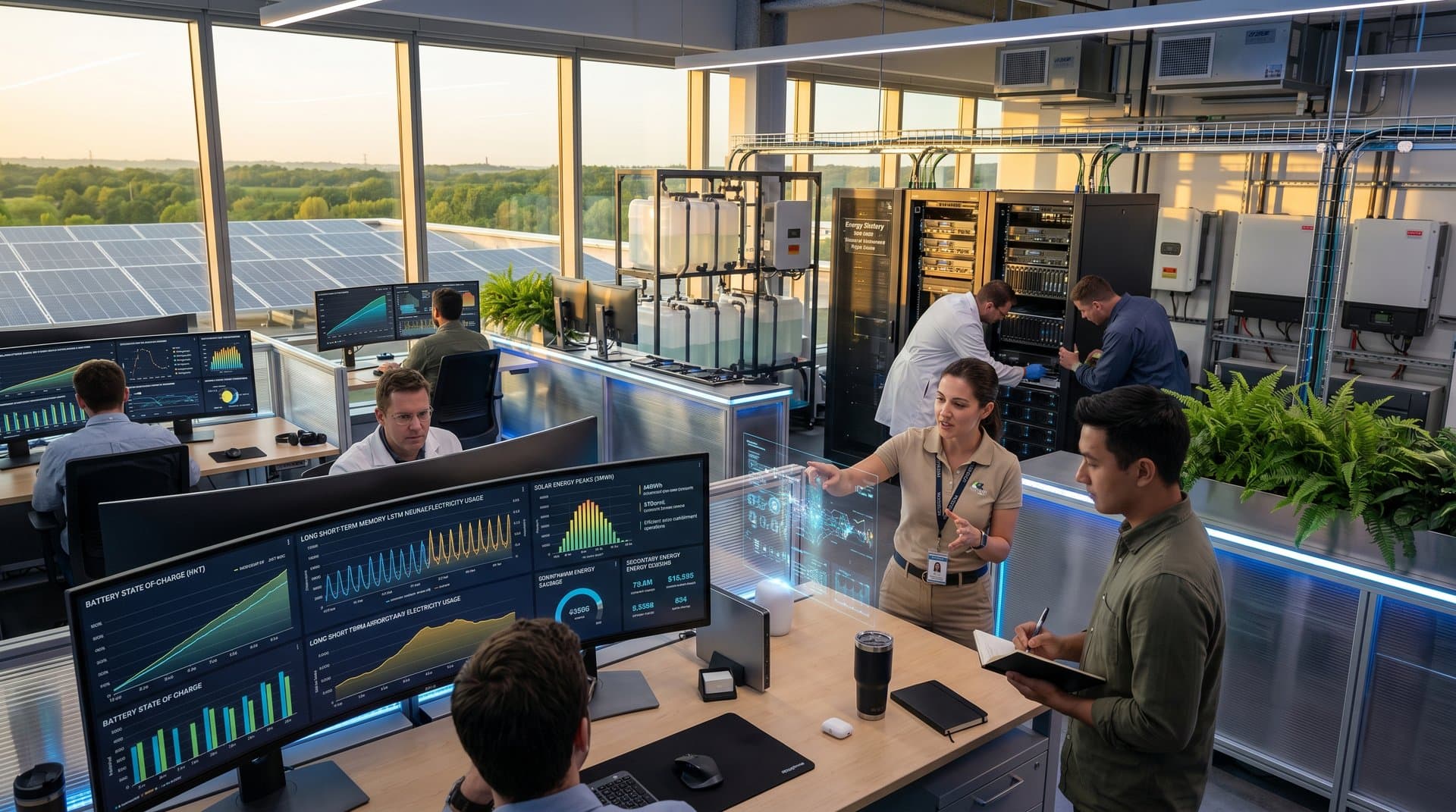
- DeepMind AI reduced cooling energy by 40% in data centers.
- Research labs consume up to 10 times more energy per square foot than offices.
- NVIDIA H100 GPUs draw 700W TDP each in AI training clusters.
DeepMind deployed AI energy storage optimization. It cuts lab cooling energy 40% in pilots at NREL and Berkeley Lab. Systems forecast loads and dispatch batteries with renewables, per DeepMind's 2023 blog link.
NREL researcher Paul Denholm announced machine learning for renewable forecasting and storage control NREL.
High-compute labs use 10x more energy per square foot than offices, per U.S. DOE.
AI Load Prediction Techniques
DeepMind applies LSTM neural networks. Models train on lab sensors for server utilization (80-100%), HVAC runtime, and weather.
Predictions cover 15 minutes to 24 hours. Lithium-ion packs (250 Wh/kg, 5,000 cycles at 80% DoD, per BloombergNEF Q1 2024) discharge at peaks.
Berkeley Lab director Sudip Dosanjh reported 95% accuracy after six months of data Berkeley Lab.
Weekly retraining keeps errors under 5%.
Renewables Integration Advantages
AI labs see 5 MW spikes from NVIDIA H100 GPUs (700W TDP each, 100-unit racks).
Solar arrays produce 3 MWh daytime surplus. AI dispatches lithium-ion or flow batteries (40 Wh/kg, 10,000 cycles) at $132/kWh, per NREL.
Grid reliance falls 50%. Second-life EV batteries (180 Wh/kg) enable V2G at $80/kWh.
Systems achieve net-zero with LCOS under $100/MWh.
Case Studies: NREL, Berkeley, DeepMind Pilots
DeepMind's reinforcement learning saved 40% energy in 1 MW facilities.
Berkeley Lab paired AI chillers with 500 kWh flow batteries and 1 MW PV. Peaks shaved 25%, per Dosanjh.
NREL's 2 MWh PV-lithium-ion hybrid cut curtailment 35%, per Denholm.
- Lab Operator: Google/DeepMind · Storage Tech: Lithium-ion · Capacity: 1 MW · AI Focus: Cooling + dispatch · Gain: 40% cooling save · Source: DeepMind blog 2023
- Lab Operator: Berkeley Lab · Storage Tech: Flow batteries · Capacity: 500 kWh · AI Focus: HPC load matching · Gain: 25% peak shave · Source: Dosanjh, Berkeley 2023
- Lab Operator: NREL · Storage Tech: PV + lithium-ion · Capacity: 2 MWh · AI Focus: Renewable forecasting · Gain: 35% curtailment · Source: Denholm, NREL 2023
Lithium-ion: 250 Wh/kg, 250 Wh/L, $132/kWh (BNEF). Flow: 40 Wh/kg, 40 Wh/L, $250/kWh.
Financial and Deployment Hurdles
Installed lithium-ion costs $300/kWh (BNEF Q1 2024). AI training needs 3-6 months data at $50,000.
FERC interconnection delays 12-18 months. Order 2222 enables $20/MWh ancillary revenue.
Pilots hit 15% IRR with IRA 45X credits ($35/kWh). Scale eyes 10 GWh by 2030.
Supply Chain Considerations
Australia supplies 60% lithium at $15,000/tonne LCE. NMC cathodes dropped 20% YoY to $40/kWh.
China holds 80% cell production. U.S. IRA adds $7.5B domestic grants.
Sodium-ion pilots cost $90/kWh. Iron-air targets $20/kWh for 100-hour LDES.
Grid-Scale Implications
Labs aggregate to 100 MW VPPs for $15/MW frequency regulation. AI responds in 100 ms.
Renewables reach 70% penetration without curtailment.
EU Battery Regulation 2023/1542 requires 95% recycled cobalt by 2030. IRA offers $370/kWh hybrid credits.
Future Outlook
AI energy storage optimization links labs to renewables. IEA forecasts 50 GWh deployments by 2028.
Pilots validate LDES at $50/MWh LCOS. This reshapes grids for AI compute growth.
Frequently Asked Questions
How does AI energy storage optimization work in labs?
AI forecasts lab loads using LSTM models on sensor data. It dispatches batteries to match renewables, avoiding peaks. DeepMind cut cooling by 40% with similar tech.
What role do renewables play in AI sustainable labs?
Solar and wind charge on-site storage during excess generation. AI ensures dispatch aligns with compute demands. NREL pilots reduce curtailment entirely.
Why are sustainable labs adopting AI energy storage optimization?
Labs guzzle 10 times more energy than offices due to GPUs. AI lowers costs and emissions. Berkeley Lab optimizes HPC with real-time sequencing.
What storage tech fits AI sustainable labs?
Lithium-ion and flow batteries pair with AI for 90% round-trip efficiency. Second-life EV packs add scale. Hybrids target LCOS below 100 USD/MWh.