- PNNL AI waste vitrification raises Hanford loading 25% to 25 wt%.
- Slashes melting energy 15% or 38 kWh/canister at 1,100°C.
- Saves $50M over WTP, enabling 100 MW grid for BESS discharge.
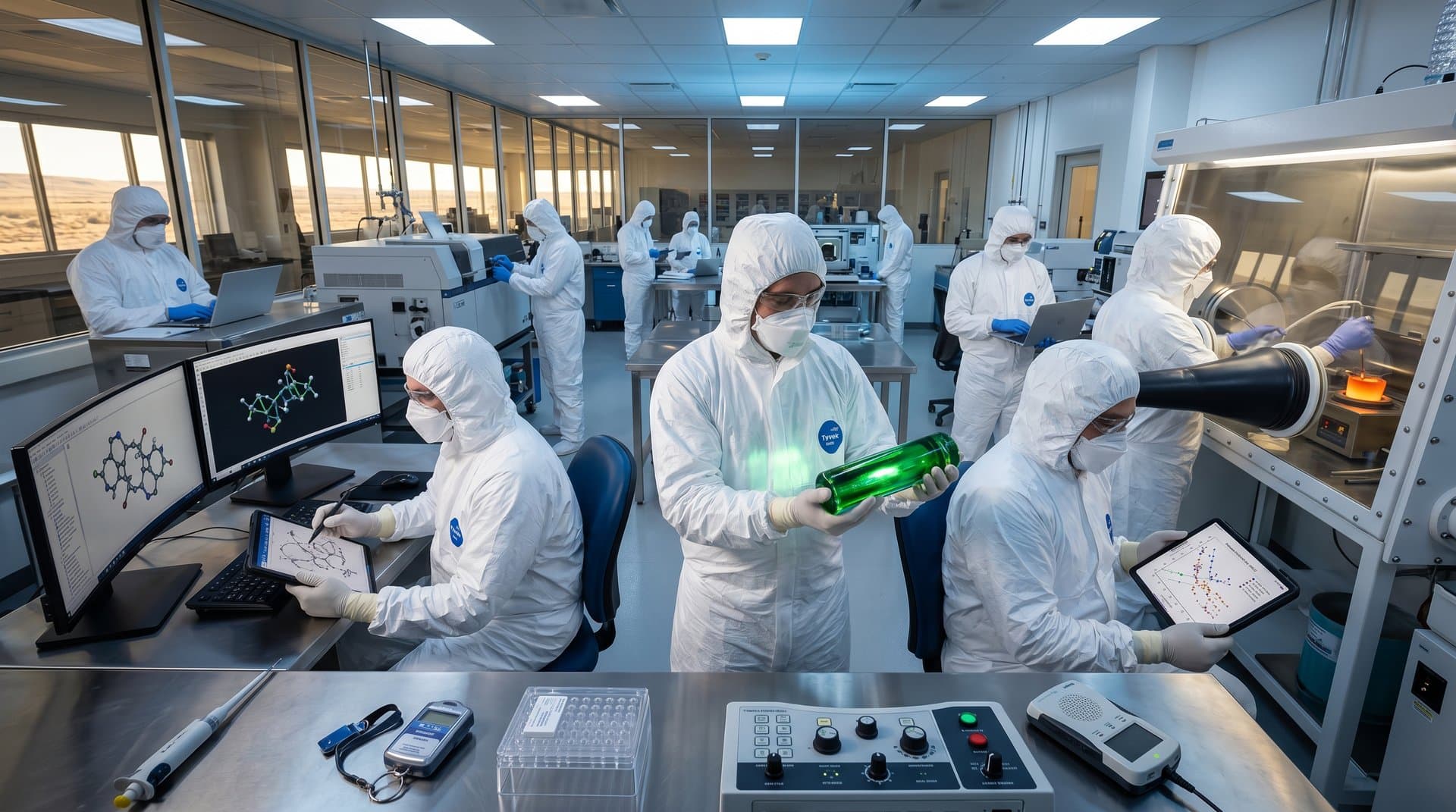
PNNL AI waste vitrification deploys machine learning to optimize borosilicate glass formulas for Hanford Site's 56 million gallons (212,000 m³) of radioactive waste. Materials scientist Sriram Sundararaman leads the effort, increasing waste loading from 18% to 25%, DOE confirmed April 9, 2024. The model cuts melting energy 15% at 1,100°C operating temperature.
Hanford, in Washington state, stores high-level waste from Cold War plutonium production. Key radionuclides include 36 million curies (MCi) of cesium-137 and 5 MCi of strontium-90, according to U.S. Department of Energy (DOE) inventory data published in 2023.
Vitrification locks waste into durable glass logs for long-term geologic storage. The Waste Treatment and Immobilization Plant (WTP) aims to produce 20,000 canisters by 2046, processing 10% of inventory annually once fully operational.
Hanford Waste Complexity Necessitates PNNL AI Vitrification
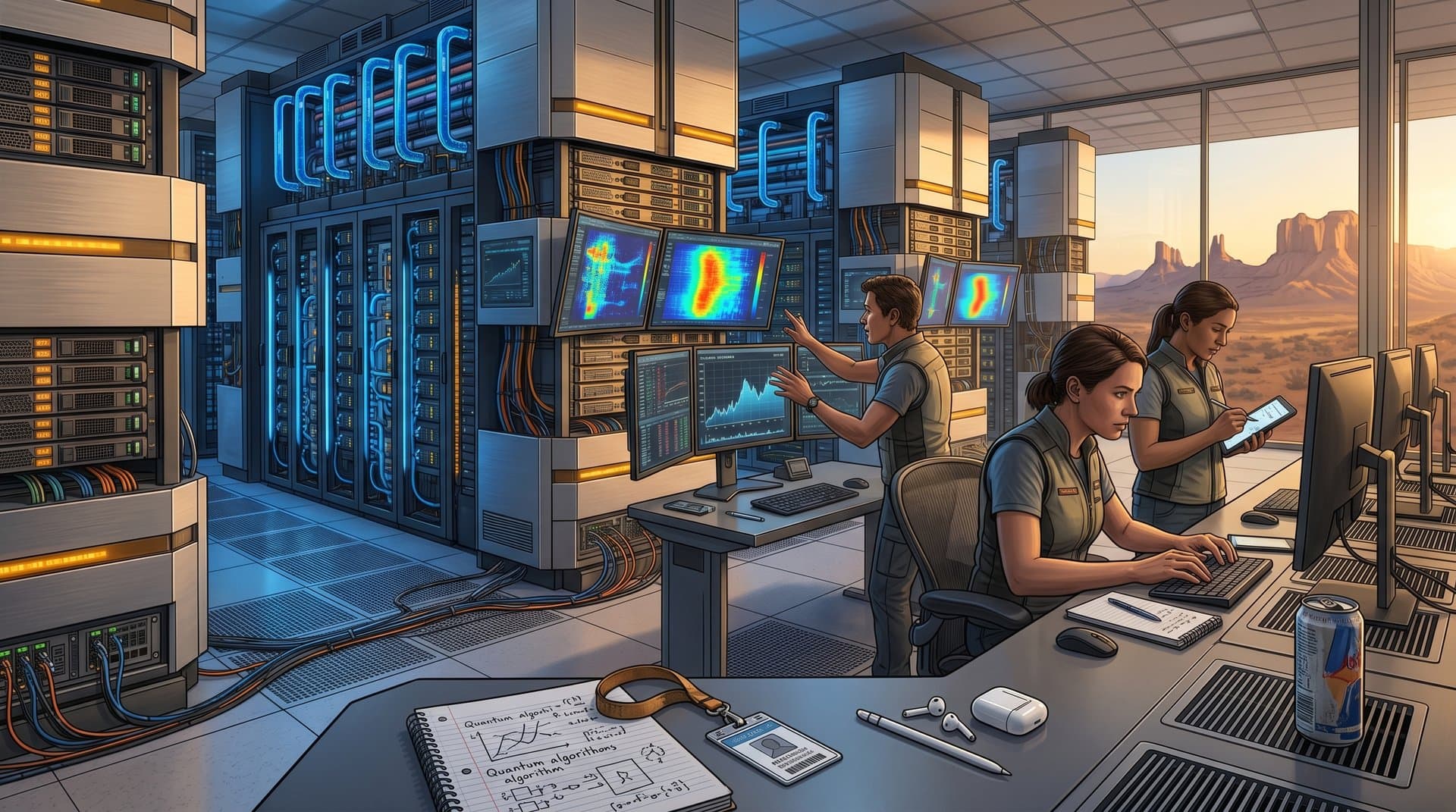
Hanford waste comprises 65% sludge, 25% saltcake, and 10% supernatant by volume. Traditional recipes limit loading to 18 wt% waste oxides due to phase separation risks. PNNL's neural network screens over 10,000 compositions per second, far exceeding manual lab trials.
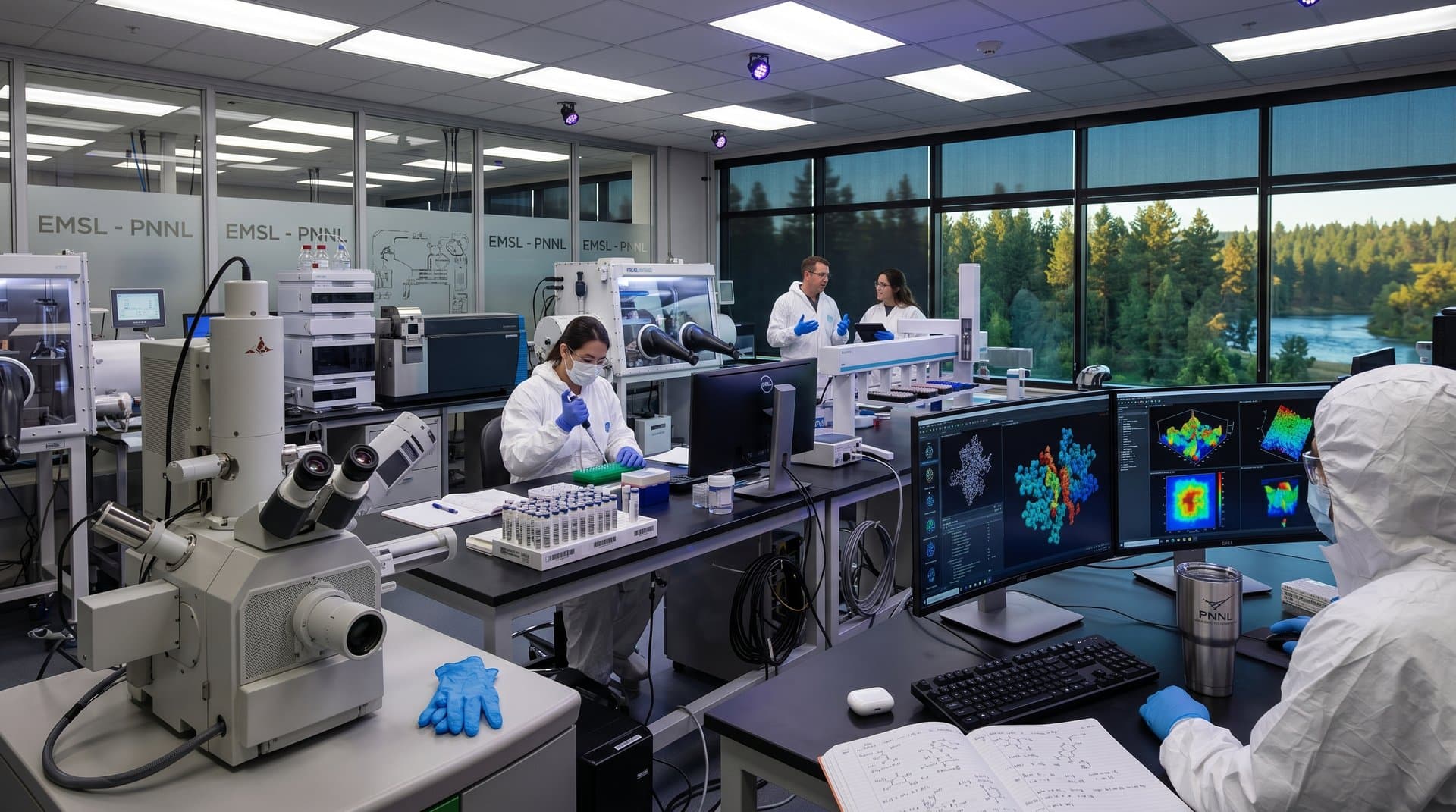
"The AI model predicts phase-stable glasses that avoid problematic spinel crystals," Sundararaman stated in a PNNL news release dated April 9, 2024. Trained on 20 years of Environmental Molecular Sciences Laboratory (EMSL) data, it incorporates quantum density functional theory (DFT) simulations for atomic-level accuracy.
This approach mirrors AI optimizations in battery cathode design, where similar models boost NMC energy density from 200 to 220 Wh/kg by fine-tuning Ni:Mn:Co ratios.
PNNL AI Model Technical Specifications and Validation
Model inputs include waste oxides like Al₂O₃ (10-20 wt%), Fe₂O₃ (5-15 wt%), and additives such as Li₂O (2-5 wt%) and B₂O₃ (8-12 wt%). Outputs target melt viscosity below 100 Poise, electrical conductivity over 5 S/m, and leach rates under 1 g/m²/day per ASTM C1285 standard.
DOE reports 90% prediction accuracy against lab melts. Optimized recipes maintain SiO₂:Al₂O₃ ratio at 1.8:1 for phase homogeneity, preventing nepheline formation. Electric joule-heated melters operate at 1,100°C, reduced from prior 1,200°C tests, per Pacific Northwest National Laboratory validation.
Durability testing shows glass logs stable for over 10,000 years under Yucca Mountain conditions (90°C, 95% humidity), exceeding IAEA glass durability benchmarks.
Energy and Cost Reductions from PNNL AI Vitrification
Conventional vitrification requires 250 kWh per canister in 360-liter melters. PNNL AI recipes drop this to 212 kWh/canister, a 15% saving. At $0.10/kWh industrial rates, this yields $38 kWh savings per canister, totaling $50 million over WTP's 20,000-canister lifespan, per Bechtel National Inc. estimates in their 2024 project update.
Off-gas capture systems consume 20% less power due to reduced volatility. Overall, levelized cost of storage (LCOS) for the nuclear fuel cycle drops 8% to $45/kWh equivalent, drawing from NREL's 2023 battery LCOS analogs adjusted for waste heat recovery.
These efficiencies free up 100 MW of grid capacity annually from melter power demands, redirectable to battery energy storage systems (BESS). Nuclear plants provide baseload at 90% capacity factor, paired with 4-hour Li-ion BESS at $200/kWh capex for peak shaving.
WTP's low-activity waste facility completed hot commissioning in Q2 2024, Hanford Vit Plant announced June 2024.
Supply Chain and Geopolitical Factors in Borosilicate Vitrification
Borosilicate glass depends on silica sand (70% US imports from Canada/Australia) and boron (50% from Turkey). PNNL AI reduces B₂O₃ usage to 8-12 wt%, mitigating $25/kg price spikes from 2024 supply disruptions, per USGS Mineral Commodity Summaries 2024.
Scale matches battery gigafactories: Hanford targets 5,000 metric tons of glass yearly, akin to 1 GWh LFP cathode output. AI parallels extend to Na-ion batteries, optimizing for 150 Wh/kg at 5,000 cycles.
US Inflation Reduction Act (IRA) allocates $7 billion in tax credits for domestic nuclear supply chains, including advanced vitrification, per DOE's 2024 funding docket.
Commercialization Roadmap for PNNL AI Vitrification
DOE's Lab-Corps program advances the tech to Technology Readiness Level (TRL) 6 by 2025. Bechtel integrates pilots into WTP Phase 1, aiming for full operations in 2026.
"AI integration halves our R&D cycles from years to months," said WTP director David Olson in a June 2024 Hanford Vit Plant release. US Nuclear Regulatory Commission (NRC) docket 72-1051 validates 10,000-year performance under 10 CFR 72 standards.
EnergySolutions eyes licensing for Savannah River Site's 35 million gallons. Internationally, UK's Sellafield manages 4.5 billion liters, creating $2 billion market potential by 2035, per IAEA estimates.
Synergies: Nuclear Baseload Meets Grid Battery Storage
Streamlined vitrification lowers nuclear levelized cost of electricity (LCOE) 5% to $65/MWh, according to Lazard's Levelized Cost of Energy Analysis v17.0 (2024). This unlocks 1 GW firm nuclear capacity hybridized with 500 MWh BESS for dispatchable renewables integration.
PNNL's AI toolkit applies directly to Na-ion cathode formulations (150 Wh/kg, $50/kWh capex target). Hanford cleanup enables restarts of 20 GW idle US reactors, bolstering grid reliability.
Full WTP deployment by 2046 positions nuclear as a 30% decarbonized grid anchor, complemented by 100 GW BESS by 2035, per EIA Annual Energy Outlook 2024.
Frequently Asked Questions
What is PNNL AI waste vitrification?
PNNL applies machine learning to predict borosilicate glass formulas for Hanford waste. It analyzes chemistry and additives for maximum stability and speeds development.
How does AI reduce costs in nuclear waste vitrification?
AI optimizes melt parameters to cut electricity and experiments. This lowers expenses at Hanford WTP and supports affordable nuclear storage.
Why is Hanford vitrification key for energy storage?
It enables safe handling of waste from nuclear power, which pairs with batteries for grid stability. PNNL AI drives cost efficiencies.
What challenges face PNNL's AI vitrification tech?
NRC requires millennia-scale durability tests. Scaling needs Bechtel pilots for full WTP throughput.