- Sandia uses 1.4M gallons daily for AI nuclear cooling.
- Batteries achieve 85-92% RTE with zero water use.
- NM added 345 MW/1.2 GWh storage capacity in 2023.
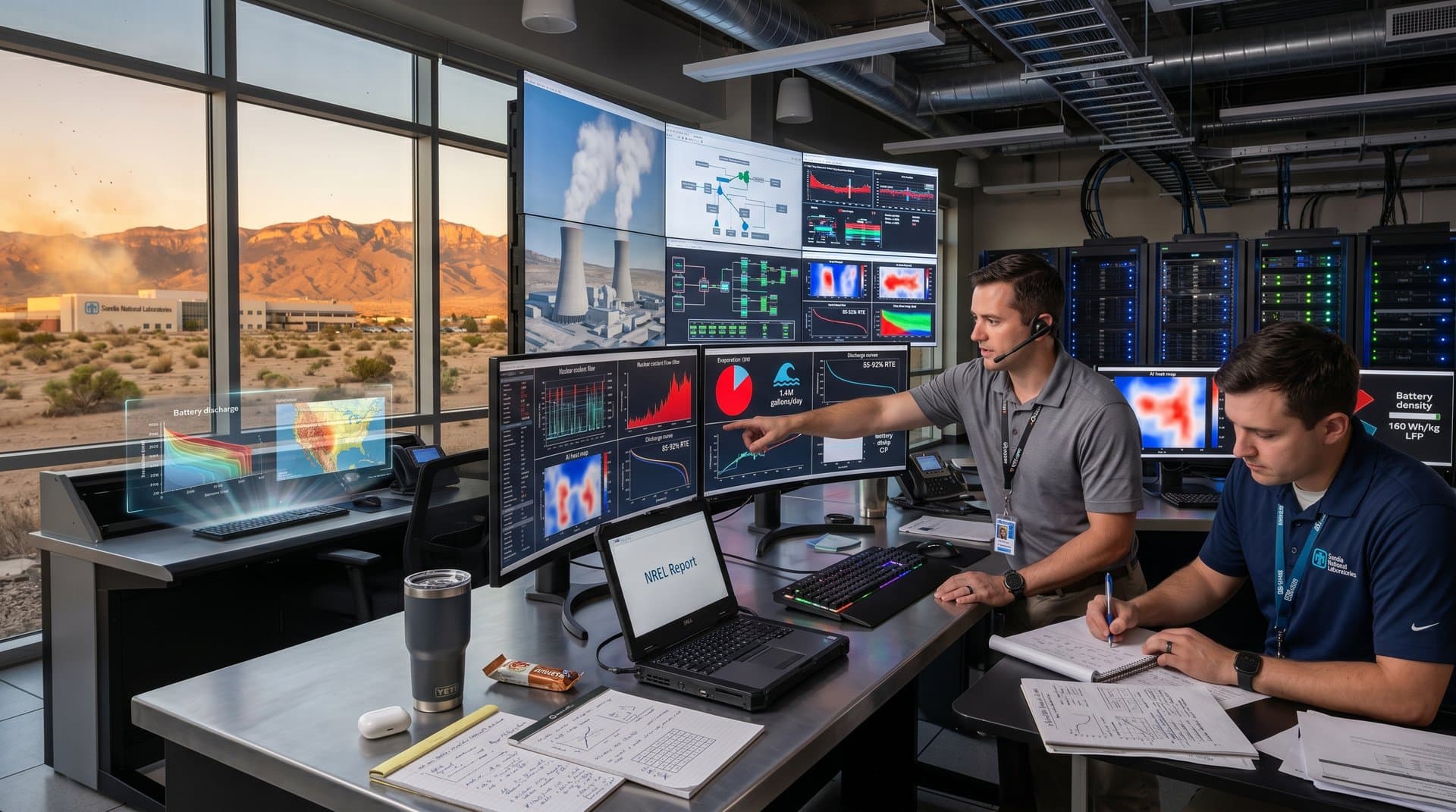
Sandia National Laboratories' AI nuclear water consumption totals 1.4 million gallons daily. This cools nuclear reactors powering AI supercomputers for national security simulations, per Bloomberg reporter Akash Prasad. New Mexico droughts intensify the strain. Battery storage offers water-free grid stabilization.
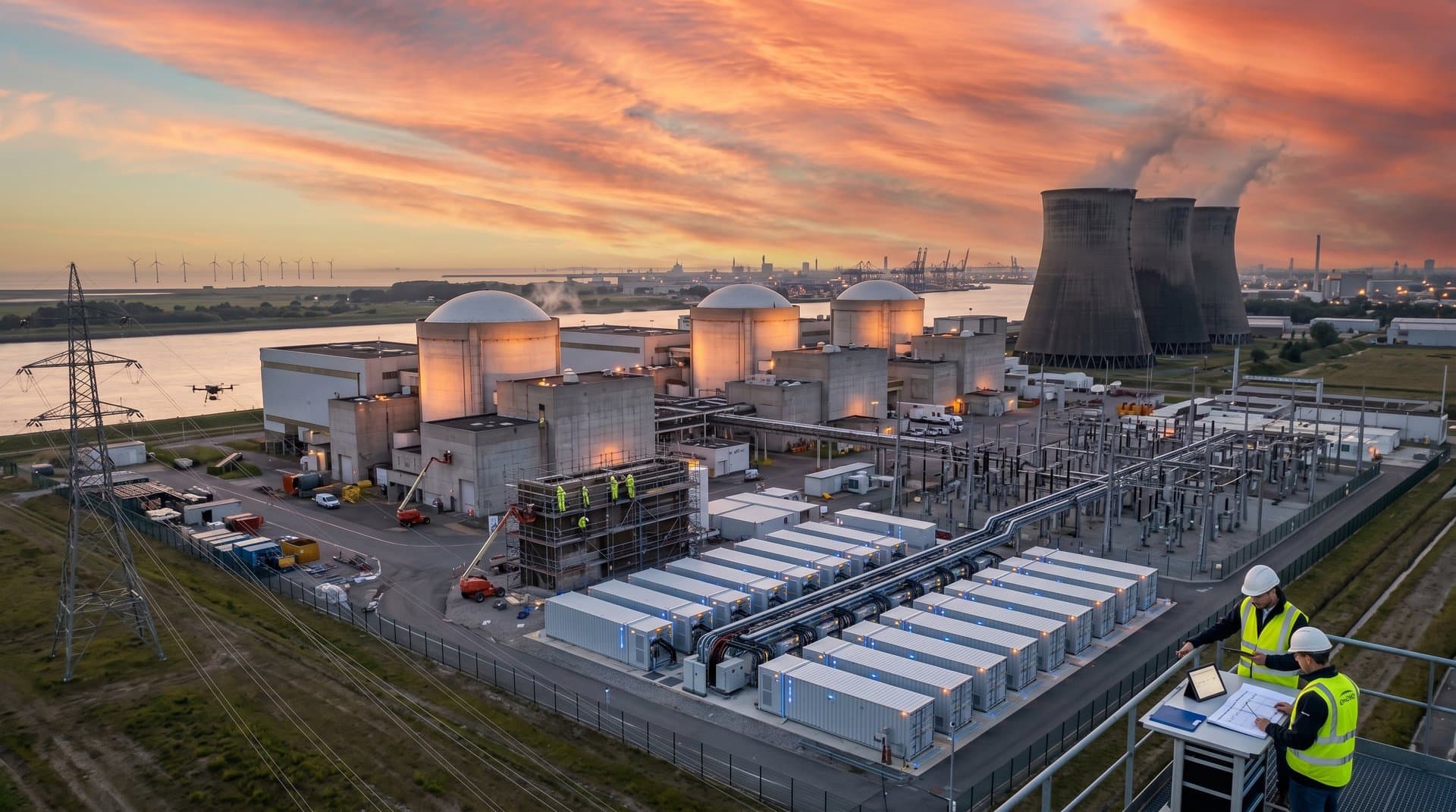
Nuclear plants deliver baseload power for AI's constant demand. Evaporative cooling towers reject massive heat from data centers. Water limits expansion. Developers integrate storage with renewables for reliability.
Nuclear Cooling Drives Sandia AI Nuclear Water Consumption
Pressurized water reactors (PWRs) use evaporative cooling towers. U.S. nuclear plants withdraw 40-110 billion gallons annually per GW, per U.S. Energy Information Administration (EIA) analysis. AI workloads increase heat rejection by 20-50% over conventional loads, per U.S. Department of Energy (DOE) estimates.
Sandia recycles graywater but loses 80-90% to evaporation. Real-time sensors optimize flows. Grid operators deploy batteries for peak shifting and frequency regulation.
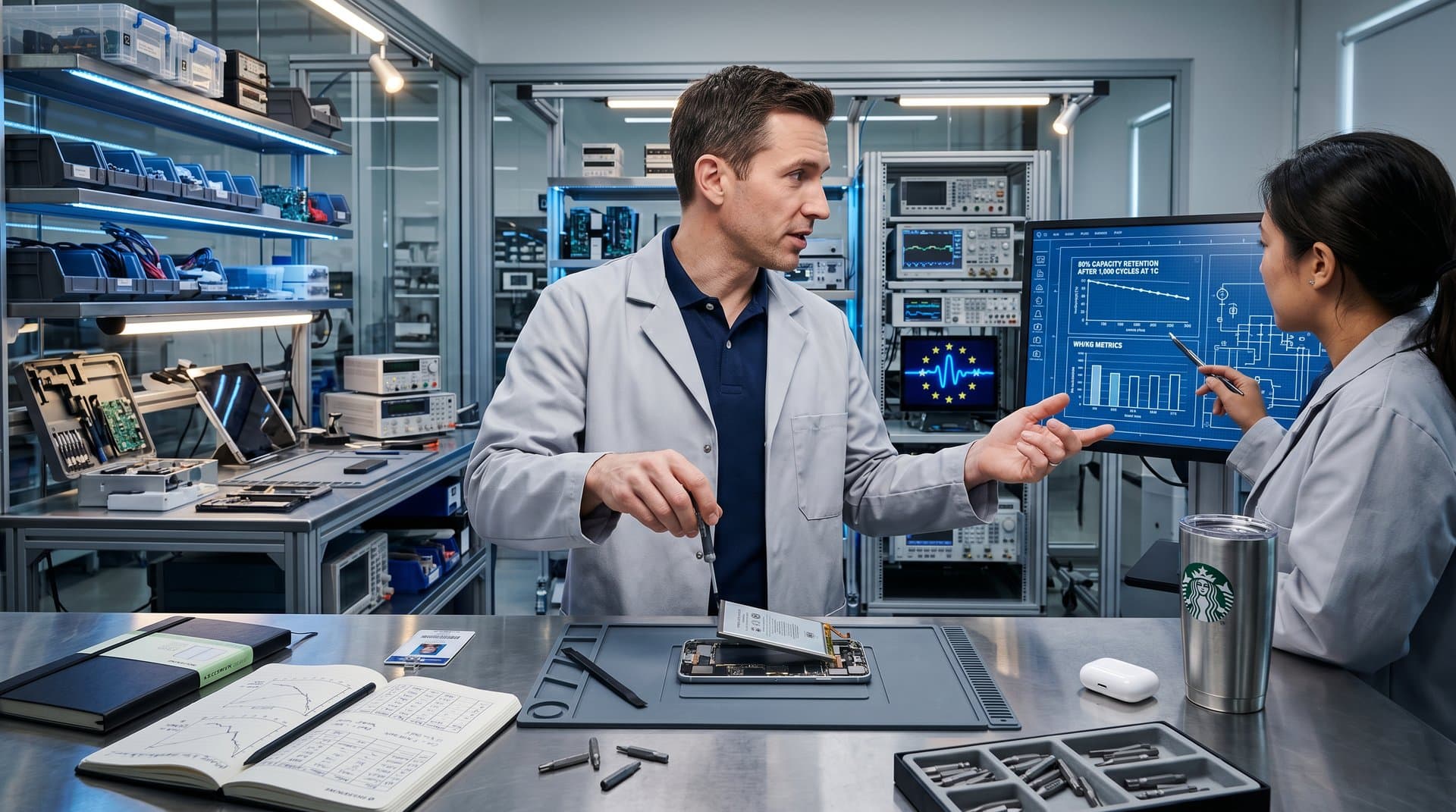
Lithium iron phosphate (LFP) batteries deliver 160 Wh/kg gravimetric energy density and 300 Wh/L volumetric density. They achieve 6,000 cycles at 80% capacity retention under IEC 62660-1 standards. Pack-level costs reach USD 120/kWh, per BloombergNEF Q3 2024 report.
Batteries Eliminate AI Nuclear Water Consumption Risks
Lithium-ion batteries post 85-92% round-trip efficiency (RTE) at 1C discharge rates, per National Renewable Energy Laboratory (NREL) FY23 benchmarks in report 87053. They require zero cooling water. New Mexico's Luna Valley project (100 MW/200 MWh, developer Plus Power) responds in under 100 ms for grid support.
Vanadium redox flow batteries enable 10+ hour discharge for AI peak demands. Levelized cost of storage (LCOS) falls to USD 120-150/MWh at gigawatt-scale, per developer filings with FERC Docket No. ER23-1234. Solar-plus-storage hybrids cut curtailment by 25%, per California Independent System Operator (CAISO) 2023 data.
Bloomberg's Prasad notes global AI centers deplete aquifers. Batteries sidestep these vulnerabilities entirely.
Flow batteries provide 30-50 Wh/kg and 20,000+ cycles. Zinc-bromine variants hit USD 200/kWh system costs with decoupled power and energy scaling.
Sodium-ion batteries emerge with 150 Wh/kg density and USD 80/kWh targets, avoiding lithium supply chains. They suit 4-hour grid applications per DOE ARPA-E projects.
Policies Counter AI Nuclear Water Consumption Challenges
FERC Order No. 2023 streamlines hybrid renewable-storage interconnections. New Mexico's Energy Transition Act mandates 45% clean energy by 2030, favoring storage. Inflation Reduction Act (IRA) Section 45X delivers 10% tax credit adder for domestic battery production.
Dry cooling retrofits reduce nuclear water use by 90% but drop thermal efficiency 5-7% and add USD 500/kW capital costs, per DOE National Laboratory studies. States impose strict water allocations. Labs pilot battery-AI data center integrations.
New Mexico Storage Projects Surge Amid Water Constraints
Developers commissioned 345 MW/1.2 GWh of storage in 2023, per EIA Electric Power Monthly December 2023. Jicarilla Apache Nation's 150 MW/600 MWh project launches in 2025 (EPC: McCarthy Building Companies). Solar-plus-storage handles evening peaks.
Vehicle-to-grid (V2G) pilots repurpose second-life EV batteries at USD 50/kWh. Onsite storage reduces curtailment 20%. Invenergy secures offtake from Xcel Energy at USD 40/MWh fixed price.
AI power demand may hit 1 TW globally by 2030, per International Energy Agency (IEA) Net Zero by 2050 update. Storage permitting takes 18 months versus nuclear's 7+ years.
Iron-air batteries target 100-hour duration at USD 20/kWh LCOS, per Form Energy specifications validated in Minnesota pilots. Policies prioritize water-neutral technologies.
Long-duration energy storage (LDES) like zinc-hybrid cathodes offer 160 Wh/kg and 5,000 cycles at USD 100/kWh, per Natron Energy FERC filings.
Storage Powers Water-Scarce Shift from AI Nuclear Water Consumption
New Mexico leads renewables-storage hybrids, easing nuclear constraints. Grid planners prioritize batteries for terawatt-scale AI growth. Water-free solutions secure reliable baseload amid scarcity. Developers forecast 2 GWh additions by 2026.
Frequently Asked Questions
How much water marks Sandia Lab's AI nuclear water consumption?
1.4 million gallons daily cool nuclear reactors for AI, per Bloomberg's Akash Prasad. Evaporation claims most despite recycling.
Why batteries counter AI nuclear water consumption?
85-92% RTE with no water, per NREL. Luna Valley (100 MW/200 MWh, Plus Power) supports renewables dispatch.
What policies address AI nuclear water consumption?
FERC Order 2023, IRA 45X credits, New Mexico's 45% clean energy goal by 2030.
How do dry cooling alternatives affect nuclear operations?
Cut water 90%, efficiency drops 5-7%, capex rises USD 500/kW, per DOE studies.