- Hyper-realistic AI features demand 5 MW from 1,000+ H100 GPUs.
- Data centers hit 1,000 TWh/year by 2026, per IEA.
- 20 GW new storage needed by 2028, per BloombergNEF.
Philip Trask
Renewables Correspondent
Hyper-realistic AI videos drive Hollywood's compute boom. Studios demand 20 GW new energy storage by 2028, per BloombergNEF. The Hollywood Reporter details the trend. Bitcoin rose 2.1% to $77,124 on April 9, 2024, per CoinGecko.
Studios deploy massive GPU clusters for diffusion models and transformers. The International Energy Agency (IEA) projects data centers consuming 1,000 TWh annually by 2026—a 50% rise from 2022. Energy storage firms intermittent renewables for 24/7 AI workloads.
Hyper-Realistic AI Features Require 1,000+ H100 GPUs
Video diffusion models train on petabytes of footage. They simulate physics, lighting, and motion. Inference renders frames in 10-30 seconds per NVIDIA H100 GPU, per AWS benchmarks.
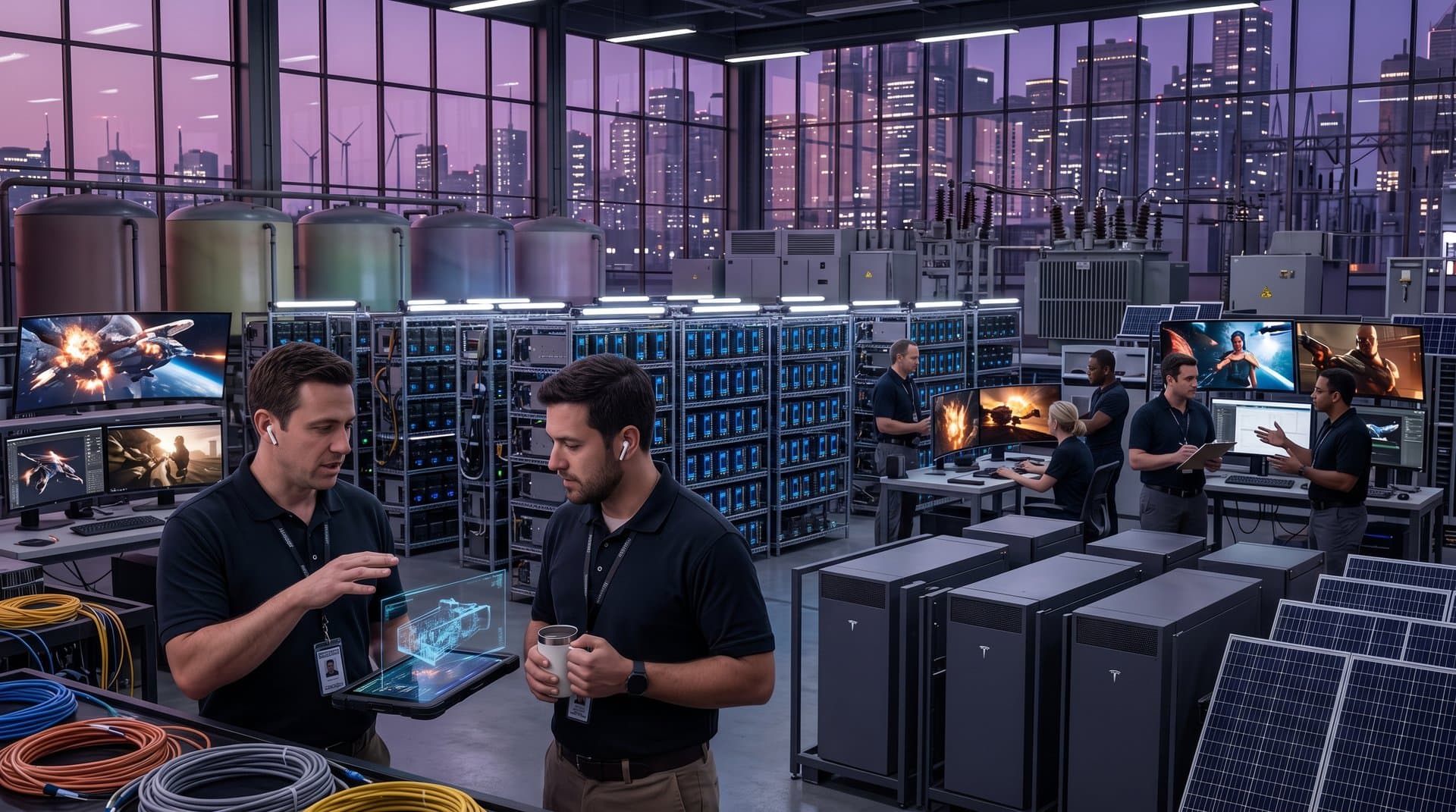
One Hollywood feature requires 1,000+ H100 GPUs for 48 hours. This draws 5 MW peak power. Solar peaks midday, but rendering demands evenings. Lithium-ion batteries (200 Wh/kg, 6,000 cycles at 80% DoD, per CATL specs) charge from excess solar and discharge at peaks.
IEA analysis flags Hollywood's role in reshaping electricity demand, alongside Google and Microsoft.
Hollywood Render Farms Strain Grids, Accelerate Storage Deployment
Render farms hit 10 MW peaks, per RenderStreet data. Grids risk blackouts without storage. Lithium-ion systems cost 150 USD/kWh installed. They deliver 4-hour frequency regulation.
California's 1.2 GWh battery fleet captured 95% curtailed solar in Q1 2024, per California ISO (CAISO) reports. Flow batteries (50 USD/kWh capex, 12-hour duration) pair with offshore wind for overnight dispatch.
Solar-plus-storage cuts PG&E interconnection queues by 18 months.
Energy Storage Chemistries Optimized for AI Compute Peaks
Sodium-ion batteries hit 160 Wh/kg at 45 USD/kWh targets. They suit studio behind-the-meter use. Form Energy's iron-air batteries reach 20 USD/kWh with 100-hour duration for long renders.
FERC Order 2222 unlocks 10 GW distributed resource revenue by 2026, per Wood Mackenzie. Fluence Energy secured 500 million USD financing for 2 GWh in 2024.
Ethereum rose 1.8% to $2,284.35. BNB gained 0.4% to $617.56 on April 9, 2024.
- Asset: BTC · Price (USD): 77,124.00 · 24h % Change: +2.1%
- Asset: ETH · Price (USD): 2,284.35 · 24h % Change: +1.8%
- Asset: XRP · Price (USD): 1.38 · 24h % Change: +0.9%
- Asset: BNB · Price (USD): 617.56 · 24h % Change: +0.4%
CoinGecko ties gains to AI infrastructure bets.
Renewables-Storage Hybrids Meet AI Baseload Requirements
Amazon signs 500 MW solar PPAs with 4-hour lithium-ion storage. EMEA wind-plus-storage hybrids monetize 98% capacity via arbitrage.
Microsoft's 1 GWh Texas solar farm arbitrages day-night spreads. IRA Section 45X adds 40 USD/kWh credits.
NREL tests show 500 MW inverters deliver 2 GW response in 100 ms, providing synthetic inertia.
V2G adds 10 GW flexibility by 2030. Second-life EV batteries retain 80% capacity for edge computing.
BloombergNEF forecasts 165% data center power growth by 2030. Renewables supply 70%, backed by storage. Hyper-realistic AI necessitates 20 GW new capacity by 2028, scaling sodium-ion and long-duration tech.
Frequently Asked Questions
What defines hyper-realistic AI in Hollywood?
Videos indistinguishable from human footage using diffusion models on H100 GPUs, per Hollywood Reporter. Drives 5 MW per feature compute.
How does hyper-realistic AI boost energy storage?
GPU clusters demand 24/7 power; storage (200 Wh/kg lithium-ion) firms renewables. IEA sees 1,000 TWh data center load by 2026.
What grid tech supports AI compute peaks?
Lithium-ion (150 USD/kWh) and flow batteries provide regulation. CAISO batteries captured 95% curtailed solar in Q1 2024.
Which storage tech scales for Hollywood AI?
Sodium-ion (160 Wh/kg) for cost; iron-air (100-hour) for duration. FERC 2222 enables 10 GW aggregation revenue.