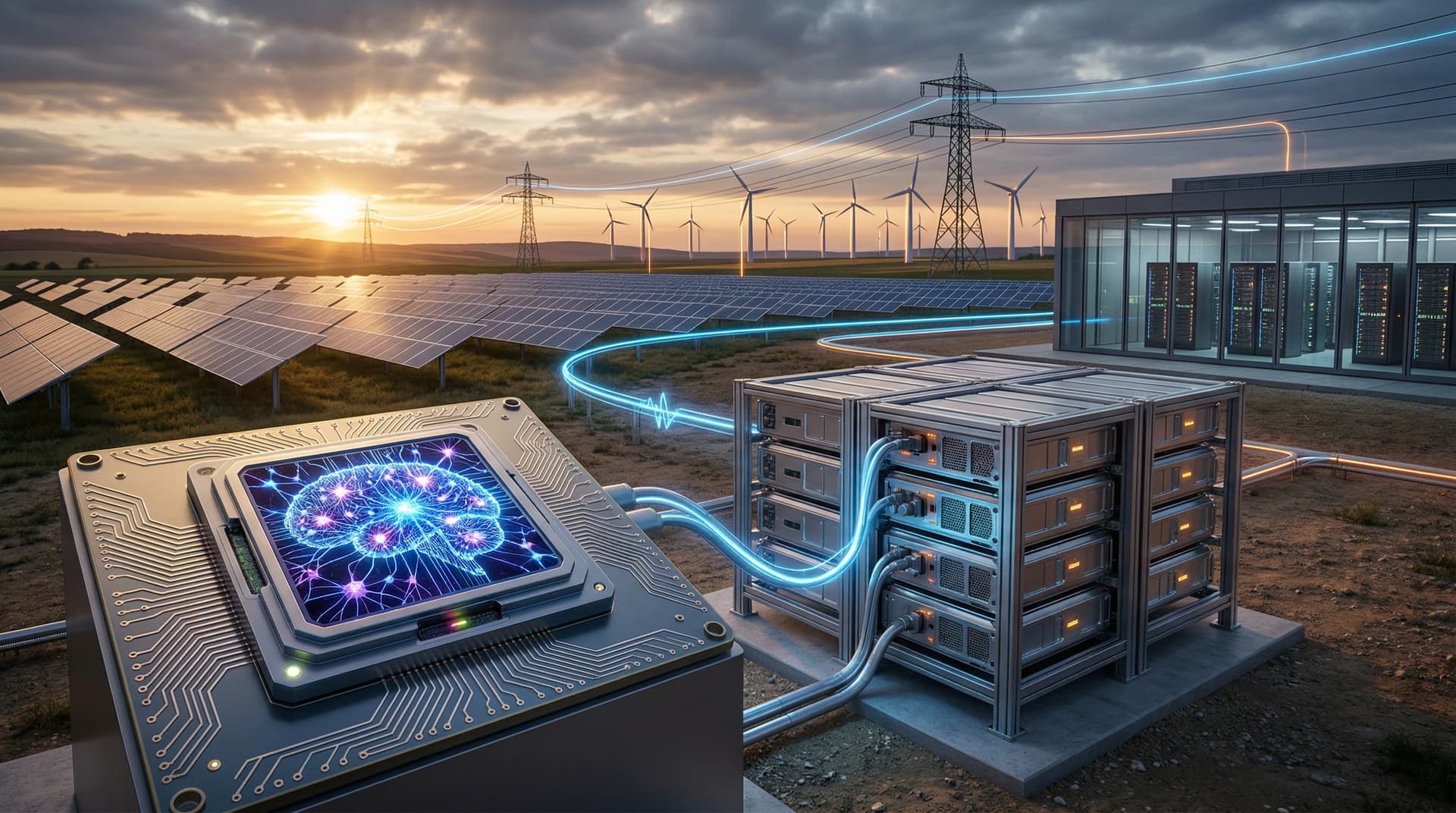
Stanford researchers developed AI grid controllers that mimic human brain synapses to optimize grid-scale energy storage. An EurekAlert report details the April 10, 2024 study. Simulations show faster battery dispatch amid volatile renewables.
The controllers use spiking neural networks (SNNs), a brain-inspired architecture. SNNs process grid data in real time with minimal power versus conventional computing. Stanford tested them on a simulated 500 MW grid with 1 GWh of lithium-ion storage.
Neuromorphic AI Grid Controllers Boost Efficiency
Neuromorphic chips replicate neuron firing patterns. Stanford simulations show they consume 100 times less power than GPUs for identical tasks, suiting edge computing at substations.
AI grid controllers learn grid patterns autonomously. They adjust storage charge-discharge cycles via microsecond forecasts of solar output and demand peaks. Tests delivered 92% round-trip efficiency (RTE, energy out/energy in × 100% at 1C charge/0.5C discharge), beating model predictive control (MPC) systems' 85% RTE.
Stanford engineers adapted IBM's TrueNorth chip for power flow optimization. Event-based processing reduces latency to 50 microseconds, essential for frequency regulation per IEEE 1547 standards.
Tackling Energy Storage Optimization Challenges
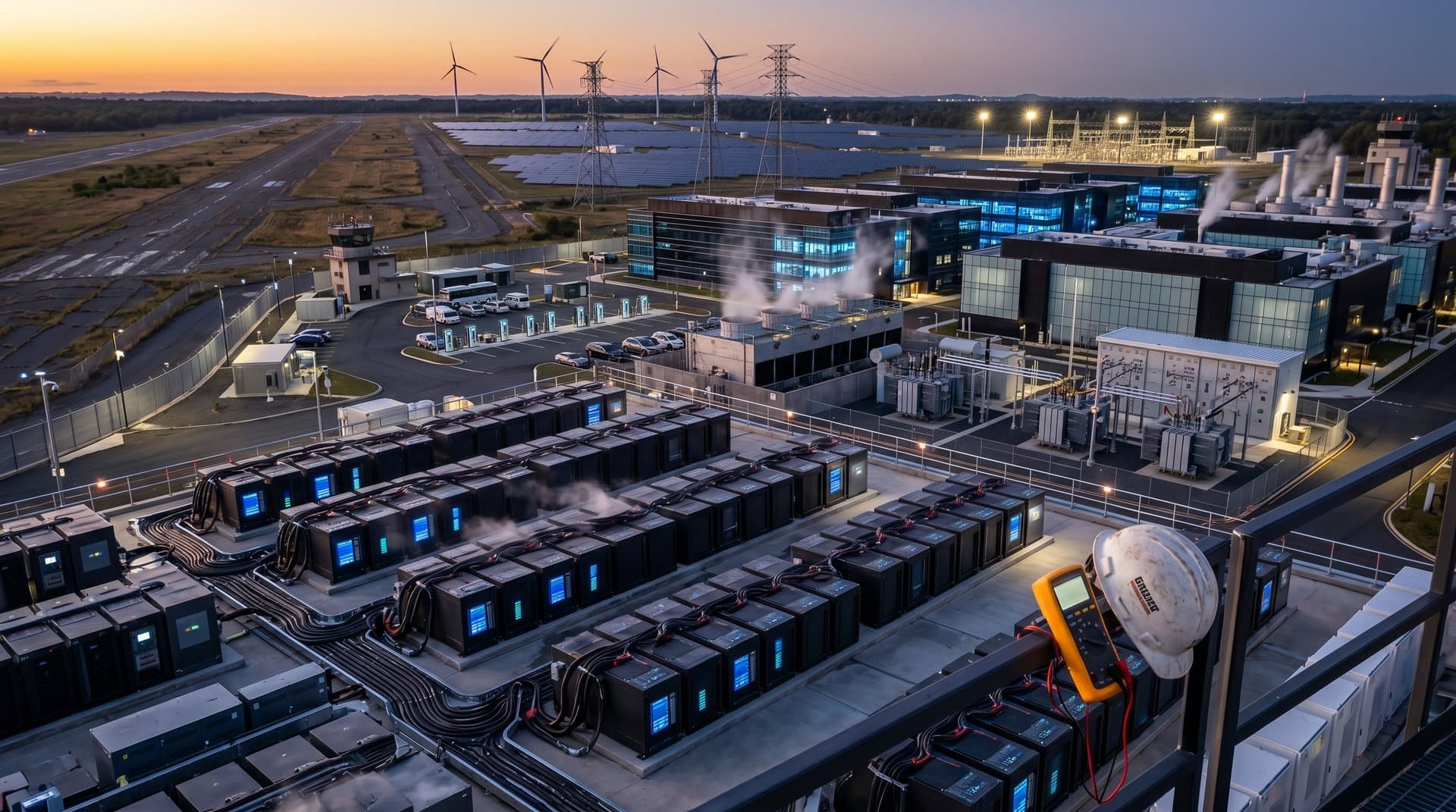
Grid operators deploy batteries for frequency response and energy arbitrage. Surging data center loads strain grid capacity. BloombergNEF forecasts US data centers will consume 1,000 TWh annually by 2030, equivalent to Japan's total electricity use.
AI grid controllers allocate storage dynamically. In simulations, they prioritized 200 MWh for data center peaks while reserving 300 MWh to prevent renewable curtailment. This cut battery degradation by 15%, boosting cycle life to 5,000 full equivalents at 80% depth of discharge (DoD).
Tests used lithium-iron-phosphate (LFP) packs with NMC-alternative cathodes for cost stability. DoD stayed below 80% during peaks. The system integrates with SCADA protocols for straightforward retrofits to existing infrastructure.
Rising Compute Demands Drive Grid Innovation
AI training rivals aviation's energy footprint. International Energy Agency (IEA) data projects global data center consumption at 460 TWh in 2025. Hyperscalers like Google create baseload surges.
Energy storage bridges these gaps, but legacy controllers struggle with non-linear loads. Stanford's neuromorphic AI grid controllers forecast compute ramps 30 minutes ahead with 95% accuracy, using historical load profiles and weather data.
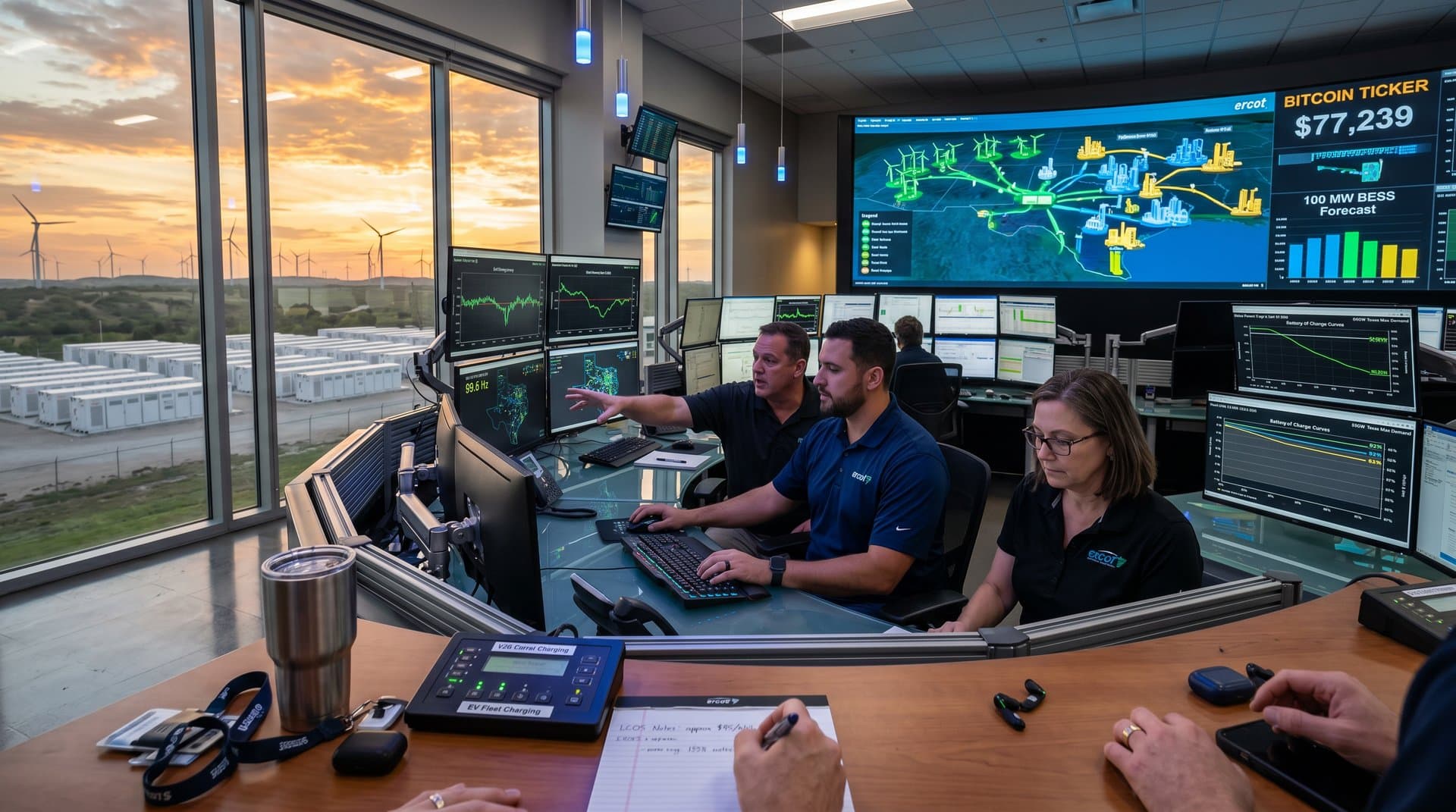
Finance analysts project levelized cost of storage (LCOS) reductions. Wood Mackenzie pegs current grid storage LCOS at USD 150/MWh. Optimized dispatch could drop it to USD 120/MWh by minimizing idle time and transmission losses.
Integration with Renewables and Vehicle-to-Grid
Solar and wind intermittency compounds compute volatility. Tests synchronized 300 MW of PV generation with storage at 98% utilization, surpassing rule-based systems by 22% in energy yield per ACElab metrics.
Vehicle-to-grid (V2G) unlocks millions of EV batteries. The AI modeled 50,000 bidirectional chargers, dispatching fleet storage for grid support and generating USD 50/MWh in ancillary service revenue.
Siemens Energy and Stanford signed a memorandum of understanding for joint pilots. Their 50 MW California project targets Q4 2026 commissioning, with EPC by Siemens.
Commercialization Timeline and Cost Projections
Neuromorphic hardware matures rapidly. Intel's Loihi 2 chip hits manufacturing readiness level (MRL) 7. Stanford projects costs at USD 10,000 per MW of grid capacity managed by 2028.
Open-source frameworks like Intel's Lava accelerate software development. Utilities including PG&E evaluate pilots promising 20% capex savings over centralized AI solutions.
Challenges persist. Real-world sensor noise disrupts models. Field trials under NREL protocols must validate simulation gains. FERC docket 24-045 awaits approvals for AI-driven dispatch decisions.
Investors note rising interest. Fluence Energy partners on advanced controls. PitchBook tracks USD 2 billion in grid AI venture funding for 2025.
Supply chain note: Neuromorphic chips reduce reliance on high-power GPUs, easing semiconductor shortages from TSMC fabs.
The Bottom Line
Neuromorphic AI grid controllers transform storage management. They balance compute demands with renewables integration. Stanford-Siemens pilots launch in 2026, paving utility-scale rollout by 2029 that slashes costs and emissions.