- Bitcoin at US$77,239 drives 2 GW mining loads in Texas grids.
- LFP batteries achieve 92-95% RTE at 80% DoD for stability.
- US storage hits 50 GW by 2030 amid crypto expansion.
Crypto mining grid storage demand surges as Bitcoin hits US$77,239 (CoinGecko). Miners expand operations in Texas and Georgia, straining grids. Lithium-ion batteries deploy for rapid response, peak shaving, and renewables integration (EIA, NREL).
High BTC prices reactivate idle ASIC rigs. Each draws 3-5 kW continuously. These loads compete with residential and industrial users, per EIA data.
Crypto Mining Strains Texas and Georgia Grids
Crypto mining facilities run 24/7. They consume power equal to small cities—up to 2 GW in Texas peaks (EIA). Texas clusters near cheap wind and solar face summer spikes from miner ramp-ups.
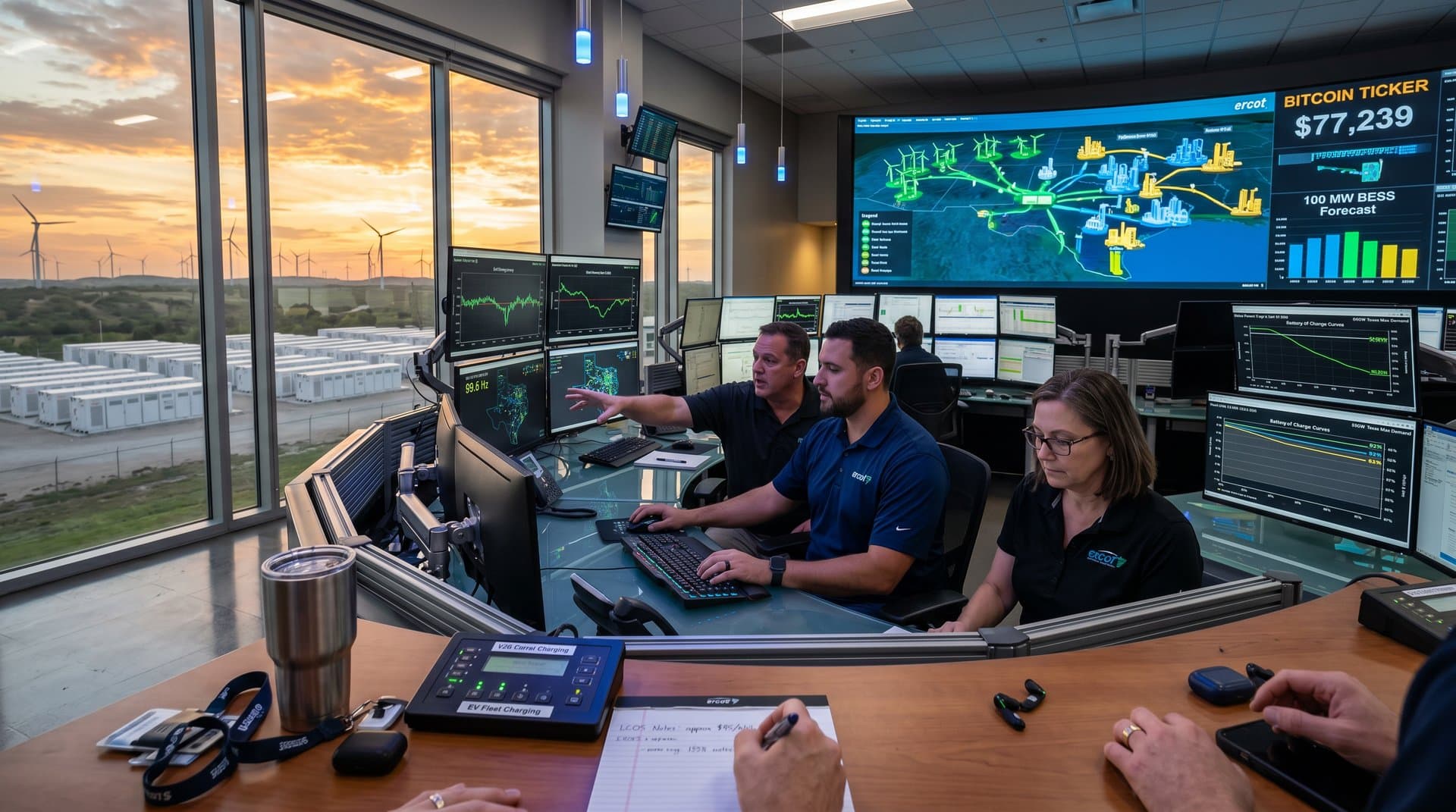
ERCOT reports grid strains worsen. Curtailments hit miners first in demand response. Grid frequency dips to 59.8 Hz on rapid starts. Peaker gas plants respond in 5-10 minutes—too slow for sub-second needs.
BTC at US$77,239 sustains profitability above US$40,000/BTC breakeven.
Crypto Mining Grid Storage Stabilizes Loads
Grid storage batteries provide frequency regulation, voltage support, and black start. A 100 MW/400 MWh lithium-ion system captures midday solar at 1C charge. It discharges to evening miners at 0.25C with 92-95% RTE at 80% DoD (IEC 62619).
Vehicle-to-grid (V2G) from EV fleets supplements utility packs. Sodium-ion batteries offer safety in heat, with 160 Wh/kg density and US$40/kWh packs by 2026 (CATL).
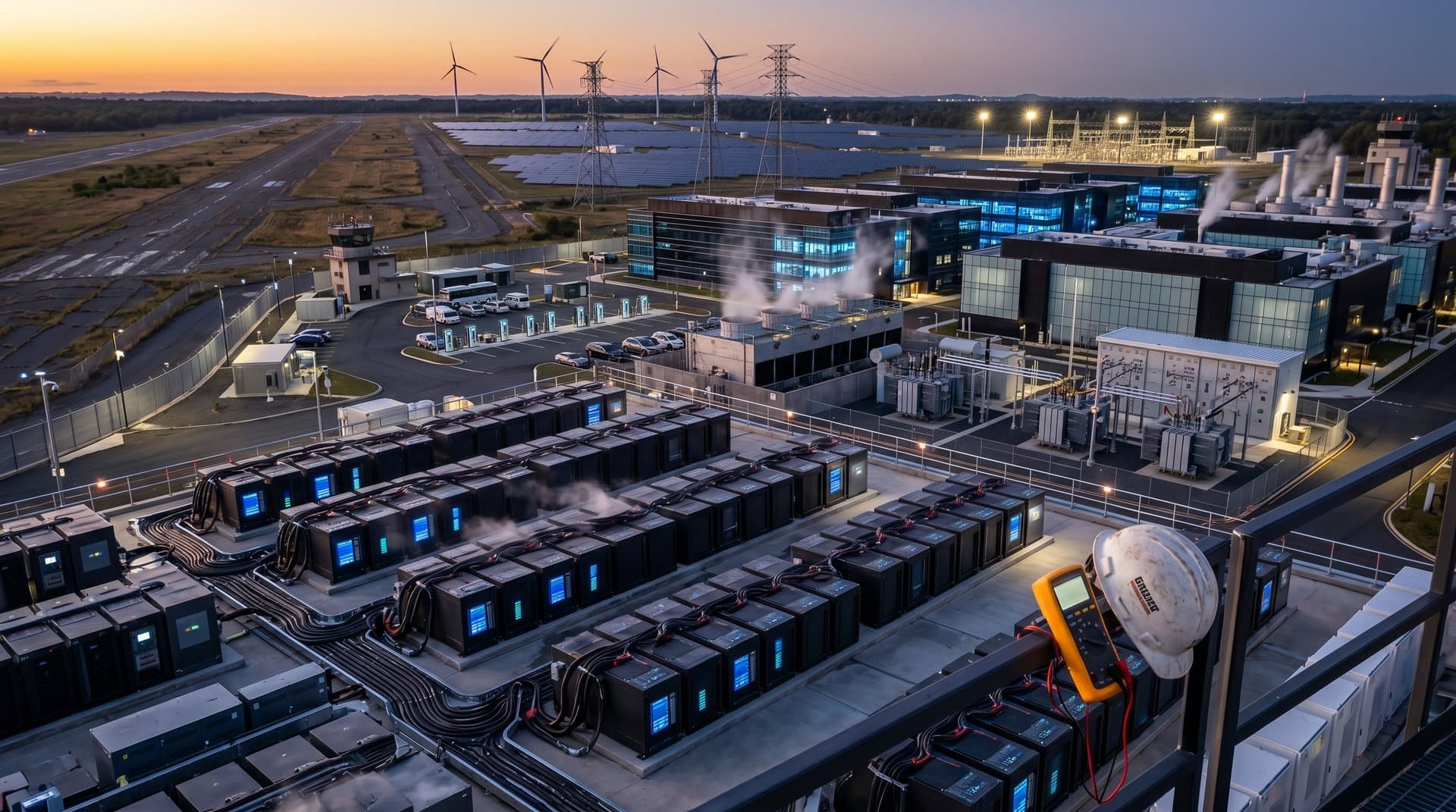
NREL highlights co-location: Miners pair 50 MW/200 MWh storage with solar. This slashes grid draw by 70% and LCOS to US$85/kWh.
LFP cathodes deliver 5,000+ cycles at 1C. They outperform NMC's 2,000-3,000 cycles (BloombergNEF).
Advanced Batteries Target Mining Volatility
QuantumScape solid-state prototypes hit 500 Wh/kg and 1,000 Wh/L. They retain 95% capacity after 1,000 cycles at 3C (DOE ARPA-E).
Form Energy iron-air batteries target 100-hour discharge at US$20/kWh LCOS. Texas pilots integrate 10 MW/1,000 MWh with solar PV.
CATL and BYD ramp LFP via 100 GWh factories. BloombergNEF forecasts US$80/kWh packs by 2026. Lithium-ion holds 95% share in 4-hour apps. LDES scales for baseload.
Supply Chain and Policy Drive Storage Expansion
Lithium from Australian mines and Thacker Pass meets demand. Prices stabilize at US$15,000/tonne LCE (USGS). Recycling recovers 95% cobalt, 90% lithium.
IRA Section 45X credits US$35/kWh for domestic LFP. Miners like Marathon Digital claim credits for 200 MW Texas solar-storage hybrids.
FERC Order 2023 streamlines 10 GW queues. Texas Senate Bill 6 mandates 5 GW by 2028.
Marathon Digital (NASDAQ: MARA, US$57.85) and Riot Platforms (NASDAQ: RIOT) add onsite storage (company filings).
Roadmap for Grid Storage in Mining Boom
US grid storage reaches 50 GW by 2030 (Wood Mackenzie). 15 GW co-locates at loads like mining. Hybrids blend 200 MW solar with 800 MWh/4-hour packs.
LCOS falls to US$100/kWh for lithium-ion. This ensures profitability at BTC US$50,000. Iron-air scales to 100 MW by 2027.
Crypto mining at US$77,239 tests grids. Crypto mining grid storage ensures reliability. Watch FERC dockets and LDES pilots.
Frequently Asked Questions
How does crypto mining grid storage stabilize US electricity grids?
Batteries discharge fast to balance mining loads. LFP systems hit 92-95% efficiency. BTC at US$77,239 sustains high activity needing this support.
What impacts do cryptocurrency miners have on US power grids?
Mining adds steady high power, straining Texas peaks. ERCOT curtails rigs first. Storage holds excess renewables for discharge.
Why does Bitcoin's price rise boost grid storage demand?
BTC at US$77,239 increases mining profits, reactivating rigs. This baseload strains renewables-heavy grids. Batteries regulate frequency.
How does LDES meet crypto mining energy demands?
Iron-air LDES provides 100-hour discharge at US$20/kWh LCOS. It pairs with solar, cutting grid reliance in mining areas.