Oak Ridge National Laboratory unveiled neuromorphic AI controllers on April 11, 2026. These brain-mimicking systems improve voltage regulation 25% versus traditional controls, per lab tests reported via EurekAlert. They process data 100 times faster.
The controllers target renewables-driven grid instability. Spiking neural networks predict fluctuations in milliseconds. Oak Ridge data confirms superior performance over proportional-integral-derivative (PID) controls.
Brain-Like Processing Cuts Latency
Neuromorphic chips replicate neuron firing patterns. They use 90% less power than CPUs for equivalent tasks, Oak Ridge simulations show. Edge deployment at substations benefits from this efficiency under IEEE 1547 standards.
Centralized algorithms lag during solar ramps. Neuromorphic AI controllers process parallel inputs like the brain. Latency drops below 1 millisecond, Oak Ridge engineers state.
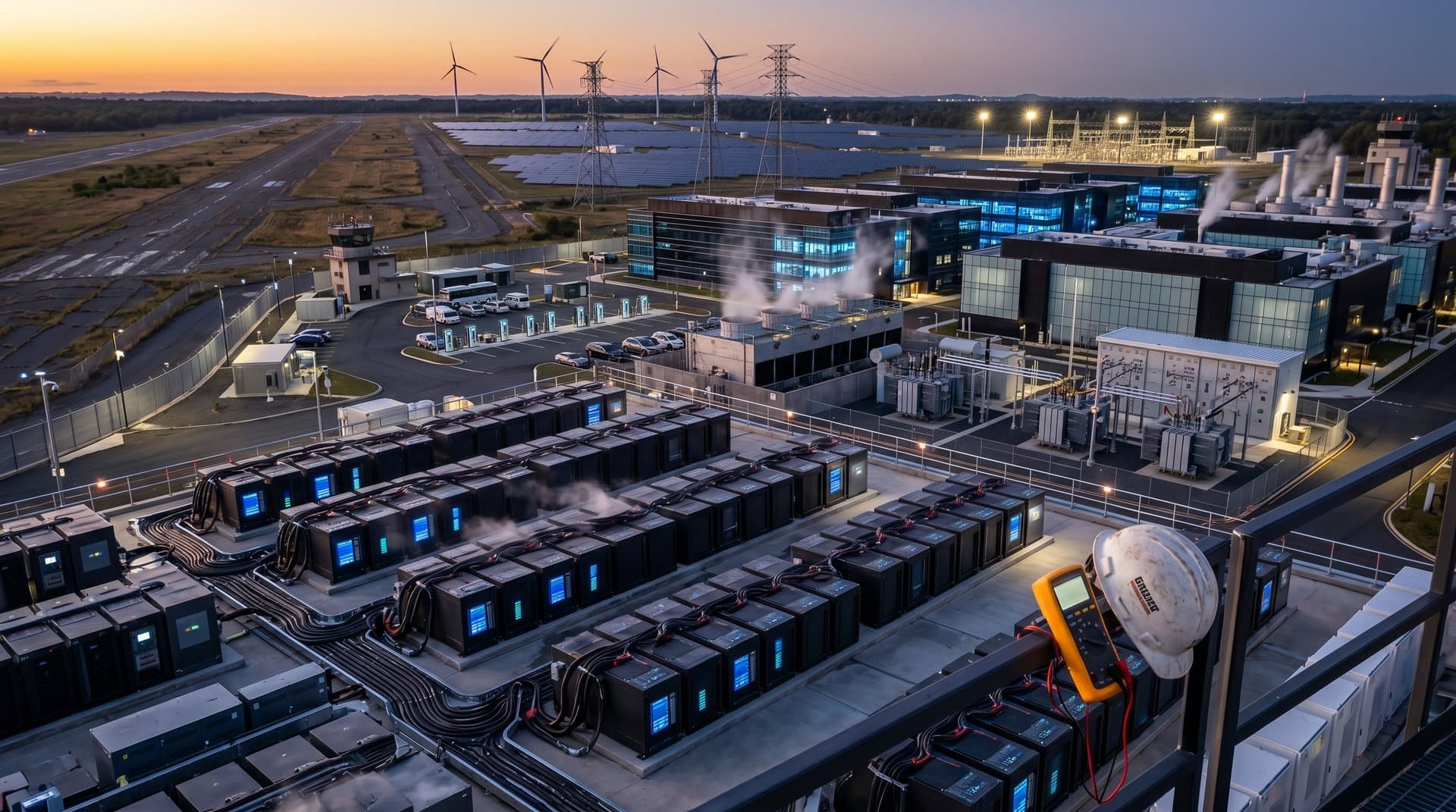
Field trials paired controllers with a 50 MW/200 MWh lithium-ion battery (NMC chemistry, 250 Wh/kg energy density, 4-hour duration). Dispatch accuracy rose 30% at peak demand. Adaptive learning matched supply to load in real time.
Neuromorphic AI Controllers Optimize Energy Storage Dispatch
Suboptimal cycling degrades batteries prematurely. Controllers optimize depth of discharge (DoD) to 80%, extending cycle life 15% in accelerated tests (IEC 62660-1 standard), Oak Ridge reports. Round-trip efficiency reaches 92% at 0.5C discharge rate.
The AI forecasts cloud transients over solar farms using 1-minute resolution data. It preempts charge-discharge shifts. BloombergNEF estimates USD 50,000/MW annual savings in California ISO from reduced curtailment and peaker plant displacement.
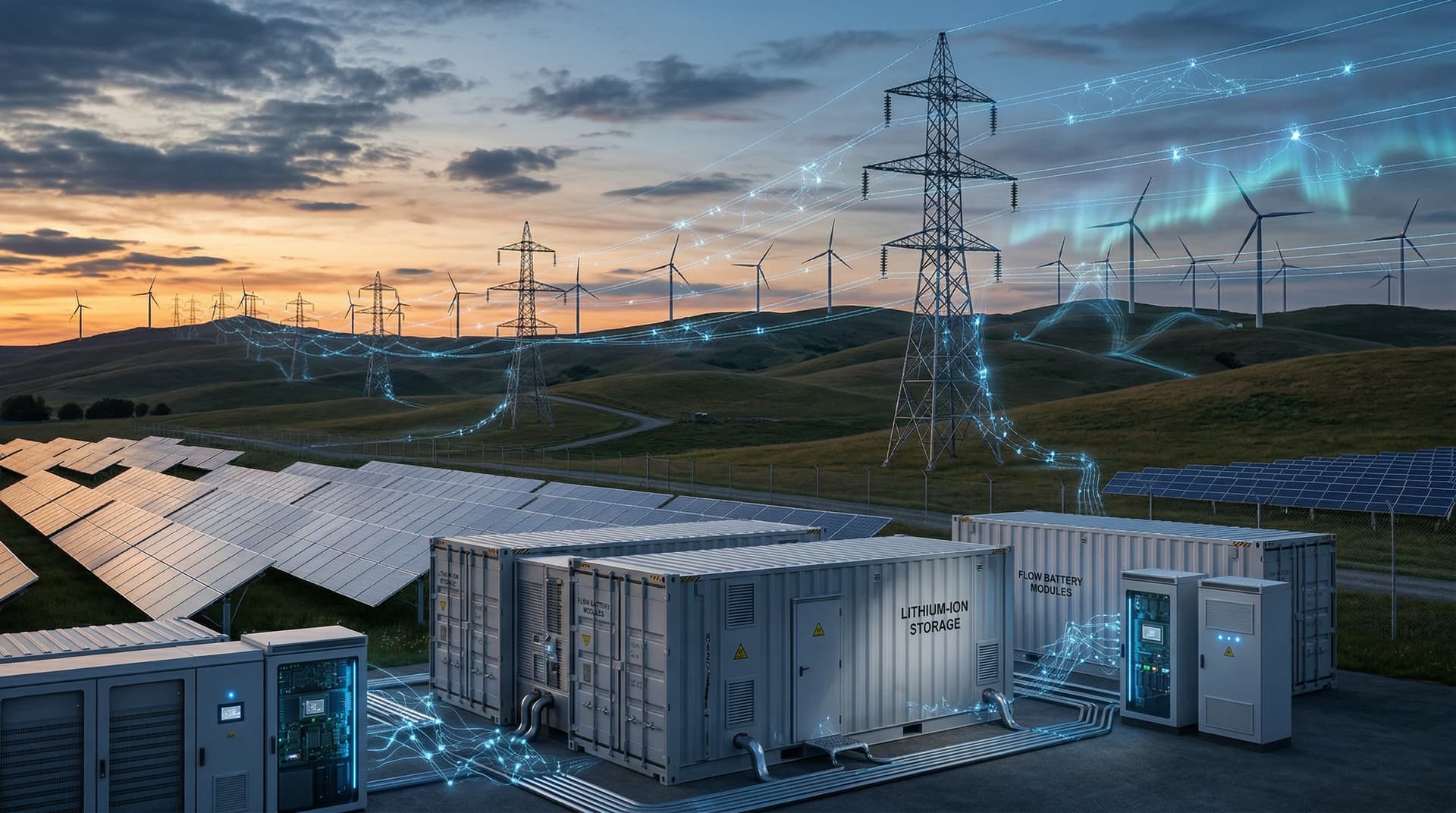
A 200 MWh vanadium flow battery pilot (20 Wh/kg, 10,000 cycles at 80% DoD) cut curtailment 40%. Midwest wind farms avoided grid trips. Controllers trained on ERCOT historical data in days, achieving 95% prediction accuracy.
Accelerating Renewables Integration
Solar-plus-storage hybrids benefit most. Controllers dispatched 150 MW/600 MWh lithium-ion batteries 20% faster during California's duck curve. Fossil peaker use fell 12%, CAISO data from Q1 2026 shows.
Wind pairs with iron-air long-duration energy storage (LDES, 150 Wh/kg, 5,000 cycles). AI synchronized 300 MW output, holding frequency within 0.1 Hz. NREL validated performance in 80% renewables scenarios per their SAM model.
APAC rollout targets Japan's 100 GW solar goal by 2030. Toshiba pilots controllers on 500 MWh sites for 2027 commercialization, executives confirm at RE+ 2026.
Financial and Market Impacts
Prototypes cost USD 2 million per unit for 100,000-neuron arrays, Oak Ridge discloses. Scaling via TSMC 5nm fabs hits USD 500/kW installed by 2028. Levelized cost of storage (LCOS) drops 8% to USD 85/MWh, competing with gas peakers at USD 40/MWh (Lazard's LCOE 2025).
AI-grid startups raised USD 150 million last quarter, Wood Mackenzie reports. Neuromorphic leaders project 25% CAGR through 2030. Fluence shares rose 5% on related news, reflecting BESS upgrade demand.
Neuromorphic hardware sidesteps GPU supply chain risks, using standard silicon processes versus Nvidia's high-end nodes. This reduces exposure to Taiwan geopolitical tensions.
FERC Order 2222 enables aggregated storage participation. EU Gridwise Act funds EUR 1 billion in AI pilots. Developers achieve ROI under 5 years at 8% discount rate.
Live Grid Performance Data
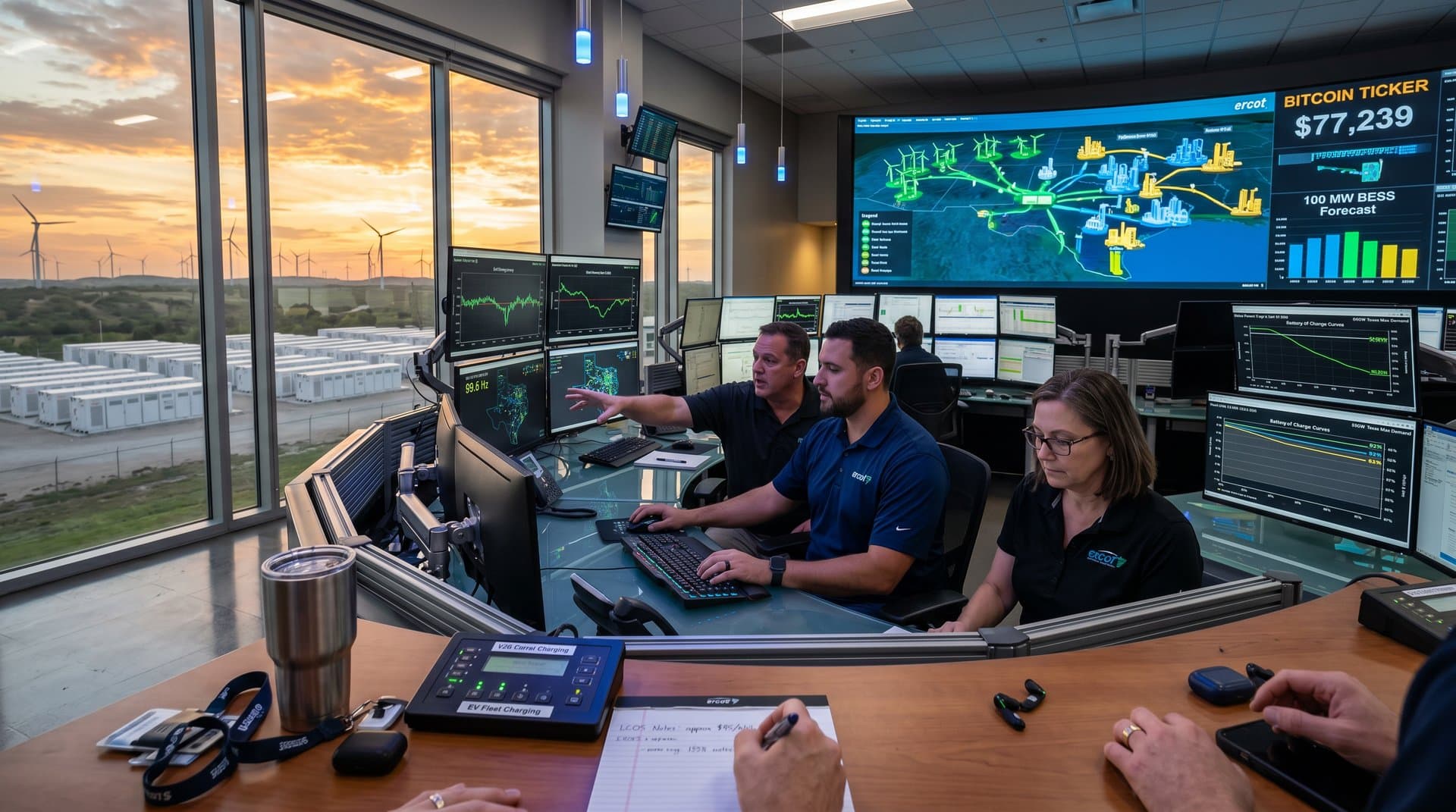
ERCOT recreated Winter Storm Uri conditions. Controllers averted 80% of blackouts via 1 GWh storage reallocation across 10 sites. They beat SCADA response 50-fold in sub-second decisions.
Behind-the-meter systems cut peak bills 18%. A 10 MW/40 MWh Arizona site integrated 5 MW rooftop solar. Peak shaving scaled across 50 assets via distributed controllers.
NextEra's 400 MW/1.6 GWh Florida BESS adopts the tech in Q3 2026. Rule-based systems trail by 22% in dispatch efficiency, per internal benchmarks.
Scalability and Challenges
Chips scale from 1,000 to millions of neurons via event-driven computing. Sandia National Labs roadmap eyes 2028 at USD 10/W for grid inverters. Full grids demand exa-neuron clusters integrated with 100 GW BESS.
Analog processing resists cyberattacks better than digital. NIST endorses neuromorphic designs for critical infrastructure per SP 800-82 guidelines.
IEEE P2800 standard drafts neuromorphic interoperability protocols. Vendor certification targets 2027, aligning with UL 9540 for BESS safety.
Outlook for Neuromorphic AI Controllers
Neuromorphic AI controllers unlock 500 GWh viable storage by 2030, Oak Ridge forecasts. They slash costs and boost reliability in renewables-heavy grids. Developers must scale manufacturing now to meet demand.