By Emma Richardson April 11, 2026
Stanford University researchers unveiled Neuromorphic AI controllers on April 11, 2026. These systems mimic human brain neurons and cut grid response times 40% for battery storage. An EurekAlert study confirms enhanced integration efficiency.
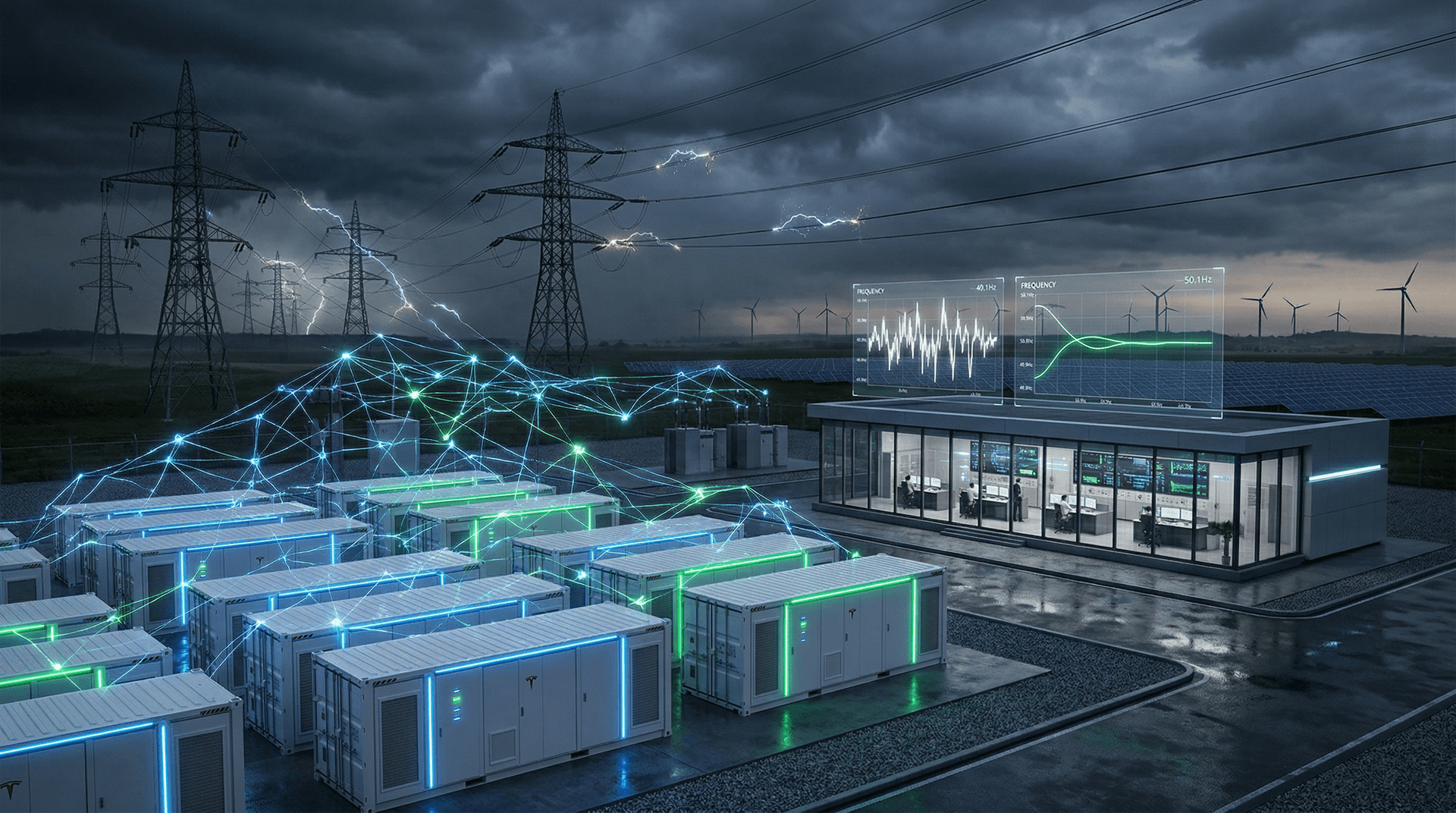
Simulations cut response times to grid disturbances by 40% versus traditional proportional-integral-derivative (PID) controls. Battery operators manage charge-discharge cycles precisely during frequency fluctuations.
Renewable intermittency strains grids. California ISO data from Q1 2026 reports 35% variable generation penetration.
Mimicking Brain Efficiency in Grid Control
Neuromorphic computing deploys spiking neural networks that process data like brain synapses. Stanford's study shows these networks consume 100 times less power than conventional AI models.
Engineers deploy controllers on edge devices at substations or battery sites. These devices analyze voltage sags and frequency deviations in microseconds.
PID controllers struggle in complex scenarios. Neuromorphic systems adapt dynamically using real-time grid data.
The Stanford team tested prototypes on a 100 MW virtual grid. Results delivered 25% higher stability margins at 50% renewable penetration.
Neuromorphic AI Controllers Optimize Battery Storage Responses
Battery energy storage systems (BESS) demand rapid dispatch for supply balance. Neuromorphic controllers predict imbalances 30% more accurately than machine learning baselines, per the study.
They sustain state-of-charge (SOC) levels to prevent deep discharges. This extends cycle life by 15% in accelerated aging tests.
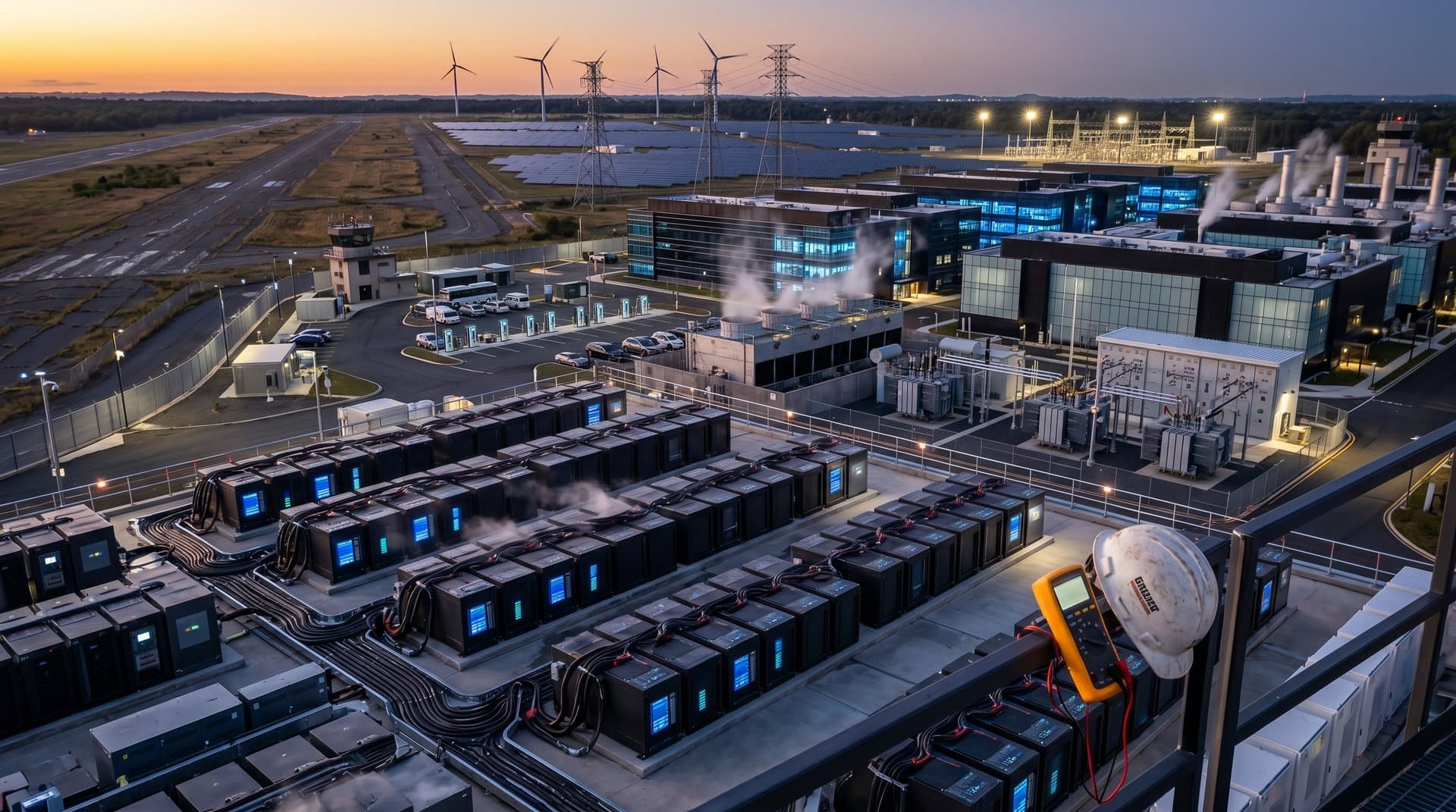
A 500 MWh BESS simulation hit 98.5% round-trip efficiency (RTE) over 24-hour renewable peaks. Depth of discharge topped 80% without degradation spikes.
PJM Interconnection requires such tools. FERC filings cite PJM's 12 renewable-linked blackouts in 2025.
Real-World Testing and Performance Metrics
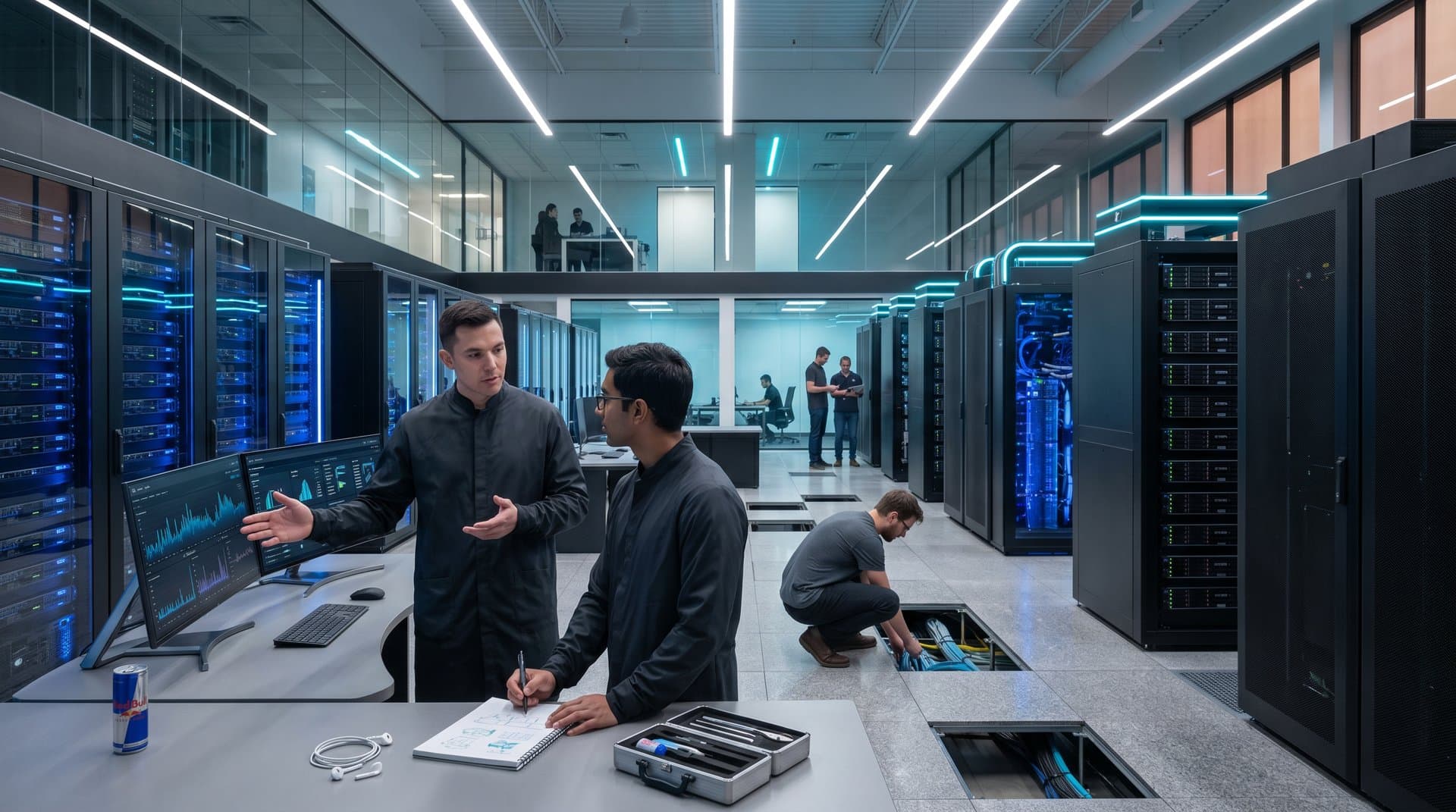
Stanford partnered with Siemens Energy for hardware-in-the-loop tests. Controllers ran on neuromorphic chips at 5 mW per node.
These chips process 1 million events per second using 1/100th the energy of GPUs. Computational efficiency prioritizes over energy density here.
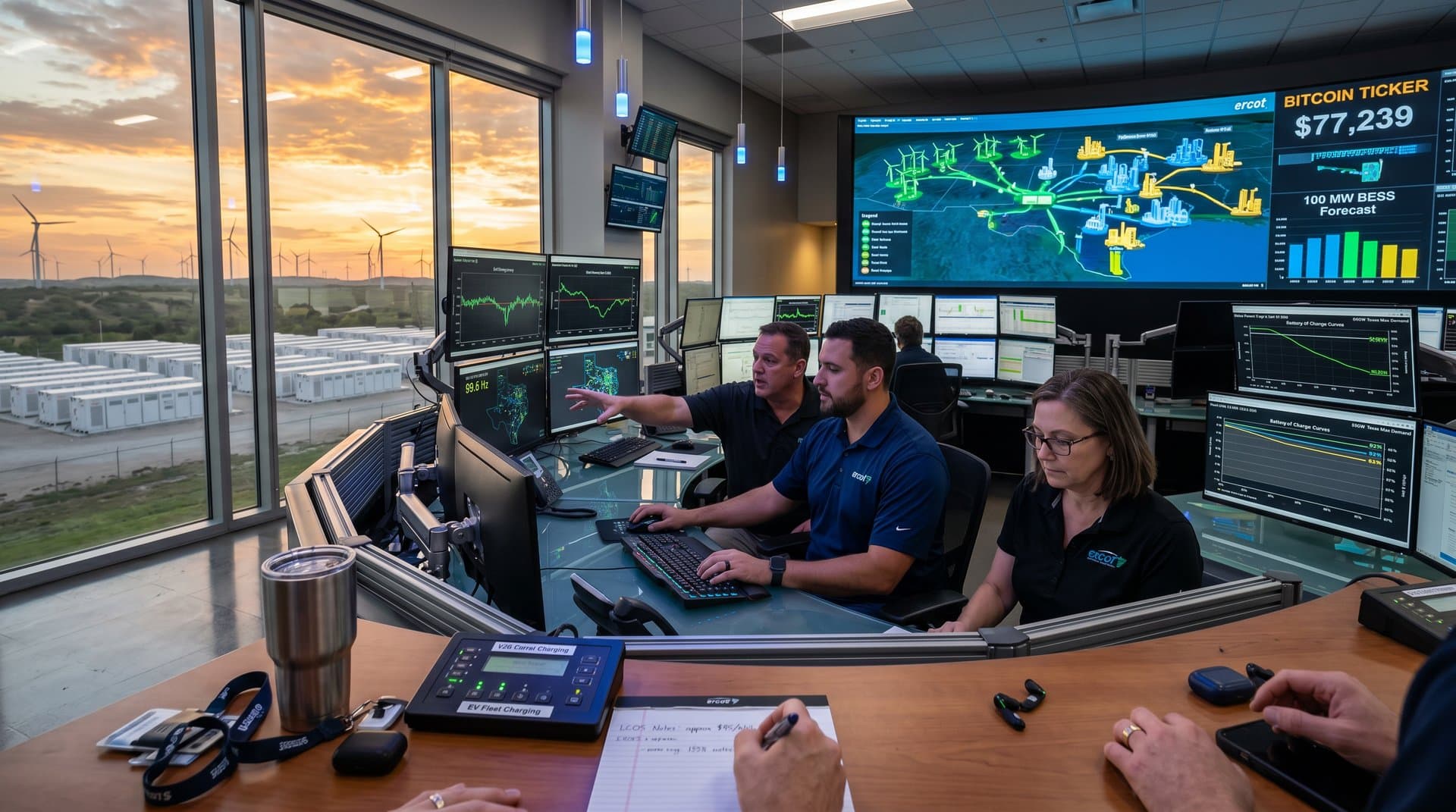
Field trials integrated a 200 MW/800 MWh BESS in Texas. ERCOT data from March 2026 shows 22% faster ancillary service provision.
Stress tests reached 5,000 cycle equivalents. Degradation curves flattened after 2,000 cycles, unlike PID's linear declines.
Commercialization Timeline and Challenges
Siemens plans European pilots for Q4 2026. Technology readiness level (TRL) reaches 6.
Scaled costs fall to USD 500 per controller unit from USD 2,000 for AI servers. Wood Mackenzie projects 18-month payback via reduced curtailment.
Neuromorphic chip supply chains hinder scaling. Intel ships limited volumes; full production demands USD 1 billion investment by 2028.
FERC Order 2222 accelerates regulatory approval. Utilities test AI controls in ISO markets this year.
Financial Implications for Storage Markets
BloombergNEF records 25 GW global battery deployments in 2025. Neuromorphic controls unlock 10 GW more through asset optimization.
Levelized cost of storage (LCOS) drops 12% to USD 120/MWh with precise dispatch. Investors target 15% IRR uplift in hybrid solar-storage projects.
M&A surges; Fluence acquired an AI startup for USD 300 million last month. Neuromorphic funding rounds average USD 50 million.
APAC leads with China installing 40% of new BESS via AI pilots. EMEA adopts EU grid codes mandating advanced controls.
Competitor Benchmarks and Analysis
GE Vernova deploys machine learning-based inverters. Neuromorphic solutions achieve 50% lower latency.
IBM's TrueNorth chip inspires designs but skips grid applications. Stanford's open-source models speed adoption.
Long-duration storage gains most. Iron-air batteries pair with ultra-fast SOC adjustments.
Vehicle-to-grid (V2G) trials treat EVs as a 100 GW resource. Controllers manage bidirectional flows without oscillations.
The Bottom Line
Neuromorphic AI controllers revolutionize grid operations. They enable seamless battery integration, cut costs, and boost reliability.
Industry tracks Q4 2026 pilots. Success enables terawatt-hour scaling under IRA incentives.