- Marvell negotiates 2 custom AI chips with Google (Reuters).
- Data centers double electricity use to 2-2.6% by 2026 (IEA).
- Global BESS pipeline hits 100 GW amid AI boom (BNEF).
Marvell-Google AI chip talks advance. Marvell negotiates two custom AI chips for Google data centers, Reuters reports on April 16, 2024. Marvell shares rose 5%. AI compute surges strain grids, spurring 100 GW global BESS pipelines (BloombergNEF).
Google deploys these chips in tensor processing units (TPUs). Data centers used 1-1.3% of global electricity in 2022, per International Energy Agency (IEA). Projections show doubling to 2-2.6% by 2026.
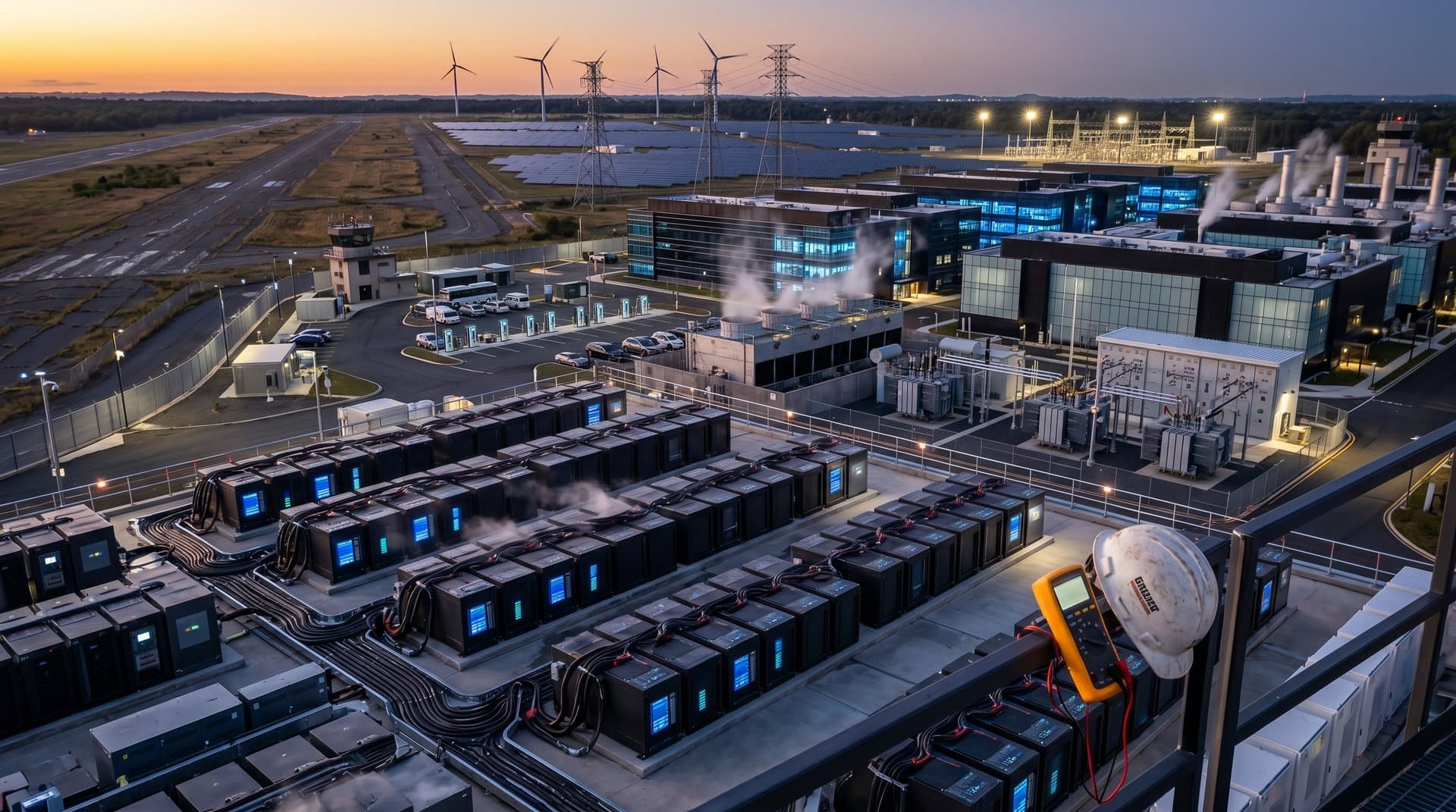
Renewables supply over 40% of data center power through power purchase agreements (PPAs). Intermittency demands BESS. Lithium-ion BESS achieves 85-90% round-trip efficiency (RTE) at 4-hour duration, per National Renewable Energy Laboratory (NREL).
AI Chips Double Data Center Power Density to 100 MW
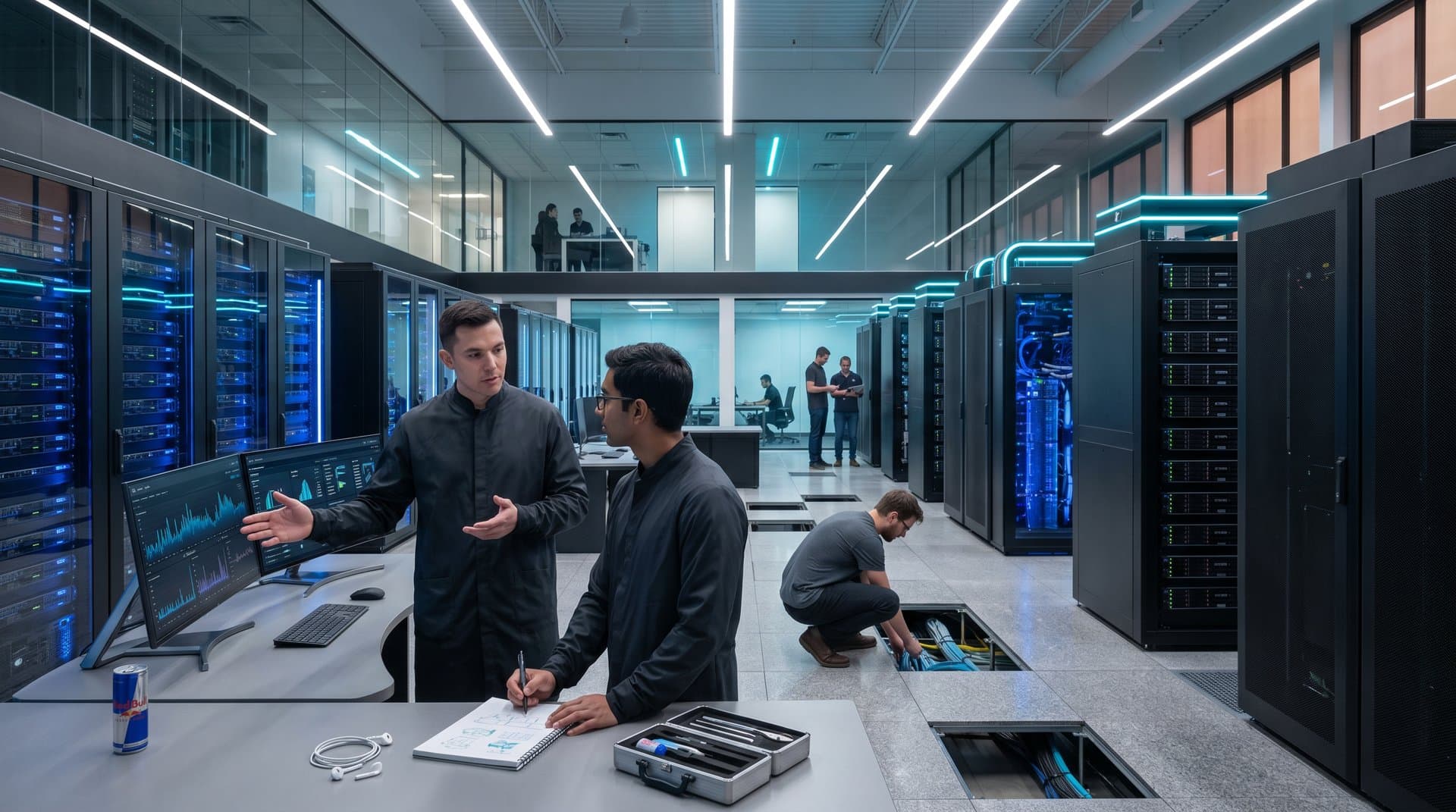
New AI chip generations double transistors. They double performance-per-watt but raise cluster power to 100 MW+. Google scales TPU pods toward gigawatt-scale facilities, per Google's efficiency page.
Hyperscalers deploy liquid immersion cooling. It cuts energy use 30% versus air cooling, Goldman Sachs analyzes. Marvell's custom silicon optimizes AI inference at C/2 discharge rates.
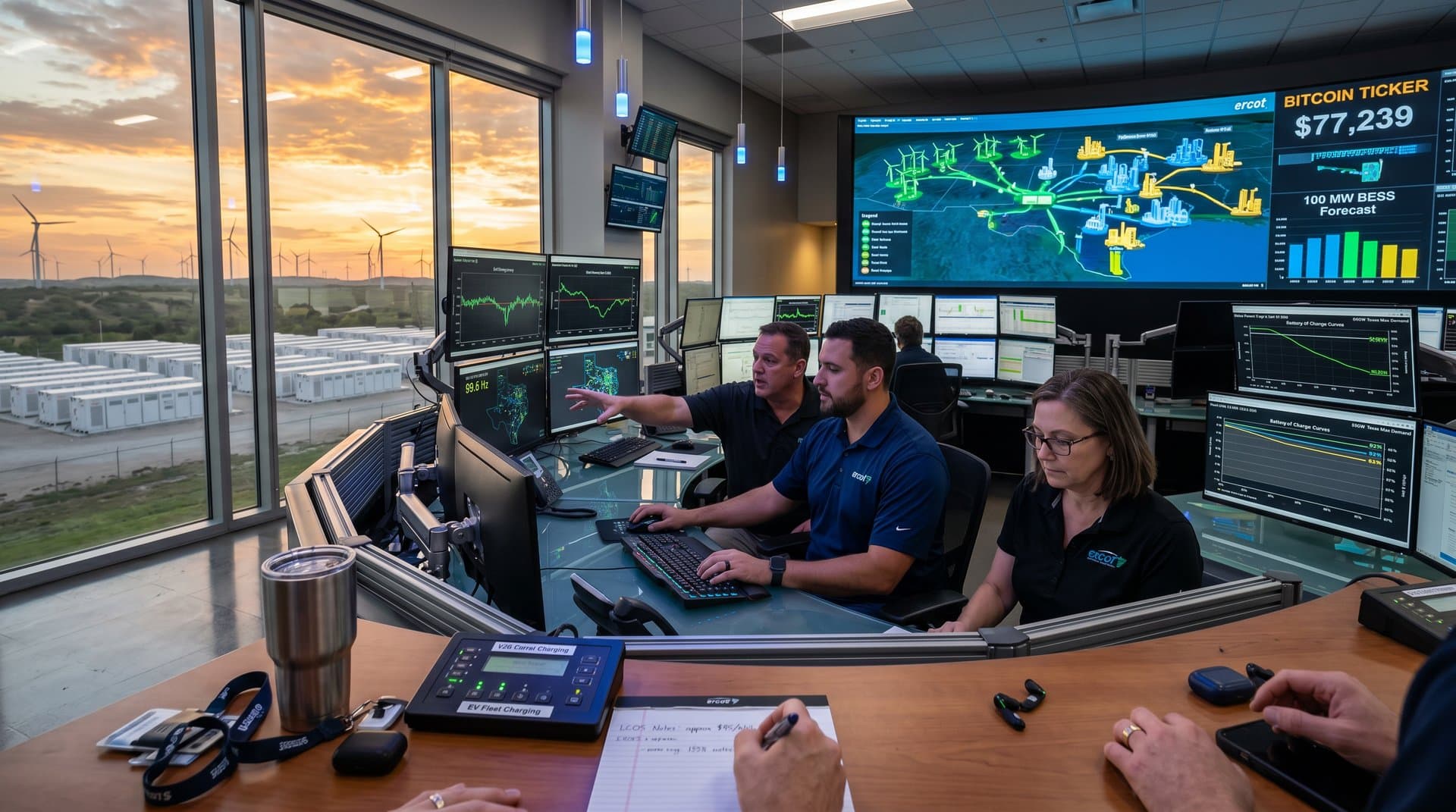
EV charging peaks overlap data center evening loads. Both compete for grid capacity. Operators deploy 2-4 hour BESS to buffer peaks.
Renewables Grids Rely on BESS for 24/7 Load Matching
Solar peaks midday. Data centers peak evenings. BESS shifts over 2 GWh daily. It matches load curves at 90% depth-of-discharge (DoD), NREL data shows.
Flow batteries support 8-12 hour duration. Iron-air batteries target 100 hours at 100 kWh/m³ energy density. Google pursues 24/7 carbon-free energy with hybrids like 500 MW solar + 2 GWh BESS.
Vehicle-to-grid (V2G) from EV fleets adds 1-5 GW virtual capacity. Second-life Nissan Leaf packs cut BESS costs 40%, per BloombergNEF.
BESS at 20% grid penetration reduces renewables curtailment 25%, NREL finds.
Marvell-Google AI Chip Talks Accelerate 100 GW BESS Builds
AI advances double data center capacity every 18 months, Goldman Sachs predicts. FERC Order 2023 shortens interconnection queues 50% for hybrid projects.
Developers pair 1 GW wind with 4 GWh BESS. Asia-Pacific deploys 40 GW BESS. The US targets 20 GW by 2030 (BloombergNEF).
Reuters sources confirm the talks. Levelized cost of storage (LCOS) falls to USD 150/MWh for BESS, below gas peaker plants at USD 200/MWh (BloombergNEF).
Google campuses test EV bidirectional chargers for V2G pilots.
EV Batteries Repurpose for Grid-Scale Storage Efficiency
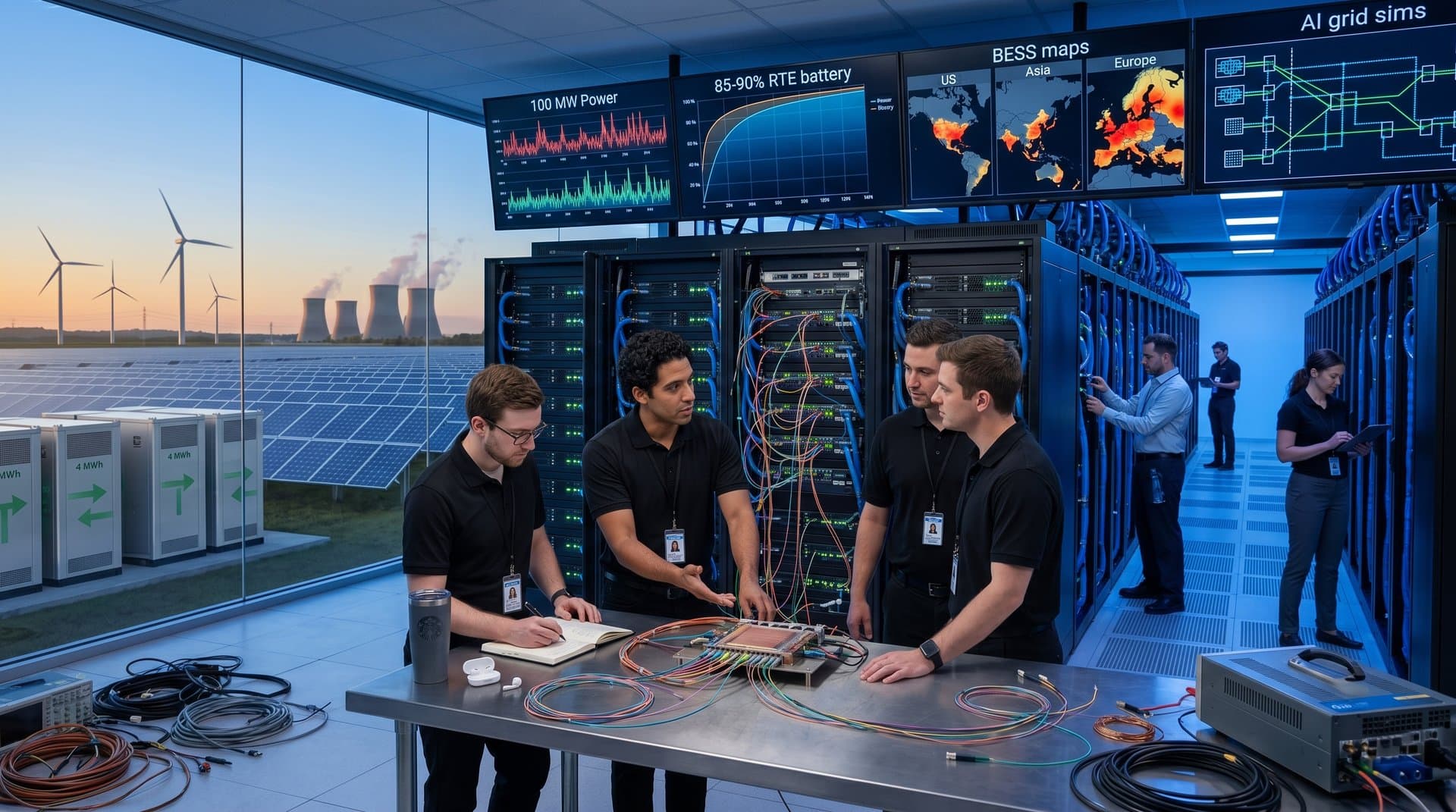
EV cells reach 250 Wh/kg energy density. Grid BESS scales to 200 Wh/kg in 4 MWh containers. Second-life modules retain 70% capacity after 200,000 miles.
GM and Nissan supply over 10 GWh annually for stationary BESS. Data centers co-locate near depots to cut transmission losses 10-15%.
Marvell AI chips process real-time grid signals. They optimize BESS dispatch algorithms.
Google commits to 24/7 carbon-free energy by 2030 using storage, per its sustainability page. Global BESS pipelines now exceed 100 GW amid Marvell-Google AI chip talks, with potential to reach 1 TW (BloombergNEF). Developers compress timelines as hyperscaler demand surges.
Frequently Asked Questions
What are Marvell-Google AI chip talks?
Reuters reports Marvell negotiating two custom AI chips for Google data centers. Shares rose 5% on April 16, 2024.
How do Marvell-Google AI chip talks impact data center power demands?
Denser AI chips double power to 100 MW+ per cluster. Renewables + BESS counter intermittency; EV peaks add grid strain.
Why is grid-scale battery storage key for renewables grids?
Lithium-ion BESS delivers 85-90% RTE (NREL), shifting solar to peaks. Hybrids like 500 MW solar + 2 GWh match 24/7 data center loads.
What EV technologies support data center grid stability?
V2G unlocks 1-5 GW from fleets; second-life packs cut costs 40% (BNEF). Bidirectional chargers turn EVs into distributed BESS.