- Marvell and Google negotiate two custom AI chips for data centers.
- AI drives 160% increase in data center power demand, Goldman Sachs estimates.
- Data centers projected to use 3% of global electricity by 2026, IEA states.
Marvell Technology negotiates two custom AI chips with Google in the Marvell-Google AI chip deal, Reuters reports on April 18, 2024. The accelerators target data center workloads. Goldman Sachs forecasts 160% power demand growth over five years from AI expansion.
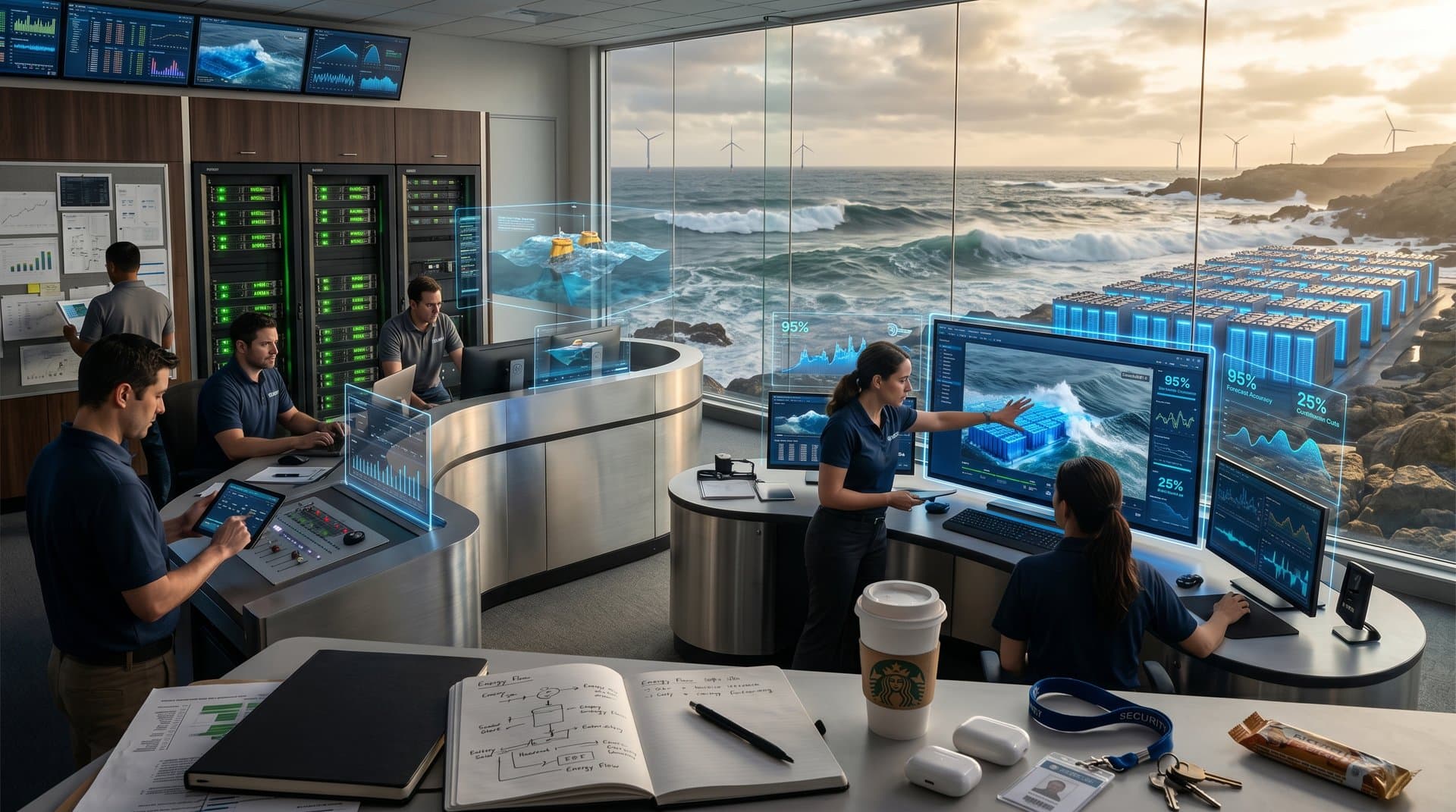
Hyperscalers like Google expand compute capacity rapidly. This strains grids with high solar and wind penetration. Energy storage provides millisecond response for stability.
Marvell-Google AI Chip Deal Specifications
Marvell draws on its ASIC and networking expertise for the chips. One accelerator optimizes Gemini model training in large clusters. The other handles edge inference tasks.
Google diversifies beyond Nvidia GPUs and in-house TPUs. Production ramps at APAC foundries by late 2026, per Reuters. Custom ASICs deliver 20-30% higher performance per watt than standard GPUs under full load.
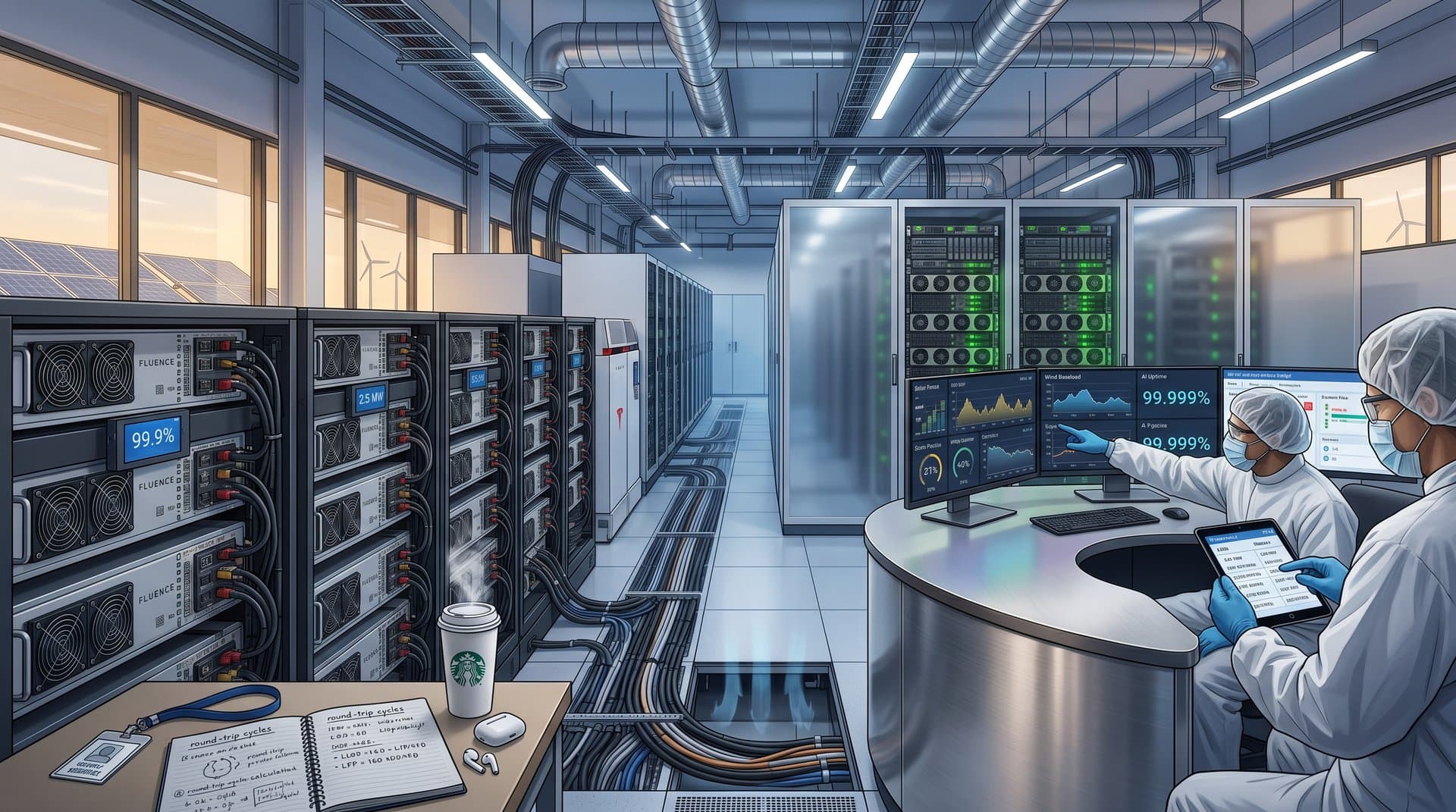
Data centers operate at constant megawatt-scale loads. Lithium-ion batteries offer 85-90% round-trip efficiency (RTE) at 0.5C discharge rates, per NREL testing standards.
AI Infrastructure Power Demands
AI training racks consume 500-1000 kW each. Goldman Sachs projects data center power doubling to 8% of US electricity by 2030. Cooling systems claim 40-50% of total energy.
Google's facilities match small cities' 100-500 MW draws. Denser chips increase heat density to 50-100 kW per rack. PJM Interconnection reports 50 GW queue backlogs for data centers.
Solar curtailment hits 5-10% in California without storage. Long-duration energy storage (LDES) like Form Energy's iron-air batteries provide 100-hour discharge at 150 Wh/kg energy density.
Grid Stability and Energy Storage Role
NERC reliability standards mandate 15-minute reserves. AI loads demand steady baseload. Batteries deliver synthetic inertia and primary frequency response in under 100 ms.
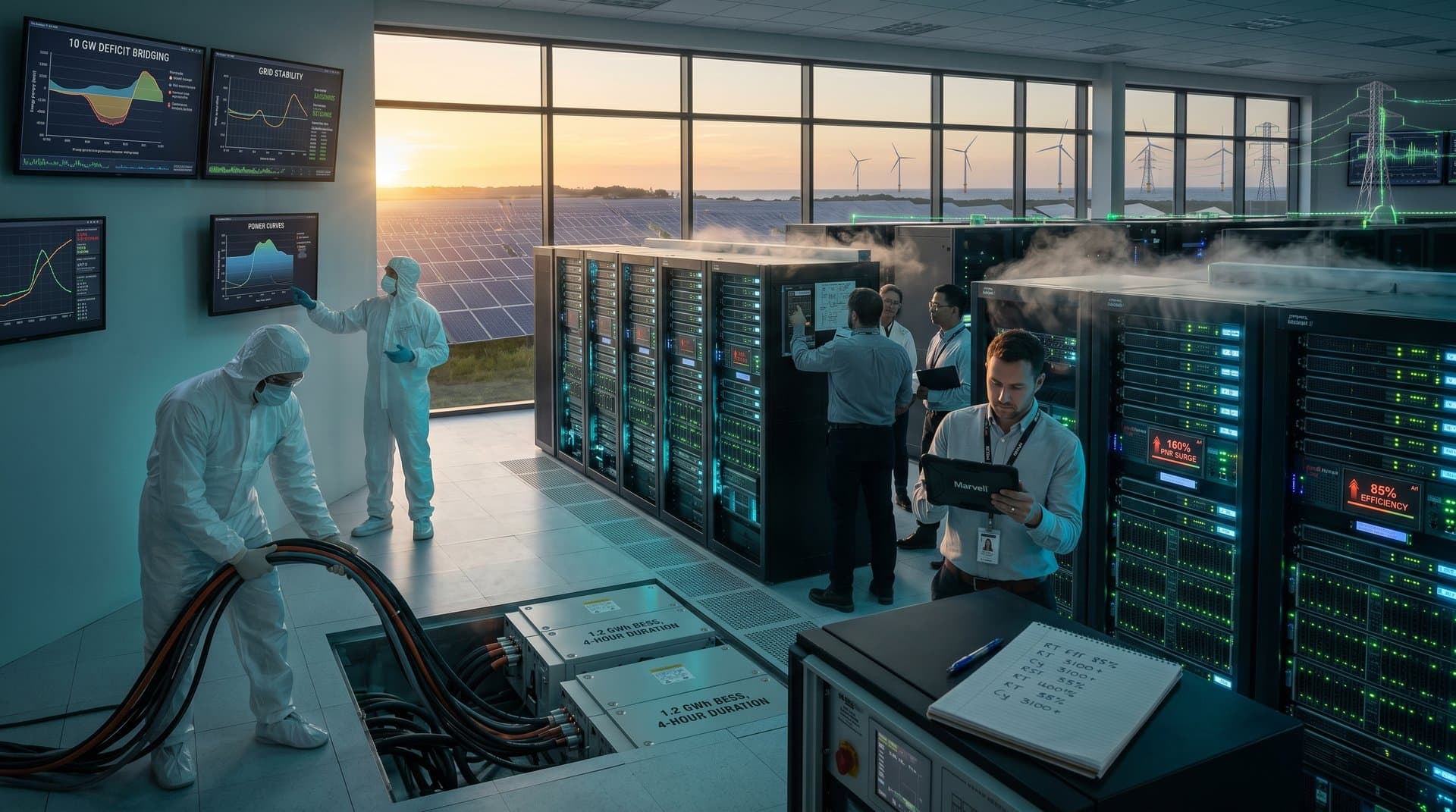
Texas ERCOT sees 25 GW peak solar. Duck curves deepen to 10 GW deficits. IEA forecasts data centers consuming 3% of global electricity by 2026, up from 1-2% today.
Fluence Energy deployed a 459 MWh lithium-ion BESS for a hyperscaler in 2023, stacking frequency regulation and arbitrage revenues at USD 200/kW-year.
Solar and Wind Integration with Storage
Hyperscalers sign GW-scale solar and wind PPAs. Google matches 100% grid consumption with renewables via 24/7 carbon-free energy matching, per its sustainability report.
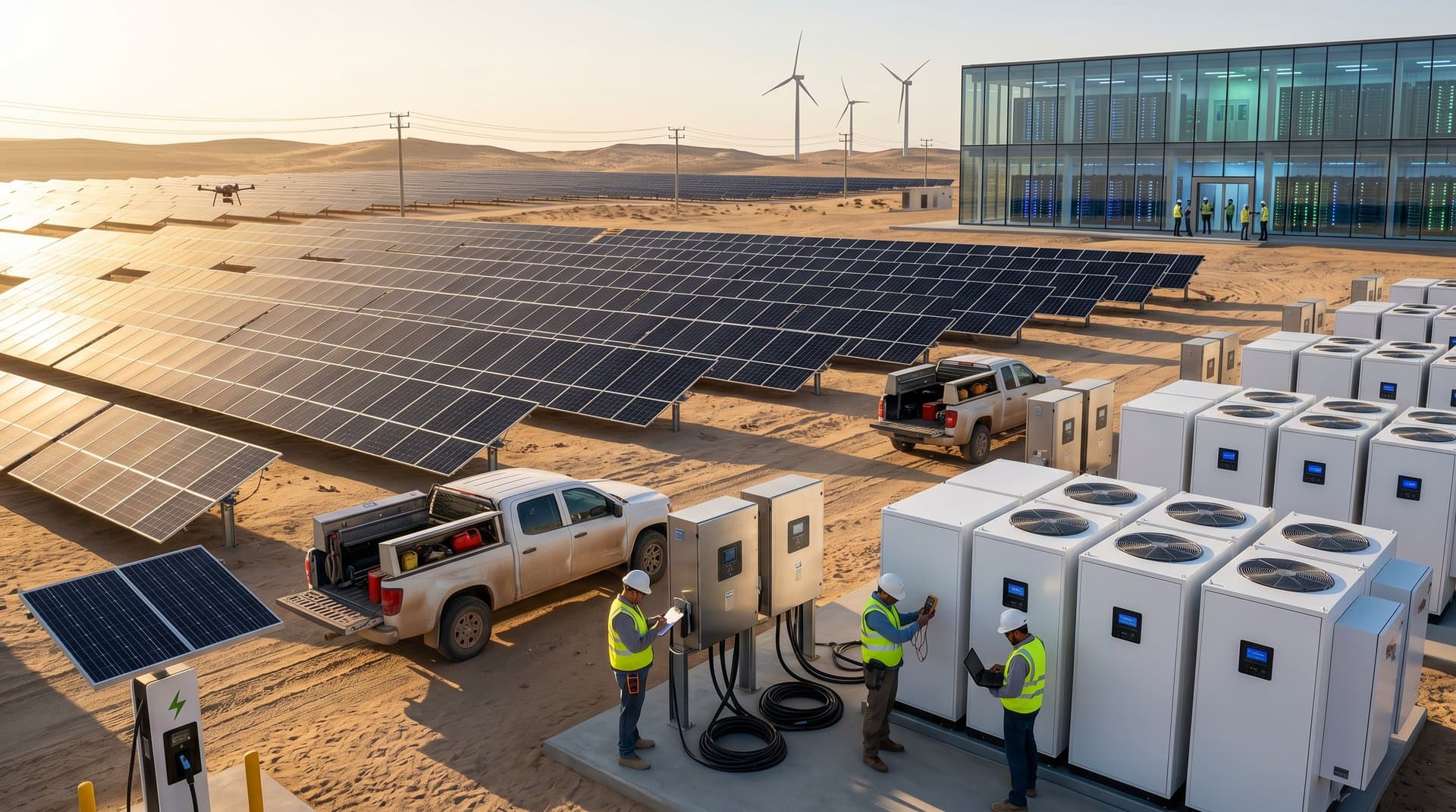
Storage bridges 4-8 hour intermittency gaps. NextEra Energy pairs 300 MW solar with 1.2 GWh/4-hour lithium-ion at USD 150/kWh installed cost, post-IRA incentives.
Tesla Megapack systems achieve 3000+ cycles at 80% depth-of-discharge (DoD), per IEC 62619 standards. Co-location reduces transmission losses by 5-10%.
FERC Order 2222 enables storage in wholesale markets. Utilities like PG&E procure 5 GW by 2030.
Policy Drivers for Storage Hybrids
US Inflation Reduction Act (IRA) offers USD 35/kWh production tax credits for storage. New York mandates 6 GW renewables-plus-storage by 2030 under Climate Leadership Act.
Illinois procures 5.2 GW via Long-Term Resource Adequacy Initiative. Orsted closed 1.1 GW offshore wind with 400 MWh storage hybrid in 2024.
AES Corporation finances 1 GW solar-plus-storage for Microsoft data centers at 4-hour duration.
FERC Order 2023 accelerates interconnection queues to 18 months for hybrids.
Economic Benefits for Storage
Energy storage costs fell 89% since 2010 to USD 132/kWh, per BNEF. AI-driven demand boosts utilization to 70-80% capacity factors.
Revenues blend energy arbitrage (USD 50/MWh spread), capacity (USD 10/kW-month), and ancillary services (USD 15/kW-year).
IEA projects 1 TWh global BESS deployments by 2030.
Outlook: Marvell-Google AI Chip Deal Synergy
The Marvell-Google AI chip deal accelerates hyperscaler capex to USD 100B annually. Solar-wind-storage hybrids scale to meet 50 GW new data center loads.
LDES technologies like zinc-bromine (200+ cycles at 70 Wh/kg) complement lithium-ion. V2G pilots aggregate 1 GW EV capacity for grid support.
Energy storage firms renewables, ensuring grid stability as AI compute grows.
Frequently Asked Questions
What is the Marvell-Google AI chip deal?
Marvell Technology is in talks with Google to co-develop two specialized AI chips for data center use, per Reuters. These target enhanced training and inference performance. The partnership diversifies Google's silicon supply.
How does Marvell-Google AI chip deal impact data center power?
Advanced AI chips increase compute density and sustained power draws in data centers. Goldman Sachs projects a 160% rise in demand over five years from AI expansion. Cooling adds significant load.
Why does energy storage matter for grid stability amid AI growth?
Storage balances constant data center loads against variable solar and wind output. It provides frequency regulation and peak shaving services. Utilities deploy it to meet NERC standards.
How do solar and wind support data centers with energy storage?
Hyperscalers sign PPAs for solar and wind paired with storage for firm power. Google aims for 24/7 carbon-free matching. Hybrids mitigate intermittency for reliable AI operations.