- Goldman Sachs forecasts 160% data center power growth by 2030.
- 100 MW solar + 200 MWh storage hits 87% RTE at 0.5C.
- Lithium-ion LCOS drops to USD 150/MWh by 2030 per BNEF.
By Priya Mensah
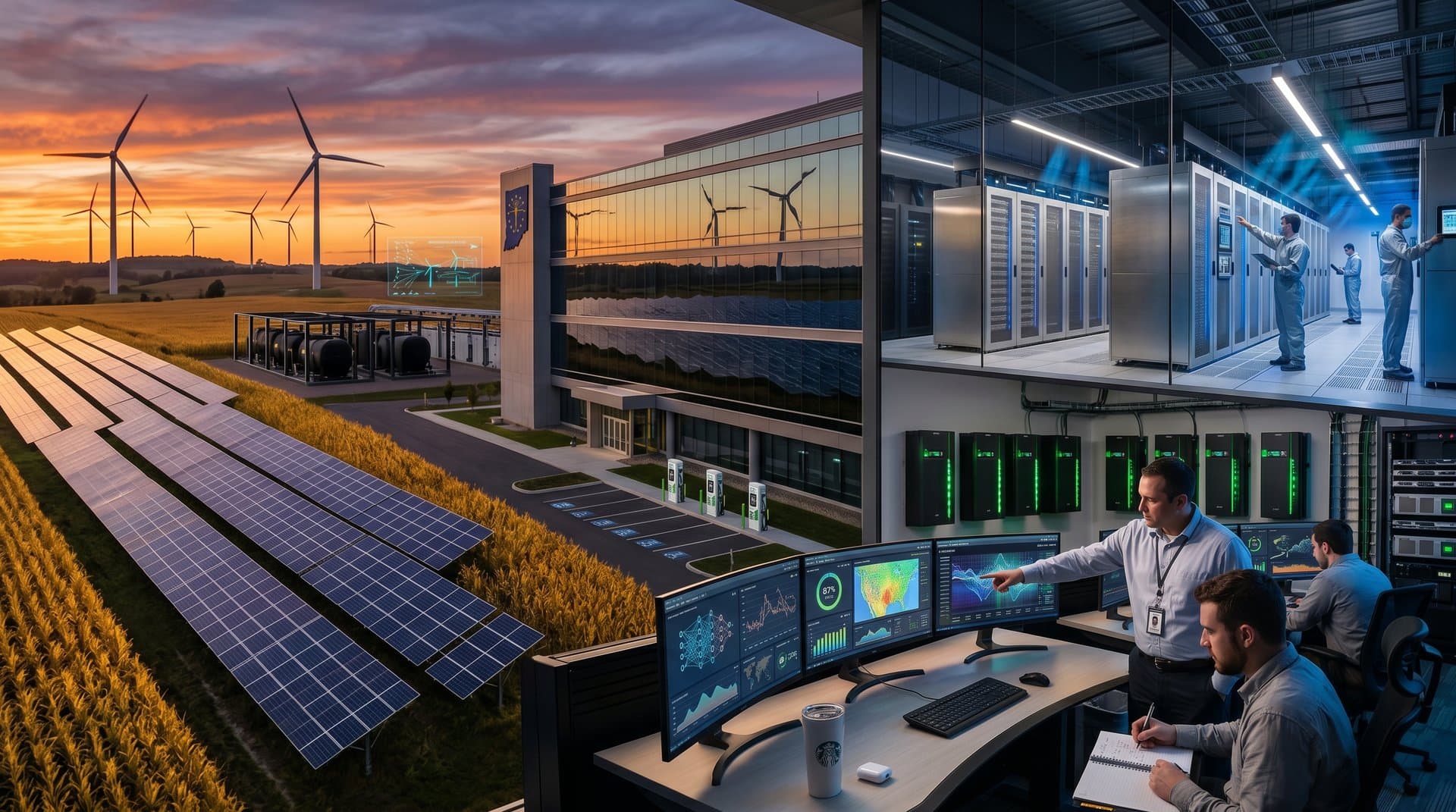
Senator Mike Braun launched the Indiana Human-Centered AI Initiative to promote ethical AI, workforce training, and data center infrastructure. The initiative projects 160% power demand growth from data centers through 2030, per Goldman Sachs analysis (Goldman Sachs).
Hyperscalers including Google and Microsoft expand facilities in Indiana. Battery storage stabilizes solar and wind integration on the MISO grid amid surging loads, according to Fox 59 (Fox 59).
Indiana Human-Centered AI Initiative Strains MISO Grid as Renewables Hit 15%
AI data centers consume power like small cities. MISO's interconnection queue exceeds 200 GW of requests, including hyperscaler projects, per MISO's latest filings. Renewables now supply over 15% of Indiana's capacity, according to U.S. Energy Information Administration (EIA) 2023 data.
Lithium-ion batteries achieve 250 Wh/kg gravimetric energy density, 700 Wh/L volumetric density, and 5,000 cycles at 80% depth of discharge (DoD), per National Renewable Energy Laboratory (NREL) benchmarks. These batteries provide frequency regulation on MISO markets.
Flow batteries deliver 40 Wh/kg, 45 Wh/L, and exceed 10,000 cycles with 8-hour discharge. Behind-the-meter systems discharge during solar peaks and recharge off-peak, cutting transmission upgrades as AI clusters grow.
Utility-Scale Hybrids Pair 100 MW Solar with 200 MWh Storage
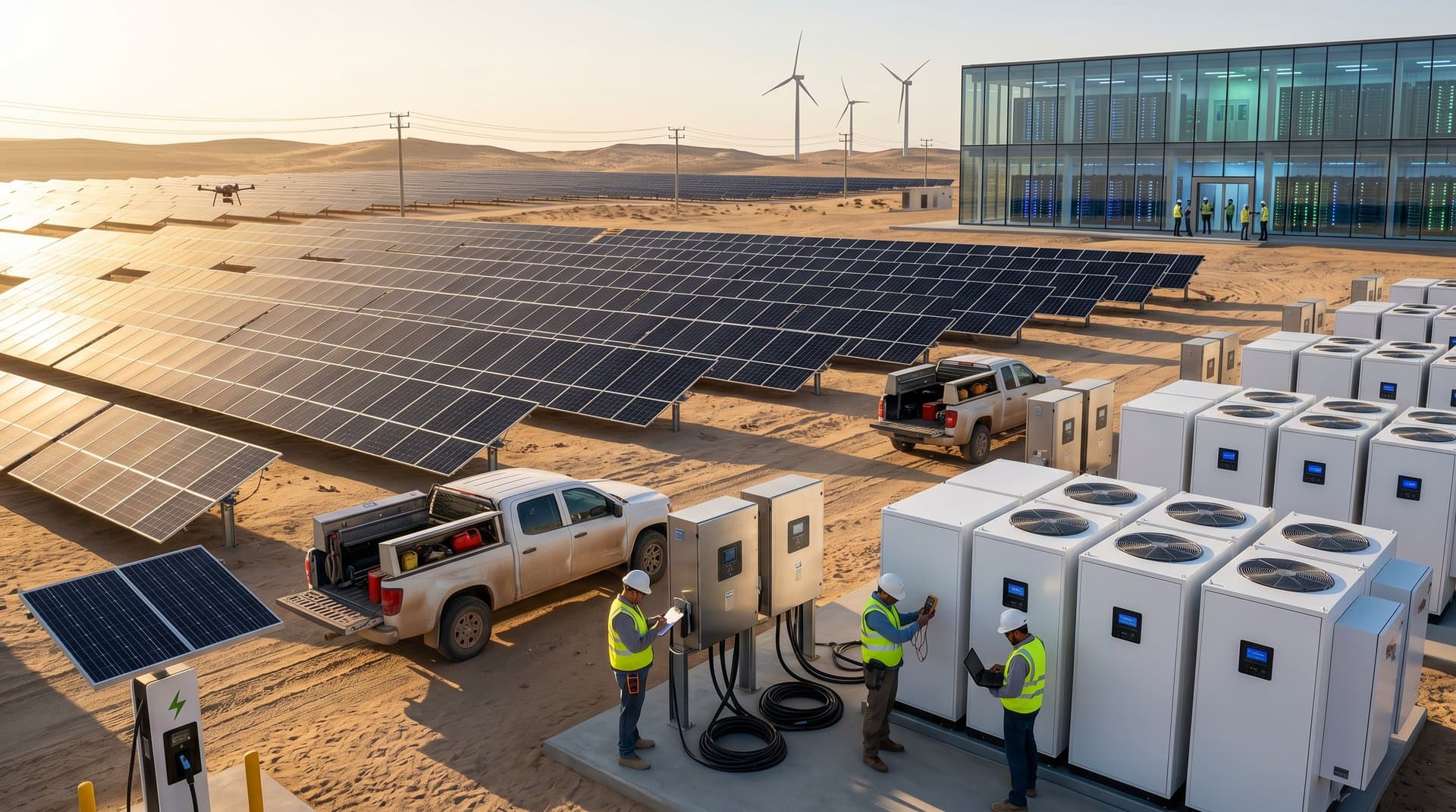
Developers lock in power purchase agreements (PPAs) for utility-scale hybrids serving data centers. A standard configuration pairs 100 MW solar PV with 200 MWh lithium-ion storage, reaching 87% round-trip efficiency (RTE) at 0.5C discharge, from NREL's System Advisor Model (SAM) simulations.
Solar curtailment falls 30% via storage dispatch. Northern Indiana wind farms average 300 MW capacity and add multi-hour flexibility. Long-duration energy storage (LDES) demand rises for 10+ hour profiles to match AI loads.
Iron-air batteries offer 150 Wh/kg, 250 Wh/L, and 5,000 cycles at 100% DoD, targeting levelized cost of storage (LCOS) at USD 120/MWh, per Form Energy specs validated by third-party tests.
Solid-State Batteries and V2G Tackle AI Load Profiles
Solid-state batteries reach 500 Wh/kg and 1,000 Wh/L with over 5,000 cycles. QuantumScape targets pilot production in 2026 for grid-scale use.
Vehicle-to-grid (V2G) leverages EV packs at 200 Wh/kg, 500 Wh/L, and 3,000 remaining cycles. Indiana's Stellantis plants deliver modules under USD 100/kWh. The International Energy Agency (IEA) notes AI optimizes grid operations (IEA).
Utility Dive confirms storage eases data center queues (Utility Dive).
Supply Chain Pressures and IRA Credits Accelerate Deployment
Lithium prices hit USD 15,000/tonne in 2024, per Benchmark Mineral Intelligence. Vanadium limits flow batteries. The Inflation Reduction Act (IRA) offers 30-50% investment tax credits (ITC) for domestic solar-plus-storage.
Indiana speeds permitting for renewables-plus-storage hybrids. MISO prioritizes co-located systems. Lithium-ion hits Technology Readiness Level (TRL) 9.
BloombergNEF (BNEF) projects 4-hour lithium-ion LCOS at USD 150/MWh by 2030, with 20% yearly cost cuts from scale. This undercuts MISO peaker costs averaging USD 200/MWh.
Domestic cathode factories ramp up via IRA funds. Geopolitics raise nickel and cobalt prices from Indonesia and DRC. U.S. policies cut China reliance (70% global refining).
National Trends Boost Indiana Human-Centered AI Initiative
Indiana joins Texas and Virginia in AI races. States build grid resilience for hyperscaler jobs. MISO auctions and hyperscaler RFPs speed batteries.
Solar-wind-storage hybrids set the standard. BNEF sees 50 GW U.S. storage by 2030 linked to data centers.
The Indiana Human-Centered AI Initiative ensures grid stability via advanced batteries, cementing the state as an AI energy leader.
Frequently Asked Questions
What is the Indiana Human-Centered AI Initiative?
Senator Mike Braun's program advances ethical AI through training and data center infrastructure, per Fox 59.
How does the Indiana Human-Centered AI Initiative affect power grids?
It spurs 160% demand growth per Goldman Sachs. Batteries mitigate solar-wind variability on MISO.
Why pair storage with solar-wind for AI data centers?
Boosts RTE to 87%, reduces curtailment 30%. LCOS reaches USD 150/MWh for competitive PPAs.
What batteries suit Indiana's AI grid demands?
Lithium-ion (250 Wh/kg), iron-air (150 Wh/kg), solid-state (500 Wh/kg), plus V2G under USD 100/kWh.