- Goldman Sachs forecasts 160% rise in US data center power demand by 2030.
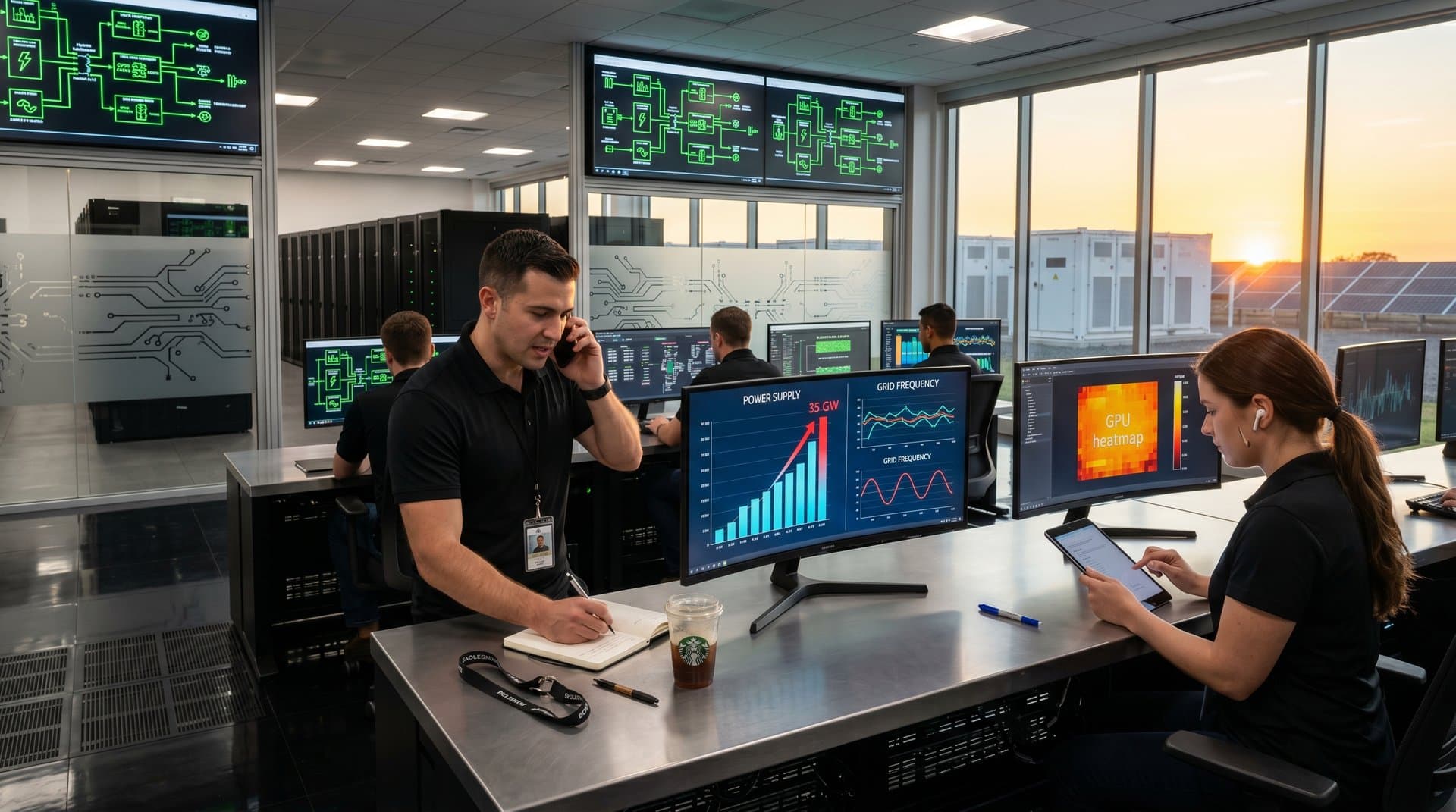
- BloombergNEF predicts US data center power triples to 35 GW by 2028.
- Battery storage deploys at 20 GW annually, outpacing new gas generation (EIA).
Grid storage deployments accelerate. Hyperscalers' Q1 2024 earnings reveal AI data centers will nearly triple US power demand to 35 GW by 2028, per BloombergNEF via Reuters (April 9, 2024). Microsoft, Alphabet, and Amazon beat AI cloud revenue targets and raised data center capex over 50% year-on-year.
Executives cite power constraints delaying expansions. Reuters reports hyperscalers like Microsoft and Google pursue small modular reactors (SMRs) plus grid storage (October 15, 2024). Fast-ramping batteries deliver sub-minute response times.
Lithium-ion systems hit 92% round-trip efficiency at C/4 discharge under IEC 62619 (NREL, 2023). Fluence Energy commissioned 1.2 GWh in Texas (Q3 2024). Tesla's 1 GWh Megapack clusters stabilize California grids.
Hyperscalers' Q1 Earnings Ignite Grid Storage Rush
Microsoft's Azure grew 31% year-on-year. Google Cloud expanded 28%. AWS rose 17% on AI workloads (company filings, April 2024). Combined capex reached USD 50 billion for gigawatt-scale GPU clusters.
Goldman Sachs projects a 160% rise in US data center power demand by 2030 (Reuters, March 11, 2024). Transmission queues exceed five years in PJM and ERCOT (FERC data, 2024).
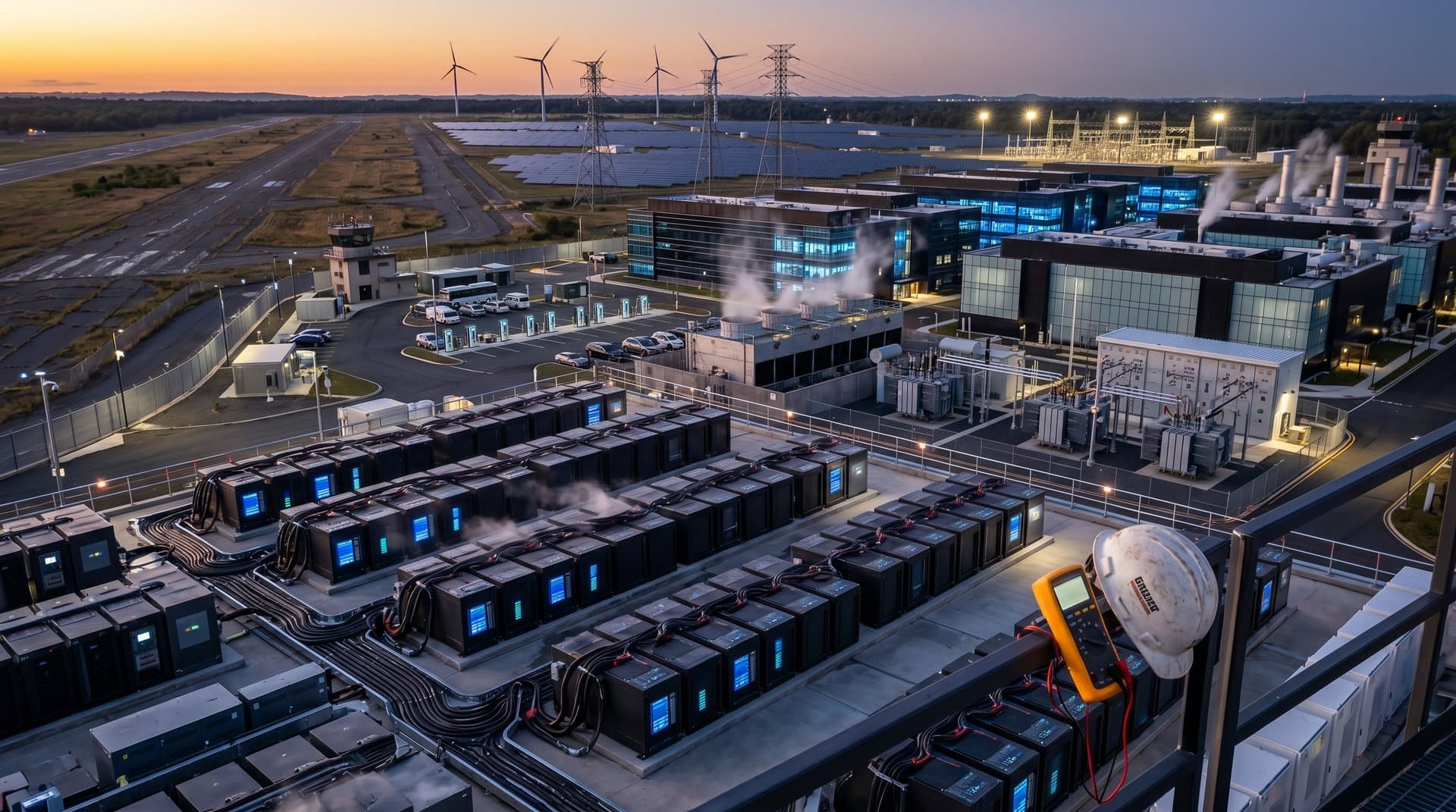
Behind-the-meter grid storage bypasses upgrades. CAISO curtailed 2.5 million MWh of solar in 2023. Colocated batteries now capture 80% (CAISO reports).
AI Data Centers Strain Existing Grid Limits
Data centers demand firm baseload during evening peaks. This clashes with solar intermittency. Lithium-ion batteries support 90%+ depth of discharge (DoD) for daily cycling (Lazard LCOS v17, 2024).
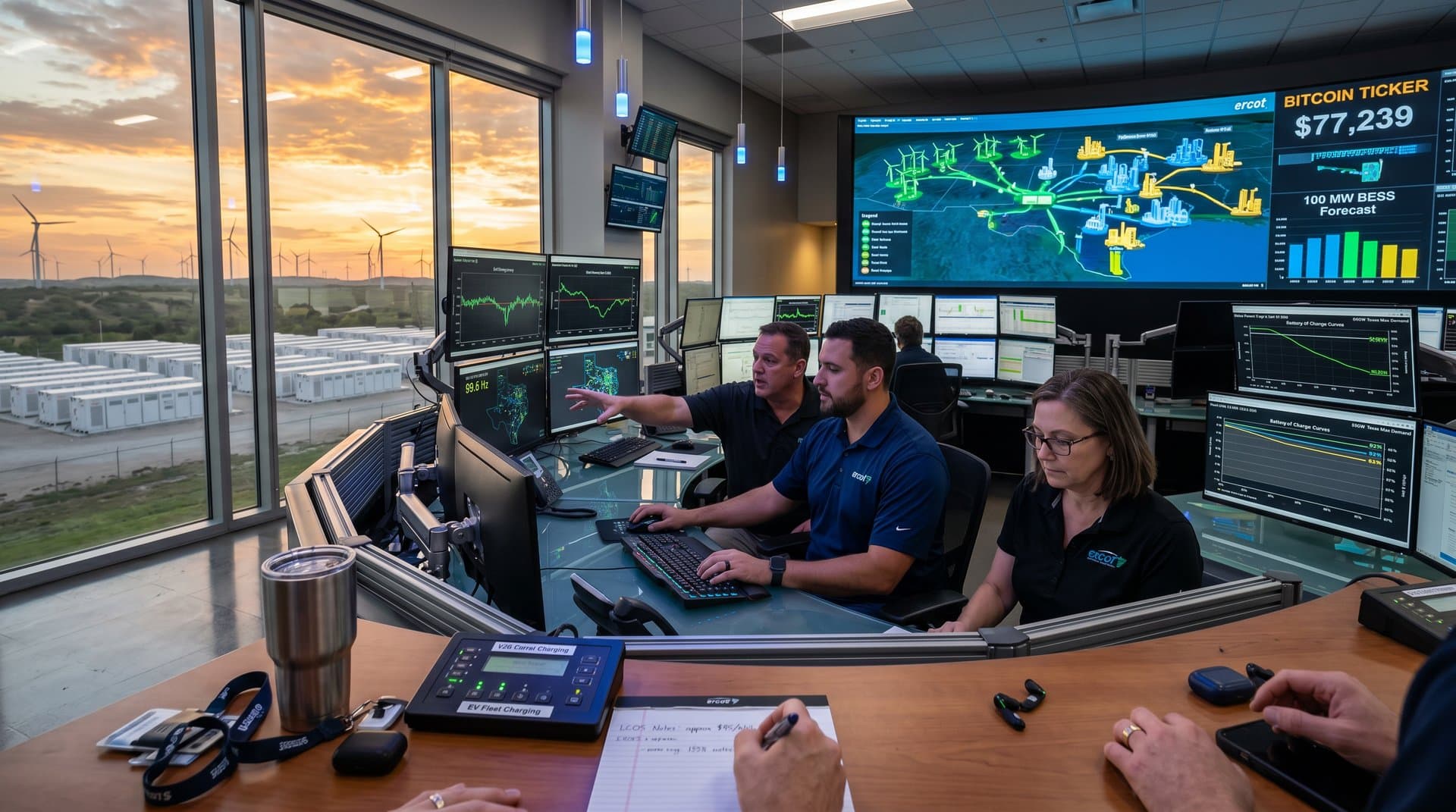
Hyperscalers favor fiber proximity, worsening local congestion. Ford's V2G pilots aggregate 100 MW EV capacity for peak shaving (DOE, 2024).
ERCOT saw 5% renewables curtailment without storage. Solar-plus-storage hybrids provide firm 4-hour dispatchable power for 24/7 AI operations.
Lithium-Ion Dominates Grid Storage Arsenal
Lithium-ion leads with 4-hour duration. LCOS falls below USD 150/MWh at 100 MW scale (Lazard 2024). Pouch cells achieve 250 Wh/kg gravimetric density and 700 Wh/L volumetric density (CATL specs, verified by TÜV, 2024).
Cycle life tops 6,000 at 80% DoD (IEC 62619). Sodium-ion offers 6,000+ cycles without lithium risks (Faradion, 2024 trials).
Flow batteries target 100-hour long-duration energy storage (LDES). Form Energy's iron-air pilots deliver 700 Wh/L at USD 20/kWh capex (company data, 2024). US grid storage hit 20 GW annual deployments, beating new gas (EIA, Q2 2024).
Hyperscalers repurpose second-life EV packs, slashing costs 30% (BloombergNEF).
Renewables-Grid Storage Hybrids Fuel AI Expansion
NextEra Energy commissioned a 200 MW/800 MWh Florida solar-storage hybrid. It matches diurnal data center loads (Q2 2024). Ørsted's 1.5 GW UK offshore wind-plus-storage hits 85% capacity factor (project filings).
CAISO picks batteries over gas peakers for 2 GW tenders. Renewables LCOE dropped to USD 20-40/MWh, undercutting gas (Lazard 2024).
FERC Order 2023 streamlines hybrid interconnections, halving queues. IRA tax credits (ITC at 30-50%) support PPAs bundling 700 MW solar with 300 MWh storage (LevelTen Energy, Q3 2024).
Grid Storage Unlocks Trillions in AI Investment
AI hyperscalers forecast multi-terawatt-hour global demand. Developers target 50 GW pipelines in ERCOT and PJM.
LCOS matches gas peakers at USD 120-160/MWh, locking hyperscaler offtakes. BloombergNEF estimates USD 2 trillion grid storage capex by 2040 for AI growth.
Lithium prices stabilized at USD 12,000/tonne (Benchmark Minerals, Oct 2024). Grid storage scales from pilots to utility-grade, delivering 10+ year economics. Developers plan 100 GW more by 2030 to meet surging grid storage needs.
Frequently Asked Questions
How do hyperscalers Q1 results impact grid storage demand?
Q1 2024 earnings show capex surges for AI data centers tripling power needs to 35 GW by 2028 (BloombergNEF). Grid storage balances peaks and integrates renewables.
What role does grid storage play in AI data center power?
Lithium-ion batteries offer 90%+ efficiency for peaks. Hybrids cut curtailment; deployments hit 20 GW/year.
How does renewables integration aid hyperscaler grid needs?
Solar-plus-storage matches evening peaks; wind hybrids provide baseload. FERC Order 2023 accelerates gigawatt-scale relief.
What makes batteries economically viable for grid storage?
Lithium-ion LCOS under USD 150/MWh (Lazard) beats gas peakers. Sodium-ion and flow batteries target LDES at scale.