- $1 trillion: Goldman Sachs' hyperscaler capex forecast by 2028.
- $257 billion: Apollo program cost, adjusted for inflation.
- $180 billion: Combined hyperscaler capex in 2024 alone.
Goldman Sachs analyst Fin Moorhouse forecasts AI hyperscalers will spend USD 1 trillion on capex by 2028. This dwarfs Apollo's USD 257 billion inflation-adjusted cost. Grid-scale energy storage demand surges to firm renewables for data centers (CNBC; Fin Moorhouse on X).
Microsoft allocated USD 56 billion for Azure in 2024. Amazon committed USD 75 billion to AWS. Google invested USD 44 billion in TPUs. Meta spent USD 37 billion on Llama, totaling USD 180 billion per company filings cited by Goldman Sachs.
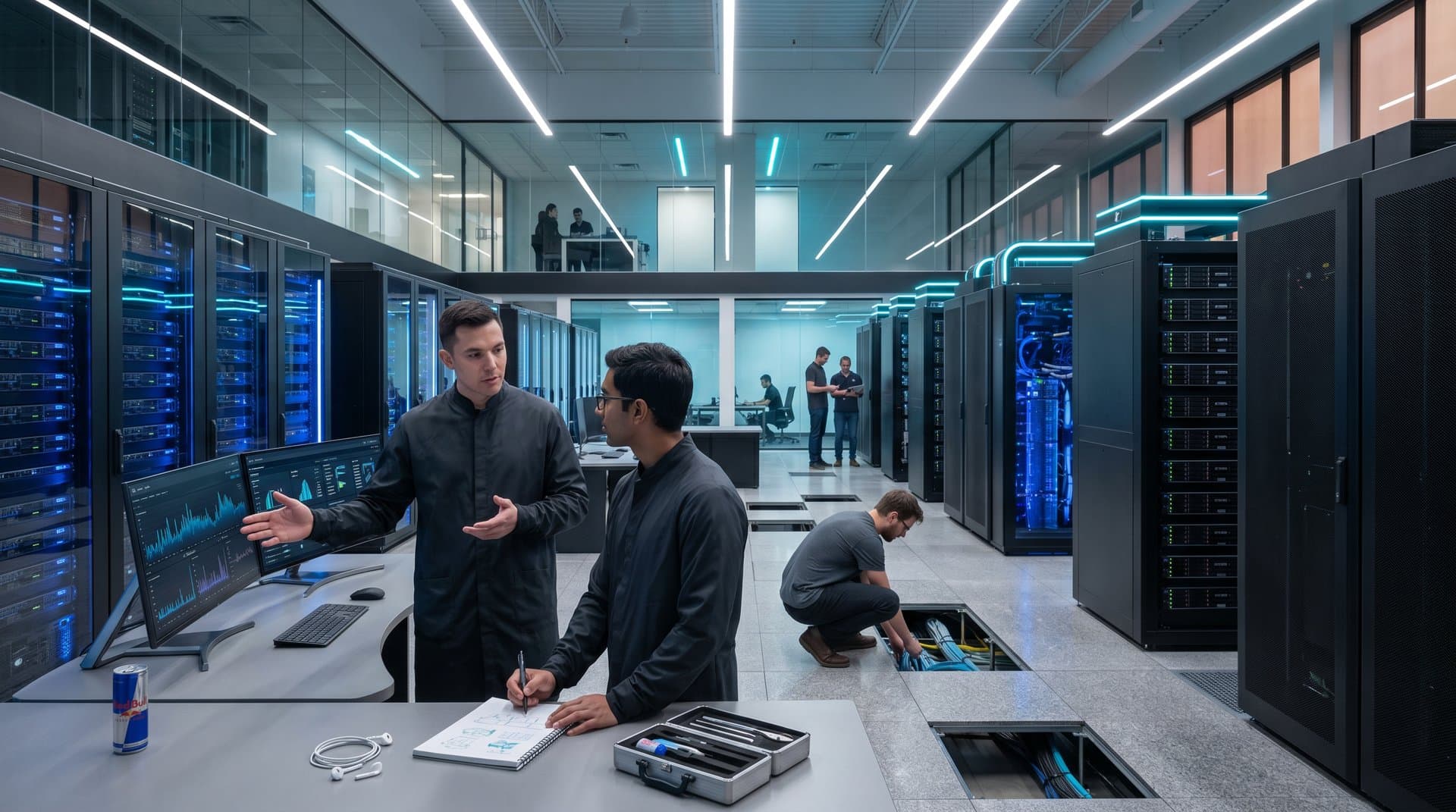
Data centers cluster in Northern Virginia (4 GW total), Texas, and Arizona at 100 MW to 1 GW scales. Cooling consumes 40% of power, per International Energy Agency (IEA) (IEA).
Hyperscalers' Capex Dwarfs Historic Megaprojects
Fin Moorhouse's analysis equates annual hyperscaler spend to Hoover Dam's USD 1 billion adjusted cost, Manhattan Project's USD 30 billion total, and Boston Big Dig's USD 24 billion yearly equivalent.
Cumulative outlays surpass the Interstate Highway System's USD 543 billion. Nvidia's AI chip demand accelerates data center builds, per Moorhouse.
Permitting delays plague grids. Hyperscalers lobby FERC for faster interconnections under Order 2023.
AI Power Needs Propel Grid-Scale Energy Storage
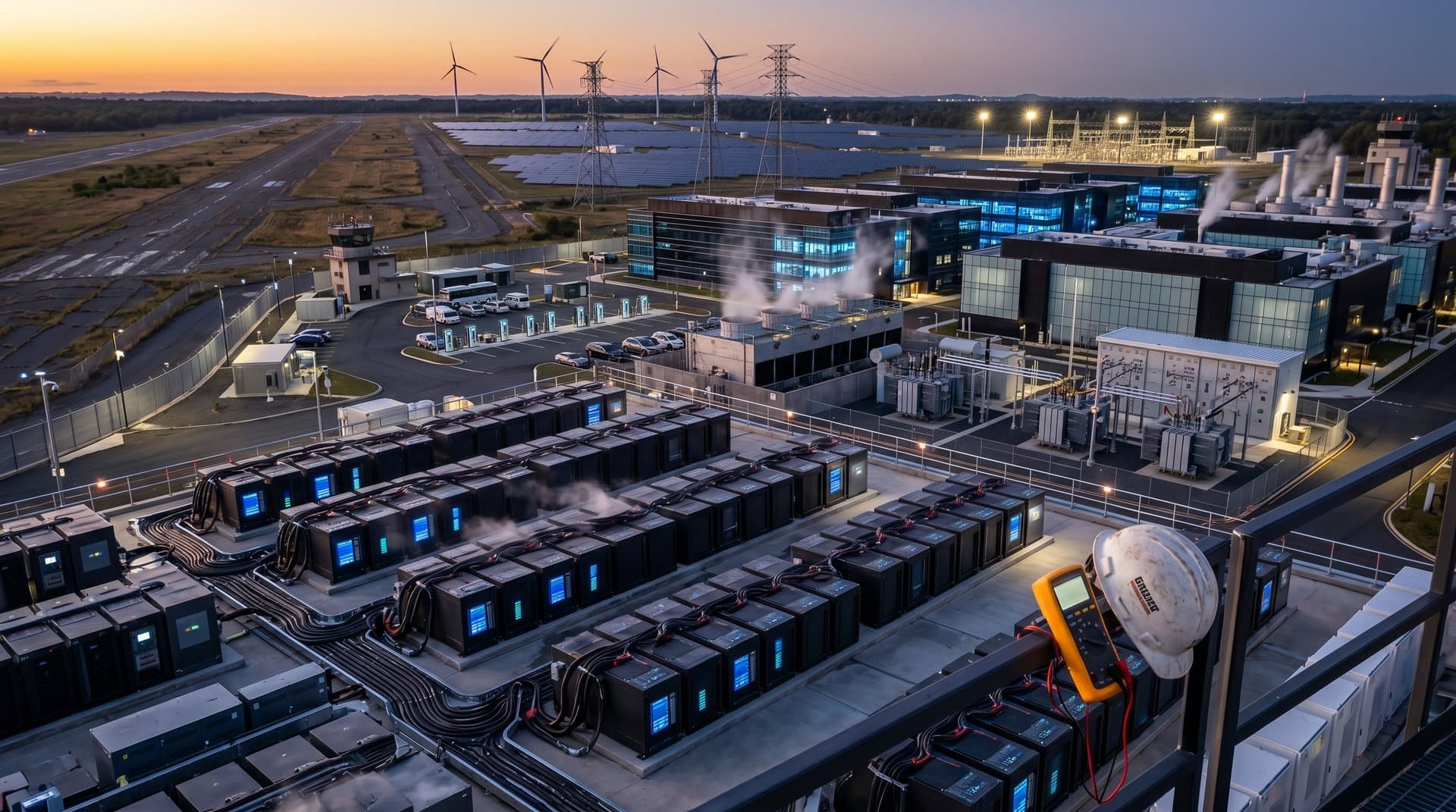
AI demands baseload power. Renewables fluctuate. Grid-scale battery energy storage systems (BESS) store excess solar for evening peaks.
Lithium-ion BESS deliver 90% round-trip efficiency (RTE) at 0.25C discharge rates, per IEA data.
Microsoft deploys 200 MW wind-plus-BESS in Texas. Google pilots iron-flow batteries for 8-hour duration (Utility Dive).
Renewables Integration via Grid-Scale Storage
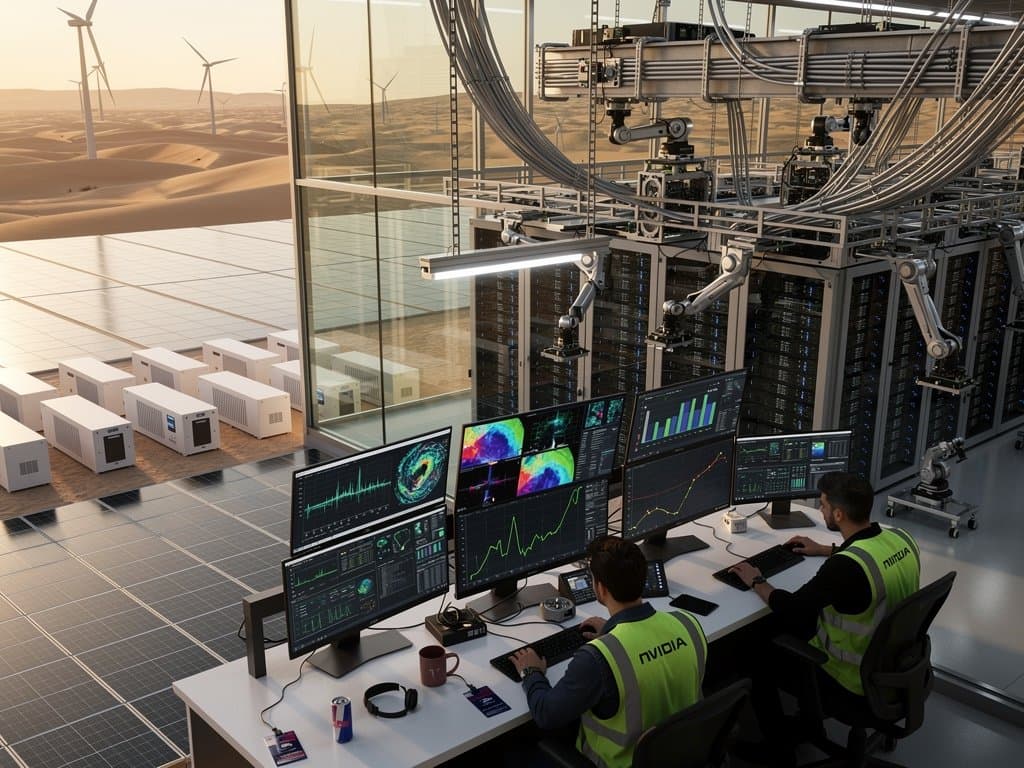
Solar-plus-storage profiles match data center baseloads. Batteries discharge at 100% depth of discharge (DoD) during peaks.
Storage cuts curtailment 30-50%, per Utility Dive analysis. Commercial lithium-ion projects achieve 85-92% RTE under IEC 62619 standards.
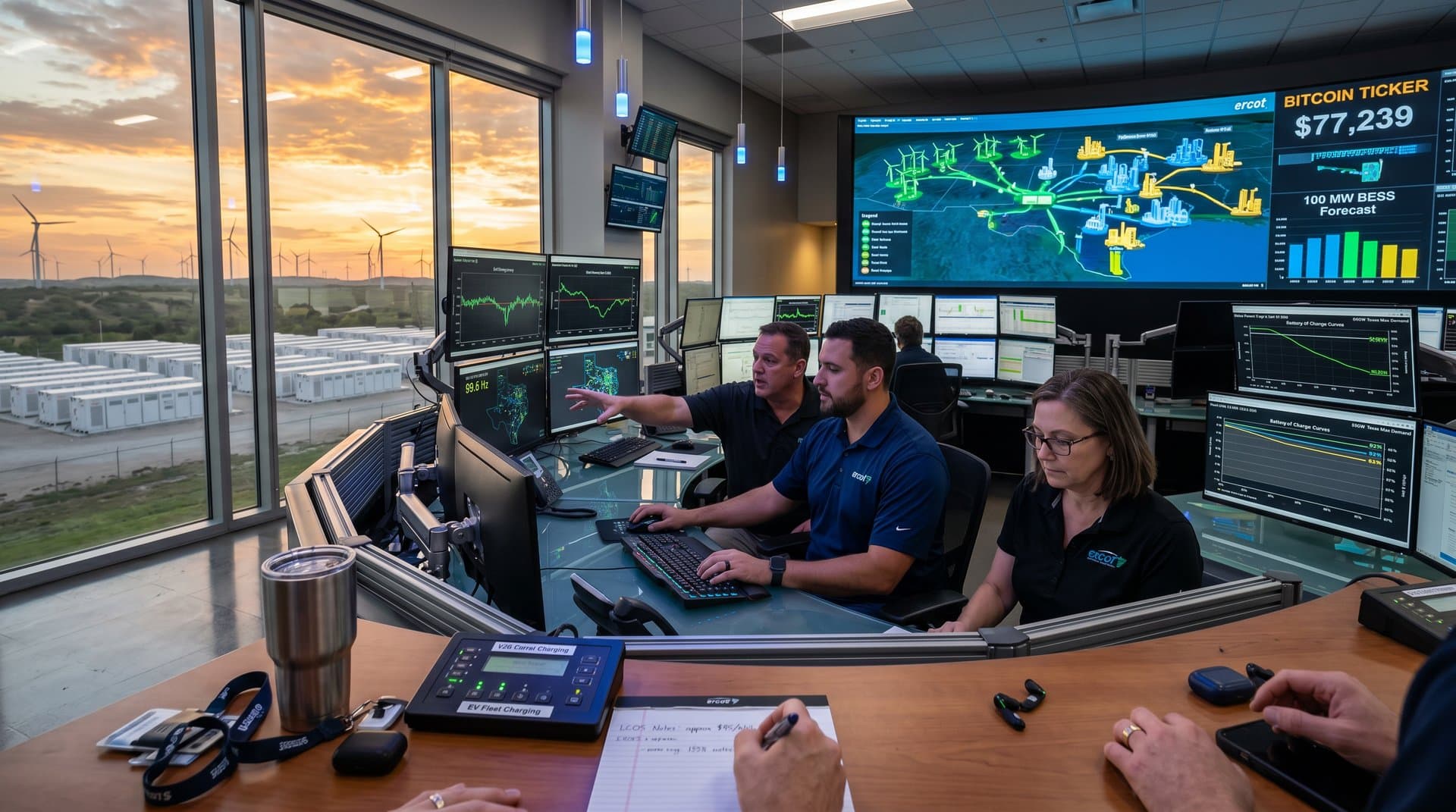
ERCOT deploys 5 GW BESS near data centers. California mandates 1 GW annual storage procurement for new loads.
Battery Technologies for Hyperscaler Storage
Lithium-ion dominates with 200-250 Wh/kg gravimetric density, 600-700 Wh/L volumetric density, 4,000 cycles at 80% DoD, and USD 132/kWh installed cost, per NREL's 2024 Annual Technology Baseline (ATB).
Tesla Megapack provides 3.9 MWh per unit, scaling to 200 MW/800 MWh 4-hour systems.
Long-duration energy storage (LDES) targets 100 hours. Form Energy's iron-air batteries offer 150 Wh/kg, 10,000 cycles at 100% DoD, aiming for under USD 20/kWh levelized cost of storage (LCOS).
Sodium-ion cuts costs 30% versus LFP at 160 Wh/kg, 300 Wh/L, 4,000 cycles. CATL commissions 100 MWh pilots in China.
Lithium demand surges 20% annually to 2030, per Benchmark Mineral Intelligence (2024). China controls 80% of cathode production (IEA), straining US supply chains amid IRA incentives.
Policy Boosts Grid-Scale Energy Storage Deployment
FERC Order 2023 mandates backstop processes for 5 GW annual interconnections. US Inflation Reduction Act (IRA) provides 30-50% investment tax credit (ITC) for standalone BESS based on duration.
California procures 1 GW storage yearly via CPUC dockets. Texas ERCOT clears 50 GW queues with BESS priority.
EU Battery Regulation mandates 16% recycled content by 2030. Amazon pledges 100% renewables by 2025 through RE100, backed by PPAs.
Grid Integration Challenges Ahead
US transmission queues exceed 2 TW, per US Department of Energy (DOE) 2023 report. Lithium carbonate prices rose 20% to USD 15,000/t in 2024 (Benchmark Mineral Intelligence).
Hyperscalers co-locate BESS onsite for <1% downtime. Second-life EV batteries deliver 10,000 cycles at 70% capacity retention (NREL ATB).
Grid-scale energy storage expands via hyperscaler PPAs and LDES commercialization. Goldman Sachs projects 300 GW data center demand by 2030.
Frequently Asked Questions
How do AI hyperscalers drive grid-scale energy storage demand?
Hyperscalers build gigawatt-scale data centers requiring reliable power. Storage firms intermittent renewables for 24/7 AI compute. Goldman Sachs projects $1 trillion capex fueling this trend.
What grid-scale energy storage technologies suit data centers?
Lithium-ion BESS provides 4-hour duration with 90% efficiency. LDES like iron-air extends to 100 hours. Hyperscalers test both onsite.
Why do hyperscalers outspend US megaprojects?
Annual capex tops $180 billion, exceeding Apollo's $257 billion total adjusted. AI infrastructure demands rapid scaling. Fin Moorhouse charted the comparison on X.
How does grid-scale energy storage integrate with renewables for hyperscalers?
Solar-plus-storage hybrids reduce curtailment by storing excess daytime generation. Batteries dispatch at peaks matching AI loads. FERC reforms speed interconnections.