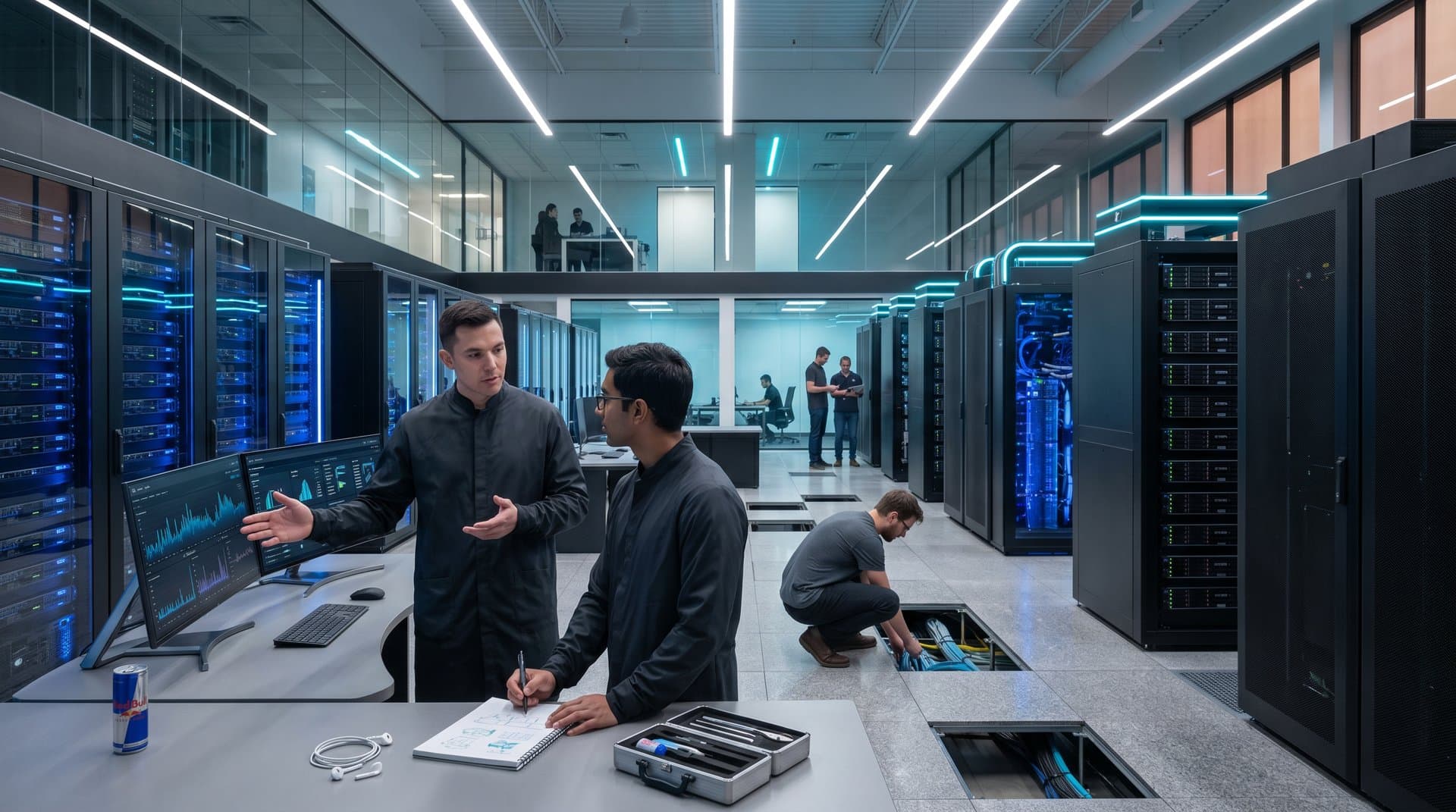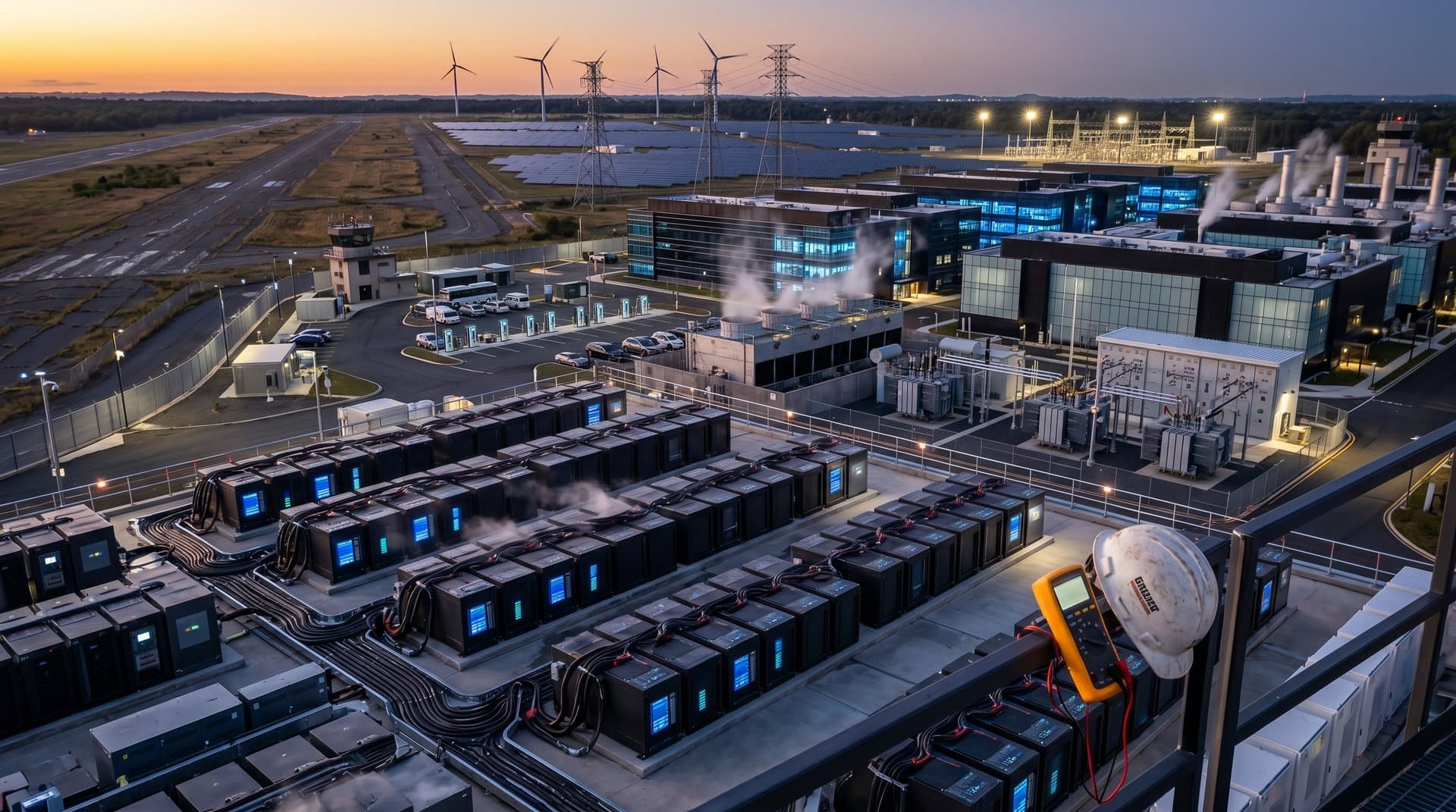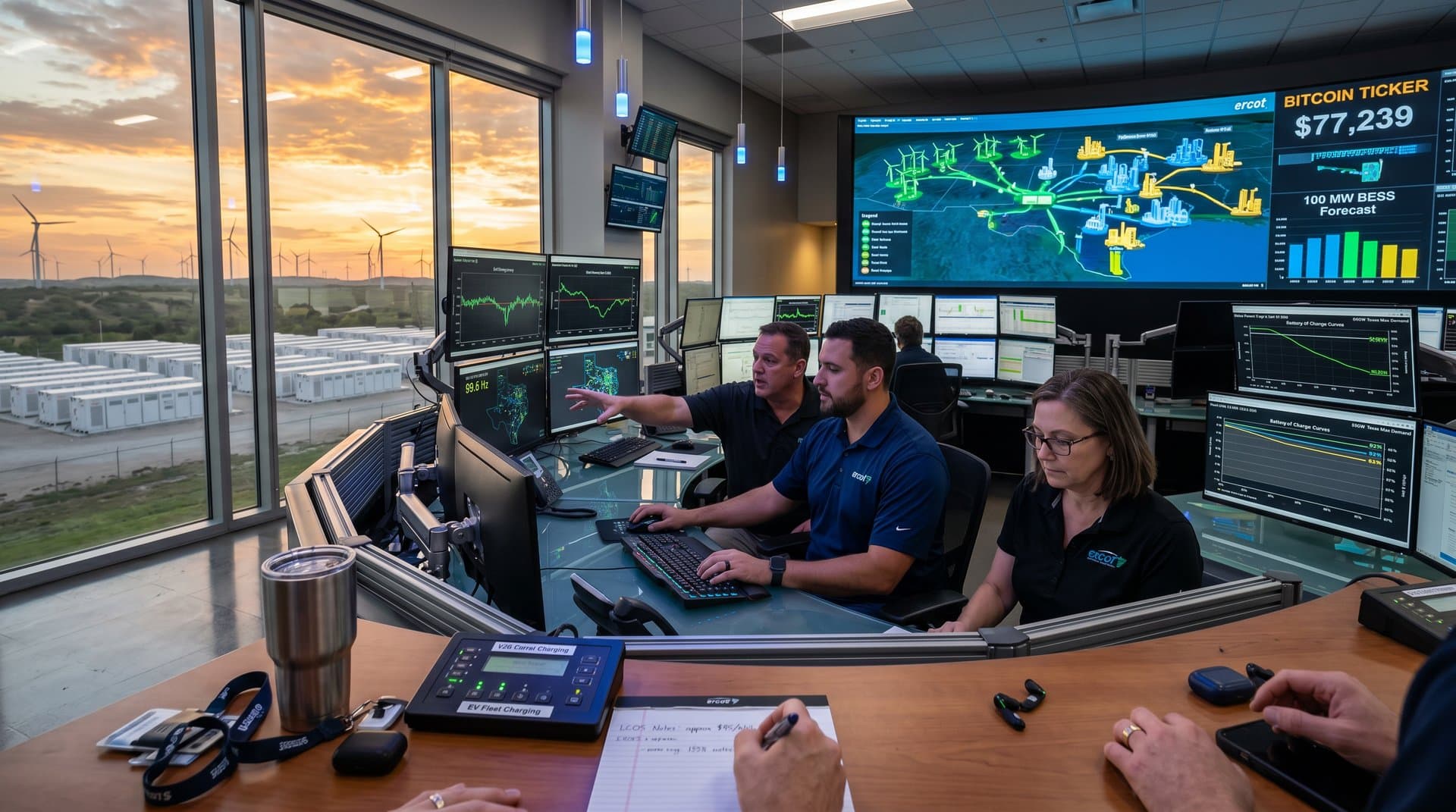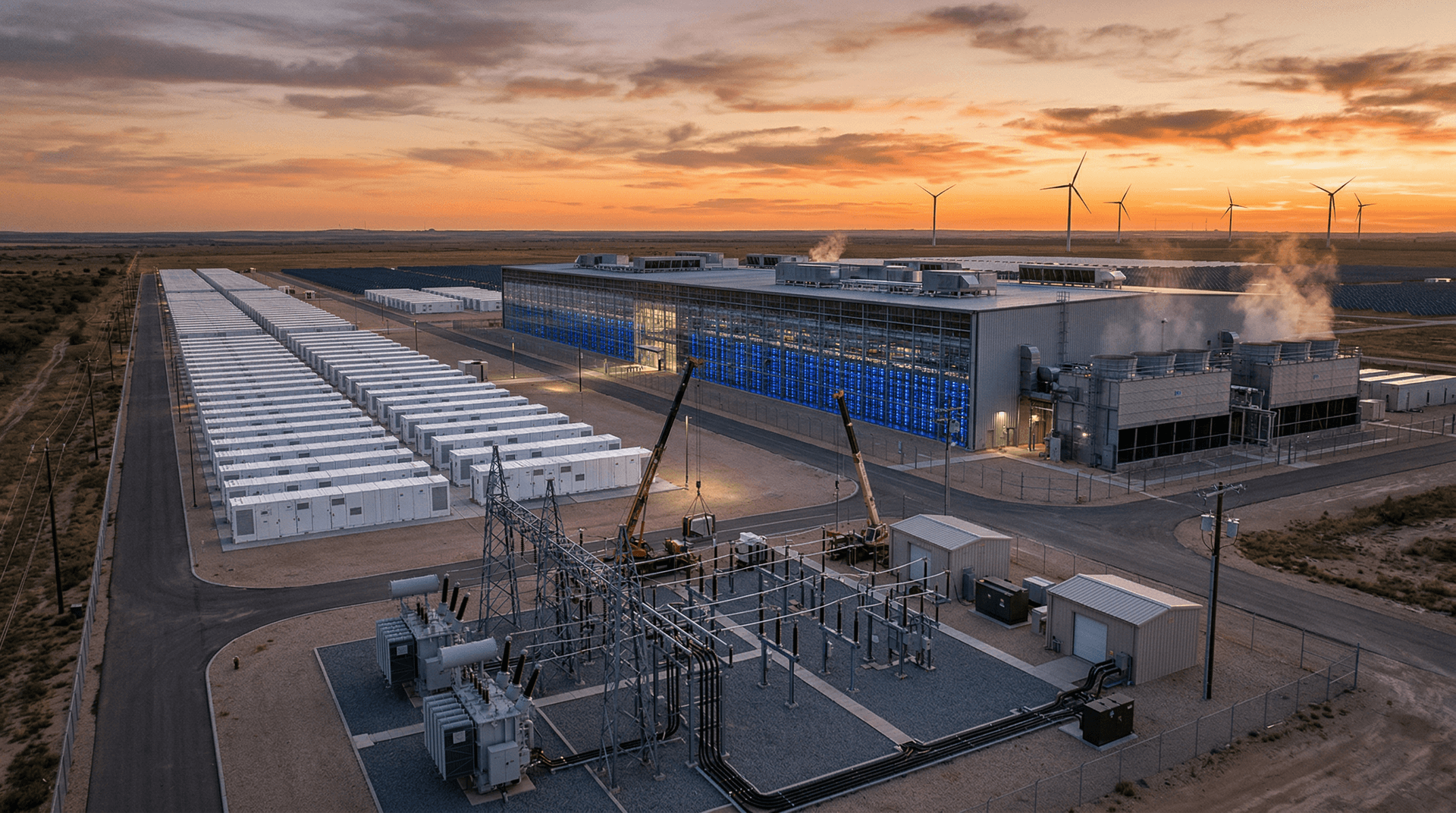
Grid storage investments will reach USD 50 billion by 2028. AI data centers spike global power demand. BloombergNEF projects this drives deployments for peak shaving. The New York Times covered the trend on April 15, 2026.
Data centers consumed 460 TWh globally in 2025, per International Energy Agency data. AI training doubles that to 920 TWh by 2028. Batteries provide frequency regulation and peak shaving.
Data Center Power Surge from AI Competition
Hyperscalers Google and Microsoft plan 100 GW of new capacity by 2028. Wood Mackenzie estimates AI workloads hit 1,000 TWh annually, rivaling Japan's electricity use.
US data centers reached 35 GW peak demand in Q1 2026, up 20% year-over-year, Federal Energy Regulatory Commission data shows. China and Europe add 25 GW and 15 GW. Transmission limits boost local storage needs.
Developers co-locate four-hour lithium-ion systems at 20% of new sites. Each delivers 200 MW / 800 MWh. This supports 24/7 operations despite renewable intermittency.
Grid Storage Capacity Ramp-Up
Global grid storage hit 45 GW / 120 GWh by end-2025, IRENA reports. Projections target 250 GW / 1 TWh by 2028. Data center proximity drives 40% of additions.
US leads with 120 GW pipeline, per Lawrence Berkeley National Laboratory queues updated April 12, 2026. California utilities procure 10 GW / 40 GWh for Silicon Valley. Texas adds 15 GW amid ERCOT peaks.
Battery costs fell to USD 132/kWh in 2025, NREL's annual survey states. LCOS reaches USD 0.08/kWh at 90% round-trip efficiency. This undercuts gas peakers at USD 0.12/kWh.
Major Projects Tie Storage to AI Loads
NextEra Energy commissioned a 300 MW / 1.2 GWh system in Virginia on April 15, 2026. It pairs with a 500 MW Microsoft data center. The project earns USD 25 million yearly from capacity markets and arbitrage.
Fluence delivered a 500 MW / 2 GWh system in Singapore for Tencent. It offers four-hour discharge at 95% depth of discharge. Revenue comes from energy shifting during APAC peak tariffs.
Enel X broke ground on a 400 MW / 1.6 GWh park near Frankfurt. It supports AWS campuses with vehicle-to-grid from 50,000 second-life EV batteries. Costs drop 15%.
| Project | Capacity | Location | Developer | Commissioning |
|---|---|---|---|---|
| Virginia AI Hub | 300 MW / 1.2 GWh | USA | NextEra | April 2026 |
| Singapore Tech | 500 MW / 2 GWh | APAC | Fluence | Q3 2026 |
| Frankfurt Grid | 400 MW / 1.6 GWh | EMEA | Enel X | Q4 2026 |
Revenue Stacks Power Returns
Data center storage stacks revenues from five streams. PJM frequency regulation yields USD 40/kW-year. Arbitrage captures USD 50/MWh spreads over eight-hour peaks.
Capacity payments add USD 100/kW-year under IRA incentives. BloombergNEF models 12% IRR at USD 150/kWh capex. Virtual power plants aggregate 10 GW for wholesale bids.
Hyperscalers sign 15-year offtakes at 95% uptime. This de-risks financing. S&P Global Ratings confirms USD 20 billion in green bonds issued Q1 2026.
Policy Incentives Accelerate Deployment
US Inflation Reduction Act allocates USD 10 billion for storage through 2032. FERC Order 2023 fast-tracks interconnections, clearing 30 GW queues by 2027.
EU Net-Zero Industry Act mandates 50 GW by 2030 with EUR 5 billion subsidies. China's 14th Five-Year Plan targets 100 GW using LFP batteries.
State mandates drive 20 GW US procurement. New York requires six GW by 2030. PJM auctions awarded five GW / 20 GWh in March 2026.
Supply Chain and Technology Shifts
Lithium-ion holds 85% share. Sodium-ion pilots reach 200 MWh in 2026. Flow batteries scale to 100 MW / eight-hour duration for long-duration energy storage.
Australia exports one million tonnes LCE annually, USGS data states. Recycling meets 30% of cobalt needs.
CATL and LG Energy Solution ramp to one TWh/year output. Contracts secure 500 GWh through 2028 with data center operators.
Market Forecasts and Risks
BloombergNEF raises 2028 grid storage investments to USD 50 billion, up 25% from January. Annual deployments hit 60 GW from 25 GW in 2026.
Grid delays stall 40% of US queues, LBNL reports. Permitting reforms cut timelines to 18 months. Geopolitical tensions lift mineral prices 10%.
Developers pursue hybrid solar-storage for 30% savings. AI dispatch software boosts round-trip efficiency to 92%.
The Bottom Line
Grid storage investments transform into a USD 50 billion market by 2028. AI data centers demand firm power. Developers gain from stacked revenues and policy support. Utilities face Q3 2026 procurement deadlines.