- Hyperscalers boost capex 20-50%, driving 15 GW grid storage by 2028 (Reuters).
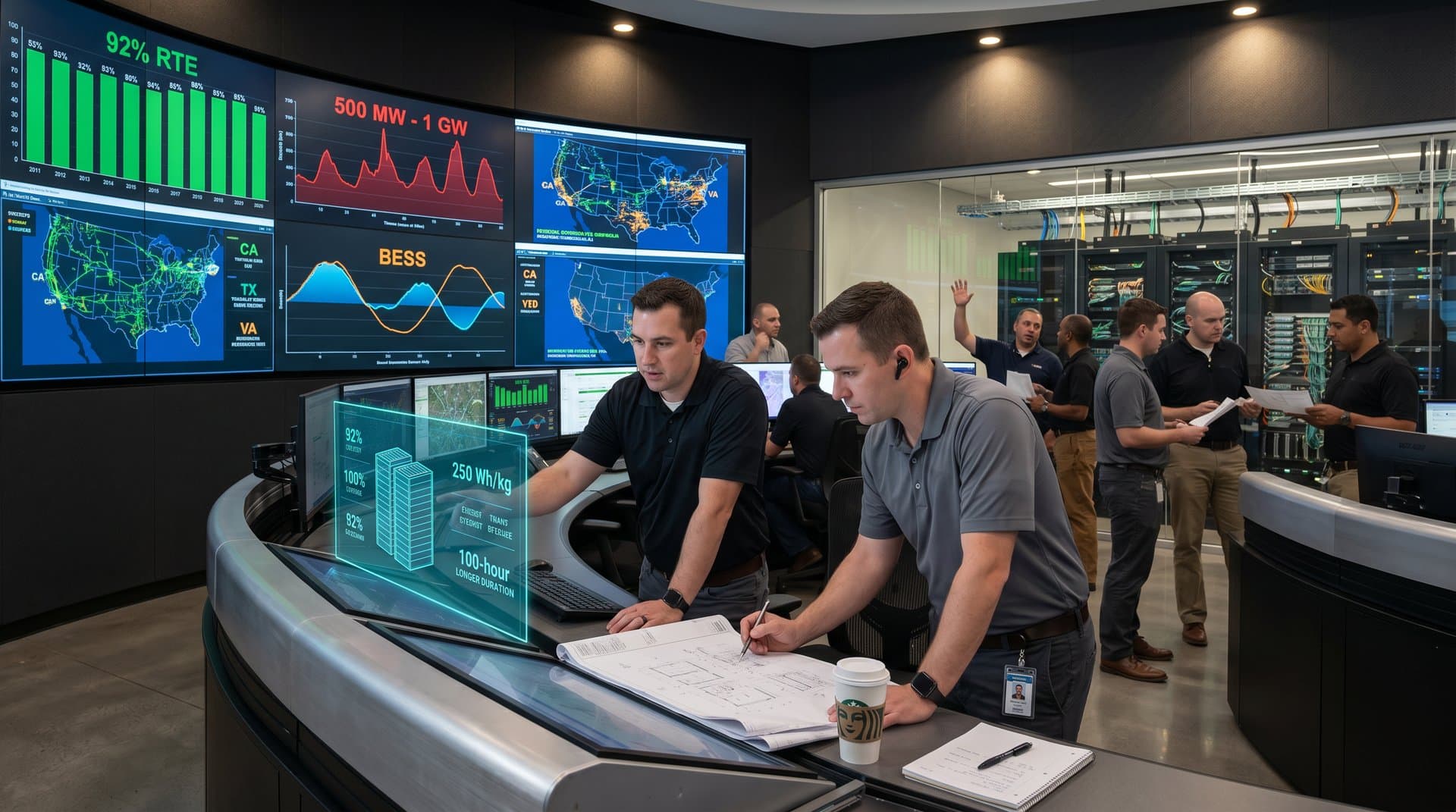
- Li-ion BESS: 88-92% RTE (NREL), 250 Wh/kg / 650 Wh/L, 3,000 cycles for AI loads.
- LCOS drops to $120/MWh (Lazard/IRA); revenues hit $250/kW-year (ERCOT).
Hyperscalers Microsoft, Amazon, Alphabet, and Meta increased Q2 2024 capex by 20-50% for AI data centers, straining US grids and accelerating a 15 GW grid storage pipeline through 2028 (Reuters, August 7, 2024). AI workloads consume 1-2% of US electricity today, rising to 9% by 2030 (Electric Power Research Institute, EPRI, 2024 report).
Battery energy storage systems (BESS) enable renewables integration and grid stability. Lithium-ion BESS achieves 88-92% round-trip efficiency (RTE) per IEC 62619 standards at 0.5C discharge (National Renewable Energy Laboratory, NREL, FY24 report). Grid operators in California (CAISO), Texas (ERCOT), and Virginia (PJM) manage 2 GW interconnection queues for storage projects.
Technical Specs of BESS for AI Power Demands
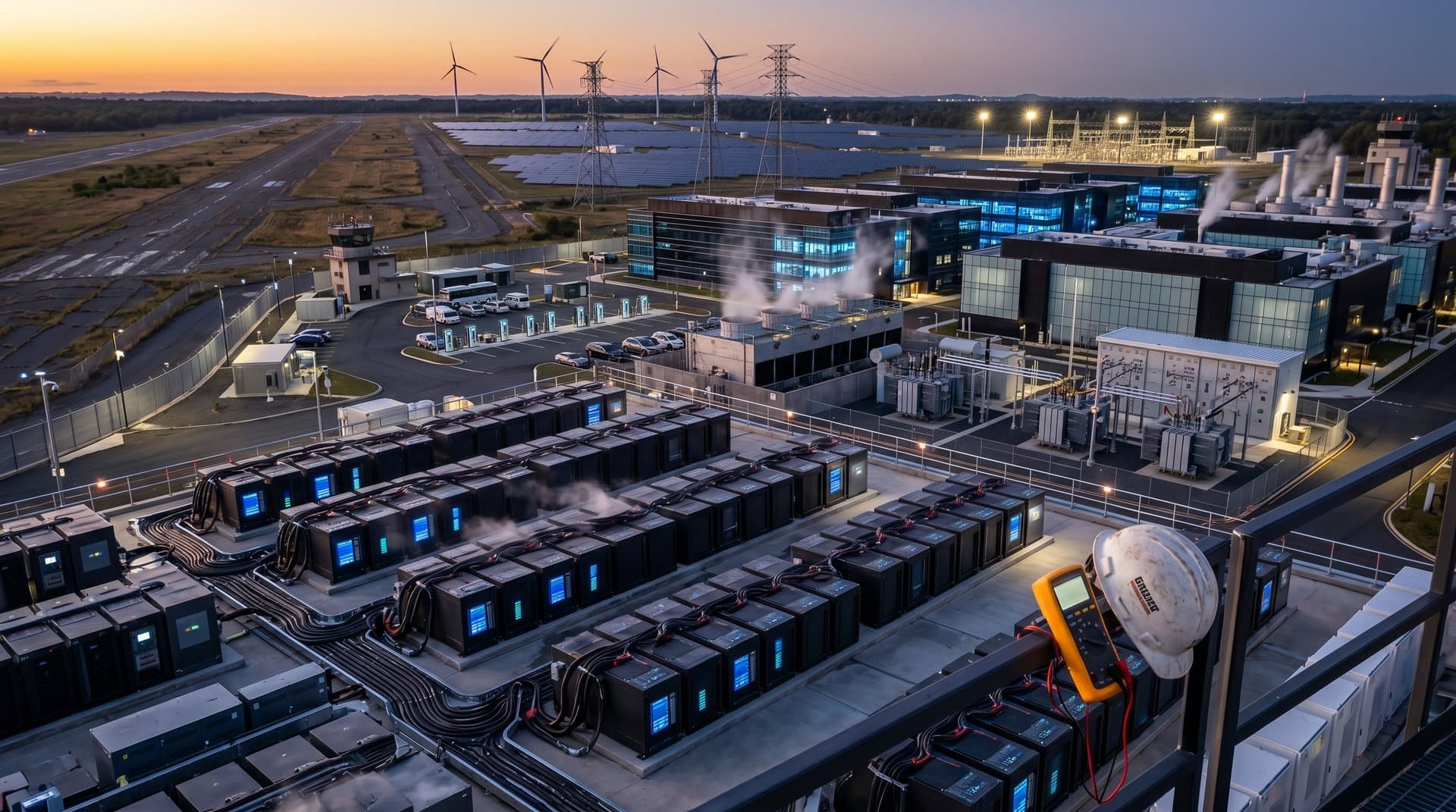
AI training clusters demand 100 MW continuously for weeks, while inference needs sub-second response. Grid-scale lithium-ion BESS serves as virtual uninterruptible power supply (UPS). Cells deliver 250 Wh/kg gravimetric density and 650 Wh/L volumetric density, with 3,000 cycles at 80% capacity retention under IEEE 1547 grid-tied conditions (NREL, 2024).
Hyperscalers secured 10 GW solar and wind power purchase agreements (PPAs) in Q2 2024 (LevelTen Energy Marketplace Report). Four-hour duration lithium-ion BESS (100 MW/400 MWh) dominates, addressing renewable intermittency. Developers co-locate systems behind data center meters, capturing $50/MWh energy arbitrage in PJM Interconnection markets (PJM State of the Market Report, 2024).
Long-duration energy storage (LDES) emerges for 100-hour discharge needs. Form Energy's iron-air batteries provide 30 Wh/kg density at 75 Wh/L, targeting US$20/kWh levelized cost of storage (LCOS) (Lazard's Levelized Cost of Storage Analysis v8.0, 2024). Utilities procure BESS for frequency regulation (<1-second response) and capacity markets at $200/kW-year (ISO-New England, 2024 auction).
FERC Order No. 2023 streamlines interconnection, prioritizing storage in 2 GW queues across ISOs.
Revenue Streams Fuel BESS Deployment Acceleration
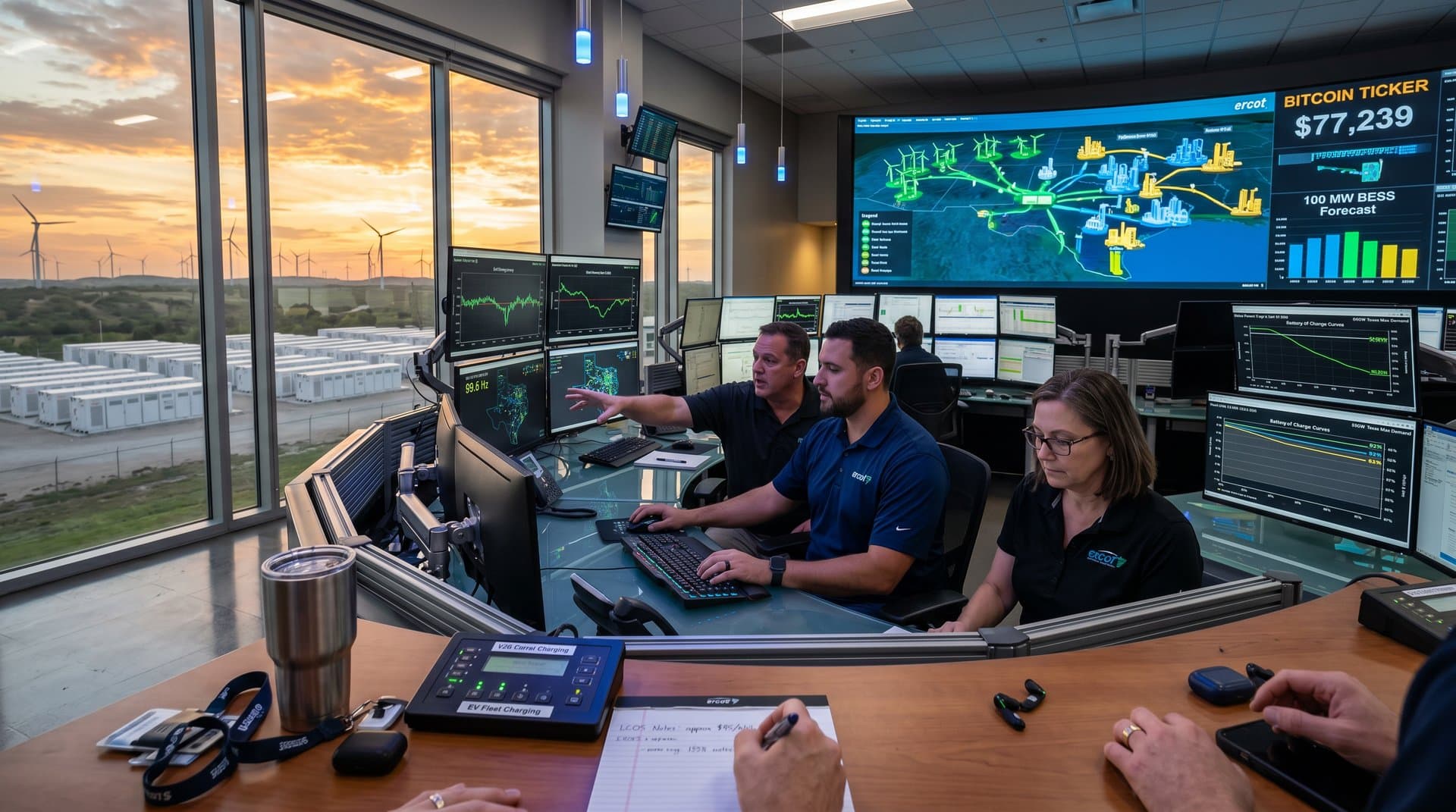
BESS generates revenue through energy arbitrage, ancillary services, and capacity payments. Fluence Energy's 200 MW/800 MWh (4-hour) project in ERCOT cleared $250/kW-year in the 2024 capacity auction (ERCOT reports). PJM awarded 1.5 GW to similar BESS assets.
Google commissioned a 100 MW/400 MWh (4-hour) BESS at its campuses through Fluence Energy, targeting Q1 2025 operations. Amazon procured 1 GWh of Tesla Megapacks for data centers, with deliveries starting Q4 2024 (Tesla Q2 Earnings). Meta tests second-life LFP cells at 160 Wh/kg, 600 Wh/L, and 6,000 cycles (Meta Sustainability Report, 2024).
Transmission infrastructure lags by five years; BESS deploys in 18 months. Inflation Reduction Act (IRA) provides 30% Investment Tax Credit (ITC) for standalone BESS, reducing LCOS to US$120/MWh (Lazard, 2024). US lithium refining capacity reaches 100 ktpa by 2025 (Albemarle Q2 2024 earnings).
Sodium-ion batteries from CATL achieve 160 Wh/kg and 300 Wh/L, with 4,000 cycles, avoiding lithium supply risks (CATL announcement, July 2024). NMC cathode prices stabilize at US$15/kg (Benchmark Mineral Intelligence, Q2 2024).
Supply chain resilience strengthens: US DoE funds domestic cathode production under BIL, cutting import reliance 20% by 2027 (USGS Mineral Commodity Summaries, 2024).
Policies and Markets Propel Commercial-Scale Growth
New York requires 6 GW storage by 2030 under Climate Leadership and Community Protection Act (CLCPA, Public Service Law §66-one). Illinois targets 5 GW via Climate and Equitable Jobs Act (CEJA docket 21-0534). FERC reforms cut queue times 50% (FERC Order 2023).
US Department of Energy (DoE) Energy Storage Grand Challenge invests US$50 million in solid-state batteries targeting 500 Wh/kg and 1,000 Wh/L (DoE, 2024). LCOS declines 15% annually through 2030 (BloombergNEF New Energy Outlook, 2024).
Hyperscalers plan over US$100 billion annual capex through 2030 (Goldman Sachs Research, July 2024). Grid storage captures 5-10% via hybrid solar-plus-storage at data hubs, with 2 GW co-located pilots commissioning in 2025.
Q3 2024 earnings will clarify capex trajectories. BESS developers secure PPAs at $40/MWh. Utilities hybridize assets near data centers. Verifiable 15 GW pipelines and declining LCOS position grid storage ahead of AI-driven demand volatility.
Frequently Asked Questions
How do AI data centers boost grid storage demand?
AI hits 9% US power by 2030 (EPRI). BESS (88-92% RTE, NREL) stabilizes renewables for 100 MW loads.
What battery specs support hyperscaler needs?
Li-ion: 250 Wh/kg, 650 Wh/L, 3,000 cycles (NREL). Iron-air LDES: 30 Wh/kg, 100 hours (Form Energy). Revenues $250/kW-year (ERCOT).
How do policies drive grid storage growth?
IRA ITC 30% cuts LCOS to US$120/MWh (Lazard). FERC Order 2023 prioritizes BESS. NY mandates 6 GW (CLCPA).
What revenues do BESS earn from AI power?
Arbitrage $50/MWh (PJM), capacity $200/kW-year (ISO-NE). Amazon deploys 1 GWh Megapacks (Tesla).