- AI data centers demand 165 GW new power by 2030 (Goldman Sachs).
- Grid-scale energy storage reaches 75 GW globally (Global Energy Monitor).
- Hybrids cut data center costs 25% (BloombergNEF).
By Philip Trask, Renewables Correspondent April 13, 2026
Grid-scale energy storage deployments accelerate worldwide. Goldman Sachs projects AI data centers will need 165 GW of new power capacity by 2030 to avoid compute shortages.
AI electricity demand surges from 20 GW today to 165 GW. Data centers consume 2% of US power and double every two years, per US Energy Information Administration (EIA) data. Grid-scale energy storage pairs renewables to deliver baseload power.
Goldman Sachs Projects 165 GW AI Power Surge
Goldman Sachs analysts forecast hyperscalers like Microsoft will add 165 GW through 2030. Reuters quotes Michael Levy, Goldman Sachs managing director: "Chip advances and model training drive this." Grid constraints bottleneck growth.
US interconnection queues reach 2.7 TW as of April 13, per Federal Energy Regulatory Commission (FERC) filings. Data centers claim 40% of queues. Europe faces similar delays. Grid-scale energy storage firms renewables and bypasses queues.
AI clusters consume 460 TWh annually, per International Energy Agency (IEA). This rivals the Netherlands' demand. Virginia hubs ration compute power.
Grid-Scale Energy Storage Hits 75 GW Globally
Developers added 15 GW in Q1 2026, per Wood Mackenzie. Cumulative capacity reaches 75 GW worldwide, per Global Energy Monitor. Lithium-ion dominates at 85% share. Long-duration options grow.
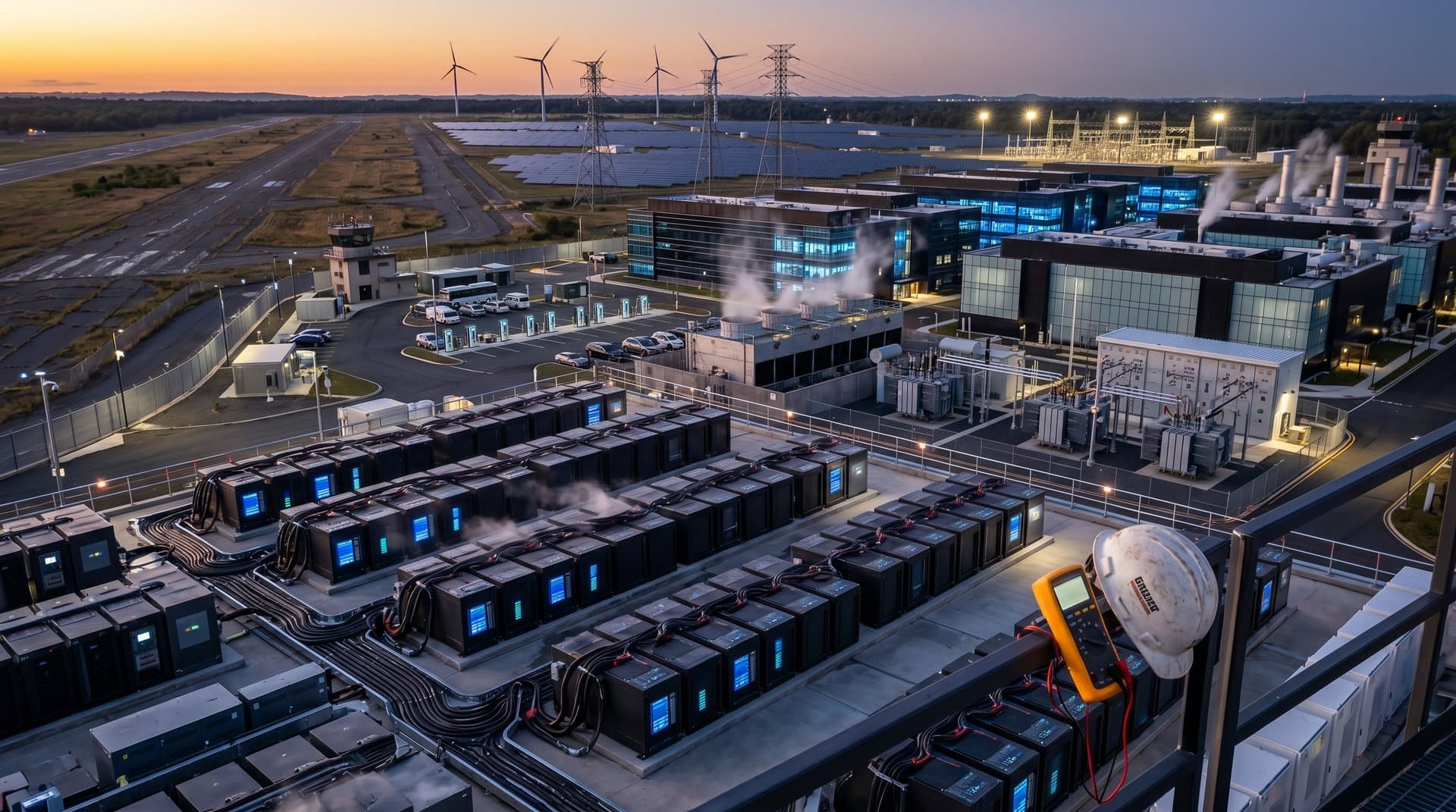
Plus Power commissioned 1.2 GW/4.8 GWh (4-hour duration) in Texas, co-located with an AI data center. It achieves 92% round-trip efficiency per IEC 62619 testing. Levelized cost of storage (LCOS) reaches USD 85/MWh, per Aurora Energy Research, below USD 120/MWh grid peaks.
IEA's Laura Cozzi states: "Storage unlocks 300 GW of stalled renewables." AI firms sign power purchase agreements (PPAs) for 50 GW solar-storage hybrids by year-end, per LevelTen Energy.
China deploys 40 GW, per China Energy Storage Alliance (CNESA). It pairs flow batteries (12-hour duration, 85 Wh/kg energy density) with wind for 95% data center uptime.
Hybrids Supply 24/7 Power to AI Data Centers
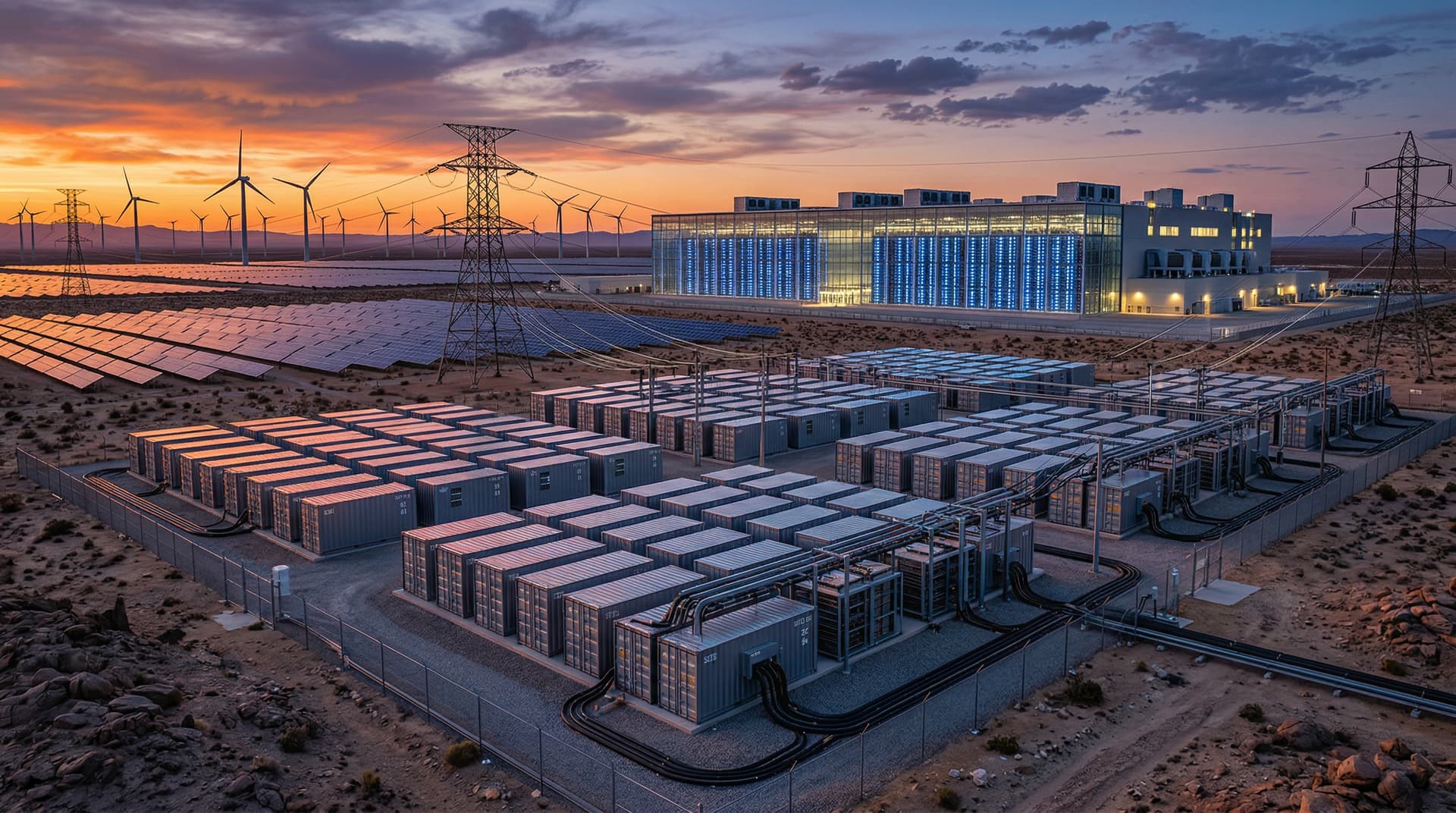
Solar-plus-storage hybrids cut data center costs 25%, per BloombergNEF. A 500 MW California project combines 300 MW solar with 1 GWh lithium-ion storage at 90% efficiency.
Batteries charge midday from solar. They discharge evenings for AI training. Curtailment drops 35% versus solar alone.
Microsoft deploys 2 GW storage across US Azure sites, per regulatory filings. It reduces gas peaker reliance with 90% round-trip efficiency and 80% depth of discharge.
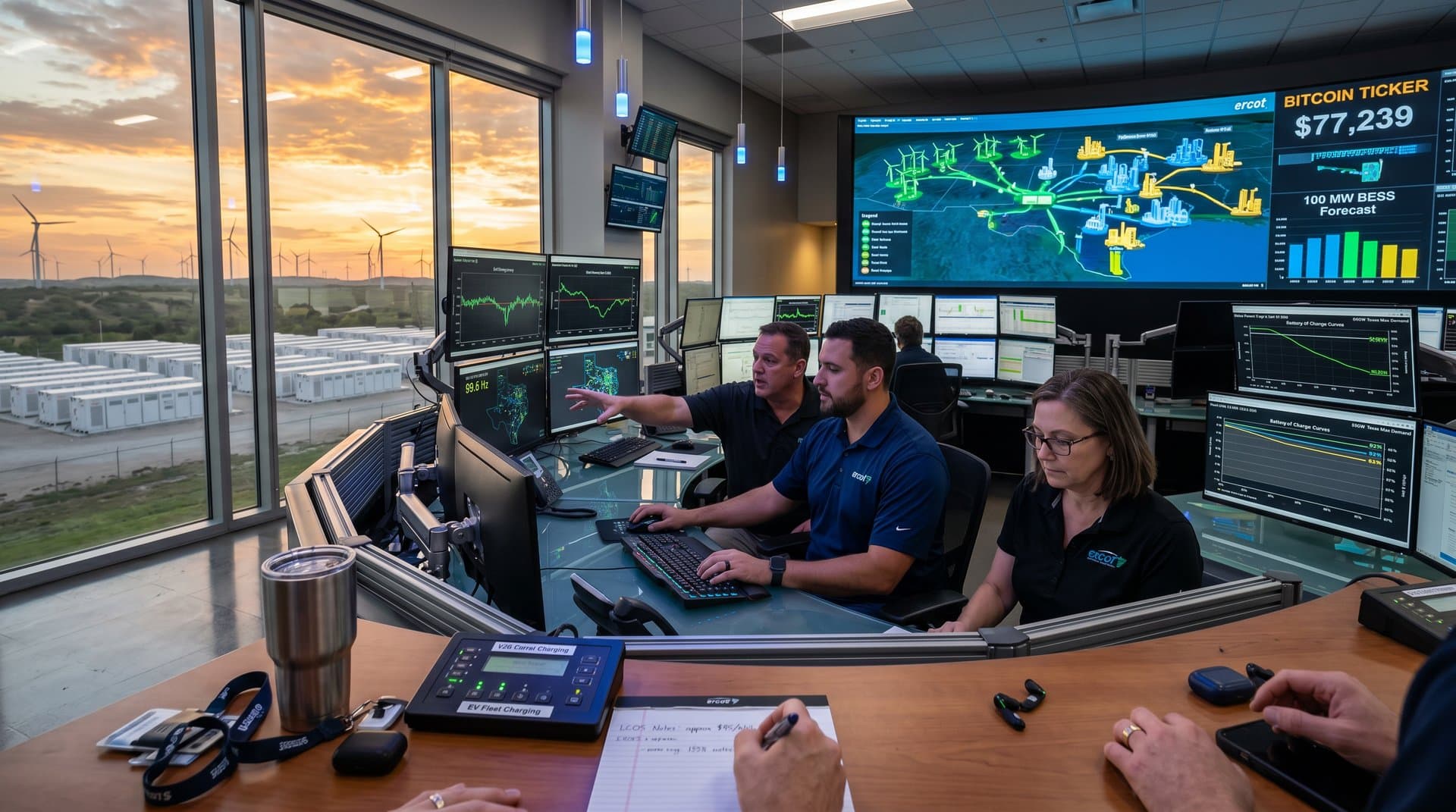
ERCOT's 800 MW/3.2 GWh wind-storage project (4-hour duration) avoids 200 GWh annual curtailment. It feeds AI loads.
Long-Duration Storage Secures AI Baseload Power
Form Energy's iron-air batteries offer 100-hour duration (30 Wh/kg, USD 20/MWh LCOS at scale). A 30 MW/3 GWh Ohio pilot launches Q3 2026 near a data center.
CATL delivers 10 GWh sodium-ion modules (8-hour duration, 160 Wh/kg, USD 40/kWh). ESS Inc.'s 5 MW vanadium flow batteries (12-hour, USD 0.10/kWh per cycle) power Australian AI facilities.
Maastricht University's Auke Hoekstra praises long-duration energy storage (LDES) for AI's steady loads. Pilots achieve 98% calendar life over 20 years, per Sandia National Laboratories.
Finance Accelerates Grid-Scale Energy Storage-AI Hybrids
Investors commit USD 12 billion in Q1 2026, up 40% year-over-year, per S&P Global. BlackRock funds USD 3 billion for a 10 GW pipeline.
Hybrid PPAs price at USD 40/MWh, 30% below fossil fuels. US Inflation Reduction Act (IRA) credits boost internal rates of return (IRRs) to 12%.
Tesla acquires 5 GWh from integrators for USD 2.5 billion. LFP cathode supply secures 500,000 tons from China.
PJM procures 4 GW toward a 20 GW target by 2027 for AI peaks.
Regions Accelerate Grid-Scale Energy Storage Deployment
US pipelines total 45 GW. ERCOT adds 10 GW hybrids quarterly.
Europe's REPowerEU mandates 100 GW by 2030. Germany pairs 2 GW storage with offshore wind for Frankfurt data centers.
India tenders 15 GW co-located projects. APAC systems average 89% efficiency.
FERC reforms shorten permitting to 18 months. They enable 5 GW additions.
Hybrids supply 70% of power at top AI sites, per BloombergNEF. They save USD 500 million annually in curtailment. Battery recycling recovers 95% lithium, cutting costs 15%, per International Renewable Energy Agency (IRENA). Second-life EV packs fill 10 GWh gaps.
Grid-scale energy storage counters AI's 165 GW challenge. FERC's May 1 auction may unlock 20 GW more capacity.