- Marvell negotiates 2 AI chips with Google (Reuters).
- AI drives 160% power demand growth by 2030 (Goldman Sachs).
- 300 GW BESS in 2 TW US queues (LBNL).
Grid-scale battery storage demand surges 160% by 2030, fueled by Marvell Technology's negotiations for two custom AI chips with Google, per Reuters. AI data centers strain grids, spurring BESS growth.
The chips extend Google's Tensor Processing Unit (TPU) v6 for AI training and inference workloads. Hyperscalers like Google ramp facilities amid competition from Nvidia and Broadcom custom ASICs.
AI Data Centers Drive 100 GW Power Demand
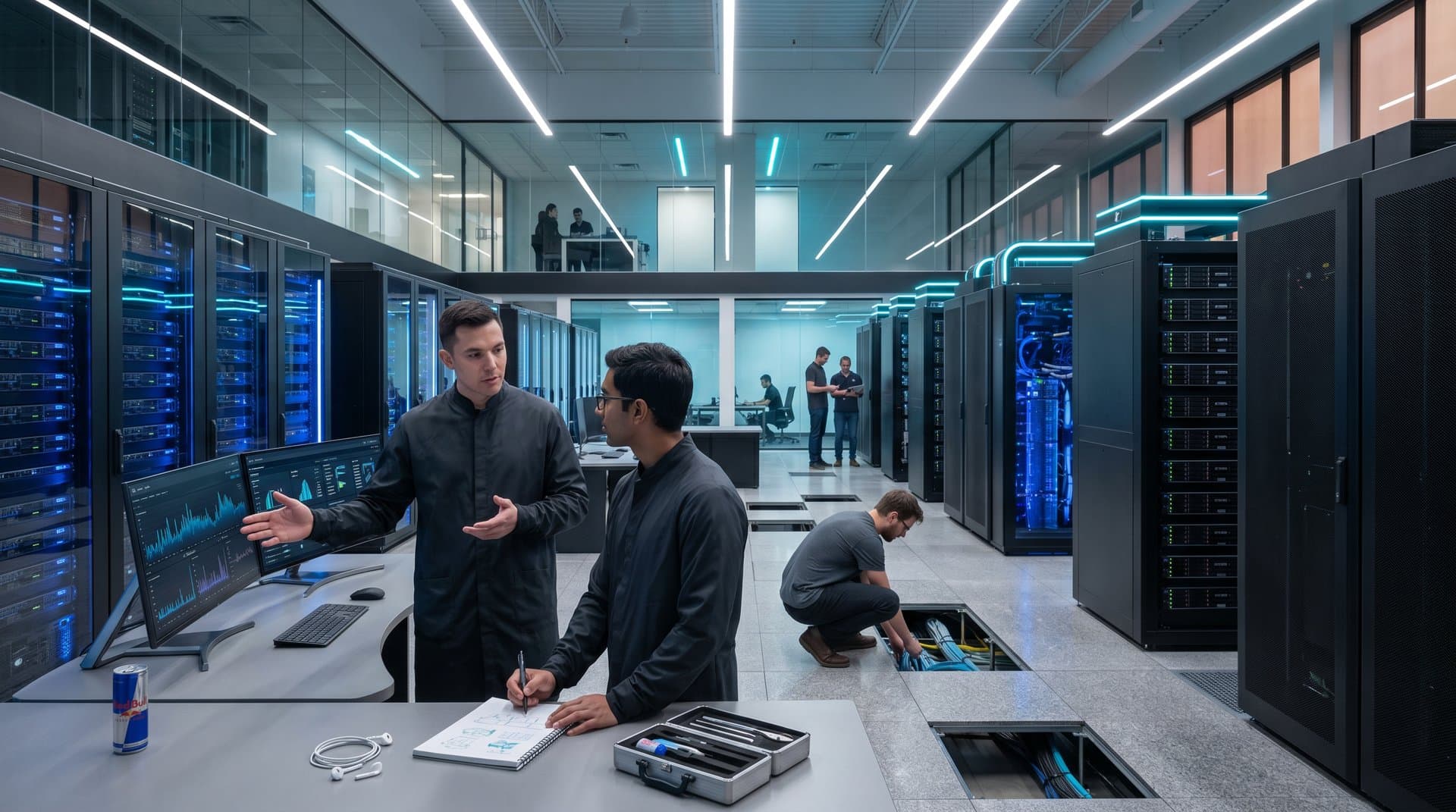
Data centers target 100 GW new capacity by 2030, according to the International Energy Agency (IEA). AI server racks consume 1-2 MW each at 50-100 kW/rack densities, per Uptime Institute benchmarks.
Goldman Sachs forecasts 160% US power demand growth from AI by 2030. Grids require fast-ramp grid-scale battery storage for peak training loads and renewable integration.
Grid-Scale BESS Achieves 85-90% Round-Trip Efficiency
Lithium-ion grid-scale battery storage delivers 4-hour duration at 100 MW scale, with 85-90% round-trip efficiency (RTE) on 0.5C discharge rates, per National Renewable Energy Laboratory (NREL) data.
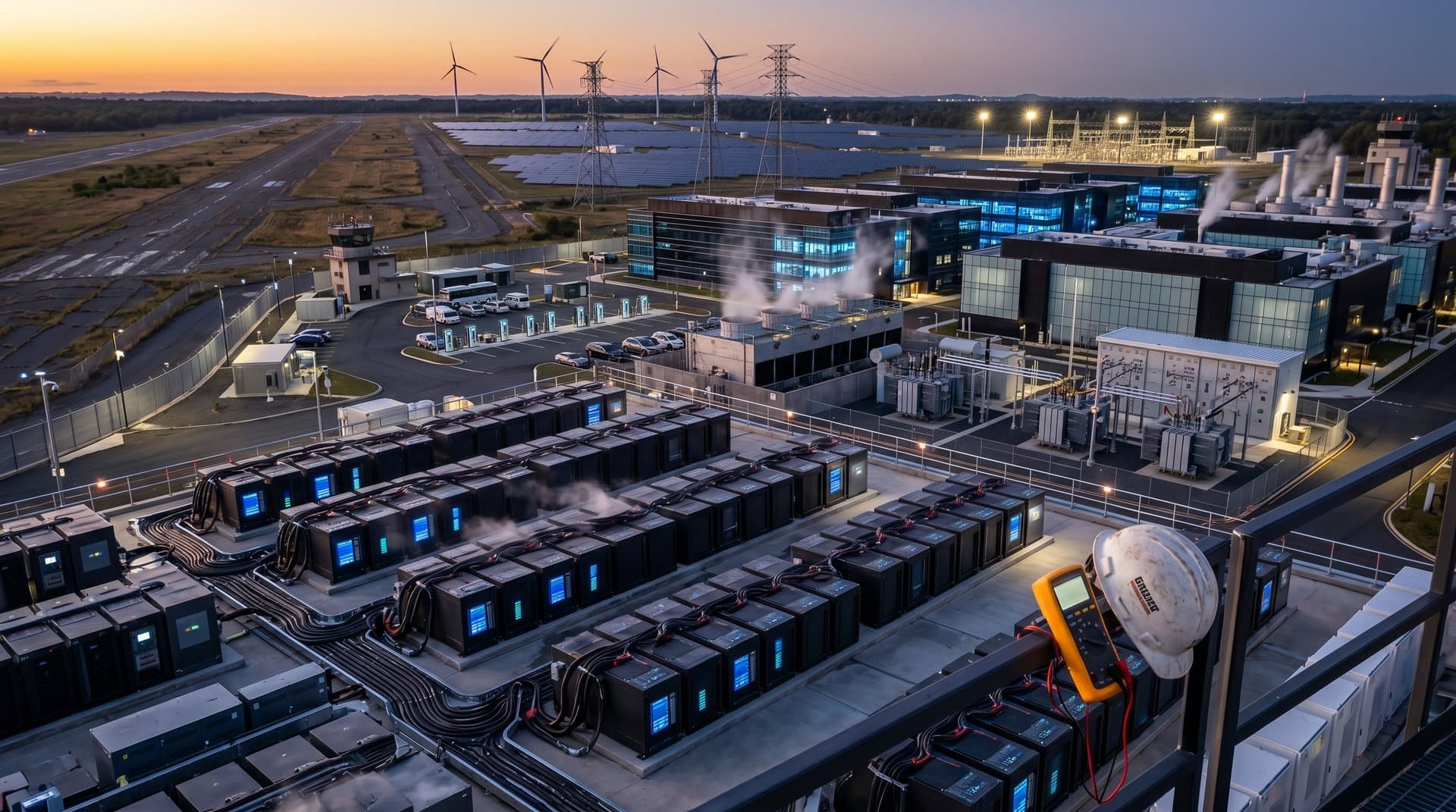
Developers co-locate 200 MWh BESS systems with data centers for backup power and ancillary services. These meet IEEE 1547 standards for frequency regulation and grid interconnection.
Flow batteries offer 8-12 hour long-duration energy storage (LDES) at 60-70% RTE, according to ESS Inc. specifications.
FERC Orders 841 and 2222 Unlock Wholesale Markets
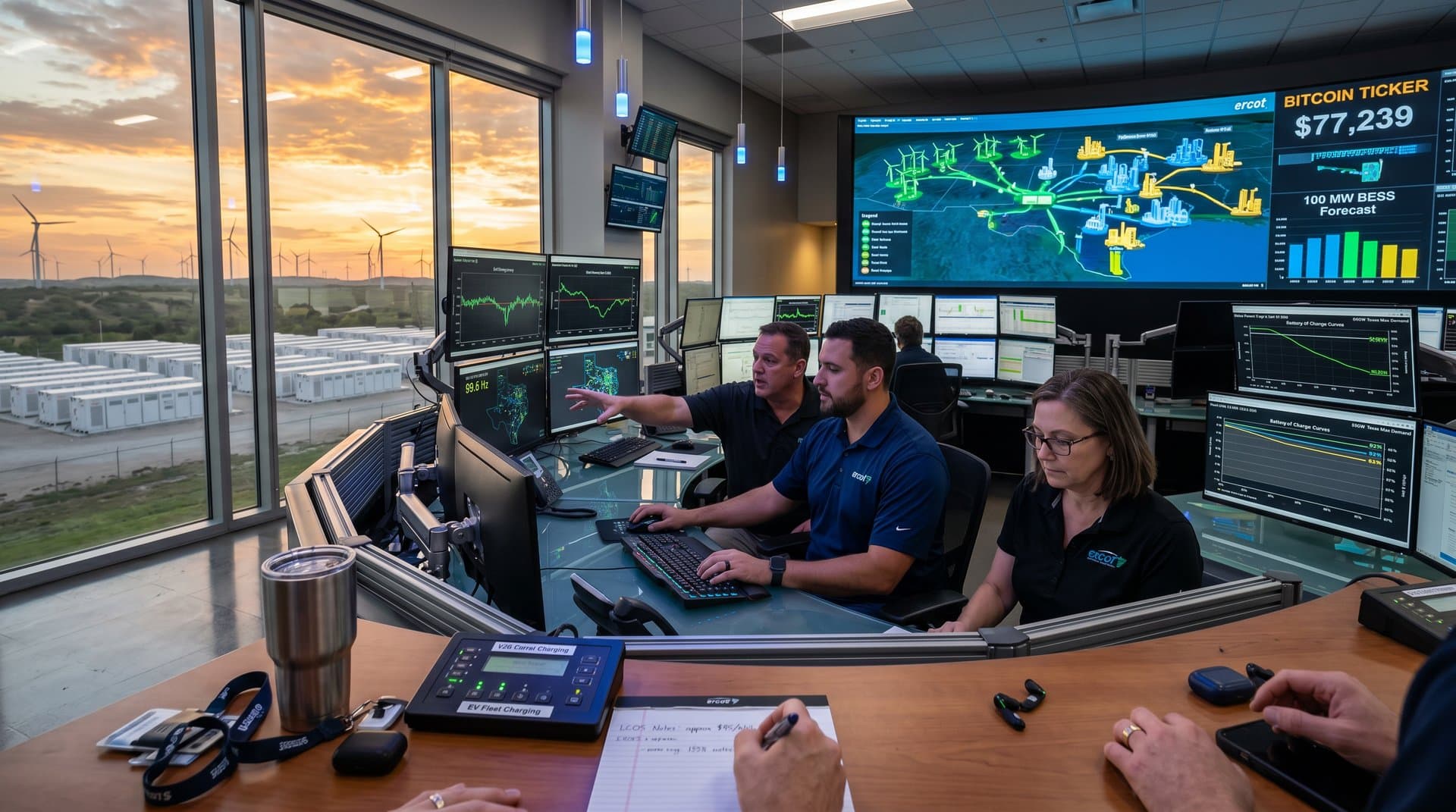
FERC Order 841 allows grid-scale battery storage participation in regional transmission organization (RTO) markets like PJM and CAISO. Order 2222 enables aggregated demand response.
US interconnection queues hold 2 TW total capacity, including 300 GW BESS pipeline, per Lawrence Berkeley National Laboratory (LBNL) analysis.
Inflation Reduction Act (IRA) Section 48 provides 30-50% Investment Tax Credit (ITC) for standalone BESS, plus 10% domestic content bonus. This cuts levelized cost of storage (LCOS) to USD 150/MWh.
Supply Chains Scale LFP and Beyond for BESS
EU Battery Regulation mandates 95% recyclability by 2030. Network codes aim for 20 GW grid-scale battery storage by 2030.
China produces 70% of global lithium-ion cells, per Benchmark Mineral Intelligence. US IRA supports 10 GWh sodium-ion pilots.
Australia supplies 50% of lithium; Canada ramps nickel to 200 kt/year, per Natural Resources Canada.
Lithium iron phosphate (LFP) batteries reach 6,000 cycles at 80% depth of discharge (DoD), 160 Wh/kg energy density (Wh/L unspecified), and USD 150/MWh LCOS, per CATL data sheets.
Iron-air batteries target 100-hour duration at USD 20/kWh capex, validated in Form Energy trials.
Vanadium redox flow batteries hit 200 Wh/L volumetric density with 20,000 cycles, per Invinity Energy Systems.
Developers Secure 5 GWh BESS Contracts
Fluence Energy and NextEra Energy locked 5 GWh grid-scale battery storage for 2025 commissioning. Vehicle-to-grid (V2G) pilots aggregate 1 GW from electric vehicles.
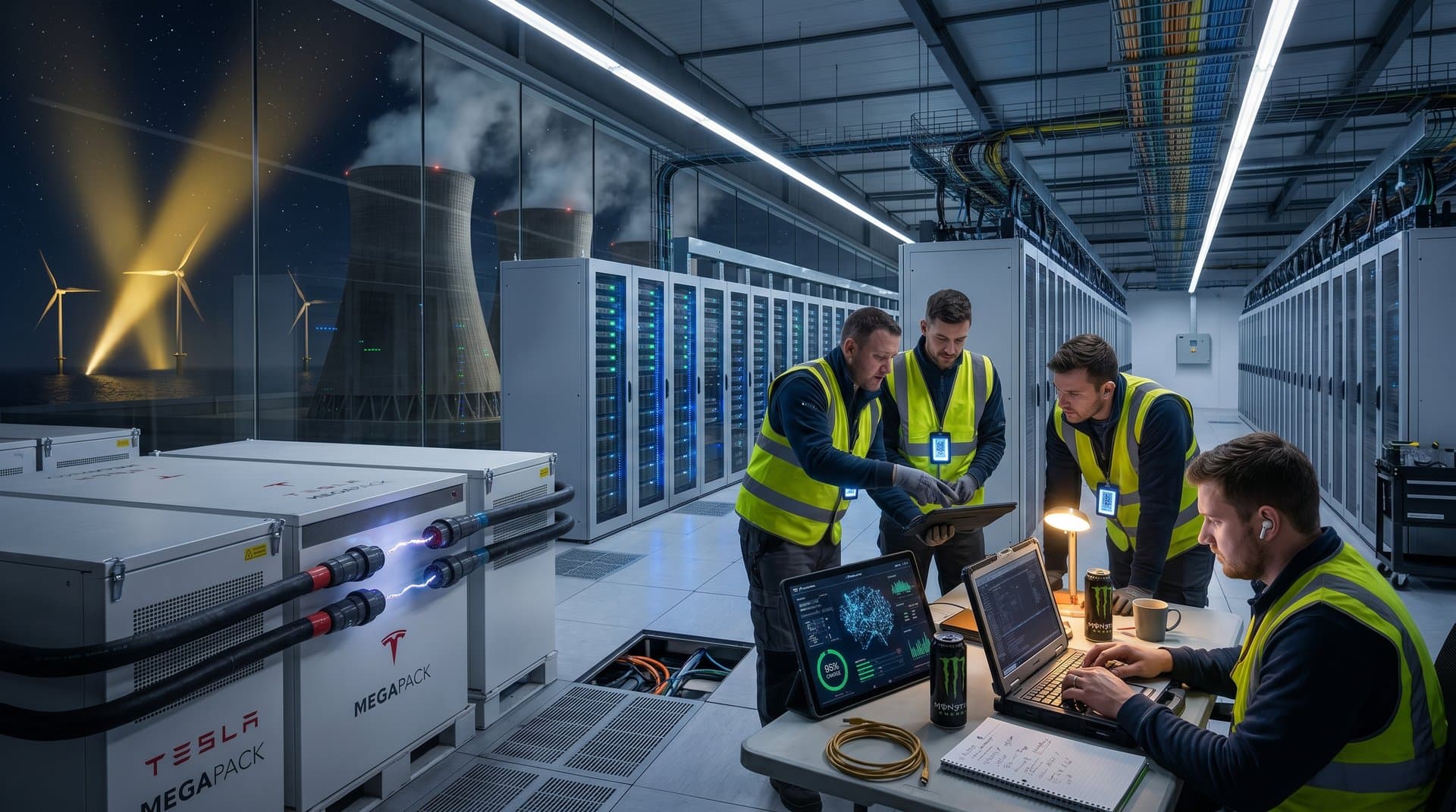
Co-location reduces transmission losses by 20%, as seen in Tesla Megapack deployments at data centers.
Plus Power advances 1.6 GWh BESS in California, paired with 500 MW solar for hyperscalers.
BESS Monetizes AI-Driven Grid Constraints
Marvell-Google AI chips spur USD 10 billion-plus data center capex. Grid-scale battery storage eyes 50 GW by 2028 through FERC and IRA revenue stacks.
Levelized cost of energy (LCOE) for BESS-backed renewables falls to USD 30/MWh, per Lazard's Levelized Cost of Storage analysis v17.
Integrators worldwide convert grid limits into profits via arbitrage, capacity, and frequency markets. Grid-scale battery storage demand accelerates as AI reshapes power systems.
Frequently Asked Questions
Why do AI data centers require grid-scale battery storage?
AI servers draw 1-2 MW per rack. Grid-scale battery storage delivers rapid MW discharge for stability, frequency regulation, and peak shaving at hyperscaler sites.
How does FERC policy affect grid-scale battery storage deployment?
FERC Order 841 enables BESS in wholesale markets via RTOs. Order 2222 adds demand response access, clearing path for 300 GW pipeline.
What role does IRA play in grid-scale battery storage for data centers?
IRA Section 48 provides 30-50% tax credits for standalone BESS. Domestic content adders cut LCOS, favoring co-location with data centers.
How will Marvell-Google AI chips impact grid-scale battery storage needs?
Two AI chips expand data center capacity, spiking power to 100 GW+. Grid-scale battery storage matches loads via FERC rules and IRA incentives.