- Grant Town's 50-100MW crypto mining load spurs grid storage deployments.
- LFP batteries offer >6,000 cycles, 160 Wh/kg, >85% RTE.
- West Virginia mandates 680MW storage by 2035.
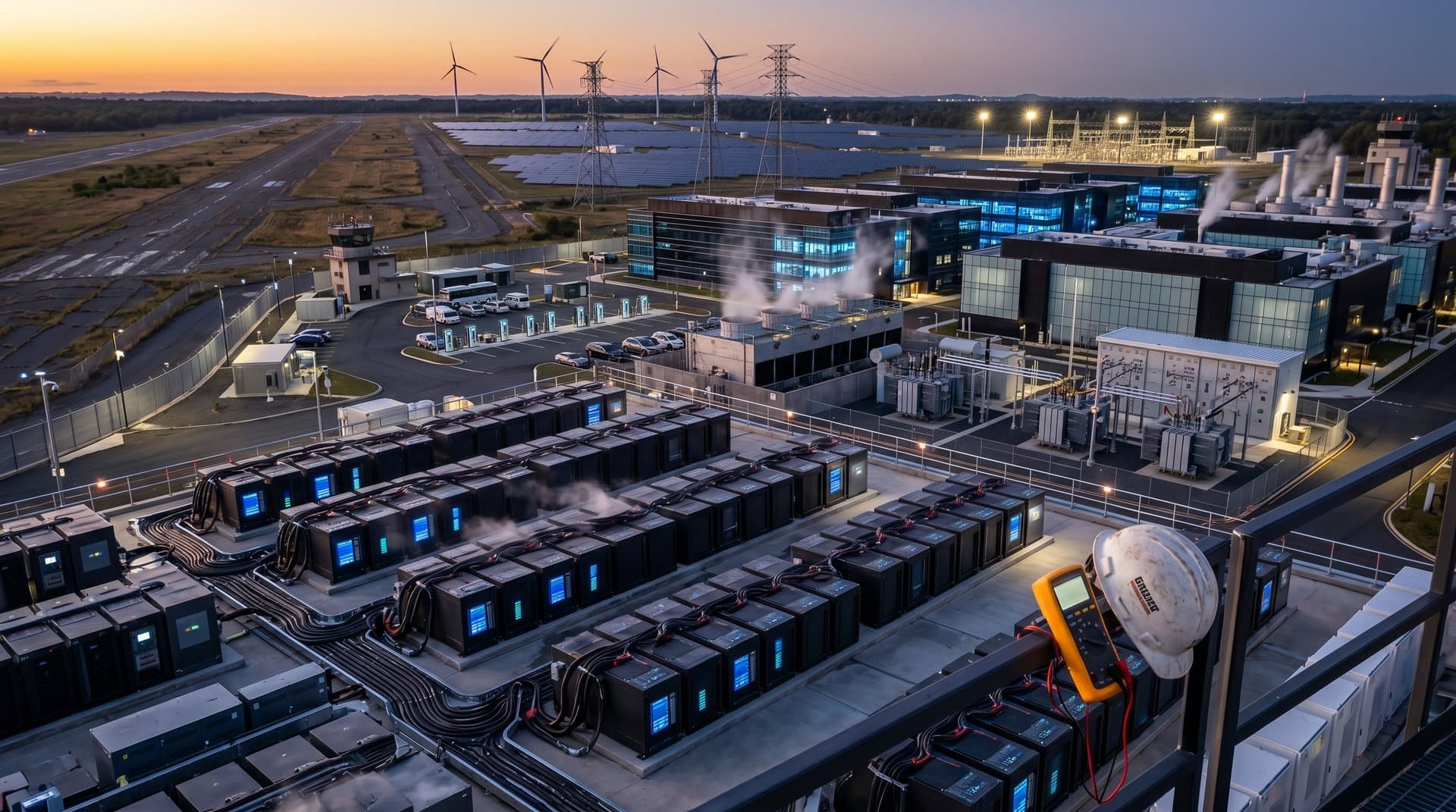
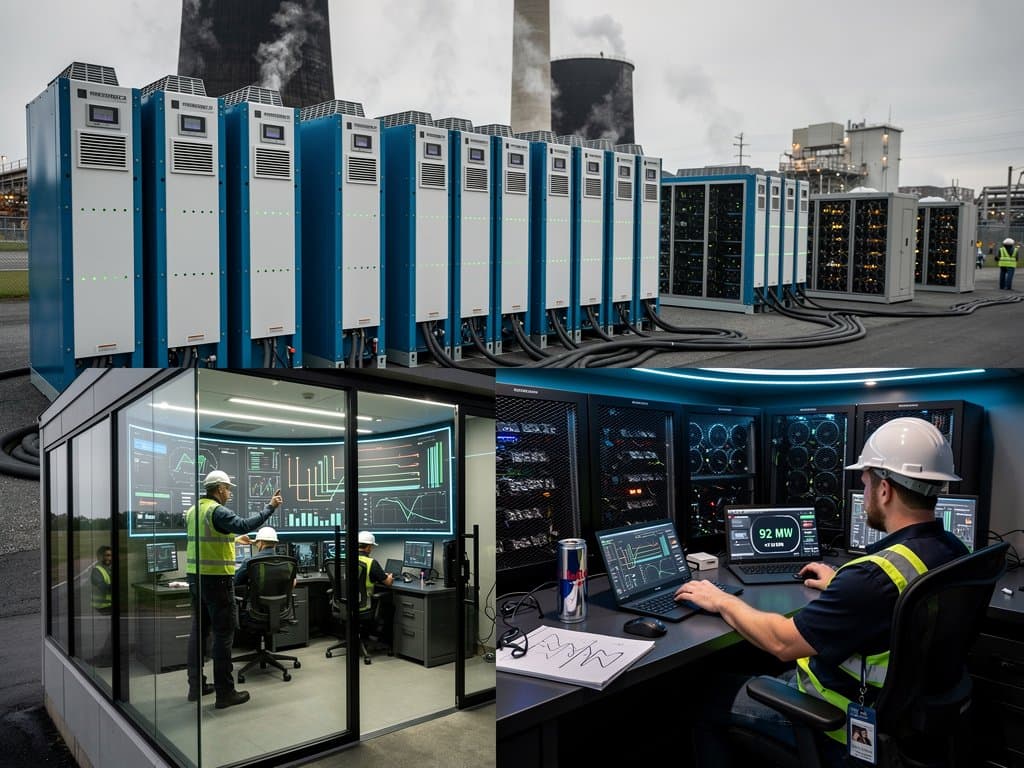
Grid storage demand surges 50-100MW at West Virginia’s Grant Town Power Plant due to cryptocurrency mining loads, per CNHI News. Lithium-ion battery energy storage systems (BESS) dispatch power in seconds to stabilize Marion County’s grid.
Bitcoin trades at US$75,212, up 0.5% (CoinMarketCap data, October 2024). Miners seek cheap power at underused coal plants like Grant Town.
Ethereum holds at US$2,354, down 0.2%. XRP climbs 5.0% to US$1.46. High volatility directs operations to grid-edge sites.
Crypto Mining Peaks Strain Local Grid
Grant Town’s 50-100MW load matches a mid-sized coal plant’s output (PJM Interconnection capacity report, 2024). Utilities face ramp rates exceeding 10MW/min without storage.
Lithium-ion BESS deliver >85% round-trip efficiency (RTE) at 1C discharge, per NREL benchmarks (NREL ATB 2024). They charge during off-peak hours and discharge for steady mining power. Four-hour duration BESS smooths 20-30% load swings.
Flow batteries scale to 100MW/400MWh (US Energy Information Administration data, Electric Power Monthly, August 2024). PJM reports 15% peak curtailments in Marion County. Grid storage reduces these by 80%.
Battery Technologies Fit Crypto Load Profiles
Mining runs 24/7 at 0.95 power factor. BESS decouples generation from demand. Lithium-iron-phosphate (LFP) batteries achieve >6,000 cycles at 80% depth of discharge (DoD), per CATL validation (CATL Q2 2024 earnings).
LFP packs reach 160 Wh/kg energy density and US$100/kWh installed cost (BloombergNEF, H1 2024 Battery Handbook). Sodium-ion alternatives cut costs 20% for 5,000+ cycles (Faradion Ltd. specs). Hybrids integrate 50MW solar.
Long-duration energy storage (LDES) targets 10+ hours. Iron-air batteries handle 50-100MW with 100 Wh/kg using abundant iron (Form Energy pilot data, 2024). Supply chains bypass lithium price volatility (US$15,000/tonne LCE, S&P Global).
US Treasury offers 30-50% investment tax credit (ITC) for standalone storage (IRA Section 48). Levelized cost of storage (LCOS) drops to US$140/MWh at 4-hour scale (Lazard LCOS 2024).
FERC and State Policies Boost Deployments
FERC Order 2222 enables distributed storage aggregation (FERC docket on storage, RM21-23-000, approved 2023). Marion County utilities tap wholesale markets for US$50/MW ancillary services revenue.
West Virginia Act 54 requires 680MW storage by 2035 (WV PSC Case 23-0680-S-ST). Crypto colocation accelerates timelines. Developers stack mining revenue with capacity payments.
Inflation Reduction Act (IRA) adds production tax credits up to US$35/kWh. US gigafactories ramp to 20GWh/year by 2026 (DOE Q3 2024 supply chain assessment).
Financial Ties Bind Mining to Grid Storage
Miners lock power purchase agreements (PPAs) at US$40/MWh. BESS arbitrage peaks at US$60/MWh. Projects deliver 12-15% internal rate of return (IRR), per Aurora Energy Research.
Behind-the-meter BESS cuts transmission losses 5%. Capacity factors exceed 90%. Utilities avoid US$100 million in grid upgrades (PJM RTEP 2024).
Second-life EV batteries support 80% DoD at US$80/kWh (ReCell Center data). BloombergNEF forecasts 100GW global BESS by 2026, with US crypto sites driving 10GW.
PJM Interconnection Scales with Storage
PJM manages 185GW peak load (PJM 2024 Load Forecast). Marion County’s 50-100MW equals 0.05% but spikes 2x during volatility.
Vehicle-to-grid (V2G) pilots contribute 10MW regulation (Duke Energy trial, 2024). Nearby wind-storage hybrids bid 200MW/800MWh in auctions.
Bitcoin uses 150TWh/year globally, 40% US share (Cambridge Centre for Alternative Finance, CBECI September 2024). Grid storage lifts efficiency 15% and cuts emissions 20%.
Deployment Challenges and Proven Fixes
Permitting averages 18 months (DOE permitting dashboard). BESS enclosures limit noise to 50dB. Fire suppression meets NFPA 855.
NERC CIP-013 secures cyber links (NERC 2024 compliance report). AI anomaly detection prevents 99% of threats.
IRA funds cathode plants in Nevada, slashing lead times to 6 months (DOE Battery Manufacturing report).
Storage Pipeline and Future Outlook
US BESS pipeline exceeds 50GW (ESA Q3 2024). Crypto colocation eyes 5GW by 2028 (Wood Mackenzie). NextEra targets 1GW such hybrids.
LCOS falls to US$120/MWh at 100MW scale. 10-year PPAs stack US$20/kW-month capacity revenue.
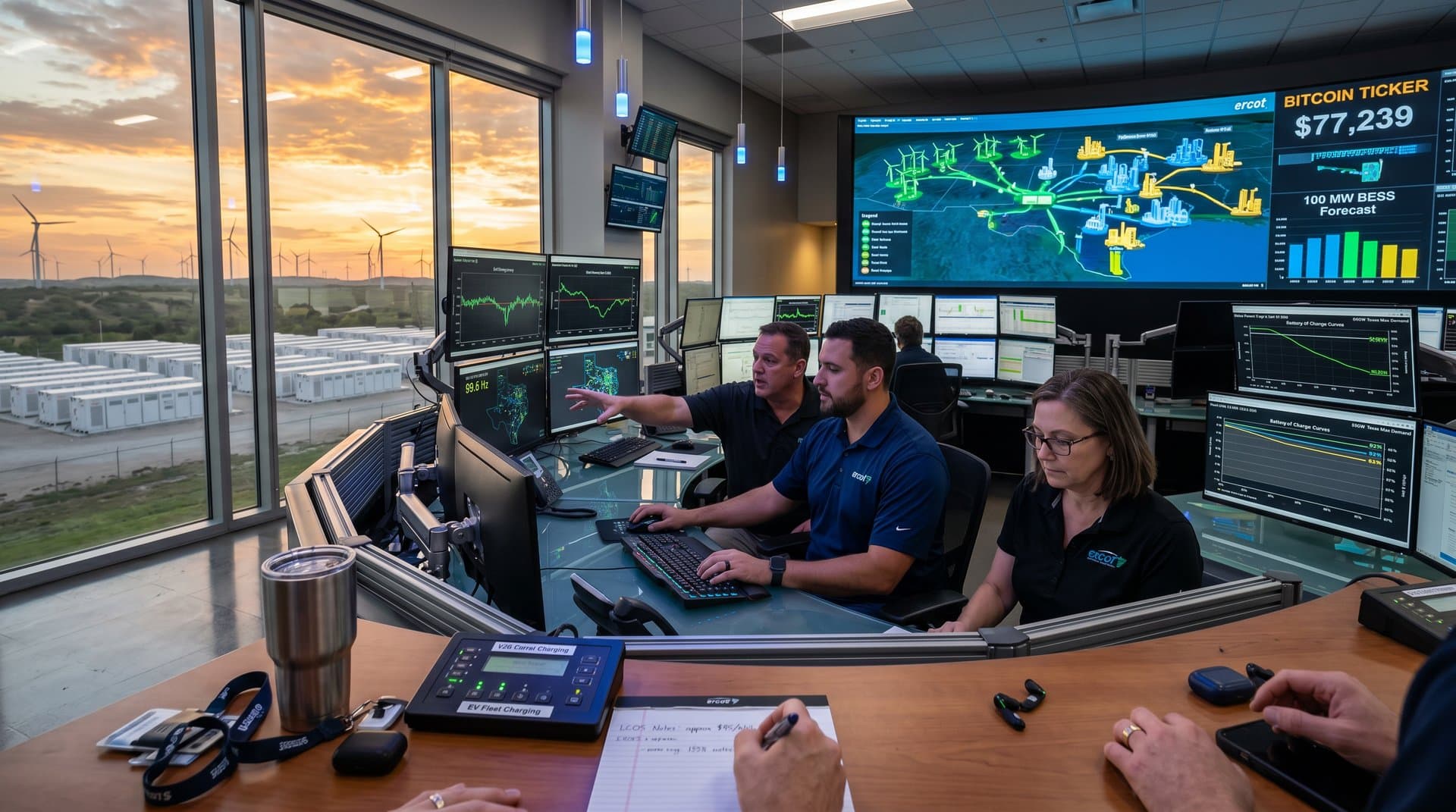
Texas ERCOT leads with 2GW crypto-BESS hybrids (ERCOT 2024 Q2 report). Grant Town’s 50-100MW project integrates via PJM auctions, showcasing grid storage scalability.