- Forbes 2026 AI 50 lists 50 AI leaders spiking power demand 165% by 2030 (BNEF).
- Lithium-ion hits 85% RTE, 90% DoD for 400 MWh solar firming systems.
- ERCOT deploys 10 GW storage; iron-air LDES targets 100 hours at 150 Wh/kg.
Forbes 2026 AI 50 list released today names 50 leading AI companies, including OpenAI and Anthropic. Their data centers drive electricity demand up 165% by 2030, BloombergNEF reports. Utilities deploy solar-plus-storage hybrids to meet this load.
Grid operators prioritize lithium-ion batteries with round-trip efficiency (RTE) exceeding 85% at 0.5C discharge rates, per International Energy Agency (IEA) benchmarks from 2024.
AI 50 Firms' GPU Clusters Strain Grids with 10-100 MW Loads
Forbes 2026 AI 50 companies install clusters of 10,000 NVIDIA H100 GPUs. Each GPU consumes 700W at peak, pushing a single cluster to 10-100 MW demand. Operators site these in Texas and Virginia for low-cost power.
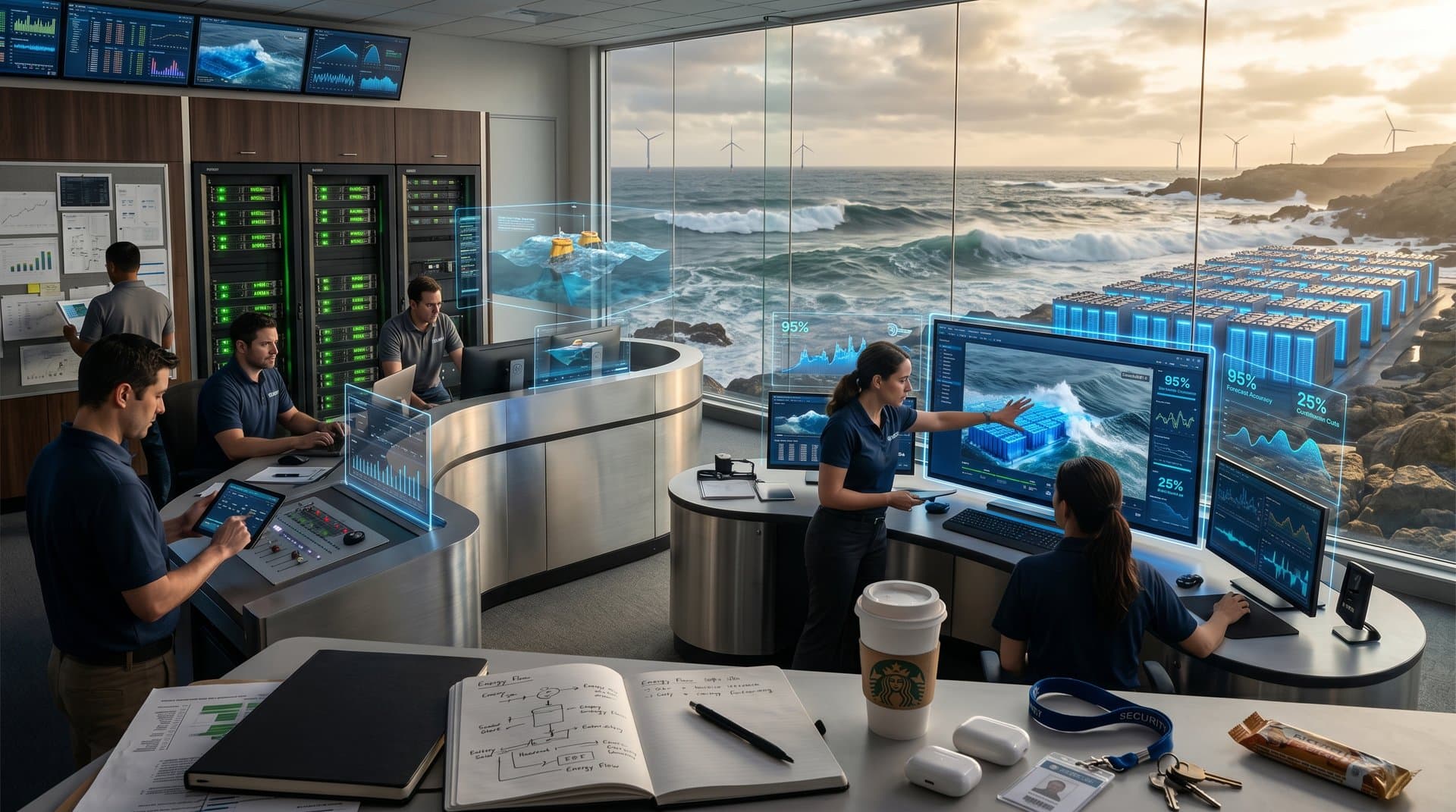
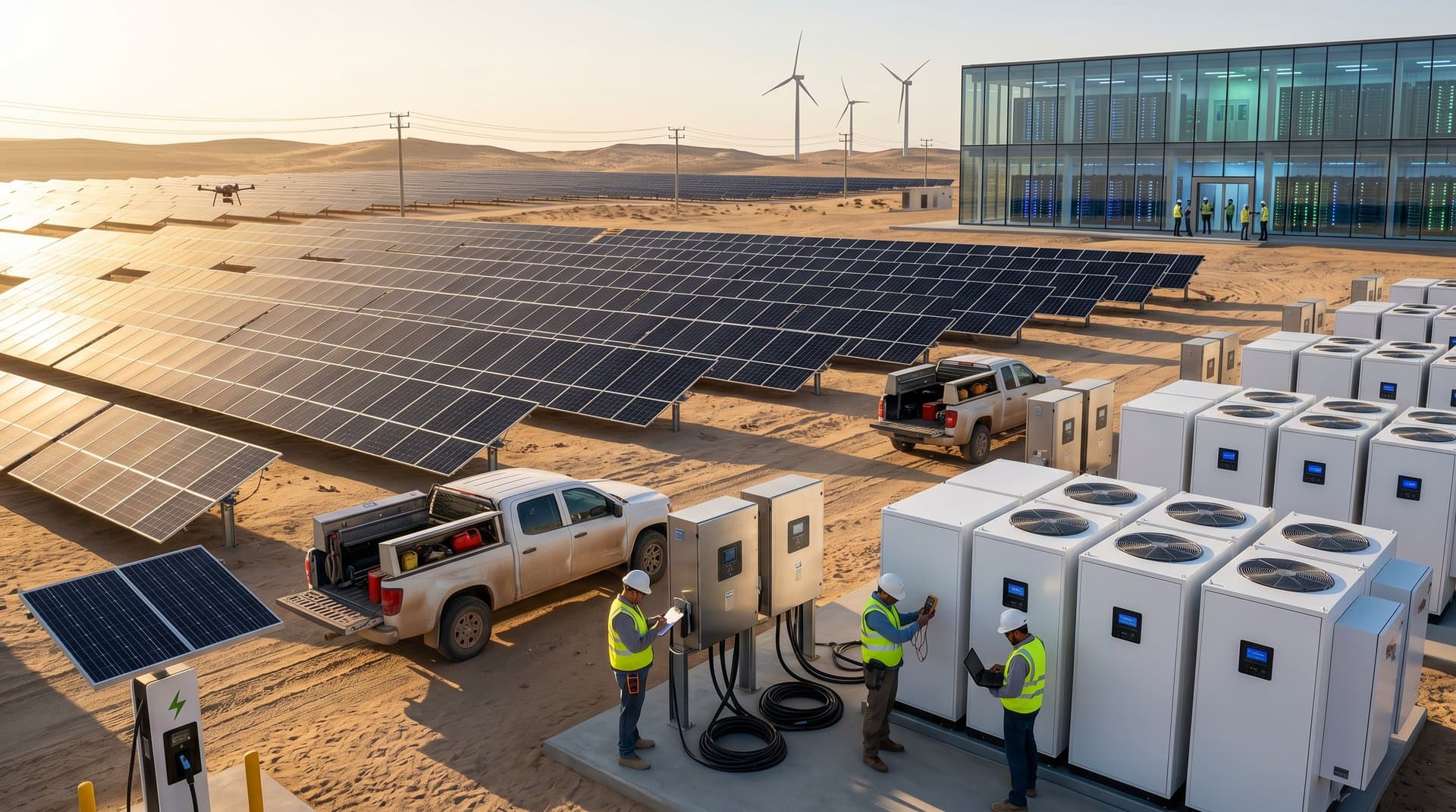
Utilities fire up gas peakers for AI spikes, but renewables need storage for firm power. Developers co-locate 100 MW solar PV arrays with 400 MWh/100 MW lithium-ion systems, providing four-hour duration at 90% depth of discharge (DoD).
IEA's 2024 analysis projects data centers consuming 1,000 TWh annually by 2026, matching Japan's total electricity use.
BloombergNEF details this 165% surge from generative AI training and inference.
Lithium-Ion Achieves 90% DoD for Data Center Uptime
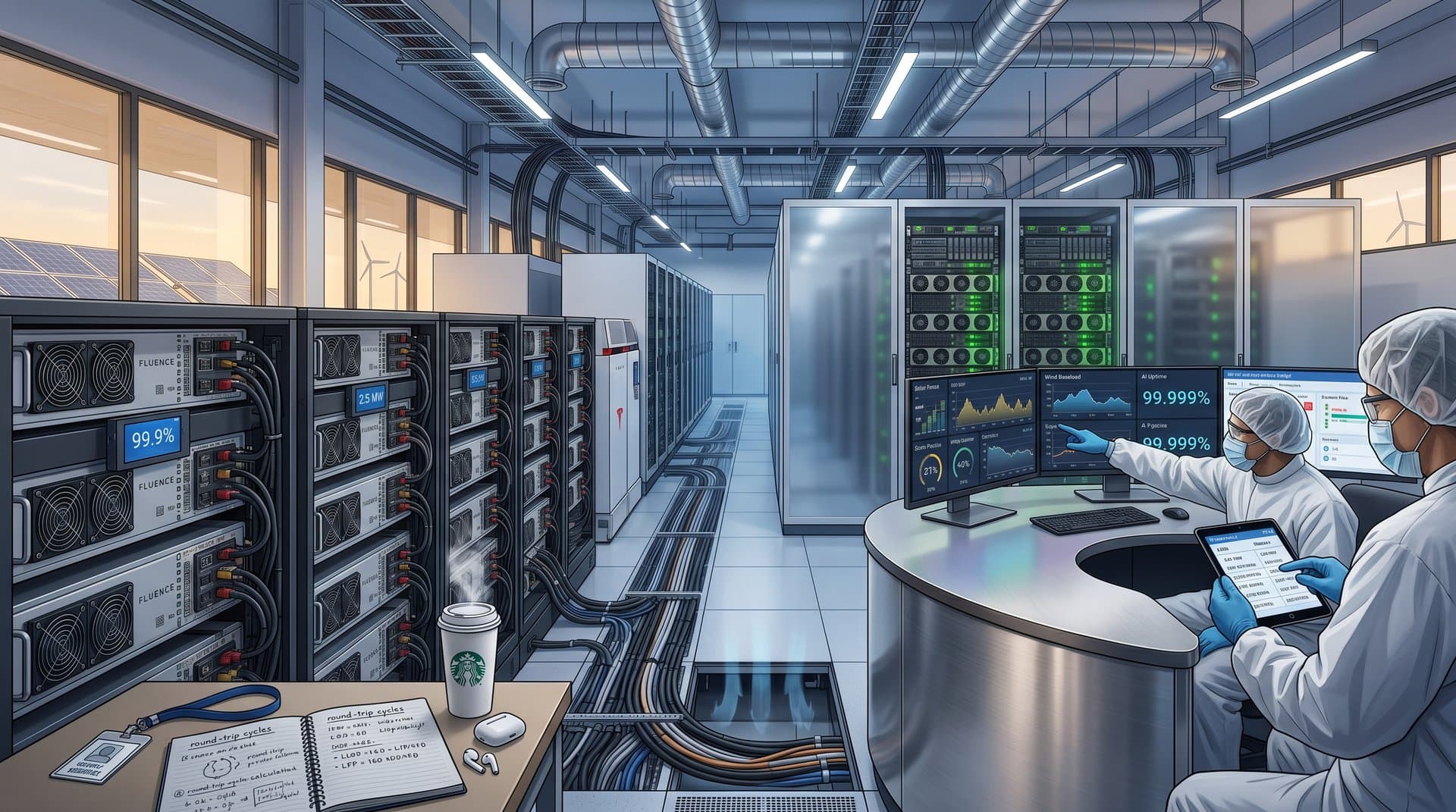
AI operations demand zero downtime; a one-hour blackout costs hyperscalers millions in retraining. Lithium-ion packs with NMC cathodes hit 90% DoD daily, tested to IEC 62619 standards.
Developers place 100 MW/400 MWh containers next to data halls. These cycle 3,000+ times at 80% capacity retention after five years, per DNV GL-validated manufacturer data.
Vanadium redox flow batteries extend discharge to 10 hours at 75-80% RTE, with 25 Wh/L energy density for grid-scale use.
Goldman Sachs forecasts a 160% global power demand rise from AI through 2030.
Lithium-ion levelized cost of storage (LCOS) drops to USD 0.12/kWh at scale, undercutting gas peakers, per NREL 2024 data.
Policies Boost Storage Pairings with Renewables
US Inflation Reduction Act (IRA) Section 48 offers 30-50% investment tax credits (ITC) for standalone storage. FERC Orders 841/2222 let batteries bid in wholesale markets since 2021.
California SB 100 mandates 5 GW storage by 2026. EU REPowerEU targets 200 GW renewables-plus-storage by 2030.
APAC subsidies favor sodium-ion at 200 Wh/kg and USD 50/kWh packs, dodging lithium risks from Australia/Chile.
Microsoft and Google sign 15-year PPAs for 1 GW solar-plus-storage. NREL's 2024 features highlight hybrid inverters optimizing 95% solar capture.
LDES Firms Renewables for AI Baseload
Long-duration energy storage (LDES) expands beyond lithium-ion. Vanadium flow scales to 1 GWh pilots at 80% RTE and 10,000 cycles.
Sodium-ion reaches 160 Wh/kg at USD 40/kWh, eliminating cobalt. Form Energy's iron-air batteries target 100-hour duration at 150 Wh/kg and 20 MW output.
Wood Mackenzie forecasts LDES at 20% of deployments by 2030. AI offtake de-risks USD 200 million capex for 100 MW/10 GWh projects.
Lithium carbonate hit USD 15,000/tonne in 2024, per Benchmark Mineral Intelligence, hiking NMC costs.
ERCOT Deploys 10 GW Storage for AI Reliability
Texas ERCOT added 3.5 GW batteries in 2024, aiming for 10 GW by 2026 to serve data centers. Batteries earn USD 50/MWh arbitrage plus USD 10/MW frequency regulation.
PJM rewards 100 MW/minute ramps. UK National Grid pairs 2 GW offshore wind with lithium-ion. Saudi Arabia builds 1 GW desert solar-storage.
Forbes 2026 AI 50 channels VC to storage innovators. FERC reforms and IRA stacking deploy 50 GW US storage by 2030, firming grids for AI growth.
Advanced batteries turn Forbes 2026 AI 50 demands into renewable opportunities.
Frequently Asked Questions
What is the Forbes 2026 AI 50 list?
Forbes 2026 AI 50 ranks 50 top AI companies scaling models and compute. It spotlights energy-intensive leaders like OpenAI shaping storage investments.
How does Forbes 2026 AI 50 impact grid storage?
Forbes 2026 AI 50 firms' data centers demand firm power. Storage pairs with solar/wind via 85% RTE lithium-ion for 24/7 delivery.
Why pair batteries with renewables for AI?
Solar/wind intermittency requires batteries for AI's baseload. Four-hour lithium-ion achieves USD 0.12/kWh LCOS with 90% DoD.
What policies support storage for Forbes 2026 AI 50?
IRA provides 30-50% ITCs; FERC 841 unlocks markets. These fund batteries serving Forbes 2026 AI 50 data centers.