- Bitcoin at $76,633 drives 2.5 GW crypto mining loads in PJM grids.
- LFP batteries provide 85-90% RTE for 4-hour peaks at 90% DoD.
- LDES hits 10 GW by 2030, with iron-air at <US$100/kWh LCOS.
Crypto mining grid pressure surges across US grids as Bitcoin trades at US$76,633 (CoinMarketCap, October 10, 2024). This price peak fuels gigawatt-scale mining expansions, straining transmission infrastructure in hubs like Texas and PJM. Grid-scale battery storage deployments accelerate to maintain frequency stability and avoid blackouts.
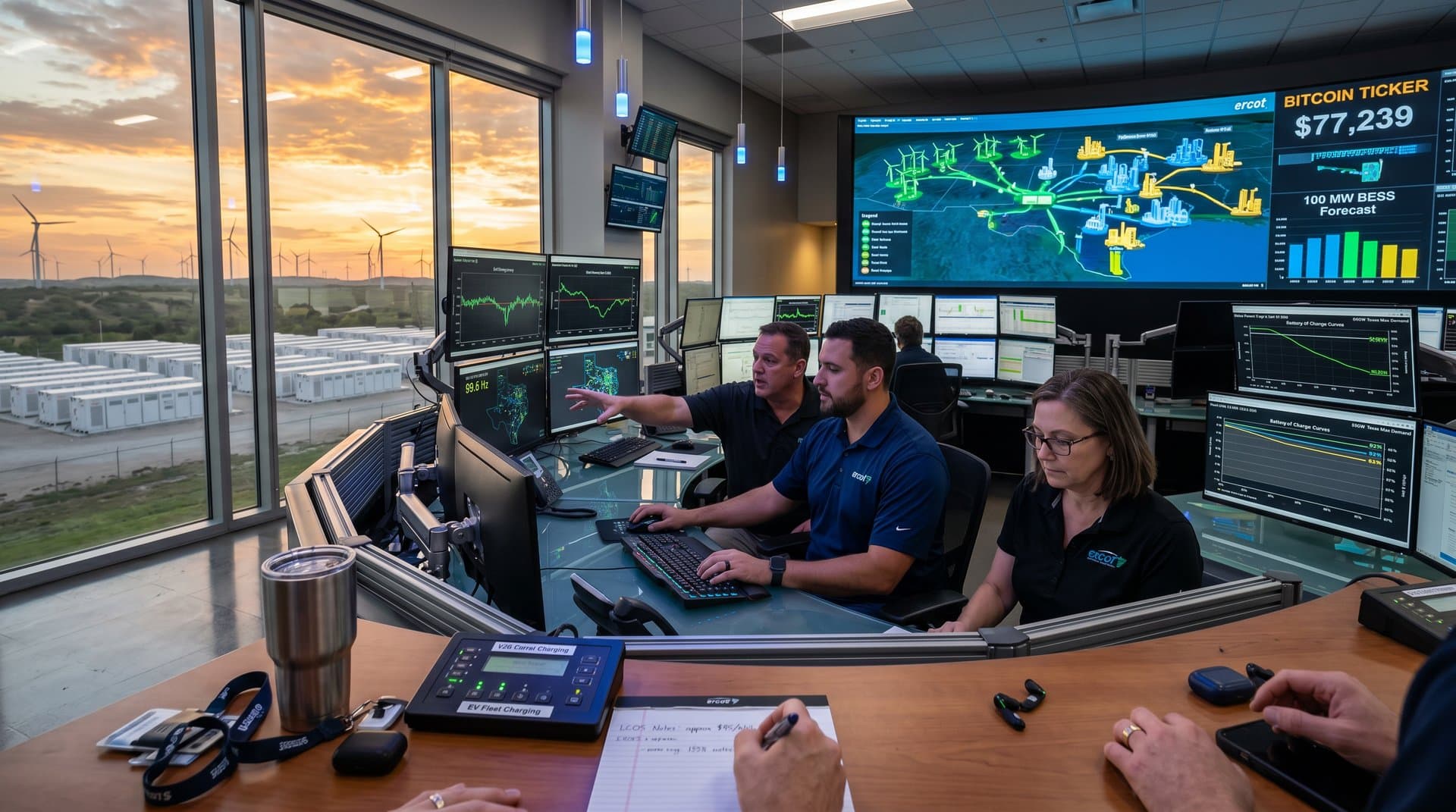
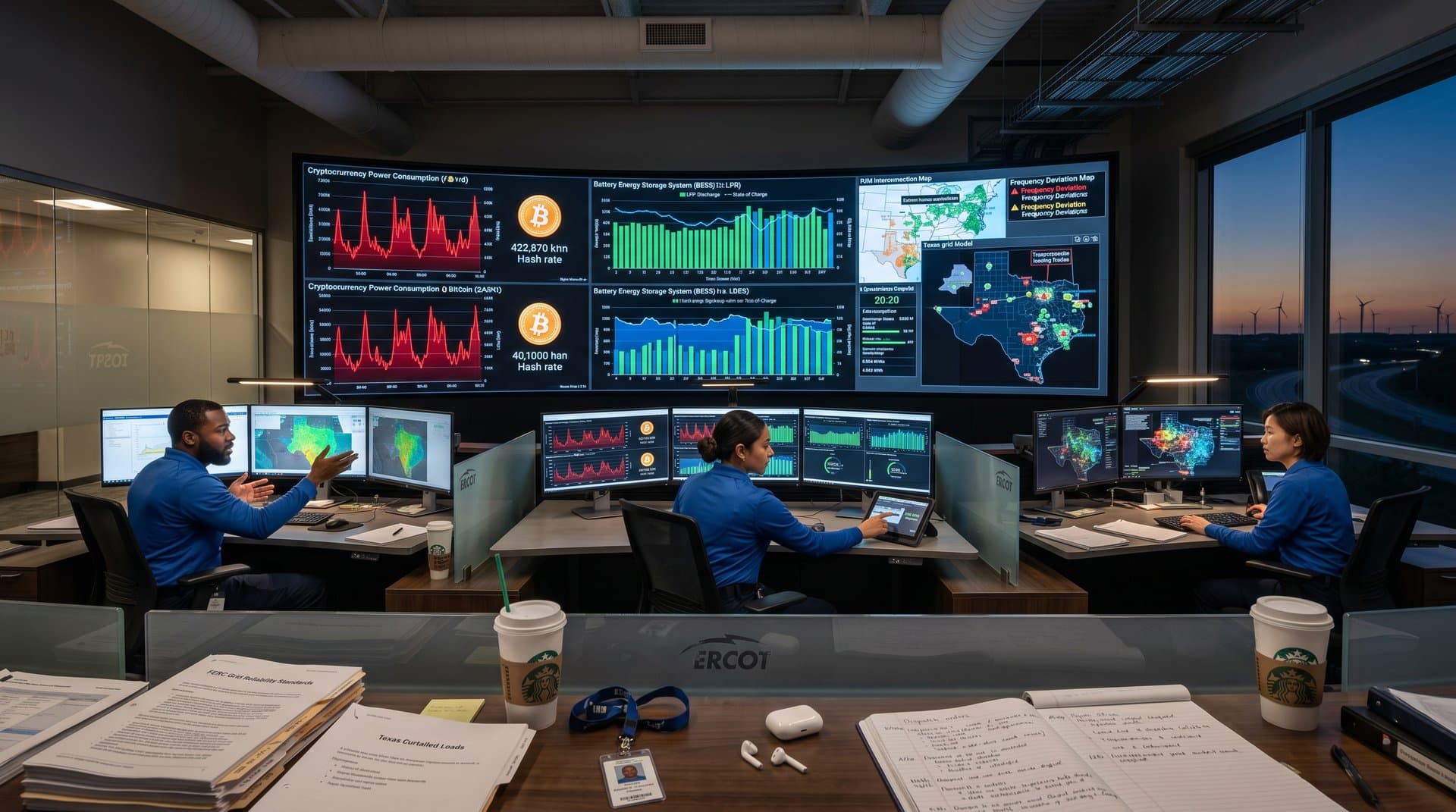
Operators report continuous baseload demands rivaling steel mills. PJM Interconnection and ERCOT face curtailment risks during peaks.
Crypto Mining Grid Pressure in PJM and ERCOT
Cryptocurrency miners operate proof-of-work rigs 24/7, creating steady loads that challenge grid inertia. Bitcoin's climb to US$76,633 boosts hash rates by 15% month-over-month (Cambridge Centre for Alternative Finance, October 2024).
PJM Interconnection's FERC filing ER24-1540-000 details data center loads, including crypto mining, reaching 2.5 GW in peak hours. Transmission constraints in Pennsylvania-New Jersey-Maryland limit expansions. ERCOT curtailments hit 1 GW in Q3 2024 during solar overgeneration.
Weibang Technology (WBT) stock surged 5.7% to US$57.42 on October 9, 2024, lifting market cap to US$12.3 billion. Investors bet on mining resilience despite grid bottlenecks.
Lithium-Ion LFP Batteries Counter Short-Duration Peaks
Lithium iron phosphate (LFP) batteries dominate with 85-90% round-trip efficiency (RTE) at 0.25C discharge rates and 4-hour duration. They achieve 90% depth of discharge (DoD) under IEC 62619 standards.
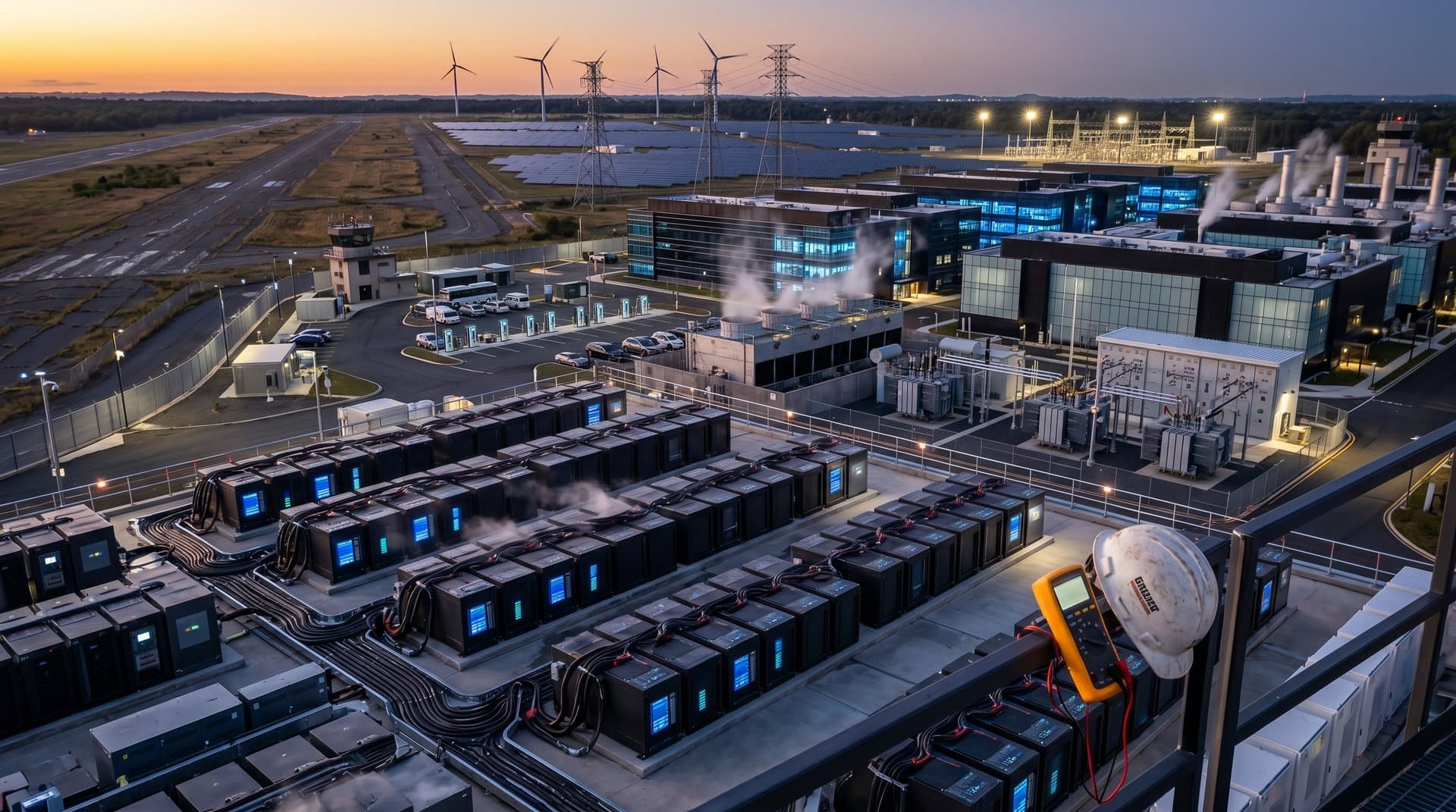
FERC Form 923 Q1 2023 data shows data center loads up 25% year-over-year to 15 GW nationally. The Inflation Reduction Act (IRA) Section 45X tax credits accelerate 200 MW/800 MWh projects, like Plus Power's 300 MW/1,200 MWh system in Arizona commissioning Q4 2025.
LFP offers 5,000-10,000 cycles at 80% capacity retention. Miners participate in ERCOT's demand response programs, curtailing 500 MW for US$50/MWh payments, backed by LFP reserves.
LDES Solutions Address Mining Baseload Demands
Long-duration energy storage (LDES) targets 8-100 hour discharges for baseload mining. Form Energy's iron-air batteries deliver 100 hours at 50-60% RTE and projected levelized cost of storage (LCOS) below US$100/kWh at 100 MW scale.
The company's 3 MW/150 MWh pilot in Minnesota integrates with mining co-location, discharging at 50 kW/MW. Vanadium redox flow batteries from Invinity Energy Systems provide 8-12 hours, 75-80% RTE, and over 20,000 cycles per VRFB-5 MWh units.
BloombergNEF analysis forecasts 10 GW LDES deployments by 2030 in high-load states like Texas and Georgia. Hybrid solar-mining-storage plants, such as Soluna Computing's 25 MW project in Texas, cut net grid draws by 40%.
Battery Technologies Comparison for Crypto Mining Grid Support
- Technology: Lithium-ion (LFP) · Duration: 2-4 hours · RTE: 85-90% · Cycle Life: 5,000-10,000 · LCOS (US$/kWh): 120-150 · Energy Density (Wh/L): 200-250
- Technology: Vanadium Flow · Duration: 8-12 hours · RTE: 75-80% · Cycle Life: 20,000+ · LCOS (US$/kWh): 100-130 · Energy Density (Wh/L): 25-35
- Technology: Iron-Air (Form) · Duration: 100 hours · RTE: 50-60% · Cycle Life: 5,000+ · LCOS (US$/kWh): <100 (proj.) · Energy Density (Wh/L): 30-50
LFP suits frequency regulation (5-15 min). Flow batteries handle 4-hour ramps. Iron-air scales baseload, per Form Energy's DOE ARPA-E validation.
Financial and Supply Chain Impacts
IRA production credits lower LFP costs 30% to US$120/kWh by 2025 (Benchmark Mineral Intelligence, Q3 2024). US gigafactories like Tesla's Lathrop (50 GWh/year) and Ultium Cells secure cathode supply amid lithium prices at US$12,000/tonne.
FERC Order 1920 requires transmission planning for 30 GW storage by 2035. States like California procure 5 GW, Texas 10 GW via auctions. Miners form virtual power plants (VPPs), aggregating 2 GW batteries for ERCOT ancillary services.
Solid-state batteries from QuantumScape target 500 Wh/kg and 1,000 cycles, with 1 GWh pilots planned 2026. Geopolitical shifts favor US refining, reducing China dependency from 80% to 50% by 2030.
Policy and Market Outlook
Crypto mining grid pressure persists with BTC above US$70,000 profitability threshold (US$45,000 all-in costs, per CoinShares Q3 2024). FERC auctions in Q1 2025 will test 5 GW battery integration.
BloombergNEF projects grid storage capacity hitting 150 GW by 2030, outpacing mining growth at 25 GW. Co-located batteries enable miners to monetize excess renewables, stabilizing US grids long-term.
Frequently Asked Questions
What causes crypto mining grid pressure in the US?
Proof-of-work rigs draw constant baseload power, spiking with BTC at $76,633. ERCOT and PJM face transmission constraints. Batteries balance excess generation.
How do batteries alleviate crypto mining grid pressure?
LFP provides 4-hour duration at 85-90% efficiency for peaks. LDES extends to 100 hours. Demand response integrates miners with storage.
Which battery technologies suit crypto mining grid needs?
LFP for short peaks (5,000 cycles). Vanadium flow for 8-12 hours (20,000 cycles). Iron-air for 100 hours at <$100/kWh LCOS.
Will US policy address crypto mining grid pressure?
FERC Order 1920 requires storage planning. IRA accelerates deployments. States mandate 5-10 GW procurements by 2030.