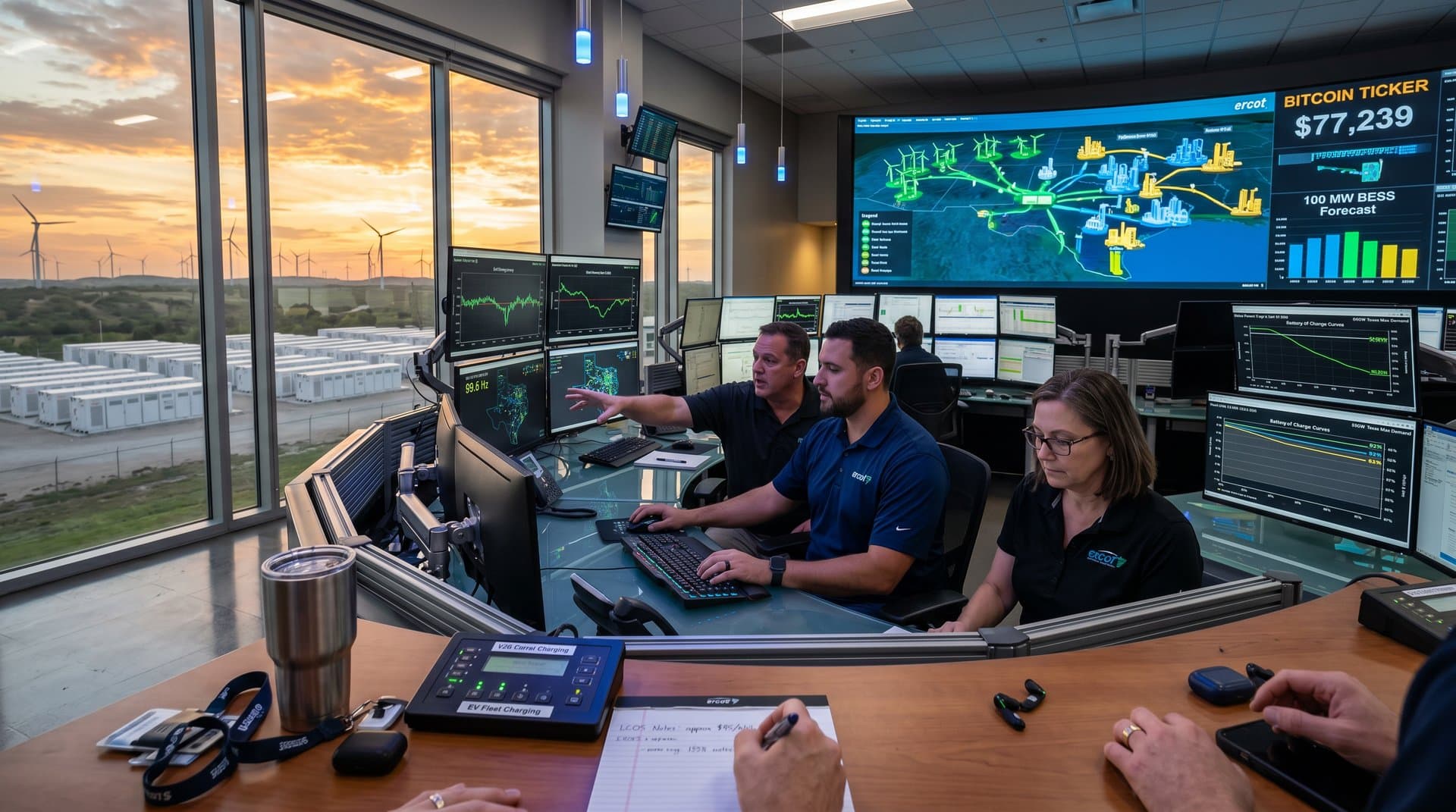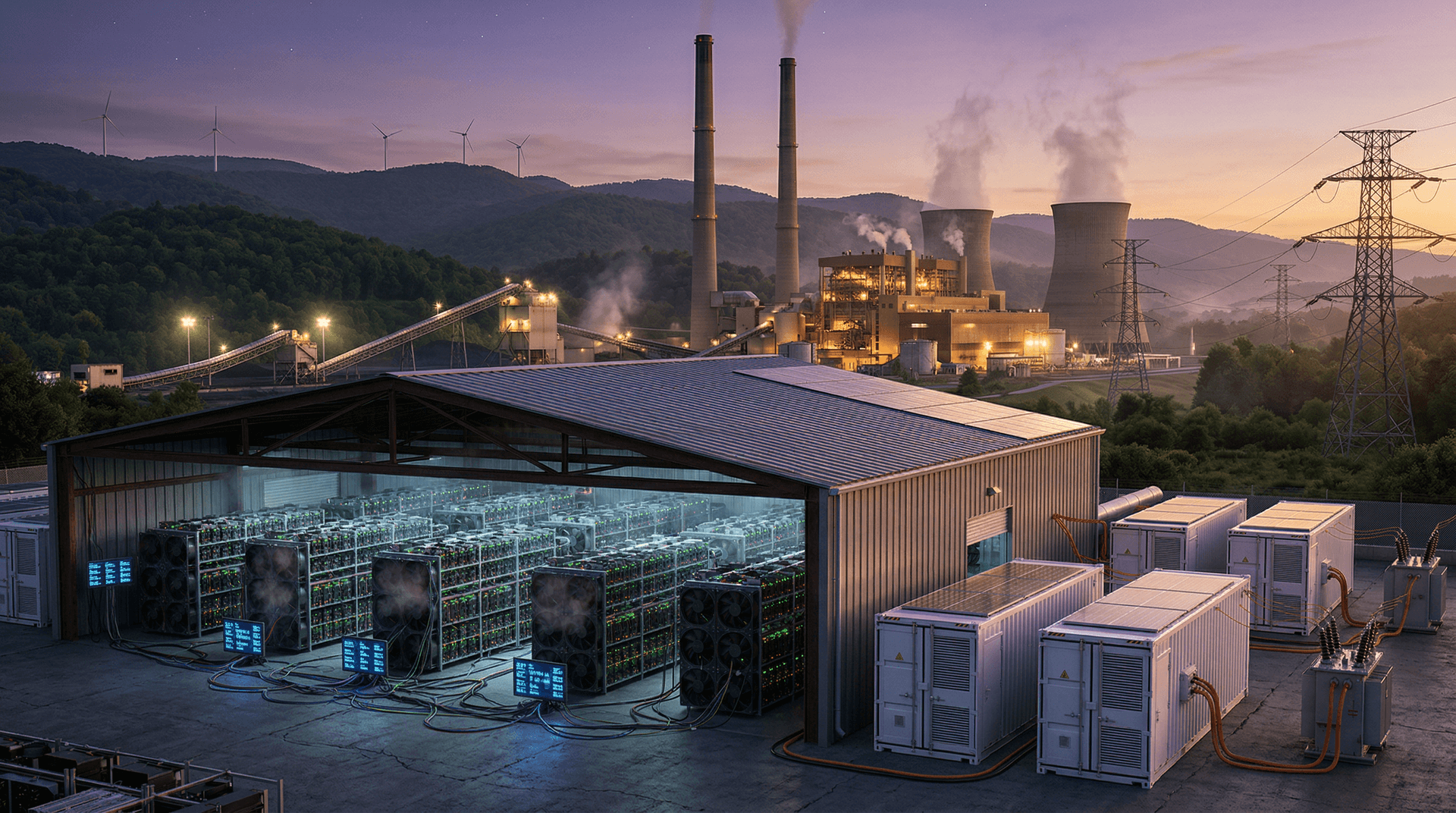
- Crypto mining spikes 500 MW peaks on PJM grids near Grant Town.
- Li-ion batteries hit 85% RTE, 250 Wh/kg for 4-hour support.
- LCOS drops to $150/kWh, fueling 50% behind-the-meter growth.
Suspected crypto mining at Grant Town Power Plant surges grid storage demand 500 MW in West Virginia, reports the Times West Virginian. Lithium-ion batteries buffer peaks at 85% round-trip efficiency (RTE). Bitcoin trades at $74,515 per CoinMarketCap.
Grant Town's 175 MW Capacity Faces Crypto Peaks
Grant Town supplies 175 MW baseload from coal. Crypto rigs create variable loads, pushing PJM Interconnection peaks to 500 MW, states PJM's 2024 Load Forecast Report. Miners target low-cost power 24/7.
Lithium-ion batteries discharge in milliseconds. They deliver 250 Wh/kg gravimetric density, 400 Wh/L volumetric density, and 4,000 cycles at 80% retention under IEC 62619, per NREL's 2023 battery handbook.
West Virginia utilities deploy behind-the-meter systems. These recharge from off-peak renewables and discharge during surges.
Lithium-Ion Specs Counter Mining Volatility
Li-ion achieves 85-90% RTE at 0.5C rates. Levelized cost of storage (LCOS) hits $150/kWh for 4-hour systems, BloombergNEF reports in their 2024 Energy Storage Outlook.
ESS Inc. flow batteries offer 8-10 hour duration at 70% RTE and 30 Wh/kg density. They handle prolonged hashing with 20,000+ cycles.
Sodium-ion packs cut costs to $100/kWh. They reach 160 Wh/kg without lithium risks from Australia or Chile.
FERC Reforms Speed Storage Deployments
FERC Order No. 2023 shortens queues to 90 days for <5 MW storage (docket ER22-2110). Developers accelerate approvals near mining sites.
Renewables correspondent Philip Trask states, "Crypto mining grid storage bridges constant loads with variable solar and wind."
PJM senior analyst Andrew Gledhill's load forecast projects 15 GW data center growth by 2030, doubling storage needs.
Solar-Plus-Storage Hybrids Cut Coal Use 25%
DOE pilots combine 100 MW solar with 50 MWh batteries. They cut coal burn 25% during night mining, per DOE's Solar Energy Technologies Office 2024 report.
Appalachian wind farms reduce curtailment 30% using 2-hour storage. 200 Wh/kg density supports compact setups.
Marion County installs 100 MW inverters for battery dispatch. They maintain 95% power factor under IEEE 1547.
Behind-the-meter storage grows 50% yearly, Wood Mackenzie forecasts in Q1 2024.
Economic Impacts and Supply Chain Realities
PJM connects Grant Town to 65 GW capacity. Mining boosts utilization 20%, but unbuffered peaks risk 0.5 Hz drops.
Batteries provide synthetic inertia in 2 seconds. NREL models predict a 10 GW storage gap by 2028 post-coal retirement.
Falling LCOS enables $150/kWh projects. Bitcoin halving pushes miners to efficient storage co-location.
Demand response pays $100/kW-year. Storage arbitrages peaks for $50,000/MW revenue.
Coal-to-Hybrid Transition Accelerates
DOE grants total $100 million for hybrids. IRA Section 45X credits cover 30% of battery costs.
Form Energy's iron-air batteries target 100-hour duration at 20 Wh/kg and $20/kWh LCOS. Pilots suit mining endurance.
PJM auctions award $200/kW-year to storage. Crypto sites lock 10-year offtakes.
BloombergNEF forecasts US grid storage triples to 300 GW by 2030. Crypto mining grid storage accelerates this timeline.