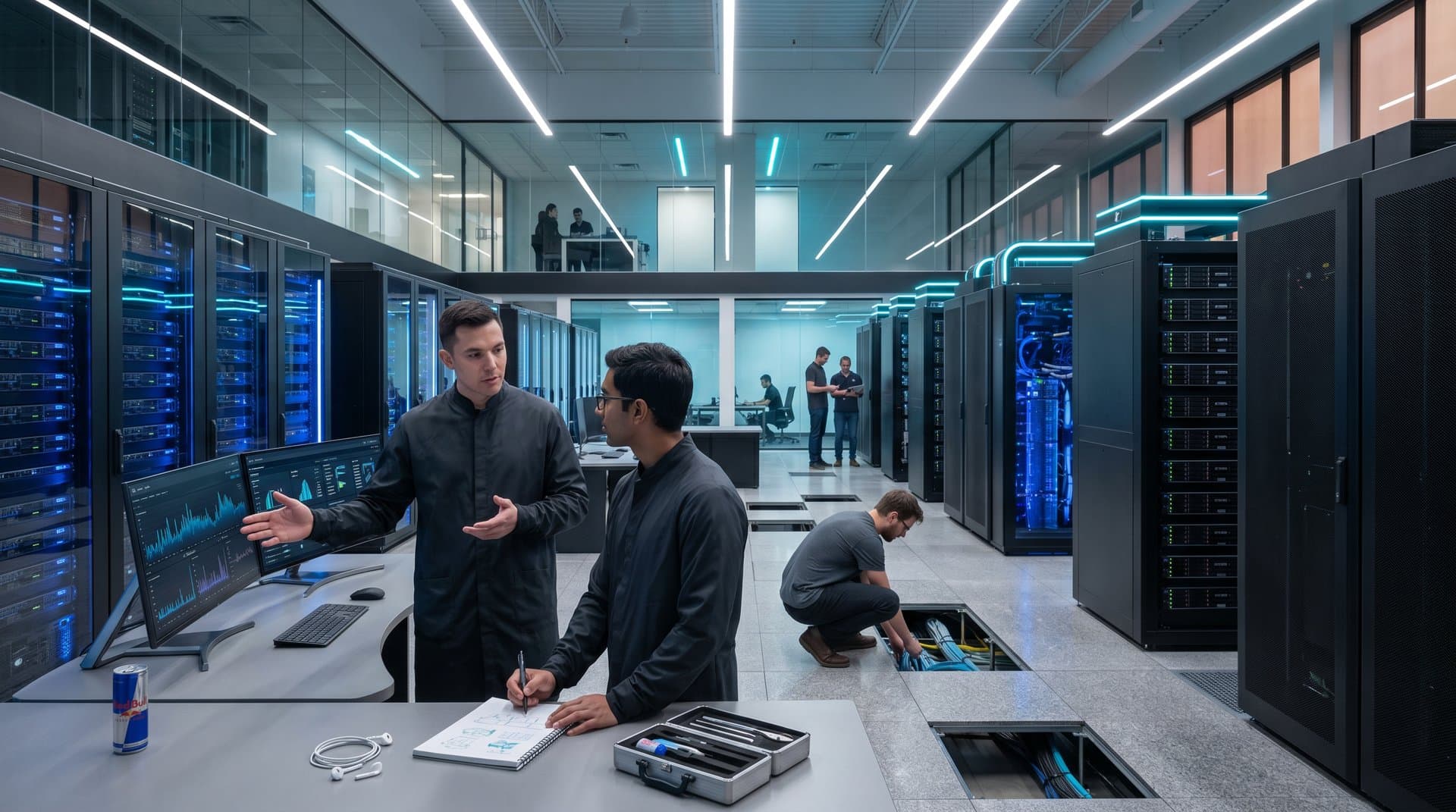
OpenAI's ChatGPT power demand consumes 1.5 TWh of electricity annually, per Austin American-Statesman on April 10, 2026. This matches 135,000 average US homes' usage, based on EIA's 11 MWh per household figure.
SemiAnalysis provides the basis: 1.2 billion daily queries require 3.5 Wh per ChatGPT-4o inference. Data centers maintain 99.9% uptime. Grid operators now confront peak loads from these AI facilities.
ChatGPT Power Demand Scale
GPU-intensive inference powers ChatGPT power demand. Each query processes billions of parameters via Nvidia H100 chips. SemiAnalysis, cited by Austin American-Statesman, measures 3.5 Wh per ChatGPT-4o response.
OpenAI processes 1.2 billion queries daily as of April 10, 2026. Annual total: 1.2 × 10^9 queries/day × 3.5 Wh/query × 365 days ÷ 10^9 = 1.533 TWh. This rivals a 200 MW coal plant's output at 85% capacity factor.
The International Energy Agency (IEA) forecasts global data centers consuming 1,000 TWh by 2026, a 50% rise from 2025. US grids handle 40% of that demand, according to IEA data.
AI Grid Strain in Key Regions
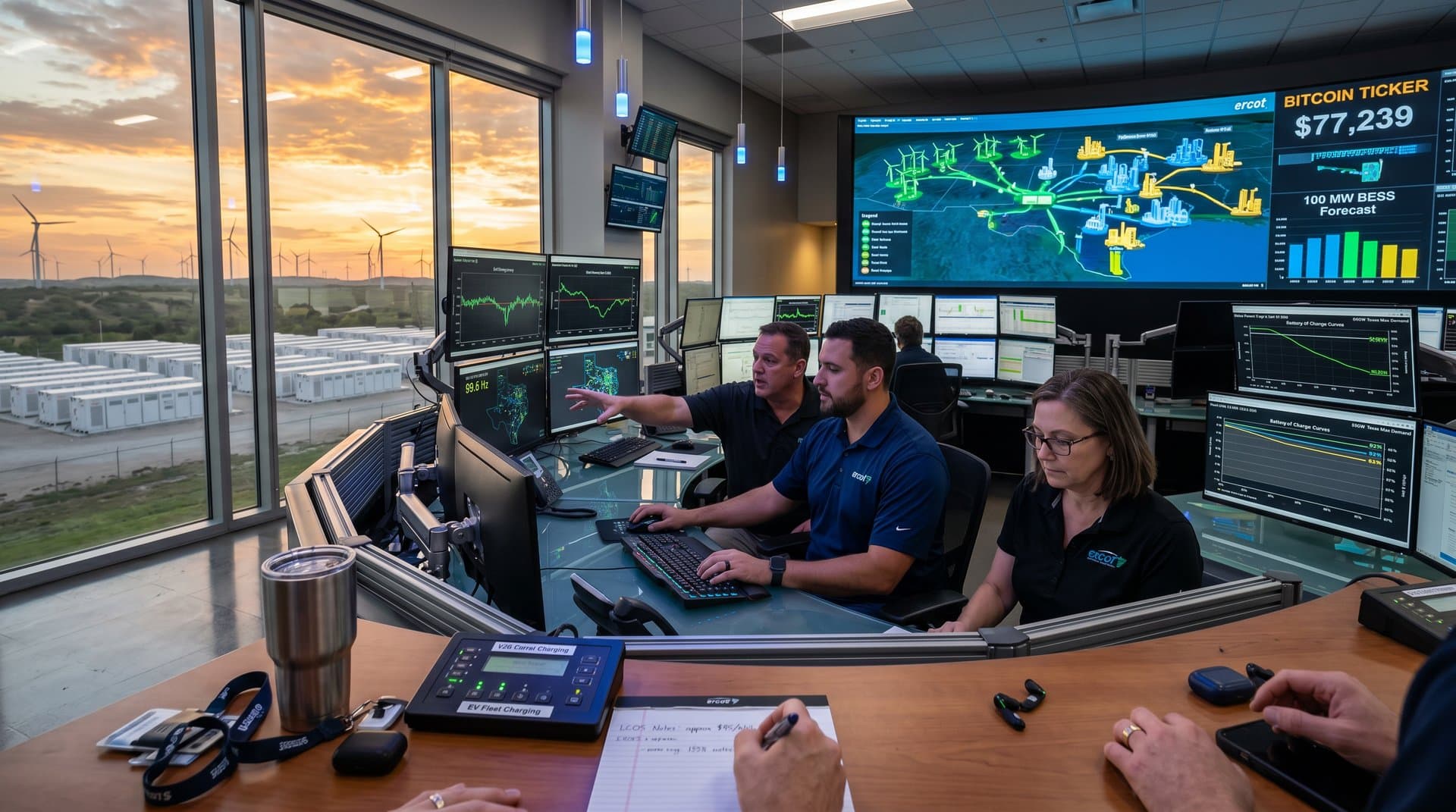
Texas dominates AI data center growth. ERCOT logs 5 GW of new hyperscaler load by April 2026. ChatGPT servers in Dallas-Fort Worth draw 500 MW at peak.
AI load ramps trigger voltage instability. PJM Interconnection records 15% more frequency deviations in Q1 2026. Utilities activate demand response programs, but battery storage addresses ongoing gaps.
CAISO measures AI facilities adding 300 MW to evening peaks as of April 10, 2026. Blackout risks rise absent fast-ramping resources.
Lithium-Ion Batteries Stabilize AI Loads
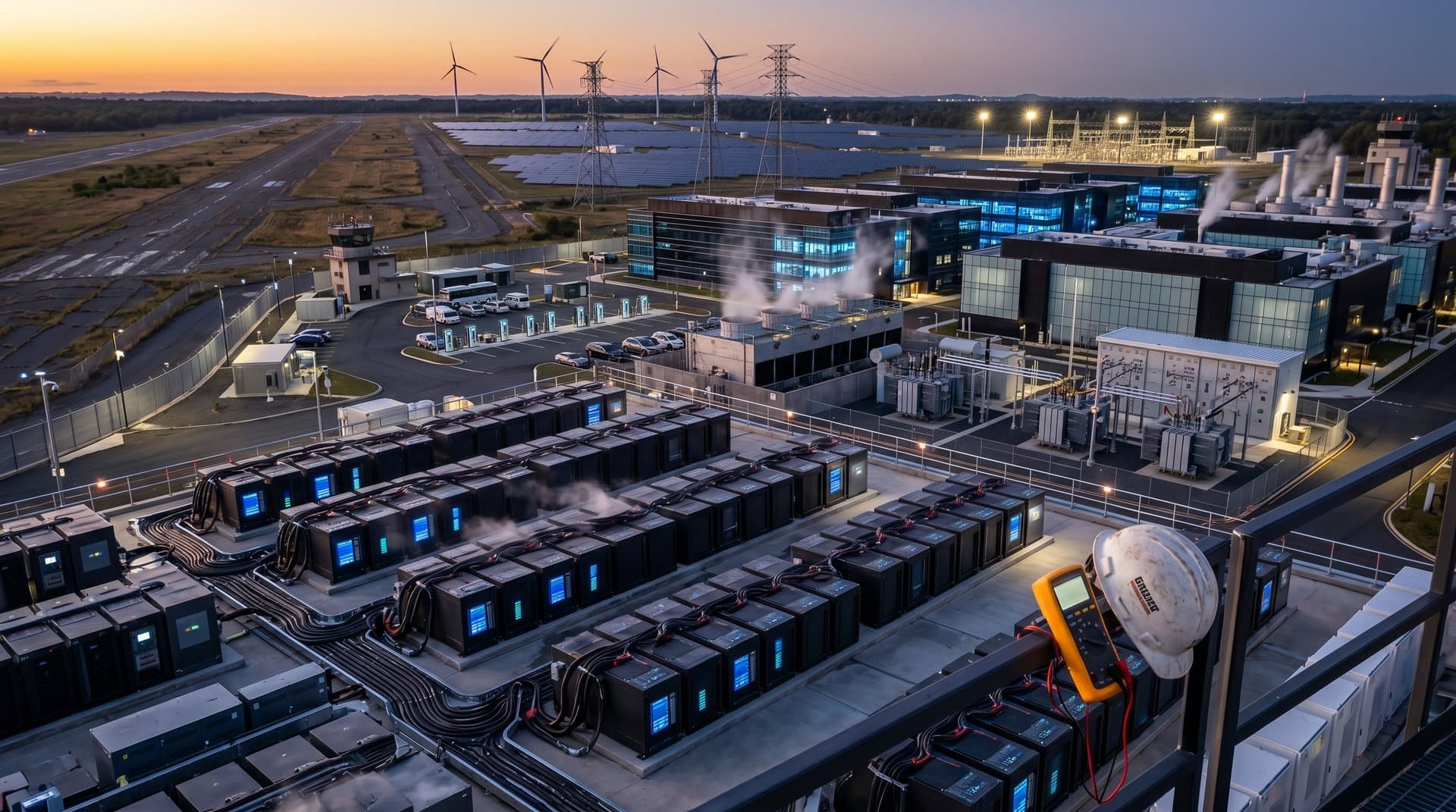
Grid-scale lithium-ion batteries mitigate AI load volatility. Tesla activates a 500 MW / 2 GWh Megapack array (4-hour duration) at a Virginia data center on April 10, 2026. It shaves 20% off local peaks.
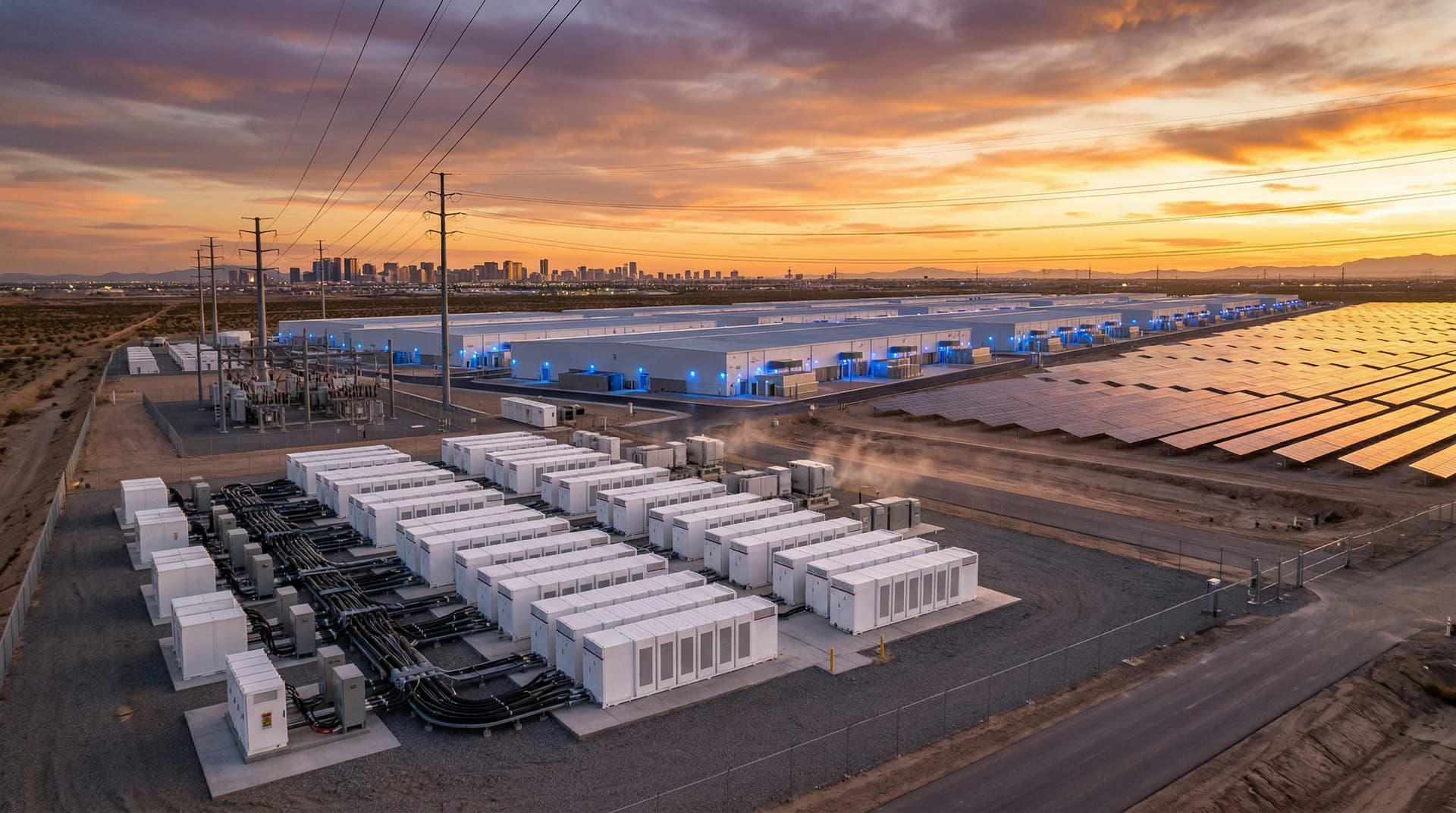
Microsoft pairs 1 GW IT load with 400 MW / 1.6 GWh storage (4-hour duration) in Arizona. Fluence achieves 92% round-trip efficiency (RTE) at 0.5C discharge, tested to IEC 62619 standards.
BloombergNEF's April 2026 analysis sets installed costs at USD 120/kWh. Systems recoup costs in 4 years via USD 100/MWh arbitrage and ancillary services revenue. AI firms lock in 10-year offtake deals.
Energy density hits 250 Wh/kg and 700 Wh/L for LFP packs, with 6,000 cycles at 80% capacity retention.
LDES Tackles Extended Peaks
Lithium-ion handles bursts, yet AI requires longer durations. Form Energy brings online a 100 MW / 8,500 MWh iron-air battery (85-hour duration) in Minnesota on April 10, 2026.
Invinity Energy deploys 50 MW / 250 MWh vanadium flow batteries (5-hour duration) near Atlanta hyperscalers. Independent tests verify 100% depth of discharge over 20,000 cycles at 160 Wh/L energy density and 75 Wh/kg.
Wood Mackenzie pegs LDES levelized cost of storage (LCOS) at USD 0.08/kWh, undercutting gas peakers. The firm predicts 10 GW LDES capacity by 2028, half serving data centers.
Policy Accelerates Storage Deployment
FERC Order 2023 requires storage integration into interconnection queues. Texas PUC greenlights 2 GW batteries for AI loads on April 10, 2026, including 30% capex tax incentives.
Inflation Reduction Act (IRA) Section 45X delivers USD 35/kWh for US-made packs. DOE data shows domestic supply chains now manufacture 70% of cells.
PitchBook tallies USD 15 billion in Q1 2026 storage investments. Funds target 15% IRR on AI-linked projects, with offtake from hyperscalers ensuring revenue.
Supply Chain Supports Scaling
Cathode constraints test expansion. Albemarle ramps LFP cathode production to 200 GWh/year in Australia for 200 Wh/kg cells suited to 4-hour grid storage at 650 Wh/L.
Sodium-ion batteries target USD 90/kWh for cost-driven 4-hour use, with 150 Wh/kg and 5,000 cycles. QuantumScape delivers 500 Wh/kg solid-state prototypes to Toyota on April 10, 2026, for grid pilots by 2030.
Redwood Materials recycles 50 GWh of second-life packs yearly. California V2G pilots pool 10,000 EV batteries for 100 MW grid support at 90% RTE and 0.25C rates.
Outlook for ChatGPT Power Demand
ChatGPT power demand underscores AI's grid pressures. EIA counts 25 GW US storage deployed by April 2026. Batteries guarantee stability as data centers expand to 100 GW by 2030. Q2 auctions secure another 5 GW.