- Iran war risks 20% global oil via Hormuz, per EIA.
- Battery costs rise 15-20%; Bitcoin holds $78,078.
- Data centers drive 1,000 TWh power demand by 2030, per BNEF.
Battery supply chains face 15-20% cost surges from Iran war disruptions critical to AI data center grid storage, per Motley Fool analysts. Fear & Greed Index hits 33, yet Bitcoin trades at $78,078, up 1.0% (CoinGecko).
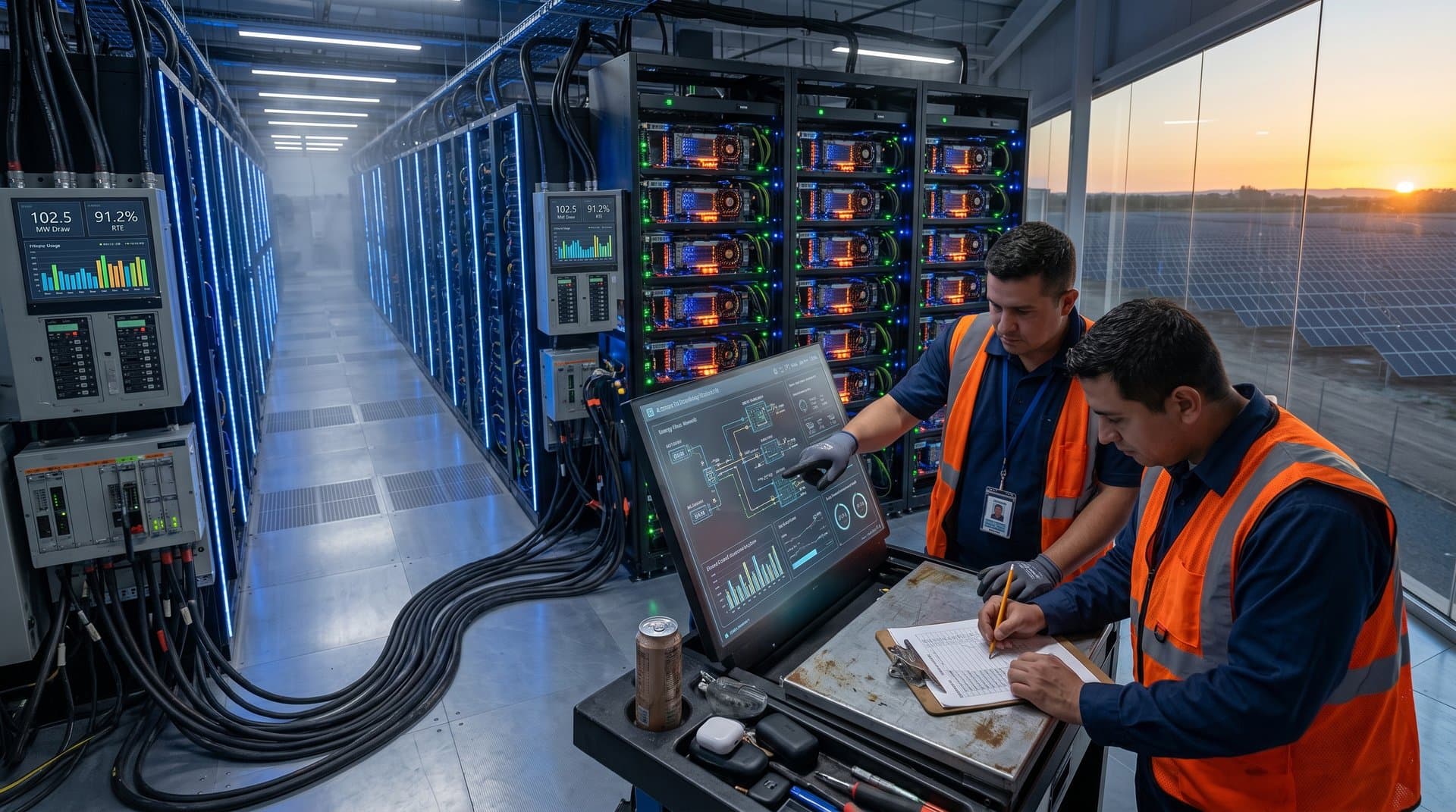
Data centers fuel AI expansion. They demand dispatchable power against renewable swings. Lithium-ion batteries achieve 85-90% round-trip efficiency at 0.5C discharge, per National Renewable Energy Laboratory (NREL) tests.
Iran War Disrupts Key Battery Supply Chains
Iran tensions risk the Strait of Hormuz, carrying 20% of global oil, per US Energy Information Administration (EIA). Disruptions elevate gigafactory energy costs 15-20%.
Indonesia supplies 50% of refined nickel, per Benchmark Mineral Intelligence. Red Sea attacks extend Suez transits 10-14 days. Australian lithium incurs 5-7 day delays.
China processes 70% of cathodes, per Reuters. It stockpiles materials preemptively.
US Inflation Reduction Act (IRA) provides $45/kWh credits, spurring North American battery supply chains. Europe mandates 95% traceability via updated Battery Directive by 2030.
Data Centers Boost Grid Battery Demand
AI clusters consume 100-500 MW nonstop, per International Energy Agency (IEA). Batteries shave peaks: discharge at $200/MWh highs, recharge at $50/MWh lows.
Li-ion delivers 4-hour duration, 200 Wh/kg gravimetric density, 500 Wh/L volumetric density, and 3,000+ cycles at 80% capacity retention (IEC 62660). They respond in 100 ms for PJM frequency regulation.
Microsoft deploys 100 MWh co-located systems at Azure sites. Google integrates 50 MWh with PPAs.
Alternative Chemistries Strengthen Supply Chains
Sodium-ion hits 160 Wh/kg, dodging lithium risks. Iron-air targets 10-hour discharge at $20/kWh LCOS, per Form Energy.
Redwood Materials recovers 95% cathode metals. Second-life EV packs slash grid costs 30%.
BloombergNEF forecasts data center power doubling to 1,000 TWh by 2030. Batteries capture $50/MWh arbitrage.
Utilities Fast-Track Storage Projects
CAISO queues 10 GWh storage. ERCOT adds 5 GW against curtailments.
FERC Order 2222 activates VPPs. States target 5 GW storage by 2030.
CATL erects 20 GWh US plants. LG Energy Solution scales to 40 GWh domestic capacity.
Ethereum gains 1.8% to $2,353. Markets bet on AI endurance.
Battery Supply Chains Outlook
Rerouting lifts short-term costs 10-15%. Multi-year offtakes secure developer revenues.
PJM prioritizes 2-4 hour Li-ion. FERC rulings expand LDES roles. Battery supply chains adapt via onshoring and diversification.
Frequently Asked Questions
How does the Iran war impact battery supply chains?
Strait of Hormuz risks 20% oil flows (EIA), raising costs 15-20%. Nickel delays 10-14 days from Indonesia; lithium reroutes from Australia.
Will battery supply chains recover from Iran war disruptions?
US IRA $45/kWh credits onshore production. Sodium-ion at 160 Wh/kg rises. China holds 70% cathode processing (Reuters).
What role do batteries play in AI data center power?
Li-ion 85-90% RTE (NREL) shaves peaks $200/MWh to $50/MWh. 100 ms PJM response; 100 MWh Microsoft, 50 MWh Google deployments.
Does Fear & Greed at 33 impact battery investments?
Fear signal contrasts BTC $78K resilience. 10 GWh CAISO queues; CATL/LG build 60 GWh US capacity.