- LFP batteries hit 90-95% RTE, 6,000 cycles for 100 kWh VFX render peaks.
- Data centers double to 1,000 TWh by 2026 (IEA), fueling 10 GW entertainment storage.
- LDES iron-air targets US$0.05/kWh LCOS over 100 hours for baseload AI compute.
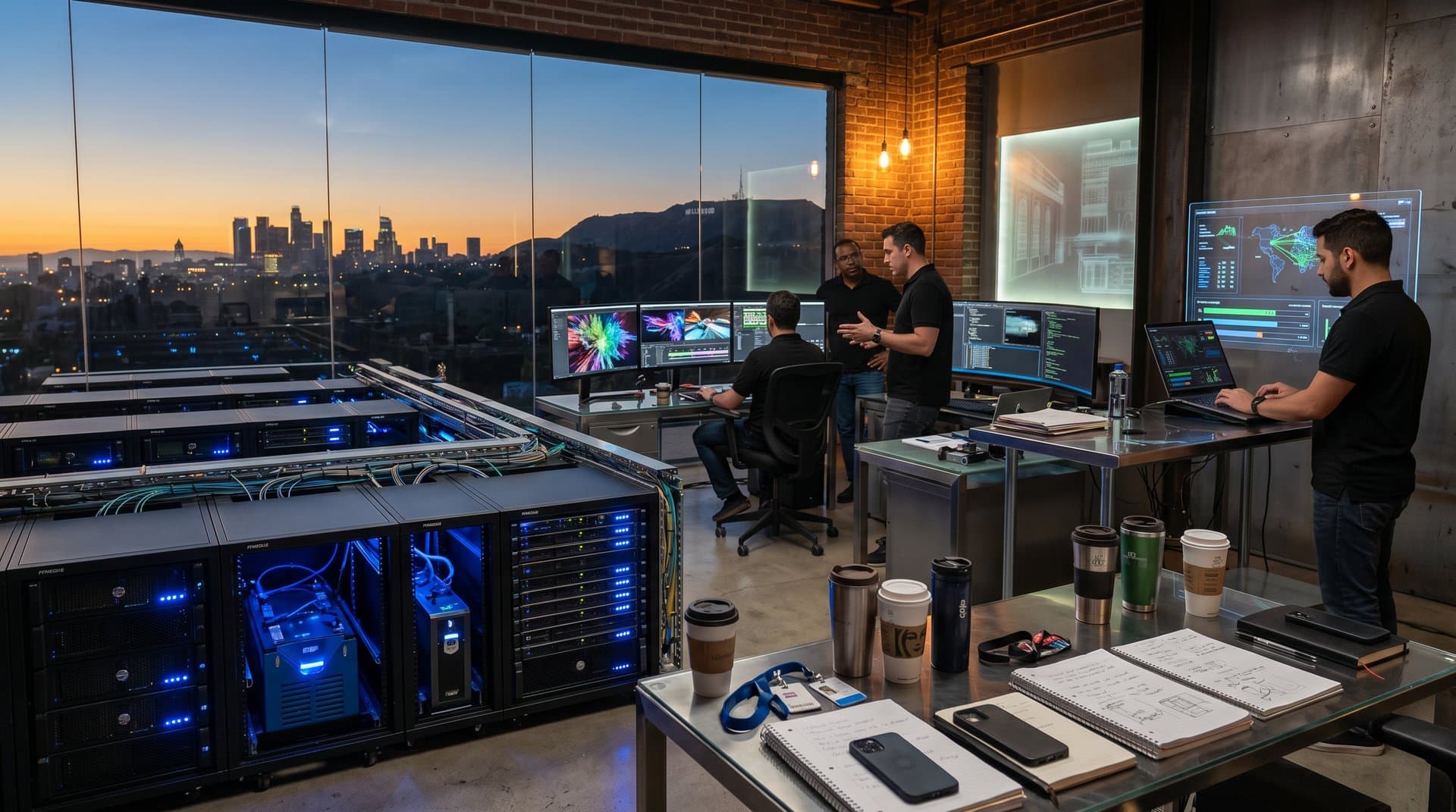
Battery storage demand surges 2x as Hollywood filmmakers deploy undetectable AI for compute-intensive VFX.
The Hollywood Reporter details creators' mantra: "If it's AI-detectable, you've failed."
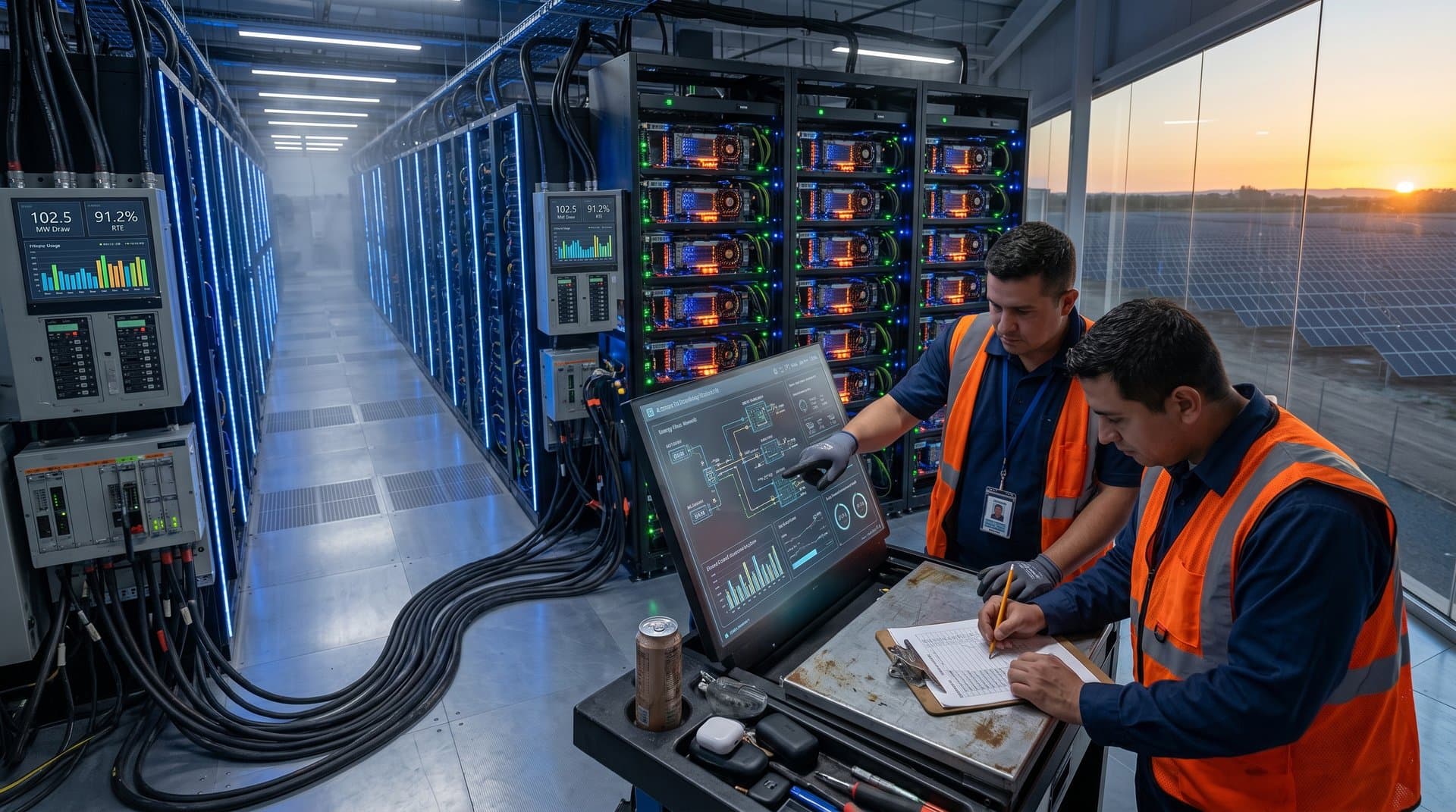
Generative AI handles video synthesis, effects rendering, and pre-vis under human oversight. NVIDIA datasheets list A100/H100 GPUs drawing 100 kW per rack during training.
Developers deploy 4-hour LFP battery storage for uninterrupted studio data center power.
Grid operators install 100 MW-scale lithium-iron-phosphate (LFP) systems. These achieve 90% round-trip efficiency (RTE) at 0.5C discharge.
Undetectable AI Transforms Hollywood VFX Production
Diffusion models like Stable Video process 10 TB per 4K scene. Artists refine prompts for photorealistic blends.
A single blockbuster render farm consumes 1 GWh per project, per industry estimates cited by Bloomberg.
AWS and Google cloud-hybrid farms replace on-premise setups. Battery storage limits depth of discharge (DoD) to 80% for 6,000+ cycles at 25°C, per IEC 62660-1 standards.
Vanadium redox flow batteries (VRFB) target 10-hour duration for high-uptime environments.
Leading integrators like Tesla offer LFP packs at US$120-150/kWh installed. These scale to 500 MWh for studio campuses.
AI Rendering Peaks Strain Local Grids
Rendering a 4K VFX sequence consumes 100 kWh. Major films from Industrial Light & Magic (ILM) escalate to 5 GWh total, per Bloomberg analysis.
Evening peaks coincide with residential demand, stressing California ISO grids.
LFP responds in <100 ms with 90-95% RTE at C/3 rates, per Sandia National Labs testing.
Warner Bros. pilots vehicle-to-grid (V2G), repurposing 1,000 EV batteries for 2 MW backup. This extends cycle life to 3,000 cycles.
The IEA forecasts global data center demand doubling to 1,000 TWh by 2026. VFX contributes 5-10% in entertainment hubs.
LFP Batteries Dominate Short-Duration AI Workloads
LFP excels with 160 Wh/kg and 300-400 Wh/L density. It enables 4-hour discharge at US$0.12/kWh levelized cost of storage (LCOS).
Tesla Megapack projects deliver 1.5-hour power for 200 MW Hollywood-area farms.
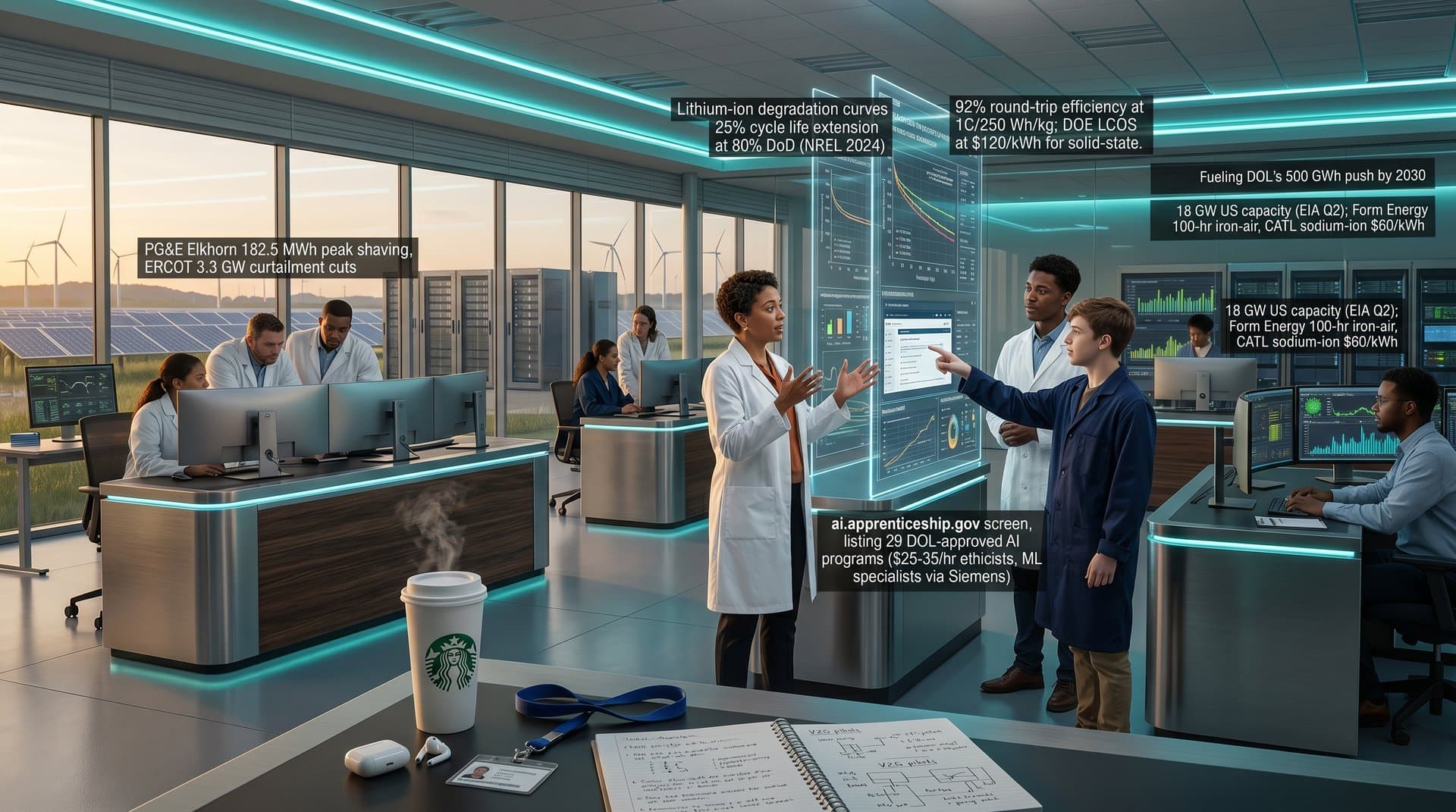
Long-duration energy storage (LDES) advances. Iron-air batteries hit 100-hour duration at US$0.05/kWh LCOS targets.
NREL rates APAC LFP at TRL 9, VRFB at TRL 8.
- Technology: LFP · Energy Density Wh/kg: 160-180 · Energy Density Wh/L: 300-400 · Cycle Life: 6,000+ · Capex US$/kWh: 120-150
- Technology: Vanadium Flow · Energy Density Wh/kg: 25-35 · Energy Density Wh/L: 25-50 · Cycle Life: 20,000+ · Capex US$/kWh: 80-100
- Technology: Iron-Air · Energy Density Wh/kg: 40-60 · Energy Density Wh/L: 40-60 · Cycle Life: 5,000+ · Capex US$/kWh: 50-70
Supply Chain Stabilizes Amid Geopolitical Shifts
Lithium prices fell 80% since 2022 peaks to US$12,000/t, per Benchmark Mineral Intelligence.
This enables GWh-scale LFP output from CATL and BYD factories. Nickel- and cobalt-free chemistries mitigate DRC supply risks.
US Inflation Reduction Act (IRA) offers 30-50% investment tax credits (ITC) for domestic assembly.
FERC Order 2023 mandates 90-day interconnection reviews for <5 MW storage. EU Battery Regulation (2023/1542) requires 16% recycled content by 2031.
Bloomberg highlights aggregated studio storage pooling 500 MW to ease grid upgrades.
10 GW Battery Storage Roadmap by 2030
Hollywood's AI compute spurs 10 GW battery storage for entertainment, per Wood Mackenzie projections. These align with IEA trends.
LFP captures 70% of short-duration market share. LDES scales to 30%.
V2G and sodium-ion (200 Wh/kg target) pilots at Disney and Netflix test second-life packs.
CATL sodium alternatives achieve 140 Wh/kg at 20% lower cost than LFP.
Battery storage secures 99.999% uptime for AI creativity. It averts blackouts as compute grows 50% annually.
Frequently Asked Questions
How does battery storage support Hollywood's AI compute?
LFP provides 90-95% RTE, <100 ms response for 100 kW GPU racks during 100 kWh renders (Sandia Labs).
What technologies fit AI filmmaking storage needs?
LFP: 160 Wh/kg, 4-hour discharge. VRFB/iron-air: 100 hours at US$0.05-0.10/kWh LCOS (NREL).
Why does Hollywood's undetectable AI surge battery storage?
GWh-scale training power needs 99.999% uptime amid IEA's 2x data center demand growth by 2026.
How does AI VFX impact grid storage rollout?
MW-scale evening peaks drive installs. IRA 30-50% ITC, FERC 2023 speed behind-the-meter LFP/V2G.