- US battery storage reaches 15 GW operational (EIA, 2024).
- Lithium-ion delivers 85-90% RTE, 250 Wh/kg density (NREL).
- FERC Order 2023 unlocks revenues amid 2,700 GW PJM queues.
By Finley Vance, Grid Storage Analyst
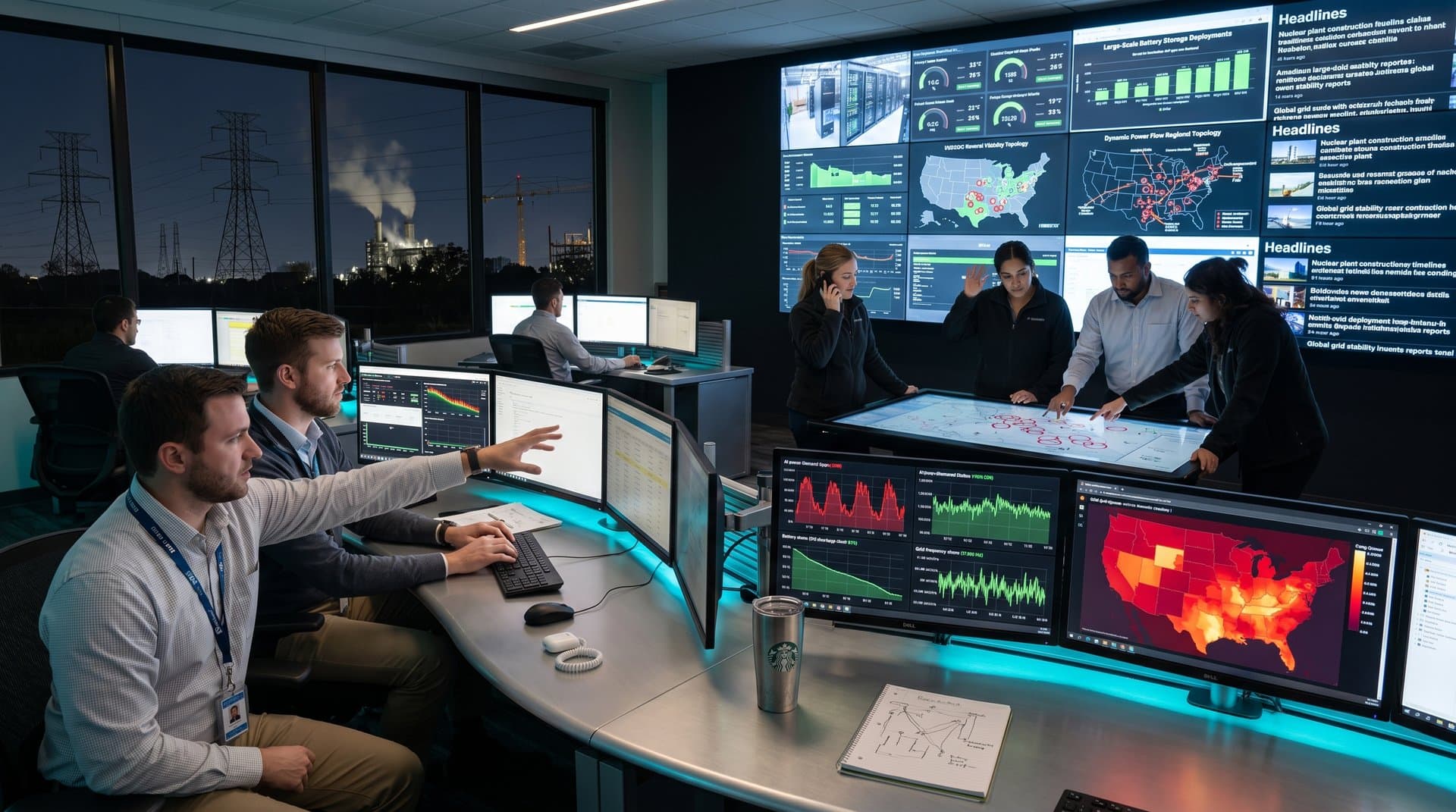
US battery storage capacity hits 15 GW operational, per US Energy Information Administration (EIA) data for December 2024. President-elect Trump pledges fast-tracked power for AI data centers. PJM and ERCOT grids face constraints from 2,700 GW transmission queues (PJM Queue Report, 2024).
Hyperscalers Microsoft and Google expand AI facilities. These require 100-500 MW continuous loads in Virginia and Texas (EIA, 2024). Lithium-ion battery storage provides frequency regulation and peak shaving.
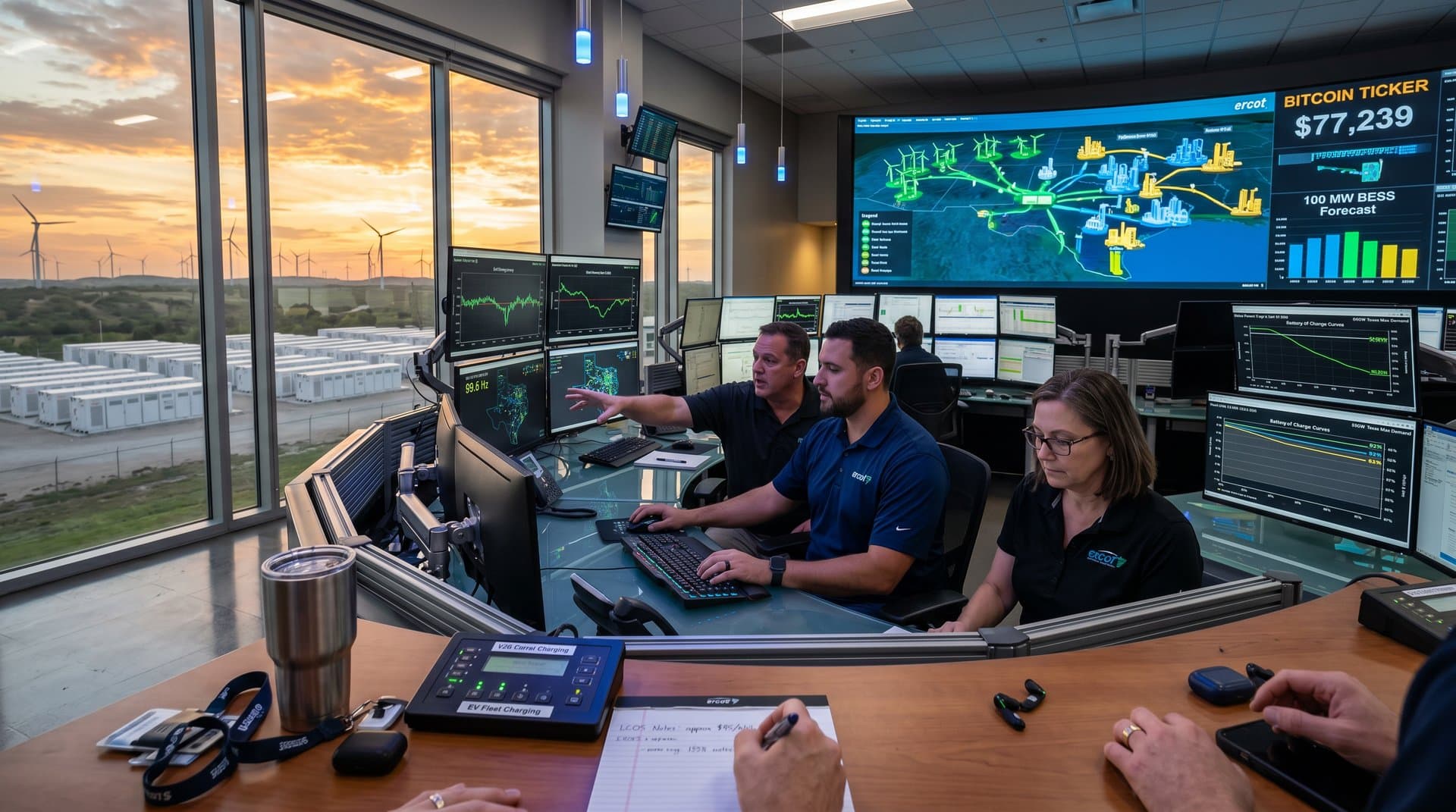
Bitcoin trades at $76,420 with a $1,530.1 billion market cap, up 0.6% (CoinMarketCap, December 2024). The Fear & Greed Index sits at 29, signaling fear (Alternative.me, 2024).
AI Data Centers Demand 100+ MW with 50 MW/Min Ramps
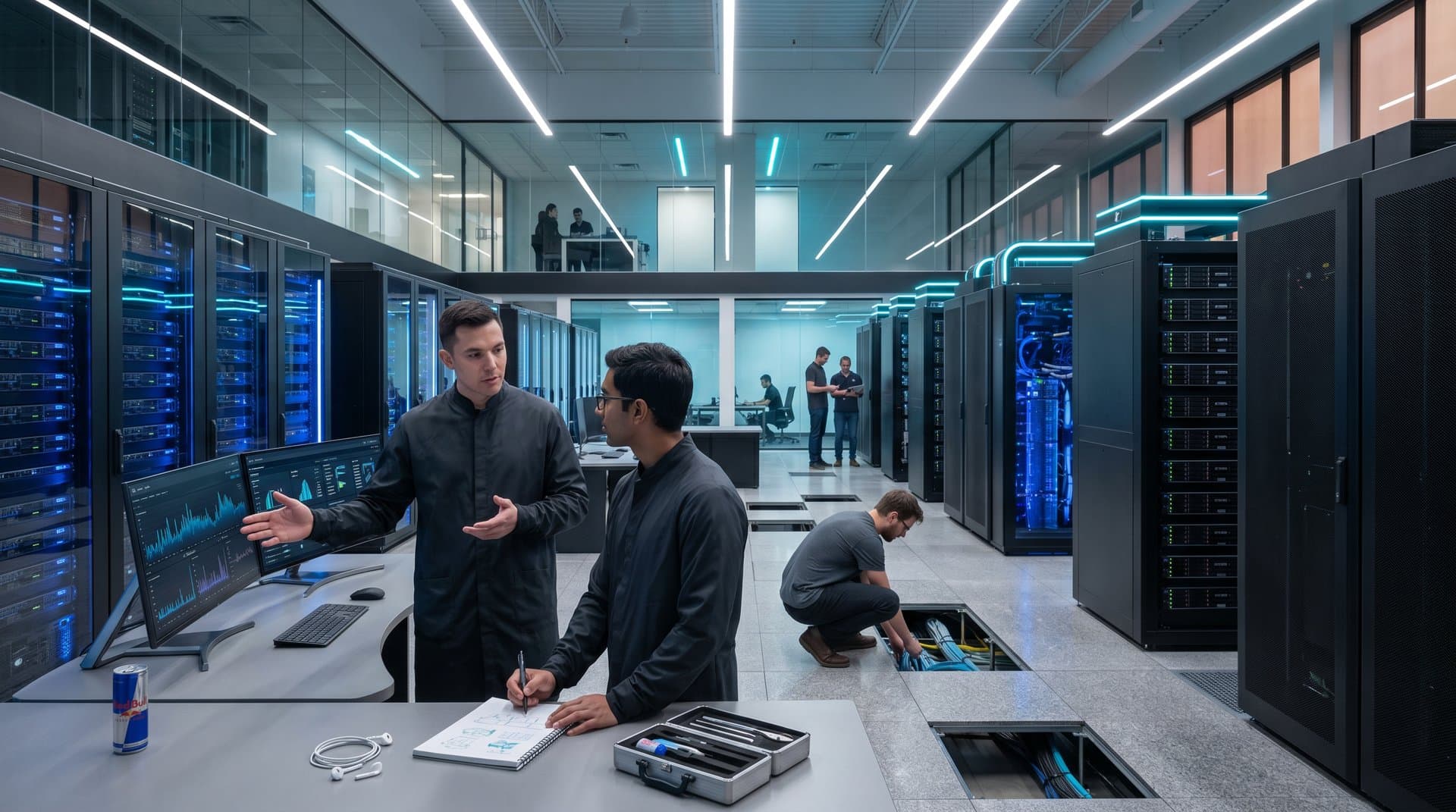
AI data centers consume over 100 MW continuously. Ramp rates reach 50 MW per minute during model training (National Renewable Energy Laboratory NREL], 2024). Servers operate 24/7, creating baseload without grid headroom in PJM and ERCOT.
Lithium-ion battery storage stabilizes voltage. It delivers synthetic inertia in seconds. Trump's gas and nuclear push faces 24-month permitting delays (Reuters, July 2024).
Commercial-scale battery storage deploys immediately. Trump pushes nuclear for AI power.
Lithium-Ion Battery Storage Offers 250 Wh/kg, 5,000 Cycles
Commercial lithium-ion battery storage achieves 250 Wh/kg gravimetric energy density and 160 Wh/L volumetric density. It retains 80% capacity after 5,000 cycles (NREL Annual Technology Baseline ATB], 2024). Round-trip efficiency (RTE) reaches 85-90% at 1C discharge.
Battery storage stacks revenues from energy arbitrage, ancillary services, and capacity markets. FERC Order No. 2023 enables full participation without double-counting (Federal Energy Regulatory Commission FERC], 2024).
Developers like Fluence deploy 4-hour onsite packs (300 MWh) and utility-scale 200 MW/800 MWh arrays. FERC Order No. 2023.
Long-duration energy storage (LDES) alternatives like Form Energy's iron-air batteries target 100 hours at 150 Wh/kg, 50 Wh/L, and 5,000 cycles. Demonstration pilots support black-start for data centers (US Department of Energy DOE] ARPA-E, 2024).
Supply Chain Stabilizes for Battery Storage Scaling
Lithium carbonate prices hold at $10,500 per metric ton, down 70% from 2022 peaks (S&P Global Platts, December 2024). Cathode NMC 811 costs $45/kWh.
Trump tariffs on Chinese cells boost US sodium-ion production. Sodium-ion battery storage cuts costs 30% versus lithium-ion at 160 Wh/kg and 4,000 cycles (Contemporary Amperex Technology Co. Limited CATL], 2024). It avoids cobalt and lithium risks.
Domestic cell manufacturing ramps up. Northvolt's 60 GWh Quebec factory targets NMC packs for grid storage (Northvolt announcement, 2024).
Energy Finance Powers 15 GW Battery Storage Growth
Inflation Reduction Act (IRA) Section 45X credits and tax equity reduce levelized cost of storage (LCOS) to $132/MWh for 4-hour systems in California (Lazard's Levelized Cost of Energy LCOE] v17, 2024).
Green bonds total $2.5 billion for projects like Intersect Power's 1.2 GWh Riverside East array, commissioned Q4 2025 (BloombergNEF, 2024). Developers secure 15-year power purchase agreements (PPAs) at $45/MWh.
Tokenized real-world assets offer fractional ownership of battery storage portfolios. Bitcoin miners pivot to AI colocation with 100 MWh storage for firm power. Miners shift to AI.
WBT stock rises 6.5% to $57.27 ($12.2B market cap). FIGR HELOC trades at $1.03 ($17.8B cap).
Key Battery Storage Projects Target Grid Strain
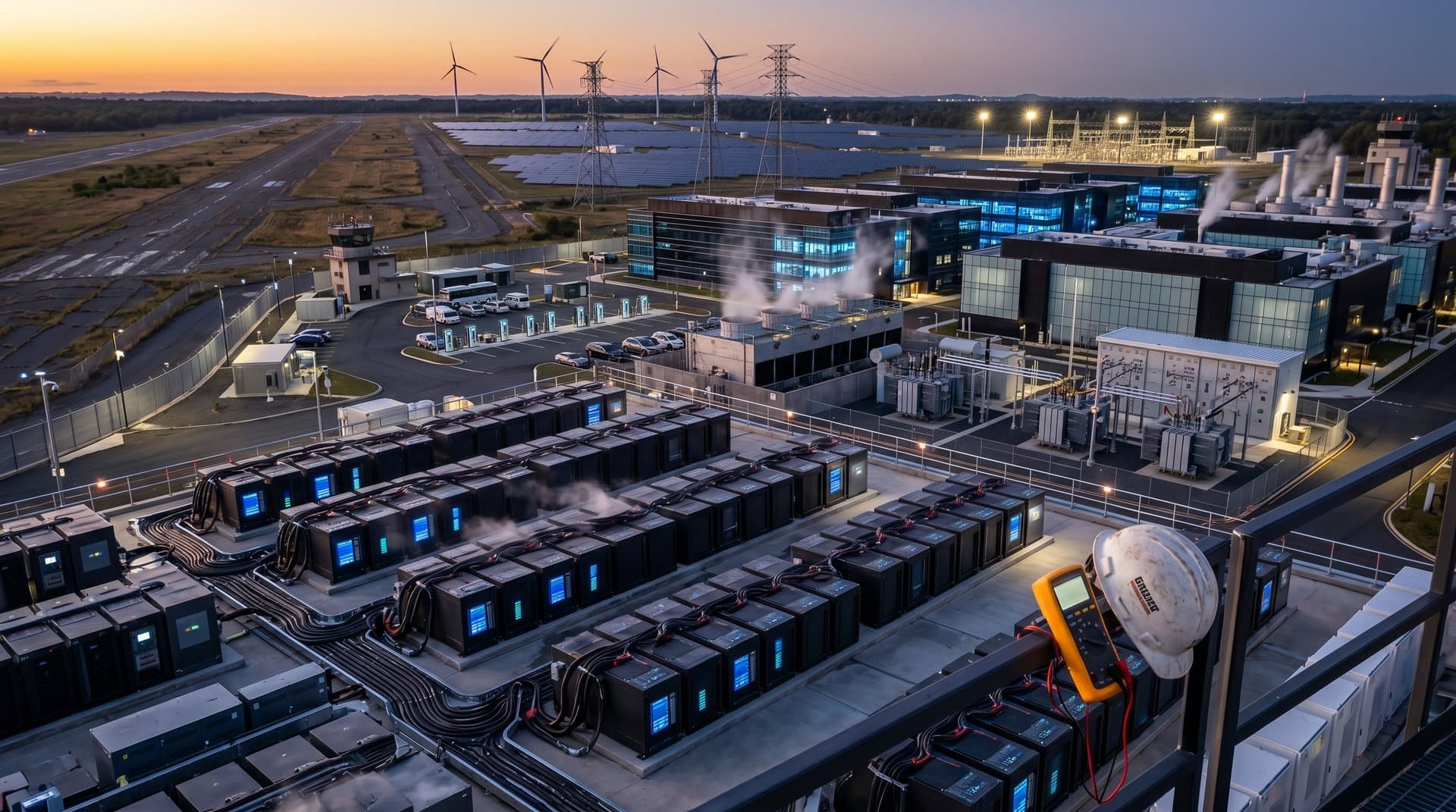
Fluence Energy delivers the 409 MW/1,636 MWh Sunlight Storage project in Arizona for Salt River Project (SRP), operational 2025 (Fluence, 2024). It provides 4-hour duration for peak shaving.
In Texas, Plus Power's 1,000 MWh standalone system in ERCOT supports frequency response (Plus Power, 2024). These nameplate capacities total over 2 GW in development.
PJM approves 850 MW/3.4 GWh of battery storage interconnections (PJM, Q3 2024). Developers like NextEra Energy lead with 15-year capacity contracts.
Crypto Signals Reflect Battery Storage Demand
Fear & Greed Index at 29 (Alternative.me, December 2024) signals power scarcity. BTC holds $76,420; ETH at $2,265 (-0.5%).
Miners like Core Scientific integrate onsite battery storage. XRP hits $1.37 (+0.4%); SOL $83.33 (-0.1%). Battery storage yields 12-15% returns via PPAs.
Hyperscalers sign storage-backed PPAs. AI strains grids.
FERC reforms shorten storage queues to 12 months. Battery storage bridges constraints until 2030. Developers forecast 30 GW by 2026 (Wood Mackenzie, 2024). Battery storage scales to meet AI demand.
Frequently Asked Questions
How does Trump's AI pledge impact battery storage?
Grid limits demand battery storage for ramps and stability. FERC Order 2023 unlocks markets despite new supply pledges.
Why do AI centers need battery storage?
They require fast 50 MW/min ramps. Lithium-ion provides 85-90% RTE inertia replacement over delayed lines.
What finances battery storage growth?
IRA credits drop LCOS under $150/MWh. Tokenized assets and green bonds draw crypto capital.
How does crypto tie to storage?
Fear & Greed at 29 amid BTC $76K reflects scarcity. Miners add storage for firm power.