- AI data centers double demand to 1,000 TWh by 2026, IEA projects.
- Lithium-ion hits 90% RTE at 1C discharge, Sandia IEC 62619 tests.
- V2G aggregates 10 GW from EVs at 10-20% daily discharge, IEA.
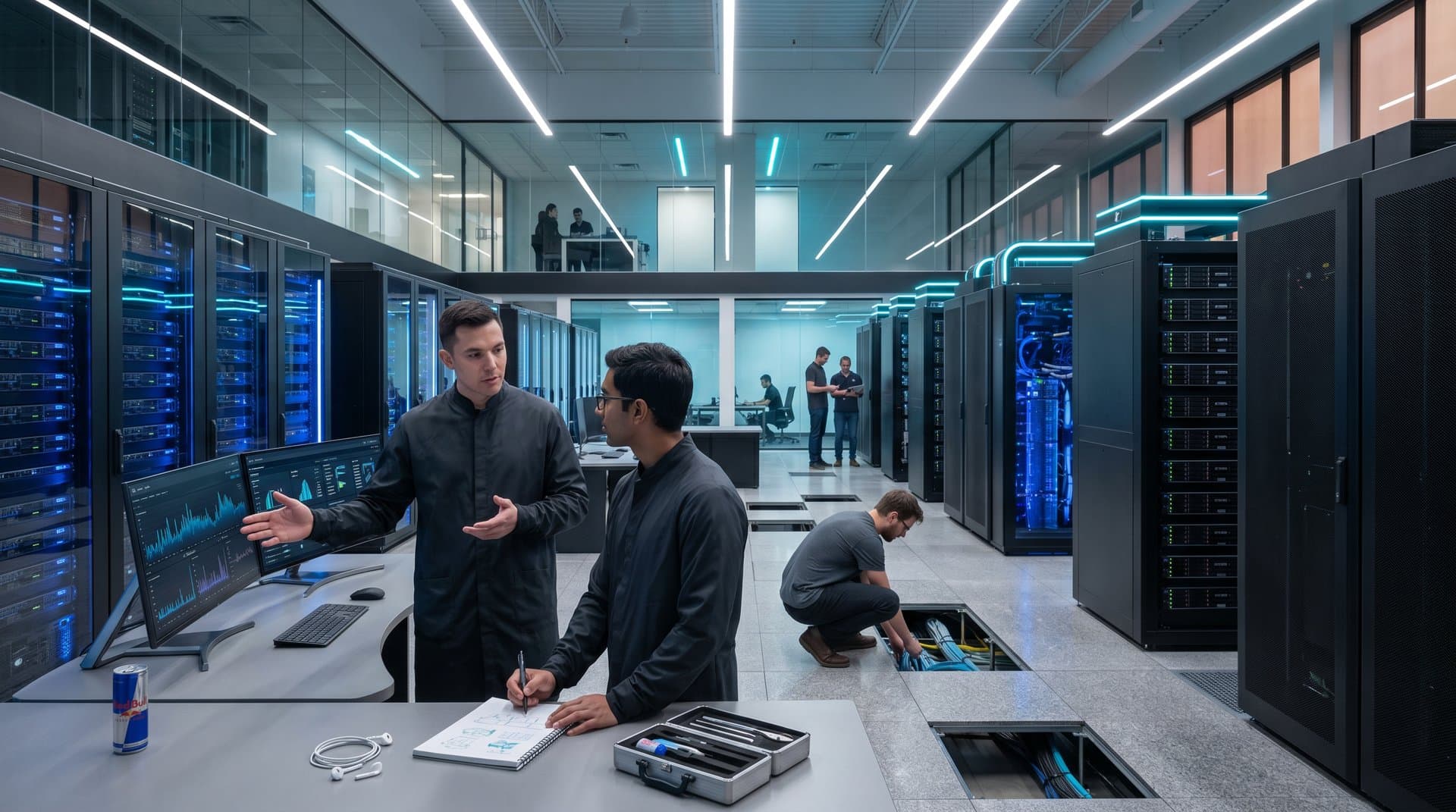
Battery storage AI data centers achieve 90% round-trip efficiency (RTE) as the International Energy Agency (IEA) projects demand doubling to 1,000 TWh by 2026. Hyperscalers like Google and Microsoft expand rapidly. Globe and Mail warns of grid crisis.
Renewables integration demands storage to curb intermittency, per IEA.
AI Data Centers Drive Gigawatt Demands, Strain Grids
AI training consumes gigawatts continuously. Nvidia H100 GPUs draw 700W each. One run matches a small city's load.
Microsoft targets 10.4 GW new capacity by 2030, per filings. Google aims for 24 GW globally.
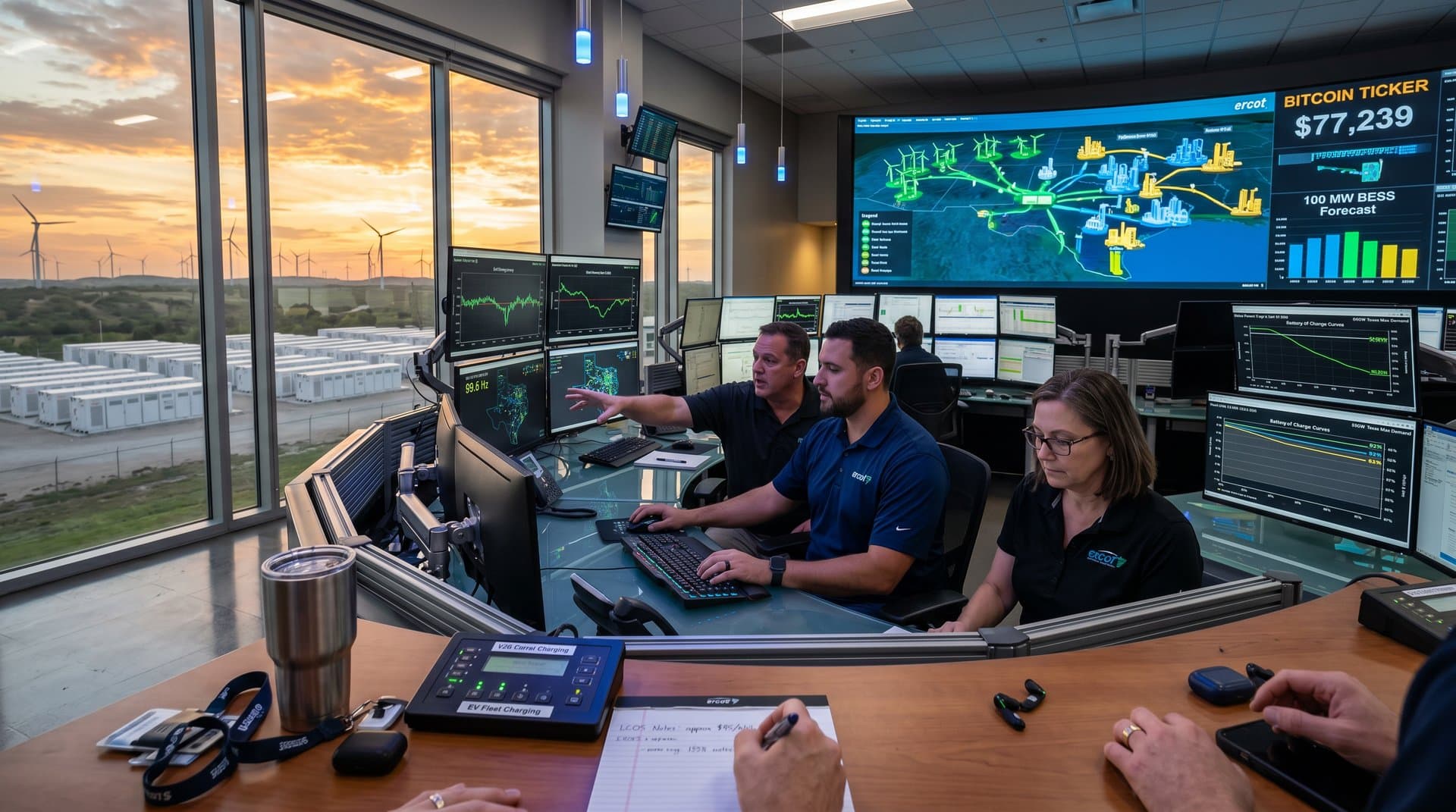
California ISO reports 2.5 million MWh annual solar curtailment from data center ramps. Texas ERCOT wind faces parallel issues.
FERC notes 2,600 GW interconnection queues. Co-located battery storage skips delays.
IEA Executive Director Fatih Birol warns data centers could claim 10% of global electricity by 2030.
Lithium-Ion Batteries Provide Millisecond Grid Response
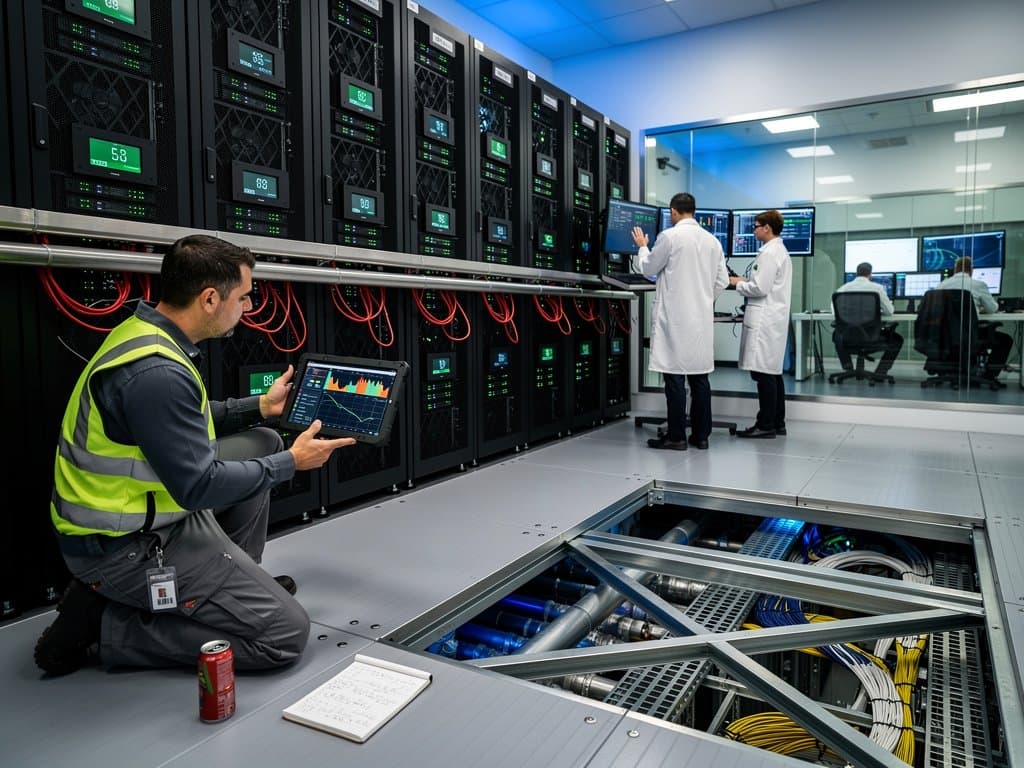
Lithium-ion batteries hit 90% RTE at 1C discharge, per Sandia National Laboratories tests under IEC 62619. Energy density reaches 250 Wh/kg, cycle life exceeds 5,000 at 80% depth-of-discharge.
Systems respond in milliseconds for frequency regulation. PJM Interconnection pays USD 100-200/MW-day for services.
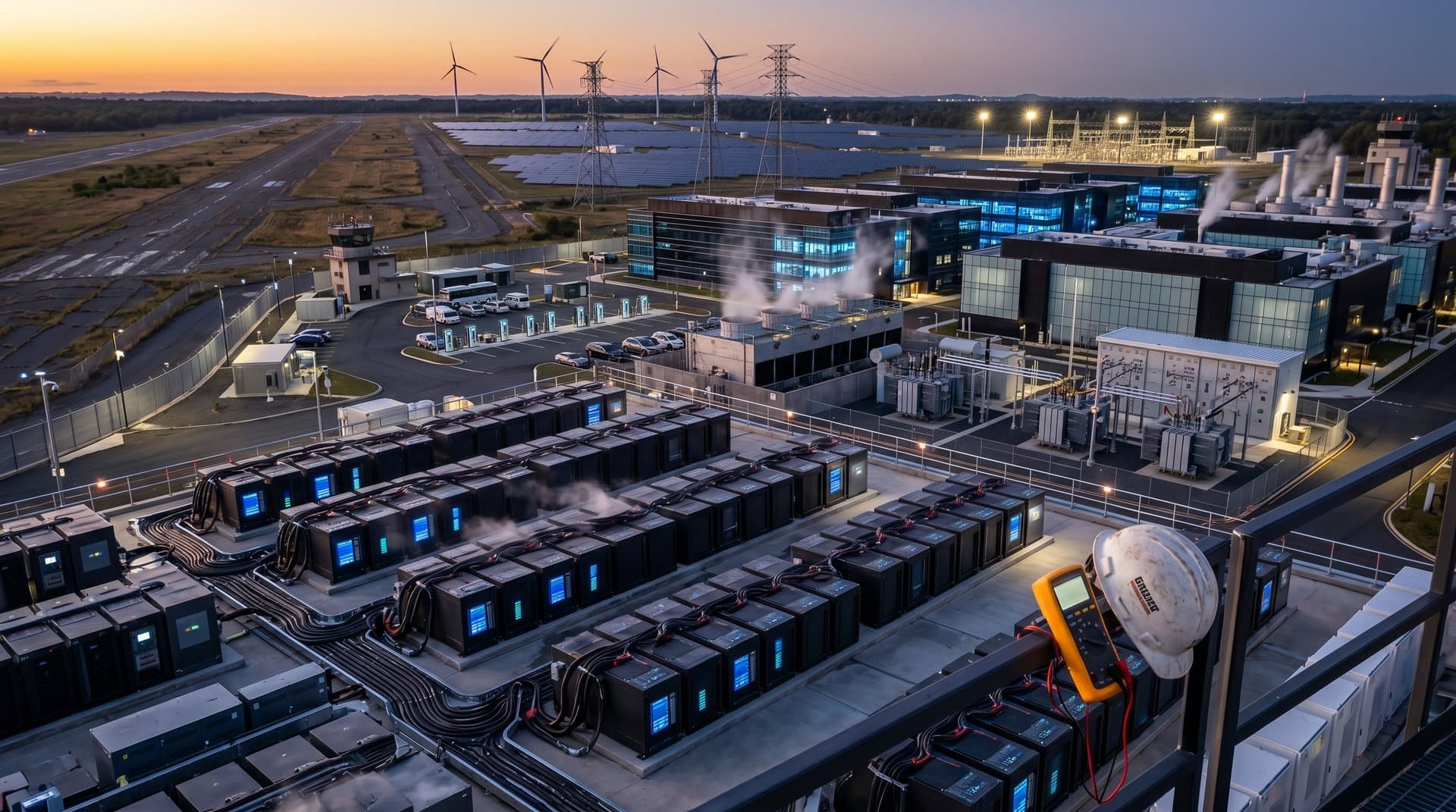
Fluence Energy deploys 100 MW/400 MWh for hyperscalers. Solar PV co-location avoids 5-10% transmission losses.
BloombergNEF Q2 2024 pegs LCOS at USD 120/kWh at scale.
Second-life EV batteries retain 70-80% capacity post-200,000 miles. NREL calculates LCOS under USD 100/kWh.
Flow Batteries Offer Long-Duration AI Backup
Vanadium flow batteries deliver 4-8 hours at 75-85% RTE, 30 Wh/L density, 20,000+ cycles. Invinity Energy Systems installs 100 MW/400 MWh.
Superior to lithium-ion's 5,000 cycles for data center backups.
NREL simulations show 30-50% curtailment cuts via renewables co-location.
V2G Aggregates EV Fleets into Virtual Power Plants
IEA Global EV Outlook 2024 details V2G turning fleets into 10 GW resources. Bidirectional chargers allow 10-20% daily discharge.
Ford F-150 Lightning pilots 19 kWh/vehicle. GM Ultium handles 11 kW bidirectional.
PG&E compensates owners USD 50-100/month/vehicle. 1 GW data center taps 50,000 nearby EVs.
NREL states VPPs plus renewables cover 90% peaks.
Markets Pay Premium for Fast Storage Response
PJM 2024 auctions award 2.4 GW storage at USD 150/MW-day. AI firms bid high.
Crypto miners shift to AI hosting, add batteries. Bitcoin miners co-locate with hydro, like hyperscalers.
Bitcoin trades USD 75,737 (-1.9% 24h). Fear & Greed Index at 27 reflects costs.
- Asset: BTC · Price (USD): 75,737 · 24h Change: -1.9%
- Asset: ETH · Price (USD): 2,350 · 24h Change: -3.0%
- Asset: XRP · Price (USD): 1.44 · 24h Change: -2.9%
- Asset: BNB · Price (USD): 630 · 24h Change: -2.3%
Supply Chains Stabilize for Battery Storage AI Data Centers
Lithium holds USD 12,000/tonne post-2023 peak. NMC 811 cathodes cost USD 15/kWh, Benchmark Mineral Intelligence reports.
US IRA credits fund 10 GWh domestic output. Fluence books 5 GWh hyperscaler orders for 2025.
Recurrent Auto forecasts 500 GWh second-life supply by 2030.
Renewables Hybrids Deploy Batteries at AI Data Centers
Hybrids launch in 6-12 months versus 5-year grid builds. LCOS falls 20% yearly to USD 80/kWh by 2030.
EV rules boost second-life supply 40%. Net-zero deals secure offtake.
Battery storage AI data centers guarantee resilience. V2G expands nationally by 2030.
Frequently Asked Questions
How does battery storage AI data centers prevent grid issues?
Batteries dispatch peaks, store renewables excess. 90% RTE at 1C per Sandia IEC 62619 shaves demand, regulates frequency.
What role do EVs play in battery storage AI data centers?
V2G fleets form VPPs at 10-20% discharge. Second-life LCOS under USD 100/kWh, NREL data.
Why do renewables pair with battery storage AI data centers?
Hybrids cut 30-50% curtailment, deploy in 6-12 months vs. 5-year grids, NREL simulations.
How do flow batteries complement lithium-ion in AI setups?
4-8 hour duration, 75-85% RTE, 20,000 cycles vs. lithium 5,000. Ideal backups.