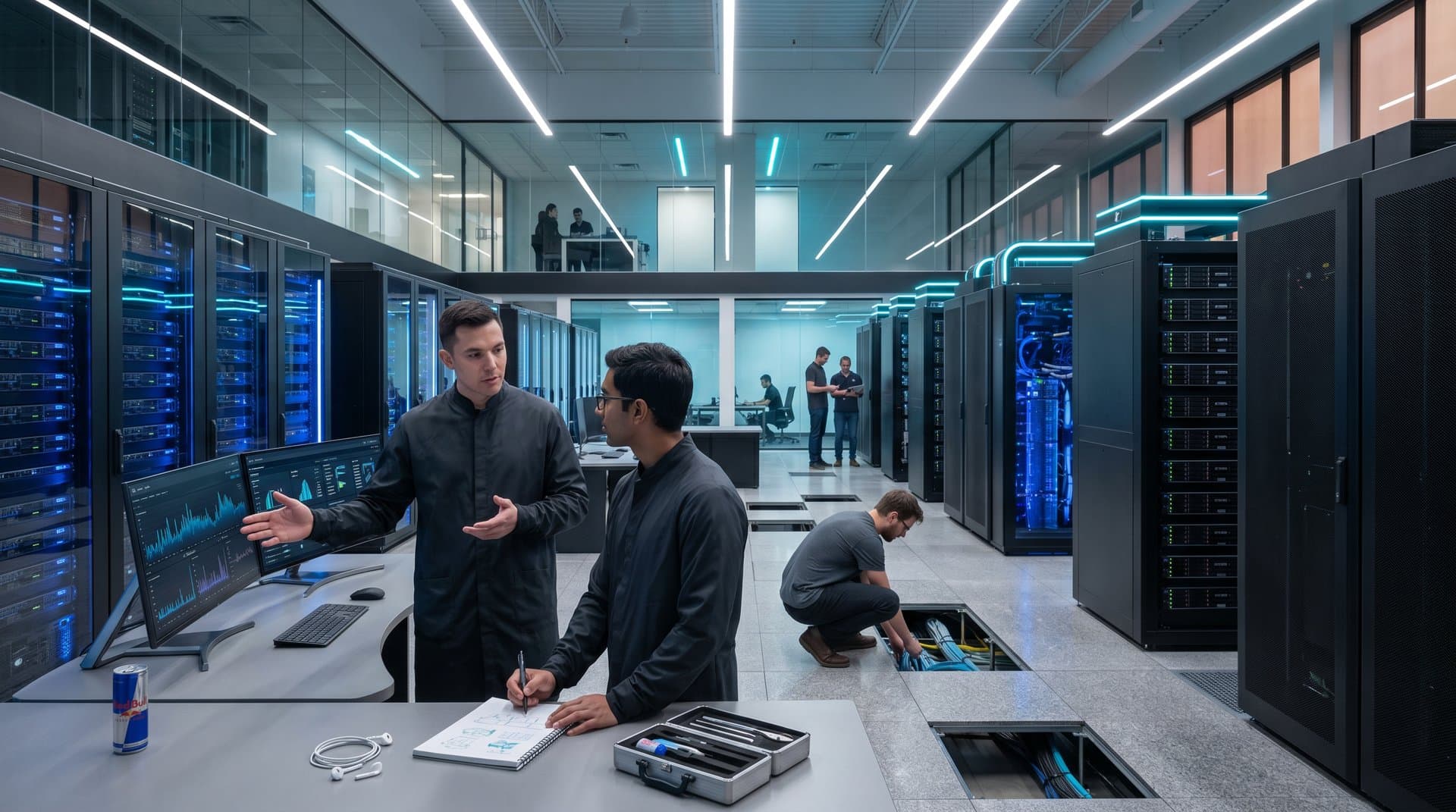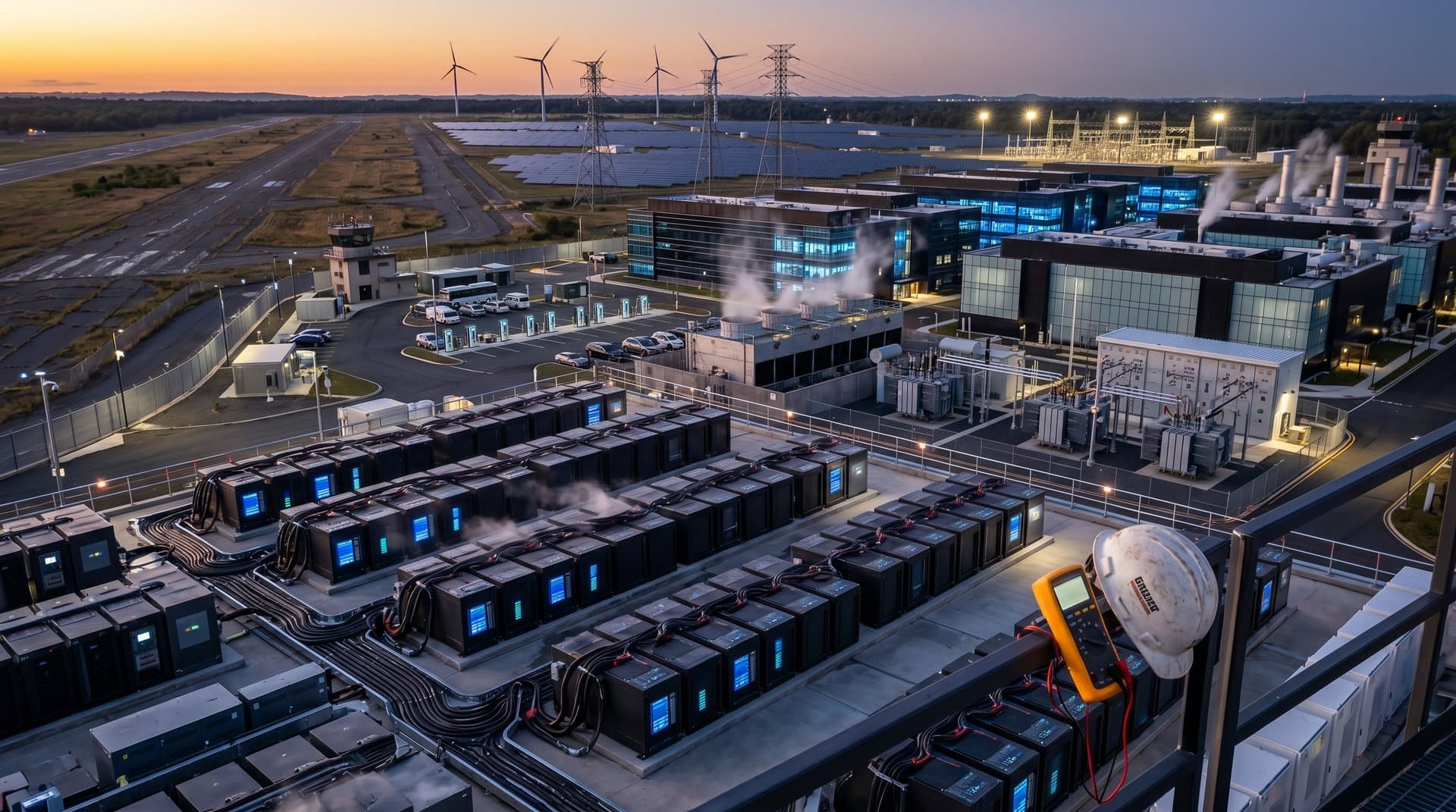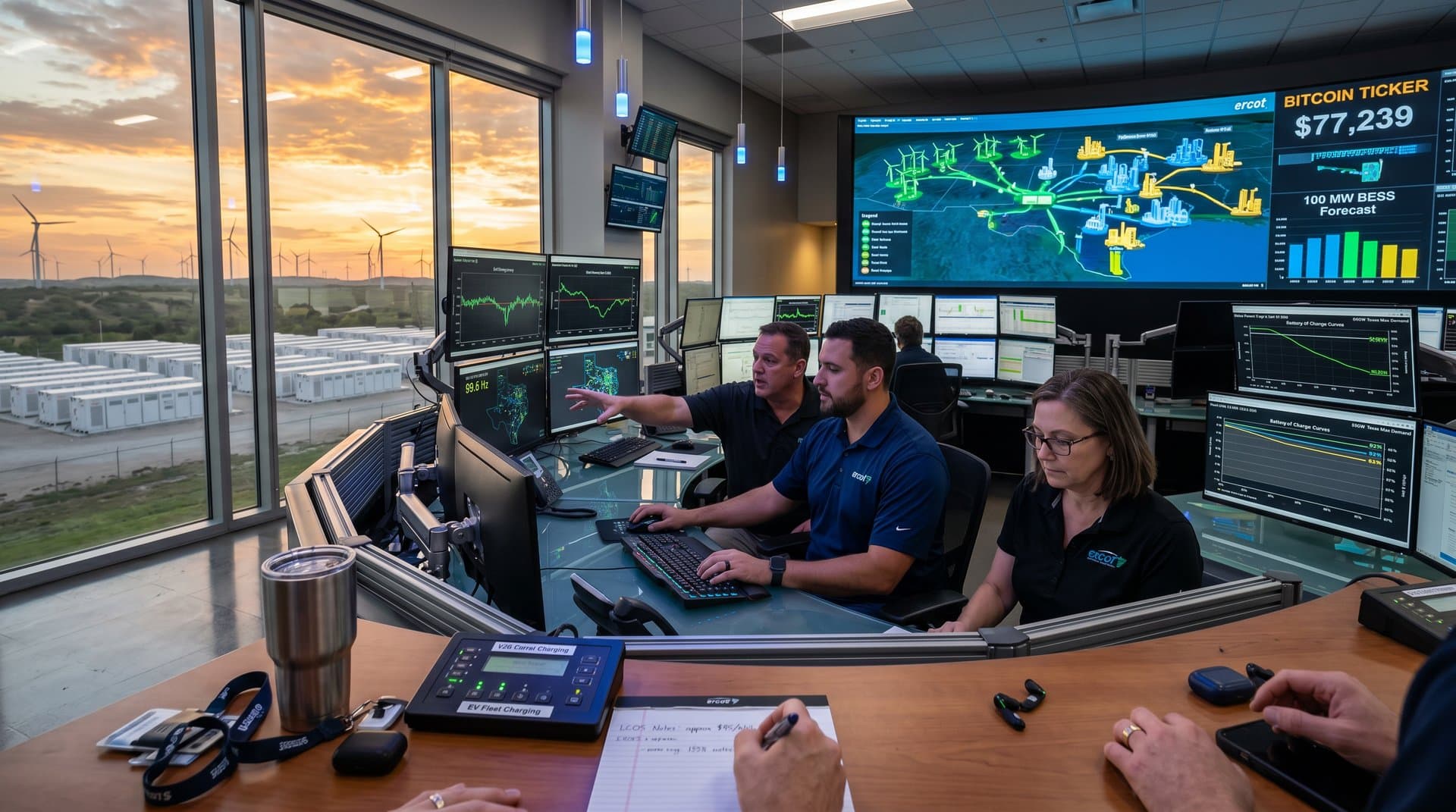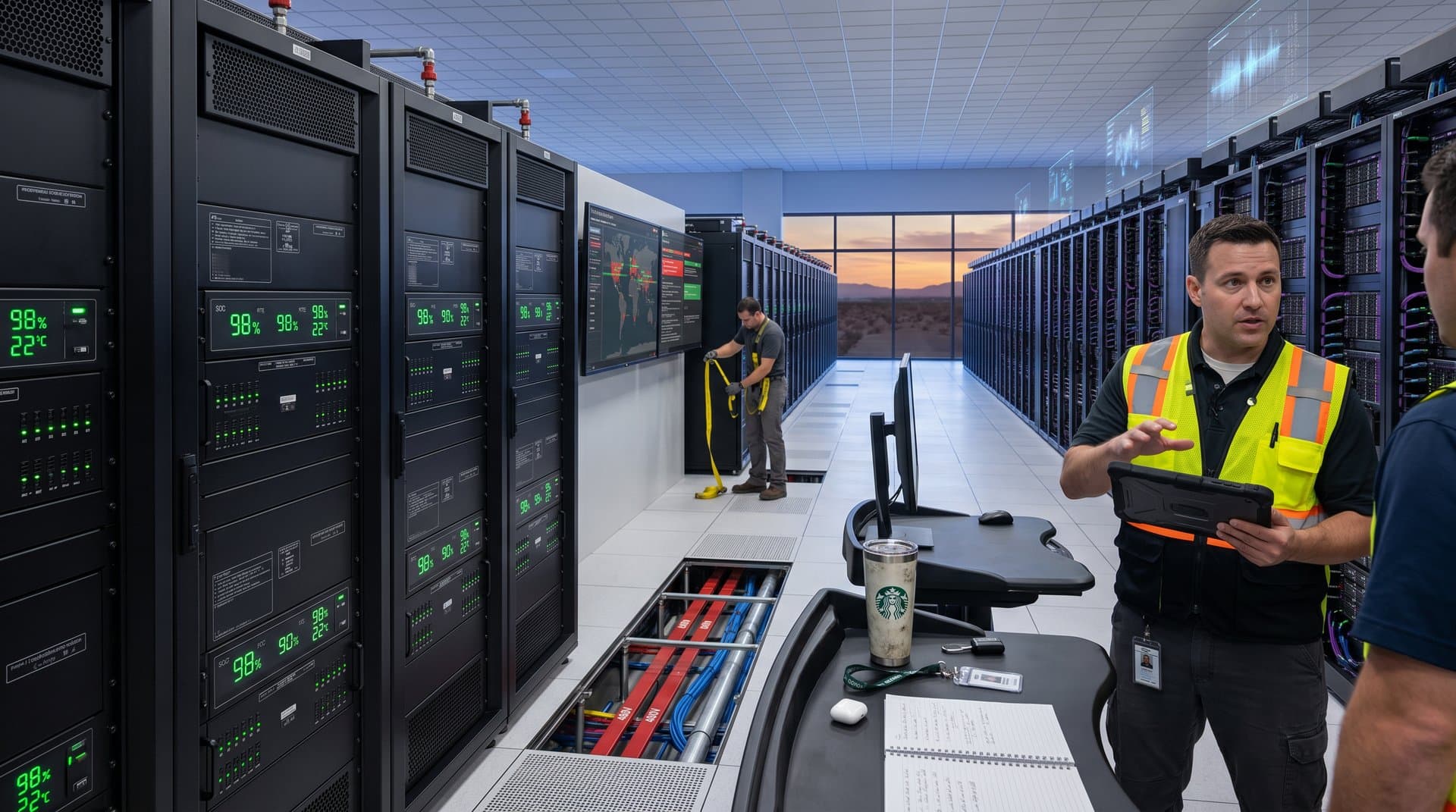
- 1 TWh annual battery additions for data centers by 2030, per BloombergNEF.
- LFP batteries achieve 90% RTE, 160 Wh/kg at $100/kWh installed.
- EV second-life packs cut grid storage costs 50%, supply hyperscalers.
AI supercycle developers reroute battery supply chains amid Iran War disruptions. BloombergNEF forecasts 1 TWh annual additions for data centers by 2030. Lithium-iron-phosphate (LFP) batteries achieve 90% round-trip efficiency (RTE) at 0.25C discharge rates.
Bitcoin trades at USD 78,247, up 1.2%, with Fear & Greed Index at 33. Ethereum climbs 2.5% to USD 2,367.73. Crypto stability signals AI infrastructure resilience to geopolitical risks.
Data centers demand hundreds of MWh hourly for AI training. Stationary batteries bridge grid gaps from disrupted fossil fuels. EV overcapacity cuts installed costs to USD 100/kWh, per BloombergNEF.
Iran War Reroutes Battery Minerals 40%
Iran War heightens Red Sea threats. Maersk logs 40% of Asia-Europe containers detouring via Africa, delaying graphite and nickel shipments by 10-14 days. These materials form 80% of lithium-ion anode and cathode mass, per Benchmark Mineral Intelligence.
China controls 82% of cathode production, per International Energy Agency (IEA) Electricity 2024 report. US Inflation Reduction Act (IRA) tax credits drive onshoring. Tesla's Nevada Gigafactory aims for 100 GWh annual LFP output by 2026.
Oil prices surge 15%, stressing diesel generators. Stationary batteries supply 4-hour duration at 160 Wh/kg energy density. Developers earn USD 20 million annually from 200 MW/800 MWh arbitrage sites, per Aurora Energy Research.
Australia provides 55% of global lithium. Indonesia scales nickel to 50% share by 2027, per Fastmarkets. LFP cells endure 6,000 cycles at 80% depth-of-discharge (DoD) under IEC 62619 standards.
EV Batteries Stabilize Data Center Peaks
Goldman Sachs Research projects data center power demand rising 160% to 1,000 TWh by 2030. Batteries handle peaks at over 90% RTE, beating gas peakers' 40% efficiency.
Second-life EV packs from Ford and GM offer 4-hour storage. LFP delivers 160 Wh/kg gravimetric density, 300 Wh/L volumetric density, and thermal runaway resistance above 500°C. Reuters reports 20% of EV capacity shifting to stationary use.
Microsoft hyperscalers sign power purchase agreements (PPAs). Levelized cost of storage (LCOS) falls below USD 0.10/kWh, undercutting peakers by 30%, per National Renewable Energy Laboratory (NREL) 2024 data.
Panasonic's Kansas plant outputs 4-hour LFP for dual grid-EV use. US interconnection queues reach 120 GW storage, per Lawrence Berkeley National Laboratory.
- Asset: BTC · Price (USD): 78,247 · 24h Change: +1.2% · Market Cap (USD Bn): 1,540
- Asset: ETH · Price (USD): 2,367.73 · 24h Change: +2.5% · Market Cap (USD Bn): 285
- Asset: XRP · Price (USD): 1.43 · 24h Change: +0.8% · Market Cap (USD Bn): 81
Glassnode tracks USD 2 billion weekly on-chain inflows.
Grid Projects Tap AI Storage Demand
FERC Order 2222 unlocks storage aggregation. PJM Interconnection procures 5 GW by 2027. CAISO aims for 10 GW. Google inks 500 MW deals with Plus Power.
Iran gas shortages favor batteries. Projects deliver 15% internal rate of return (IRR) at USD 150/kWh capex. IRA speeds interconnection approvals by 25%.
Vistra's 1,200 MW Moss Landing project leads commercial scale. Developers target Q4 2025 RFPs for 50 GW additions.
Policies Boost 1 TWh Battery Deployment
IRA grants 30% investment tax credit (ITC) plus 10% domestic content bonus for 40% total. California mandates 5 GW by 2030 under AB 2514.
EU Battery Regulation demands 16% recycled content by 2031. China pilots sodium-ion at 150 Wh/kg. BloombergNEF attributes 20% of 1 TWh additions to AI demands.
Nissan Leaf vehicle-to-grid (V2G) trials reach 90% RTE. Second-life market expands to USD 5.5 billion by 2028, per McKinsey.
IEA Electricity 2024 ties AI to 10% global power growth. Batteries cover 25% of peaks. Supply chain shifts ensure AI supercycle reliability through 2030.
Frequently Asked Questions
How does Iran War affect AI supercycle battery supply chains?
Red Sea disruptions delay graphite/nickel by 2 weeks, per Maersk. US onshores via IRA; Australia/Indonesia diversify lithium/nickel sources.
Why deploy EV batteries for AI data center grids?
Second-life LFP packs provide 4h duration at 160 Wh/kg, 6,000 cycles. Costs drop 50% to $100/kWh vs new, per BloombergNEF.
Which policies drive battery deployment in AI supercycle?
IRA 40% ITC; FERC 2222 markets; CAISO/PJM procure 15 GW. States mandate 5 GW by 2030.
How will AI reshape global battery supply chains?
1 TWh additions meet 20% demand per IEA/BloombergNEF. LFP dominates; sodium-ion scales for cost.