- NREL AI predictive models cut solar ramp errors 25% using sky imagery.
- LSTM models optimize LDES dispatch, lifting wind revenue 12%.
- IEA forecasts data centers double power demand to 1,000 TWh by 2026.
April 17, 2026
By Vivian Underwood
AI predictive models sharpen solar and wind energy forecasts by 25%. They boost grid storage efficiency. Utilities deploy them to predict output, cut curtailment, and capture peak revenues.
AI Predictive Models Process Vast Data
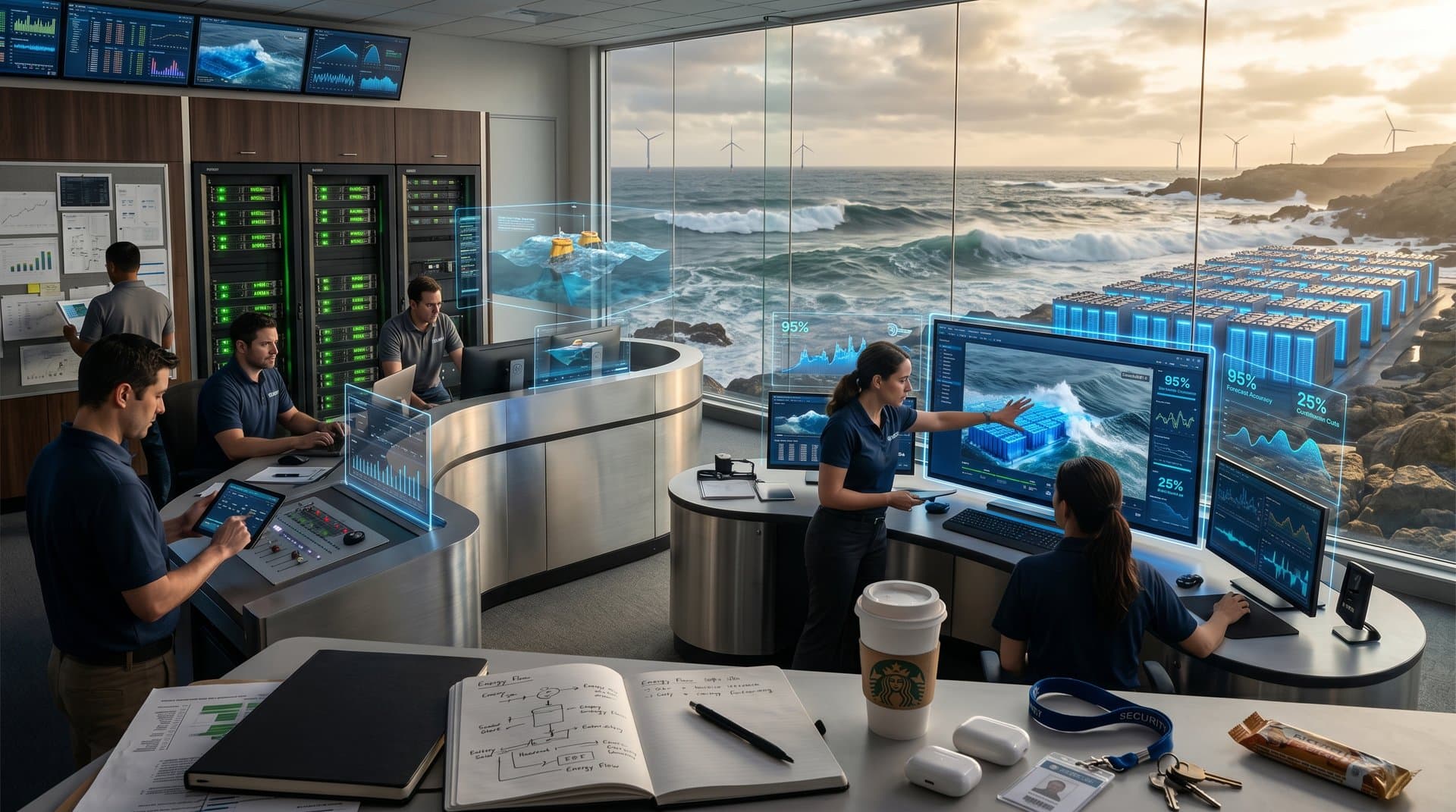
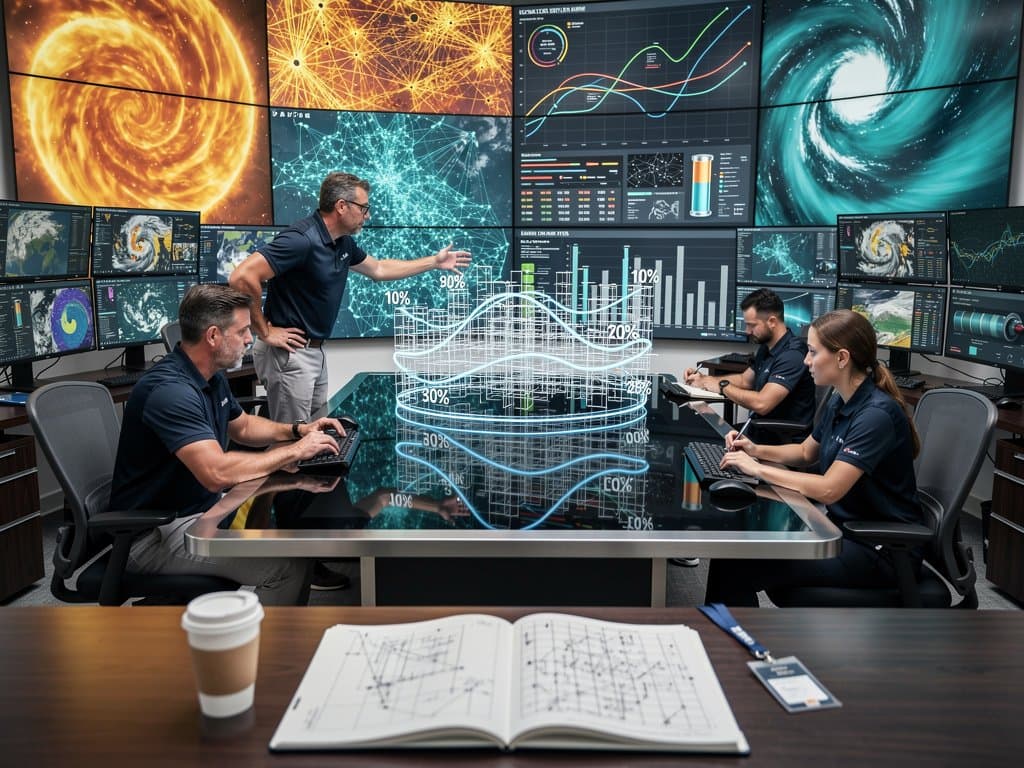
EurekaAlert reports artificial intelligence (AI) predictive models analyze weather patterns, atmospheric data, satellite imagery, and sensor feeds. National Renewable Energy Laboratory (NREL) researchers deploy long short-term memory (LSTM) neural networks. These models forecast solar irradiance and wind speeds with 20-30% higher accuracy than traditional methods, per NREL's 2022 study.
LSTM networks capture temporal generation trends. They reduce grid uncertainty.
Solar PV Forecasts Gain 25% Precision
AI predictive models process cloud cover data for photovoltaic (PV) output predictions. They outperform numerical weather prediction (NWP) models on 15-minute variability horizons. Utilities handle terabytes of real-time irradiance data daily.
NREL's deep learning tools use sky imagers. They cut ramp event errors by 25%. Storage batteries charge proactively. This avoids 10-15% curtailment losses, per CAISO's 2023 curtailment report.
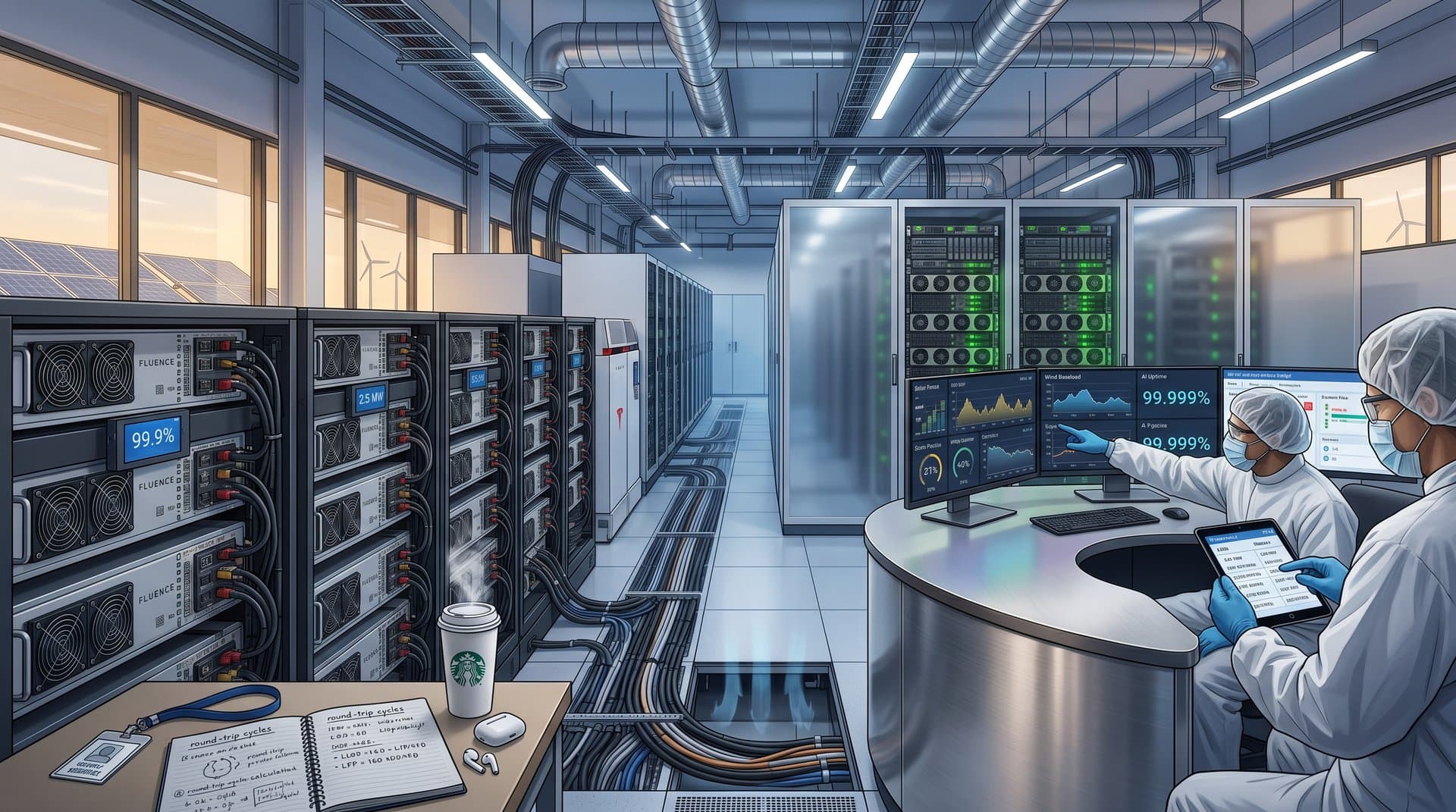
Developers pair forecasts with 4-hour lithium-ion systems (90 Wh/kg energy density, 85% round-trip efficiency at 0.25C). Cycle life reaches 5,000 at 80% depth-of-discharge.
Wind Power Predictions Enable LDES
AI predictive models ingest SCADA turbine data and global forecast systems (GFS). Ensemble techniques produce probabilistic forecasts with 95% confidence intervals for hourly MWh output.
Long-duration energy storage (LDES) captures excess wind during peaks. Developers dispatch 100 MWh flows during 4-8 hour lulls. Australia's Hornsdale Power Reserve reports 12% revenue uplift from intrahour AI predictions, per Neoen's 2024 investor update.
Form Energy's iron-air flow batteries achieve 75% efficiency over 10,000 cycles (100+ hour duration) under optimized schedules.
Dynamic Algorithms Optimize Storage Dispatch
AI predictive models integrate with unit commitment and economic dispatch solvers. They limit battery depth-of-discharge to 80%. This extends cycle life to 5,000 equivalents.
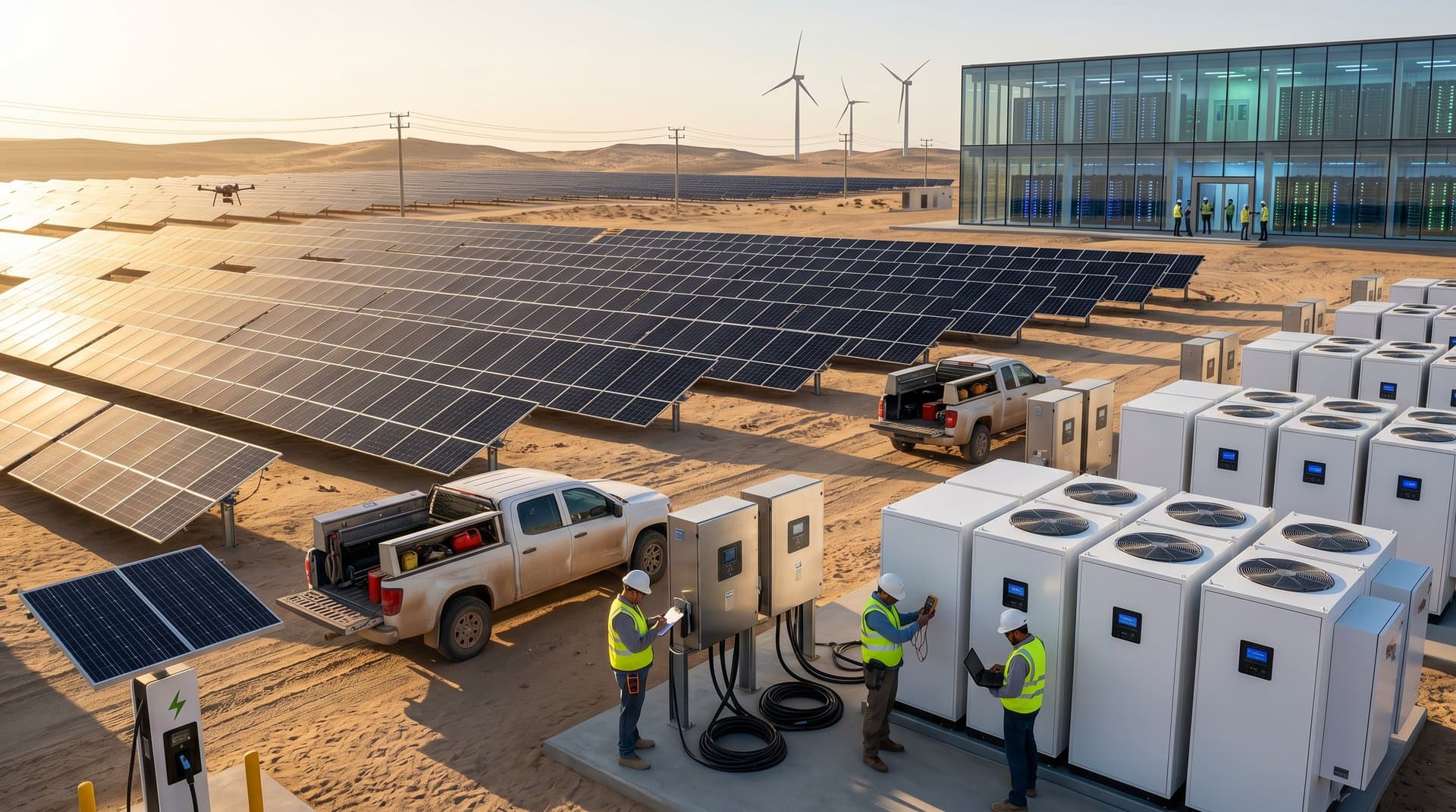
Behind-the-meter systems match rooftop solar to EV charging. Utility-scale batteries scale to GW levels. Fluence's 200 MW / 800 MWh project in Texas bids into ERCOT using AI-driven LMP forecasts. It targets $100/MWh spreads.
Arbitrage captures 20% higher revenues than rule-based controls, per Pacific Northwest National Laboratory (PNNL) analysis.
IRA Tax Credits Fund AI-Storage Pilots
Inflation Reduction Act (IRA) Section 45Y offers up to $25/kWh credits for storage paired with renewables. FERC Order 2222 enables aggregated batteries in wholesale markets.
California's AB 2514 mandates 5 GW storage procurement by 2026. PG&E deploys AI for its 1.3 GW portfolio. This unlocks $500 million in annual value, per PG&E's Q1 2026 filing.
EU Policies Accelerate Cross-Border AI
EU Battery Regulation (2023/1542) mandates recycled content. Horizon Europe grants €100 million for AI pilots. Terna S.p.A. shares Italian grid data for federated models.
Data Centers Drive 2x Demand Surge
IEA's Data Centres report projects global demand doubling to 1,000 TWh by 2026. AI training GPUs consume 500 MW per hyperscaler campus.
Predictive models schedule 400 MWh storage discharge for evening peaks. Virtual power plants aggregate 10 GW distributed resources for frequency services.
Reuters analysis notes 15% faster renewables permitting in Germany due to data center pressure.
Miners and Industries Colocate with Storage
Bitcoin miners site 100 MW loads next to Texas solar farms. AI predictive models ramp hashing during 30% surplus generation. They bid into ancillary markets at $50/MWh.
Steel and aluminum smelters hedge 20% of costs via storage arbitrage.
Global Leaders Scale AI Deployments
US DOE funds $50 million AI-storage demos via ARPA-E. China’s State Grid trains models on 1 TW solar data. Europe advances privacy-preserving federated learning.
Singapore’s 200 MW solar-wind-LDES testbeds report 18% efficiency gains, per EMA data.
AI Predictive Models Solidify Storage Role
AI predictive models cut renewables uncertainty 25%. Data center growth doubles loads. FERC's Order 2026 will mandate AI integration, scaling 100 GWh deployments by 2030.