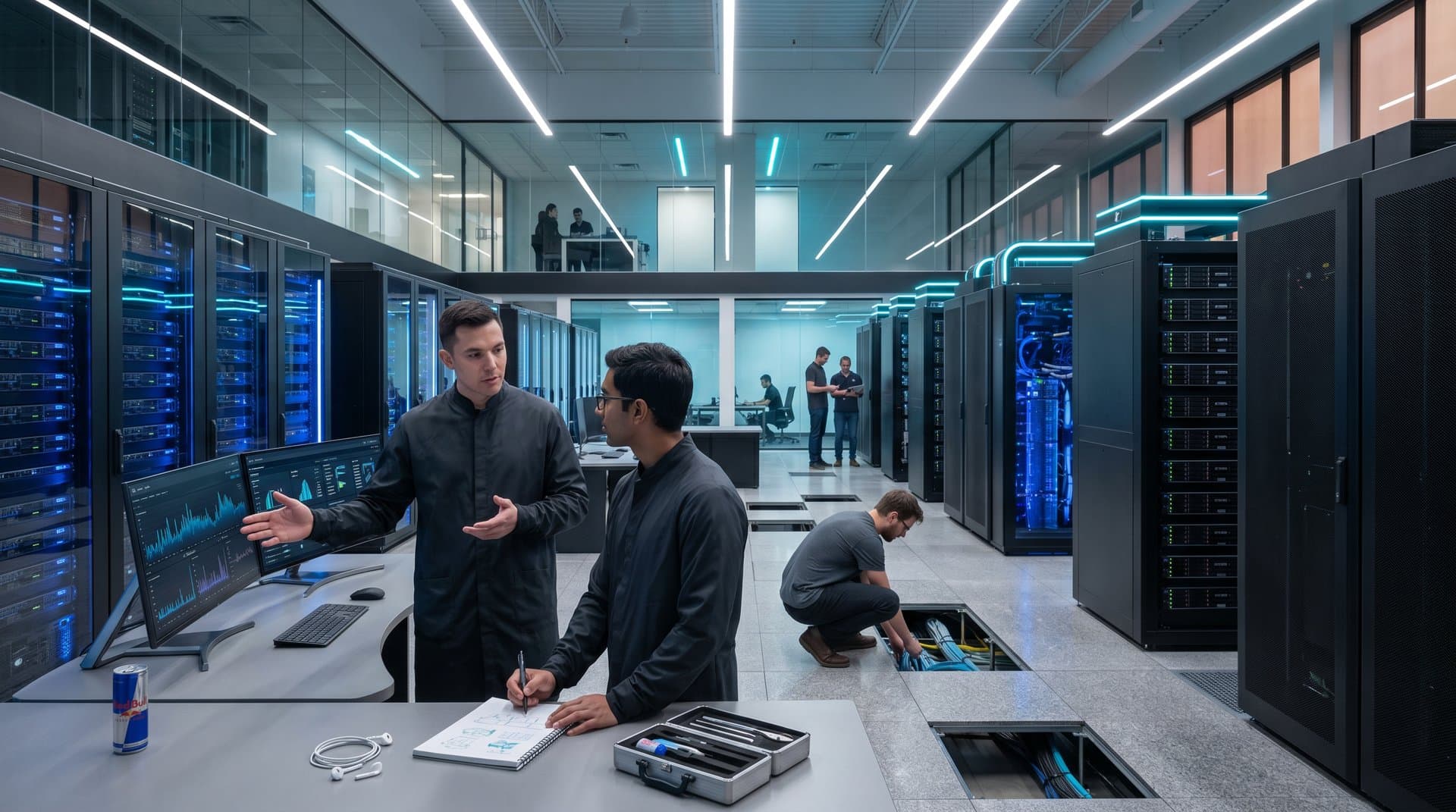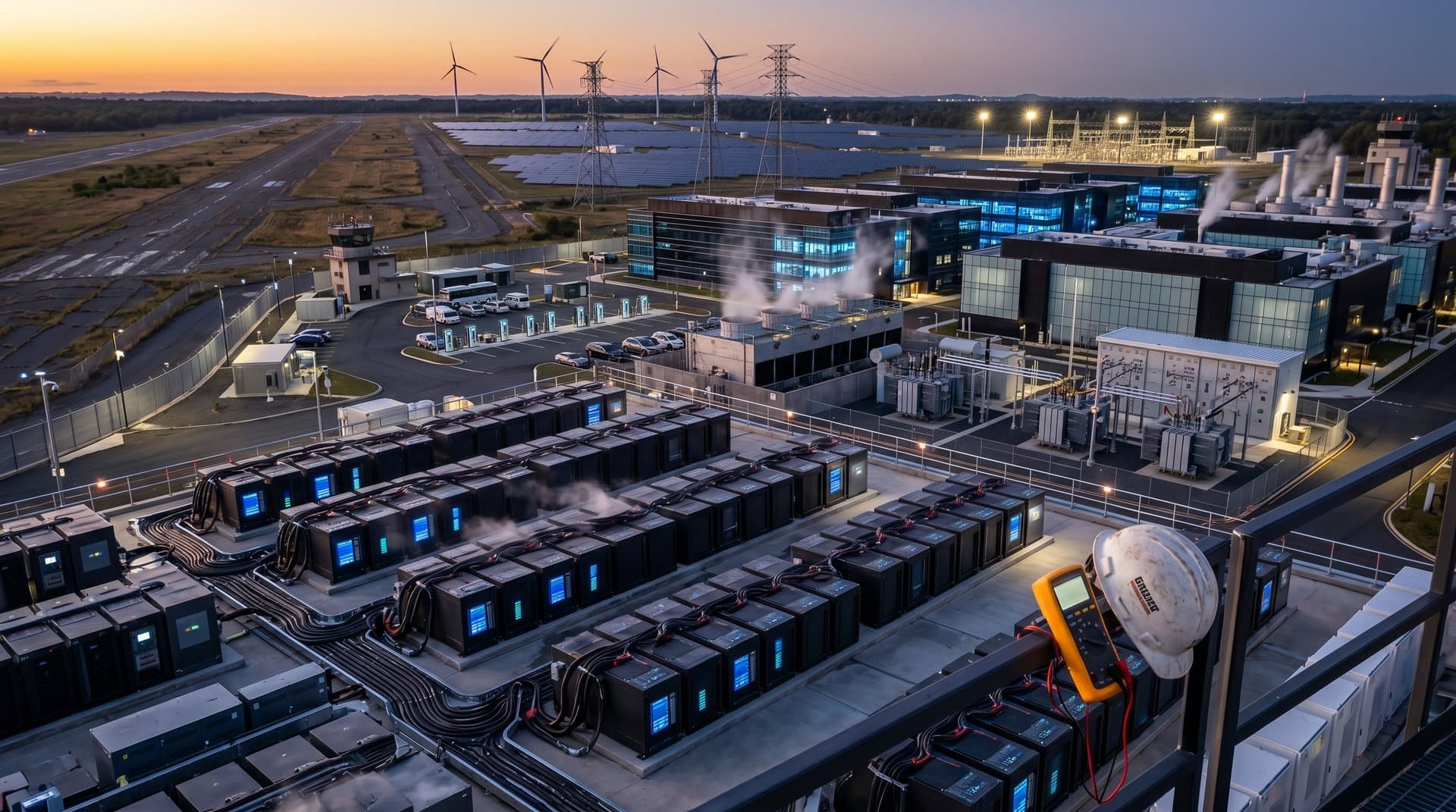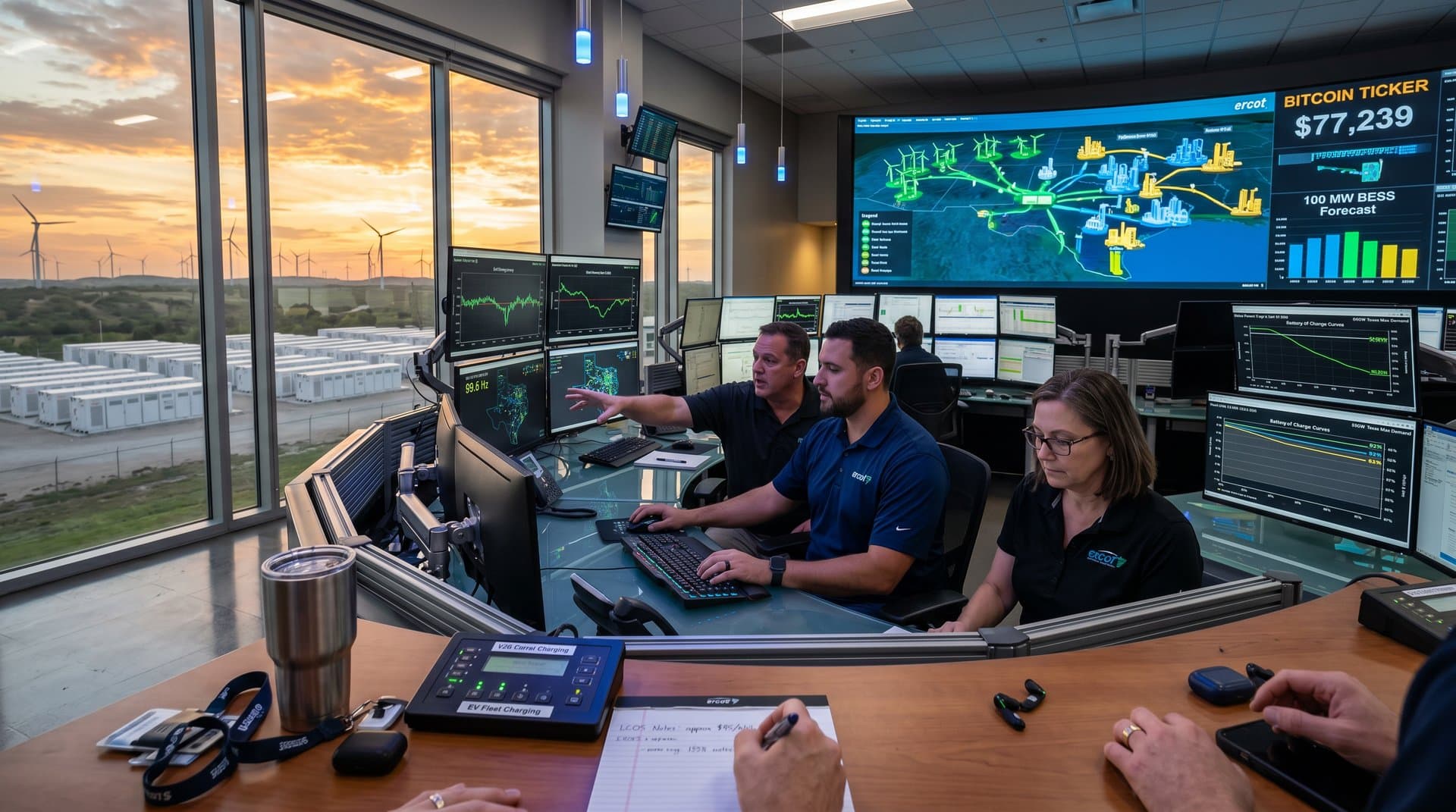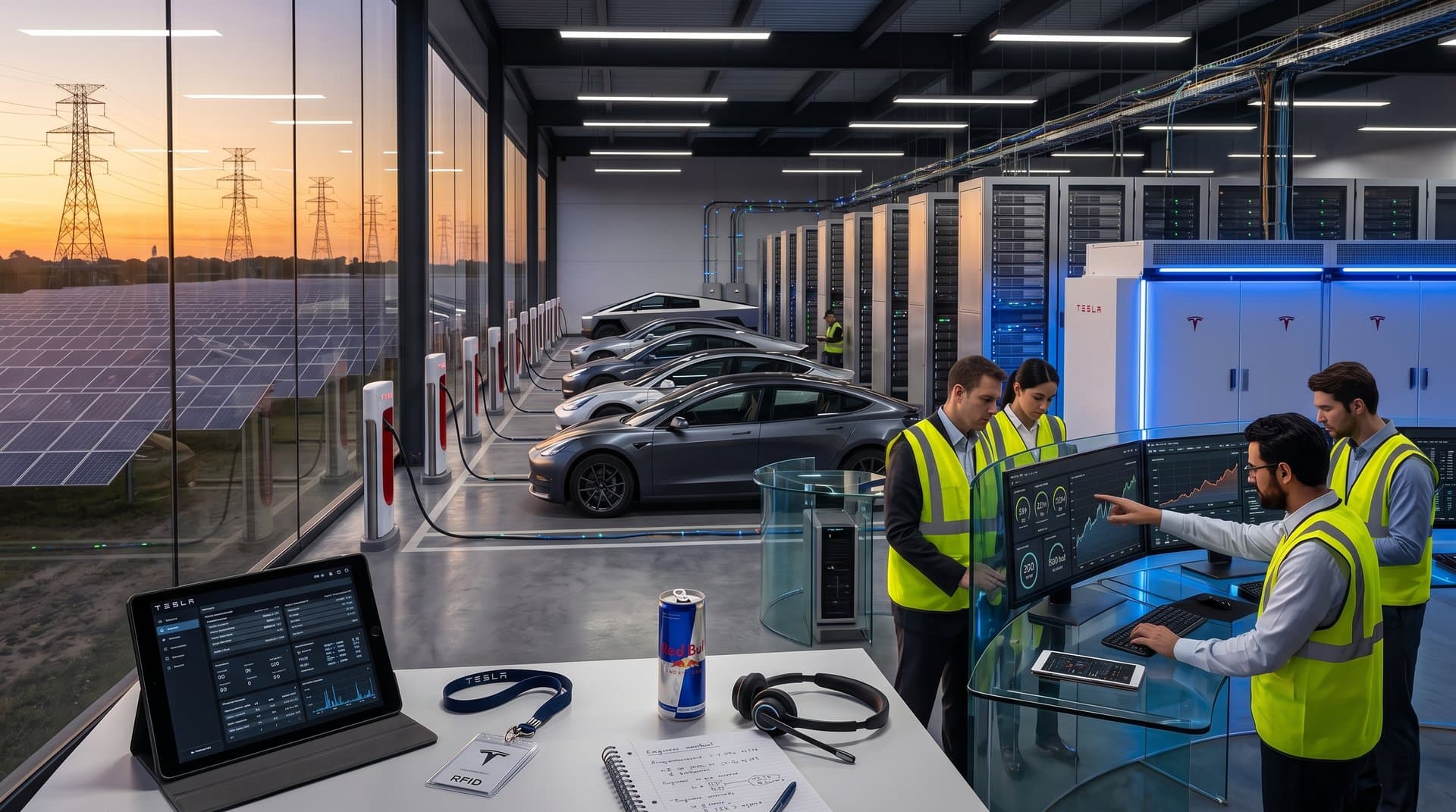
- AI power demands double to 1,000 TWh by 2026 (IEA Electricity 2024).
- Tesla Megapacks deliver 3.9 MWh at 92% RTE (NREL, IEC 62619).
- V2G cuts curtailment 20%, 92% efficiency (NREL pilots).
AI power demands will reach 1,000 TWh globally by 2026, doubling from 460 TWh in 2022 (IEA Electricity 2024). Battery storage deployments accelerate to support data centers.
AI Power Demands Strain Grids, Spur Fast Storage
AI training runs 24/7, conflicting with solar peaks and wind variability. Lithium-ion batteries deliver power in seconds, hitting 92% round-trip efficiency (RTE) at 0.5C discharge (NREL, IEC 62619). Google DeepMind data centers alone eye 240-340 TWh yearly by 2026 (IEA).
US utilities face 2,200 GW interconnection queues (FERC 2023). Batteries supplant gas peakers, ramping 0-100% in under 100 ms. Vehicle-to-grid (V2G) aggregates EV fleets for 5-10 kW per vehicle in frequency regulation.
Tesla Megapacks (3.9 MWh, 1.9 MW per unit) aid hyperscalers (Tesla specs, 2024). Lithium-ion offers 250 Wh/kg energy density and 160 Wh/L volumetric density, with 4,000 cycles at 80% DoD (NREL).
Battery Storage Ensures Data Center Uptime
Lithium-ion systems sit beside data centers, bypassing transmission limits. Fluence Cube delivers 4-hour duration at US$132/MWh LCOS (BloombergNEF Q2 2024). Form Energy's iron-air batteries target 100-hour duration, 1,000+ cycles at 80% DoD (Form Energy pilots, 2024).
Tesla Megapacks pair with solar for 80% renewables, per IEC 62933. Lithium carbonate hits US$15,000/t (Benchmark Mineral Intelligence Q3 2024). HVDC upgrades cost US$2 million/km (NREL ATB 2024).
EV second-life batteries retain 80% capacity after 3,000 cycles (NREL). Redwood Materials recycles 95% of materials.
BloombergNEF on AI energy demands details gas-storage hybrids as bridges.
V2G Bolsters AI Grid with EV Fleets
V2G enables bidirectional flow, dispatching 5-10 kW per EV for ancillary services. Ford pilots aggregate 1,000 EVs into 5 MW (NREL V2G, 2023). Tesla's California VPP responds in 100 ms, eyeing 15 GW peaks.
NREL V2G research shows 92% RTE and 1% annual degradation. EV fleets cut renewable curtailment 20% (Pacific Gas & Electric trials).
Lithium iron phosphate (LFP) in EVs yields 170 Wh/kg, 400 Wh/L, outperforming NMC's 200 cycles advantage in calendar life.
Renewables-Storage Hybrids Fit AI Loads
Solar-plus-storage provides 4-hour firm power at 250 MW. Vistra's Moss Landing (400 MW/1,600 MWh, 4-hour duration, commissioned 2021) matches AI baseload (IEC 62933).
Inflation Reduction Act cuts LCOS 30% (US Treasury ITC). Tesla ties Megapacks to EV chargers for 99.99% uptime in Dojo training.
IEA data centres report predicts 8% global electricity for data centers by 2030. FERC Order 2023 speeds storage queues. Hyperscalers target 50 GW capacity, needing 20 GW storage (S&P Global Platts).
AI power demands intensify supply chain pressures, but batteries enable scaling with verified 92% RTE and falling LCOS.
Frequently Asked Questions
How do AI power demands impact battery storage needs?
AI power demands hit 1,000 TWh by 2026 (IEA), fueling 20 GW pipelines. Tesla Megapacks (3.9 MWh) shave peaks at US$132/MWh LCOS (BloombergNEF Q2 2024).
What is V2G and its role in AI power demands?
V2G dispatches 5-10 kW per EV for MW reserves. NREL confirms 92% RTE, 1% degradation supporting AI peaks.
Why are grid upgrades essential for AI power demands?
FERC reports 2,200 GW queues. HVDC at US$2M/km (NREL); storage localizes per Order 2023.
How does renewable integration address AI power demands?
Hybrids offer 4 hours at 80% renewables. Vistra Moss Landing (1,600 MWh) cycles for AI (IEC 62933).