- Goldman Sachs forecasts 160% data center power demand rise from AI by 2030.
- IEA predicts data centers double electricity use to 1,000 TWh by 2026.
- Lithium-ion batteries shift solar peaks at 85-90% RTE, per NREL 2023 data.
Goldman Sachs forecasts energy storage solutions demand surging due to a 160% data center power increase from AI through 2030. Analysts Alberto Gandolfi and Alyssa Stansell project this growth at 700 TWh annually. The International Energy Agency predicts data centers double electricity use to 1,000 TWh by 2026.
Microsoft adds 2.5 GW in Virginia. Google constructs 1 GW in Ireland. Amazon expands 1.2 GW in Texas. PJM Interconnection's queue reaches 300 GW, per FERC filings.
AI Data Centers Trigger 160% Power Demand Surge
AI training clusters demand 100 MW baseload per site around the clock. Grids balance these against residential evening peaks of 50-70 GW. California ISO Curtailment Report 2023 shows 10 GW solar curtailment risks without storage.
Solar peaks midday at 15 GW in CAISO, but AI runs 24/7. PJM manages 180 GW East Coast peaks. FERC Order 1920 requires transmission plans to include storage through 2045.
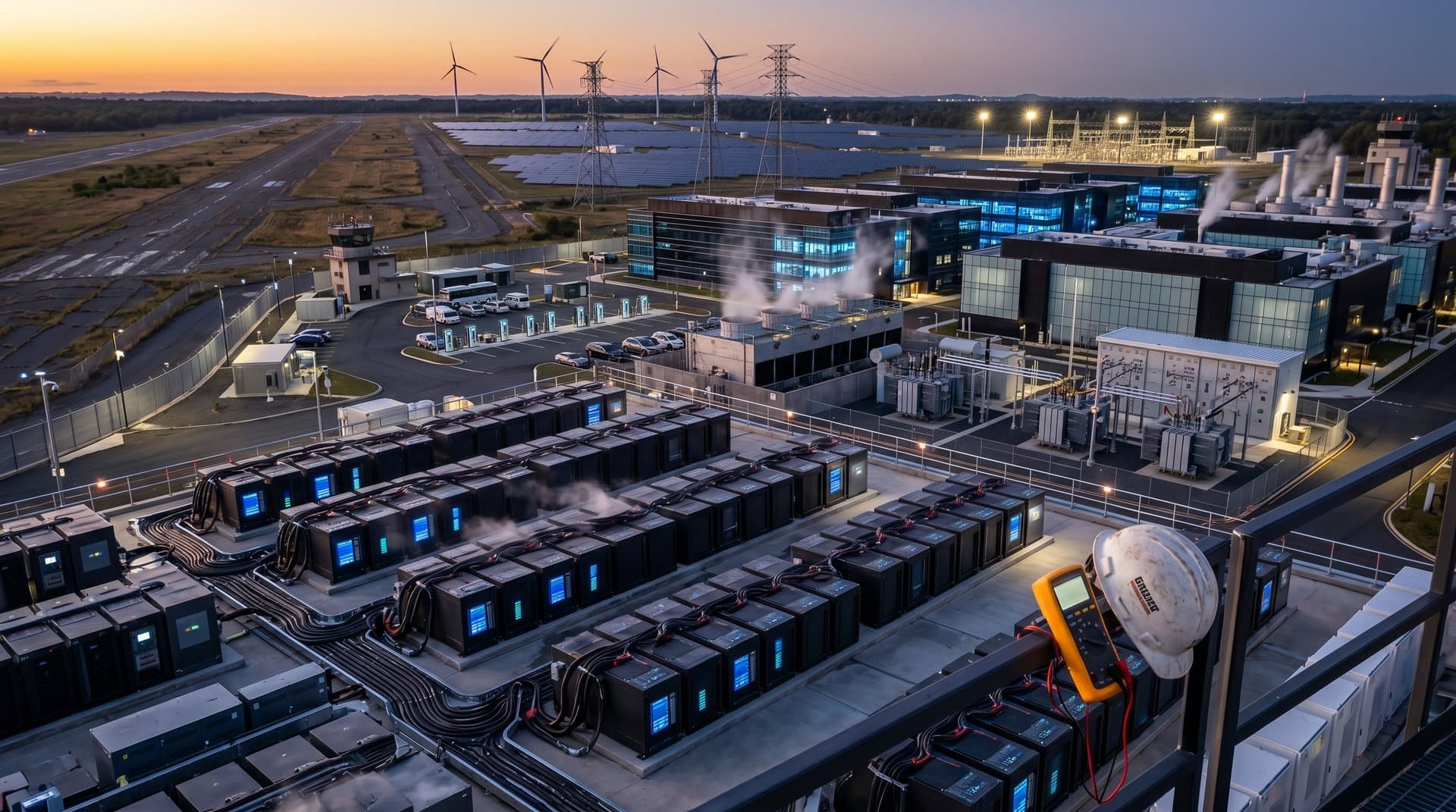
Texas ERCOT queue hits 2.5 TW, per ERCOT 2024 Generator Interconnection Status. Fluence deploys 300 MW/1,200 MWh Gateway project in California for peak shaving, achieving 4-hour duration.
Energy Storage Solutions Stabilize AI-Loaded Grids
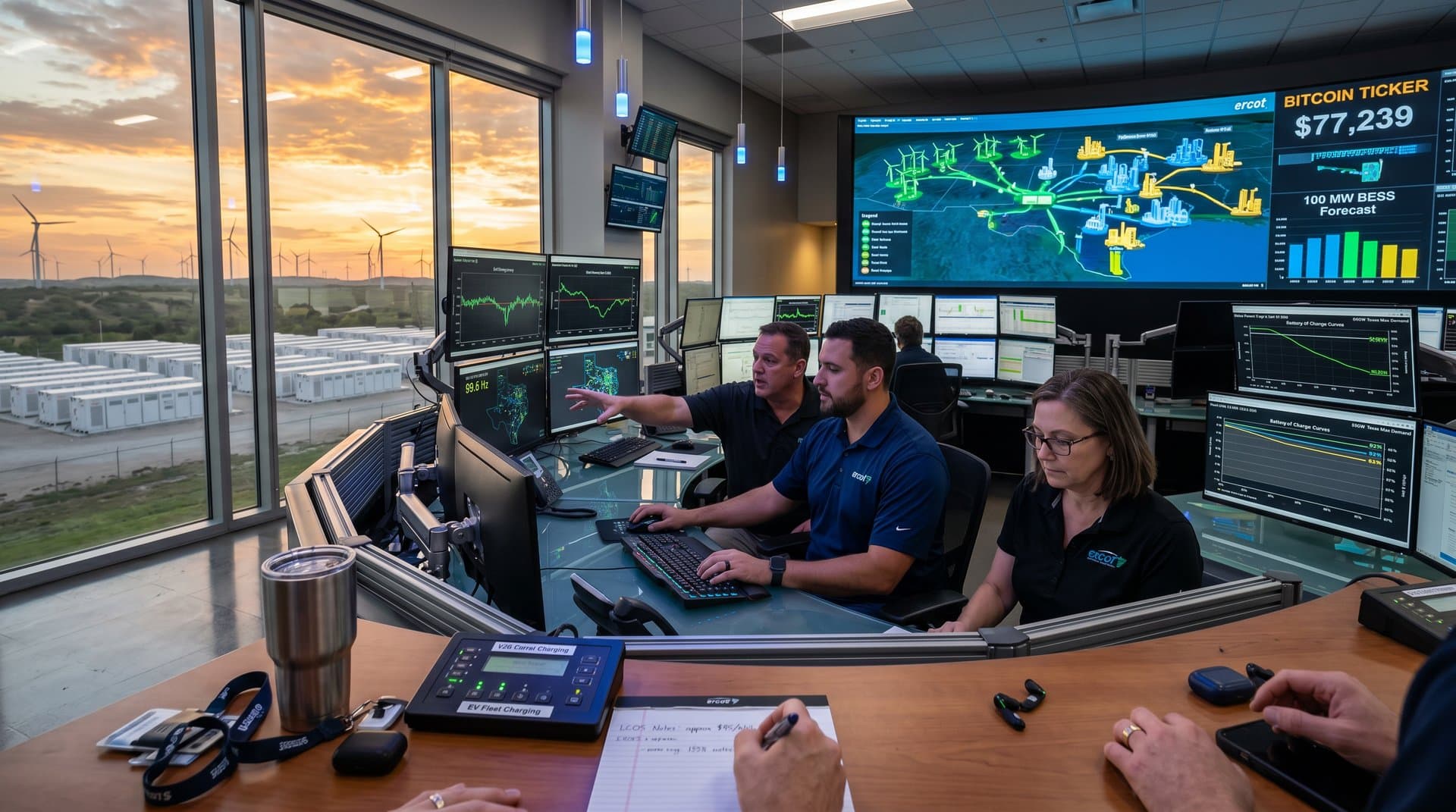
Lithium-ion batteries shift midday solar energy at 85-90% round-trip efficiency (RTE), per NREL's 2023 Utility-Scale Battery Storage report at 0.25C discharge rates. BloombergNEF pegs levelized cost of storage (LCOS) at USD 140-150/MWh in ERCOT.
BNEF identifies AI as top battery storage driver, projecting 200 GW global additions by 2030. Developers co-locate 200 MW/800 MWh systems with 500 MW solar farms in Arizona.
Invinity flow batteries deliver 75% RTE for 8-hour discharge at 20 Wh/L density. Form Energy's iron-air batteries target 100 hours at 150 Wh/kg, validated in 2023 pilot tests.
Tesla Megapacks provide 4-hour duration at 200 Wh/L packing density. RTE holds 88% under IEC 62619 standards, per Tesla's 2024 Q1 update.
Renewables Integration Relies on Energy Storage Solutions
ERCOT wind-storage hybrids cut 1.2 TWh curtailment in 2023, per EIA Electric Power Monthly. Solar farms dispatch stored energy at 80% depth of discharge (DoD).
Google aims for 24/7 carbon-free energy by 2030. Storage arbitrages USD 20/MWh solar lows against USD 100/MWh peaks in CAISO.
Vehicle-to-grid pilots use 1 GW EV fleets in California, per CALSTART 2024 report. Behind-the-meter 10 MW/40 MWh systems reduce Amazon demand charges by 30%, per company filings.
Microsoft pairs 100 MW/400 MWh storage with hydro in Sweden. Amazon signs 500 MW battery-attached PPAs with Recurrent Energy for Texas solar.
Supply Chain Dynamics Accelerate Energy Storage Scale-Up
Lithium carbonate prices peaked at USD 80,000/tonne in 2022 before falling 80% to USD 15,000/tonne, per Benchmark Mineral Intelligence Q1 2024. Nickel supply tightens under Indonesia's 60% global dominance.
CATL's sodium-ion batteries hit 160 Wh/kg at USD 40/kWh pack cost, easing scaling with abundant sodium, per company specs.
FERC Order 2023 shortens permitting to two years from five. IRA Section 48E grants 30-50% investment tax credits for standalone storage.
California ISO batteries avoided 2.4 TWh curtailment in 2023, per CAISO Final Roots report. EU Battery Regulation 2023/1542 mandates 16% recycled content by 2031.
China commissions 100 GWh factories yearly, per InfoLink data. US IRA boosts domestic capacity to 50 GWh by 2025, per DOE estimates.
Energy storage solutions undercut gas peakers at USD 120/MWh LCOS, per Lazard's 2024 analysis. Developers deploy GW-scale projects, securing grid reliability for AI hyperscalers through 2030.
Frequently Asked Questions
What drives the 160% data center power demand surge?
Goldman Sachs analysts Gandolfi and Stansell cite AI training and inference. Hyperscalers like Microsoft expand gigawatt-scale facilities, straining grids.
How do energy storage solutions address AI grid strain?
Lithium-ion shifts peaks at 85-90% RTE per NREL 2023. Flow batteries enable long-duration. Renewables hybrids cut curtailment, per EIA.
Why integrate renewables with energy storage for AI?
Storage captures solar/wind excess for 24/7 use. LCOS under USD 150/MWh beats peakers. BNEF links AI boom to 200 GW storage growth.
What challenges face energy storage scaling?
Lithium price volatility per Benchmark; nickel shortages. IRA tax credits and FERC Order 2023 speed deployment. Sodium-ion cuts costs.