- AI data centers boost power demand 160% by 2030 (Goldman Sachs).
- LFP batteries achieve 6,000+ cycles, 90%+ RTE for grid stability.
- LCOS drops to $150/MWh, matching gas peaker costs.
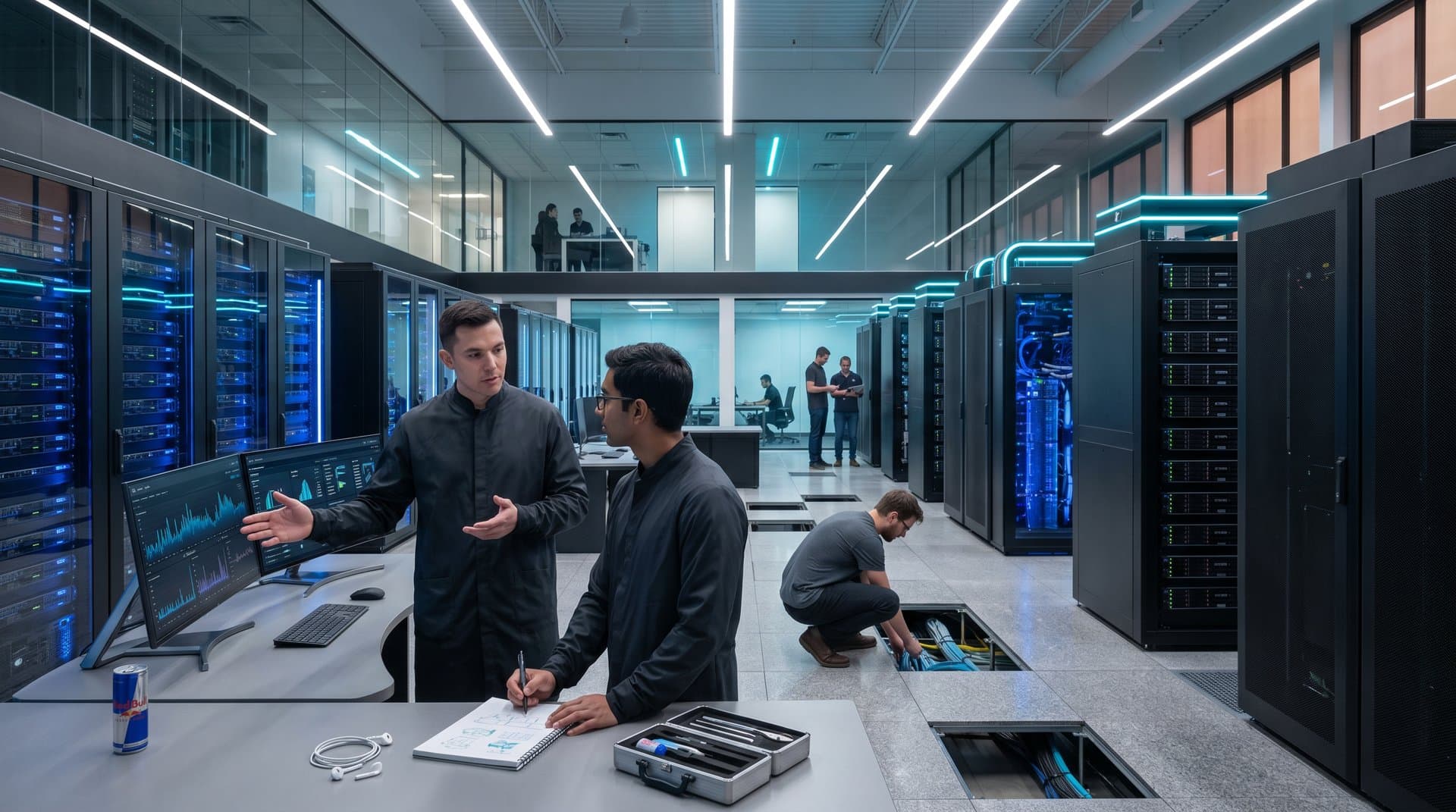
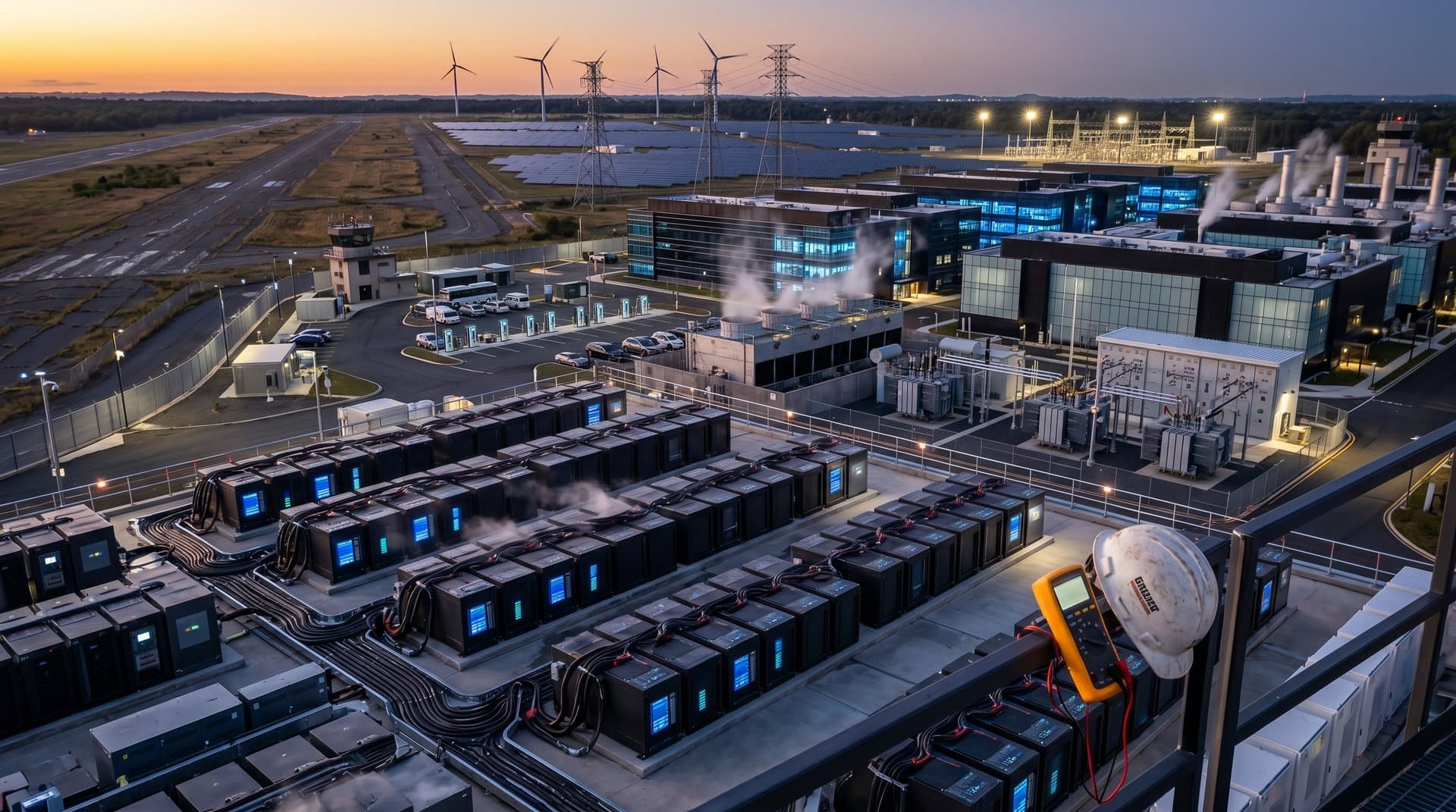
Grid storage stabilizes surging AI data center power demands. Hyperscalers like Microsoft deploy lithium iron phosphate (LFP) battery systems for millisecond grid response. Bitcoin (BTC) mining parallels this strain. CoinMarketCap data shows BTC at $77,336, up 4.0% with $1.55 trillion market cap as of October 10, 2024.
Analysts at Goldman Sachs forecast 160% power demand growth for data centers by 2030. See Goldman Sachs report.
AI Data Centers Mirror BTC Mining Grid Stress
AI training clusters consume 100-500 MW per site, rivaling small cities. Servers use 1-2% of global electricity today, per International Energy Agency (IEA) Executive Director Fatih Birol. The IEA projects this rises to 4% by 2026. IEA report.
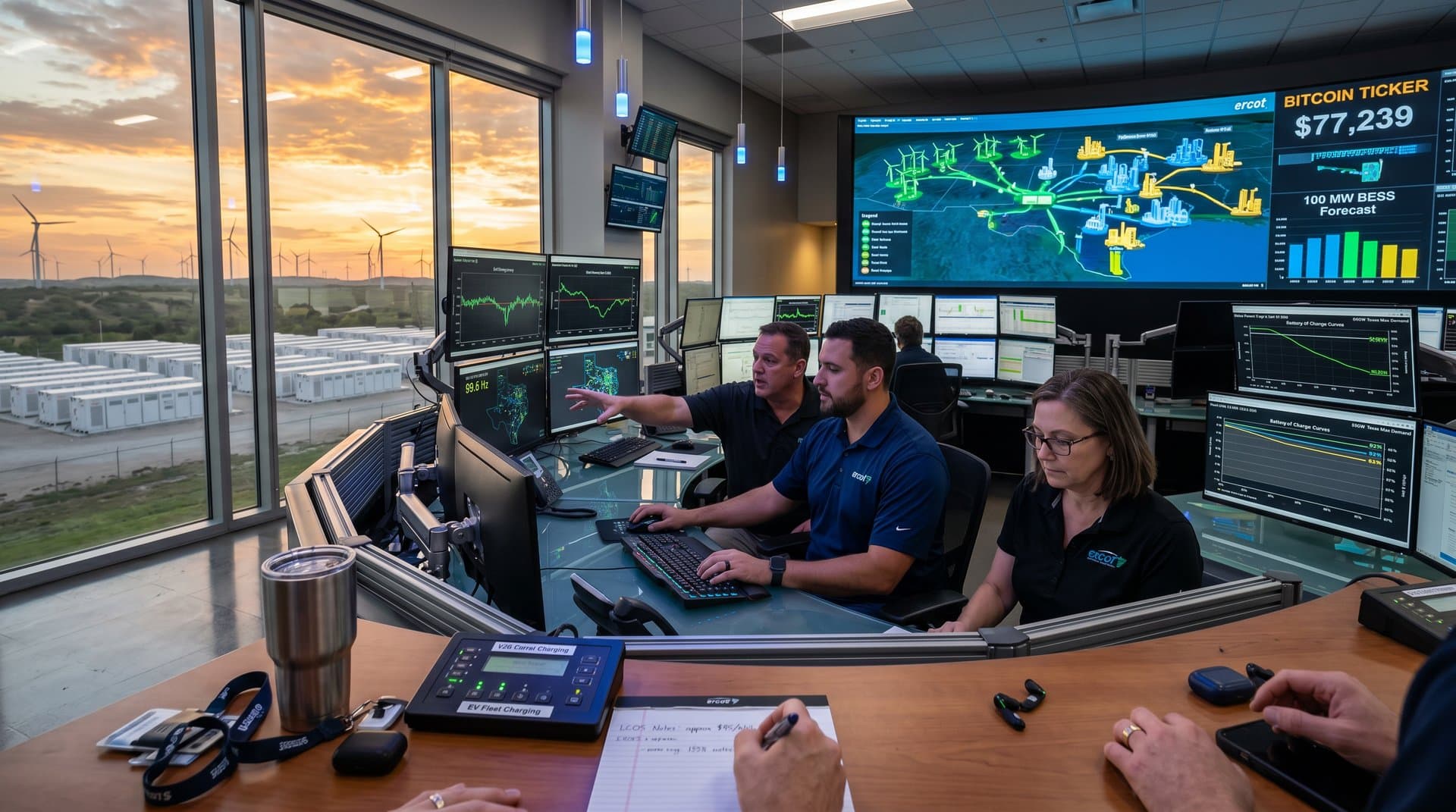
Bitcoin miners cluster in Texas, peaking ERCOT grid at 100 MW per site during high-price periods. AI hyperscalers expand in Virginia, amplifying evening peak loads by 20-30%.
Renewables generate midday power peaks. AI workloads run evenings. Grid storage bridges this timing gap with rapid discharge.
Microsoft partners with Fluence for 10.4 GWh of storage to support its AI campuses, announced in 2024.
LFP Batteries Dominate Frequency Response
LFP batteries deliver 90-95% round-trip efficiency (RTE) at 1C discharge rates, per Tesla Megapack specifications tested under IEC 62619 standards. They provide over 6,000 cycles at 80% depth of discharge (DoD). Energy density reaches 160 Wh/kg and 300 Wh/L, as validated by CATL cell datasheets.
CATL supplies these cells to Tesla Megapacks (3.9 MWh per 40-foot unit, 1.9 MW power). LFP outperforms NMC on safety margins, avoiding thermal runaway per UL 9540A certification.
Front-of-meter LFP scales to GWh deployments. Fluence Mosaic supplies 2.2 GWh to UK National Grid, commissioned in 2024 for frequency control services, achieving 200 ms response times.
Flow Batteries Enable Long-Duration Shifts
Flow batteries decouple power (MW) from energy (MWh). Invinity's vanadium redox flow batteries offer 20,000 full cycles and 75% RTE at 25-50 Wh/L density, per independent DNV testing.
Form Energy's iron-air batteries target 100-hour discharge at $20/kWh levelized cost of storage (LCOS), validated by National Renewable Energy Laboratory (NREL) simulations. NREL report.
Faradion advances sodium-ion batteries to 160 Wh/kg by 2026. These cobalt-free cells cut costs 30% versus LFP while using abundant sodium sourcing.
Policies and Financing Accelerate Projects
LFP LCOS falls to $150/MWh, rivaling gas peaker plants, according to BloombergNEF's Q3 2024 analysis.
US Inflation Reduction Act (IRA) delivers 30% investment tax credit for standalone storage over 5 MW. Federal Energy Regulatory Commission (FERC) Order 2023 enables full market participation. FERC release.
Europe's Battery Regulation mandates digital passports by 2027 for traceability. China dominates 80% of LFP cathode production via BYD and CATL.
Project financing surges: Fluence secures $200 million from AES for US deployments.
Supply Chain Realities Shape Scale-Up
Lithium carbonate prices stabilize at $12,000/tonne post-2024 oversupply, per Fastmarkets data. Australia supplies 60% of global lithium via Pilbara Minerals.
Redwood Materials recycles 95% of cathode materials at its Nevada facility, targeting 100 GWh/year by 2027.
Cobalt-free LFP adoption surges to 60% of EV packs. Indonesia ramps nickel output for residual NMC (75 Wh/kg density). US IRA funds $3 billion in North American gigafactories. CATL opens a 8 GWh/year plant in Germany, operational 2025.
Trade tensions add 10-15% to imported cell costs under US tariffs.
Outlook: Storage Unlocks AI and Renewables
AI drives data centers to 1 TW demand by 2030, per IEA. Grid storage enables 50% renewables integration at LCOS under $100/MWh.
Commercial LFP deploys at GW scale today. Track 2026 long-duration energy storage (LDES) pilots from Form Energy for 100-hour GWh breakthroughs. BTC's rally to $77,336 underscores parallel urgency for miners.
Frequently Asked Questions
Why do AI data centers need grid storage?
GPU clusters spike power to 500 MW. Storage responds in milliseconds to balance renewables and prevent outages.
What metrics define LFP for grid storage?
90-95% RTE, 6,000 cycles at 80% DoD, 160 Wh/kg density. Safer than NMC.
How do flow batteries support long-duration needs?
Decouple MW/MWh, 20,000 cycles, 75% RTE. Iron-air hits 100 hours at $20/kWh LCOS.
What policies boost grid storage deployment?
US IRA 30% credit, FERC Order 2023 markets. EU Battery passports by 2027.