- Florida utilities forecast 5 GW new load from AI data centers by 2028.
- Current grid storage capacity stands at 1.2 GW / 4.8 GWh in Florida.
- Duke Energy plans 2 GW additional battery projects costing USD 1.2 billion.
5 GW AI Load Projections
Florida Power & Light (FPL) approved 1.5 GW AI data center interconnections on April 13, 2026. Duke Energy queues 2.2 GW more. Florida grid storage totals 1.2 GW/4.8 GWh today but faces 5 GW new AI demand by 2028, equaling 20% of peak load.
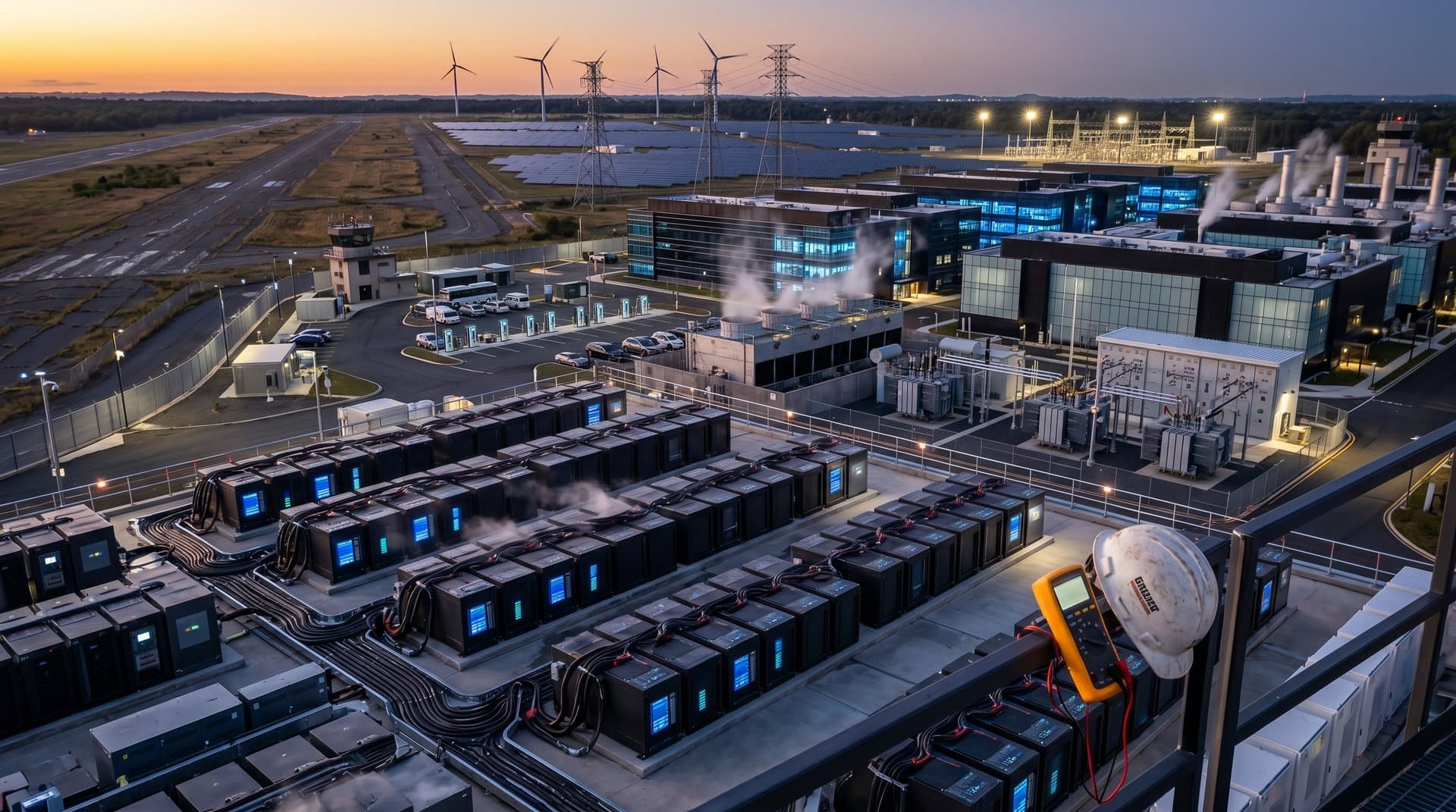
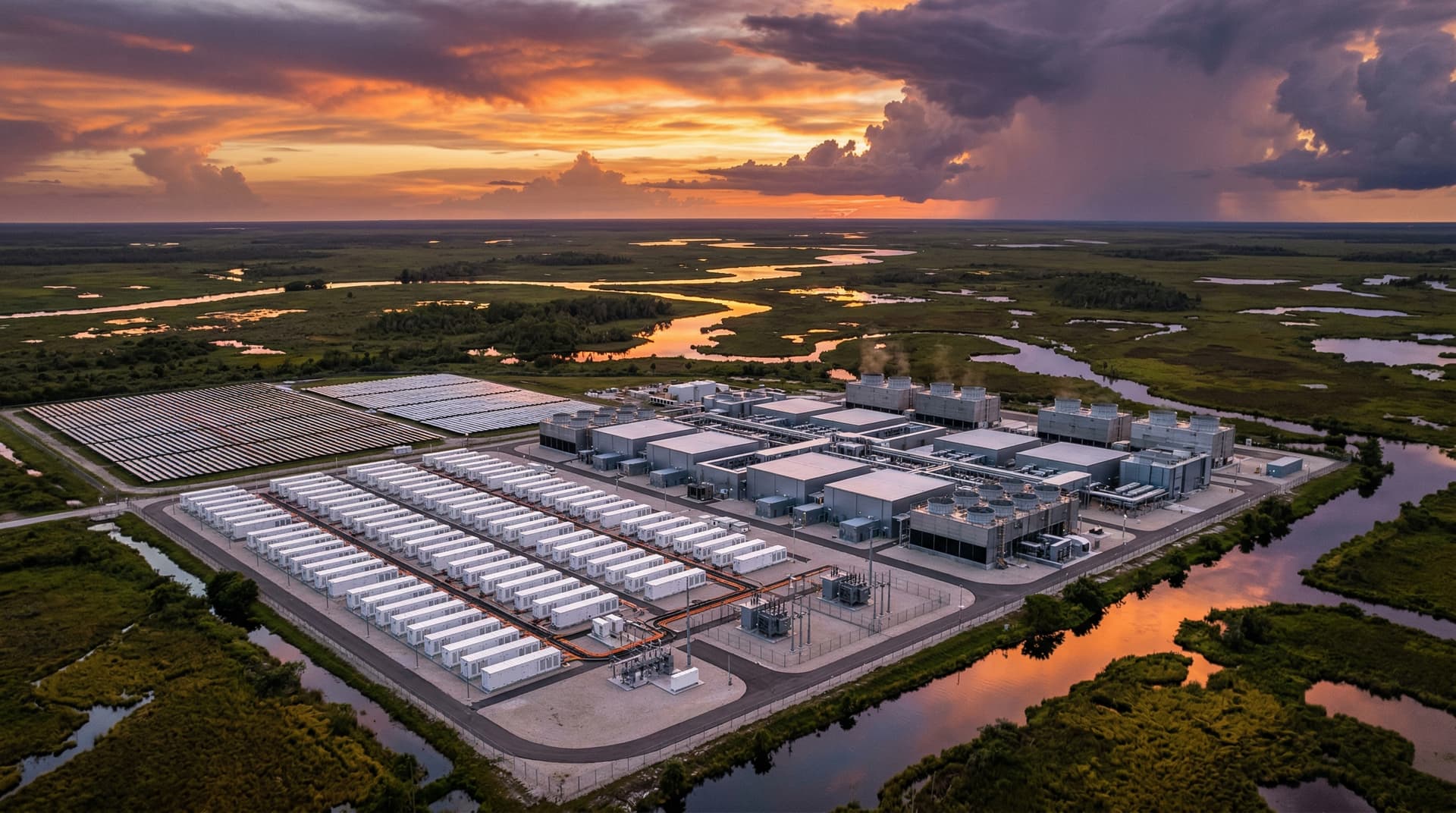
FPL's Manatee Energy Storage Center provides 409 MW/900 MWh. Lithium-ion batteries deliver 85% round-trip efficiency at 0.25C discharge. AI growth heightens hurricane risks.
AI Data Centers Strain Florida Grid Storage
Microsoft and Google secured 800 MW Osceola County sites. Hyperscalers consume 100-500 MW continuously. Bloomberg projects global AI power at 1,000 TWh annually by 2026.
Florida solar reached 10 GW by Q1 2026, per EIA data. AI offsets renewable gains. Systems need 4-hour duration and 90% depth of discharge per IEC 62619.
Current Florida Grid Storage Capacity
Florida operates 1.2 GW/4.8 GWh battery storage as of April 13, 2026, per FPL and Duke filings with the Florida Public Service Commission (FPSC). FPL manages 700 MW across five sites.
Duke's 300 MW/1,200 MWh Bartow project launches Q3 2026. Costs hit USD 250/kWh, down 15% year-over-year per NREL benchmarks. LCOS falls to USD 120/MWh over 3,000 cycles.
"Battery storage provides essential frequency regulation for AI-induced volatility," says James Kennedy, research director at Wood Mackenzie. FERC filings show 4 GW queued storage.
5 GW Demand Surge Strains Resources
Wood Mackenzie forecasts 5 GW Florida AI load by 2028, matching 20% of 2026's 25 GW peak. Centers achieve 1.2 PUE, per Uptime Institute.
FPL's plan adds 3 GW solar-plus-storage by 2030. Reuters reports nationwide big tech pressures.
Lalit Konda, Duke Energy VP of power delivery, warns of brownouts without 2 GW more storage. Hurricane Ian caused 2 GW outages in 2022.
Storage Revenue Streams Expand
Batteries earn from arbitrage, capacity, and ancillaries. Florida projects secure USD 80/MWh peak shaving. VPPs add USD 20/MWh.
FPL's RFP seeks 1 GW/4 GWh under USD 200/kWh. Bidders: Fluence, Tesla. IRA's 30% ITC lowers costs to USD 140/kWh.
"AI loads justify premium storage pricing," says Tom Flannery, S&P Global principal analyst. Wholesale prices rose 25% in Q1 2026 heatwaves, per ISO data.
Policies Drive Florida Grid Storage
Florida's 2026 mandate requires 5% storage in plans. IRA Section 45X credits USD 35/kWh for cells. State grants cover 20% of LDES pilots.
Governor DeSantis signed HB 147, extending data center exemptions to 2035. Storage procurement hit USD 2.5 billion in 2025.
FERC Order 2222 boosts aggregator revenue 15%. Florida pilots 50 MW V2G with Ford and GM EV fleets.
Barriers to Florida Grid Storage Growth
BESS production caps at 500 MW quarterly. Lithium holds at USD 12,000/tonne, per Benchmark Mineral Intelligence. Sodium-ion eyes 160 Wh/kg for 8-hour duration.
Interconnections delay 18 months. MISO South queues 3 GW storage. Duke prioritizes firm capacity.
Duke's 900 MW/3.6 GWh DeSoto Lakes starts Q2 2026 at USD 1.1 billion using 4.2% JPMorgan green bonds.
Outlook for Florida Grid Storage
Florida grid storage must reach 4 GW/16 GWh by 2030 versus 5 GW AI demand. FPL's June 2026 procurement sets resilience pace. Developers aim for 92% calendar life at 40°C.