- Goldman Sachs forecasts 160% AI power demand rise by 2030.
- IEA projects data centers hit 1,000 TWh electricity by 2026.
- EV V2G aggregates 60-100 kWh per vehicle for grid support.
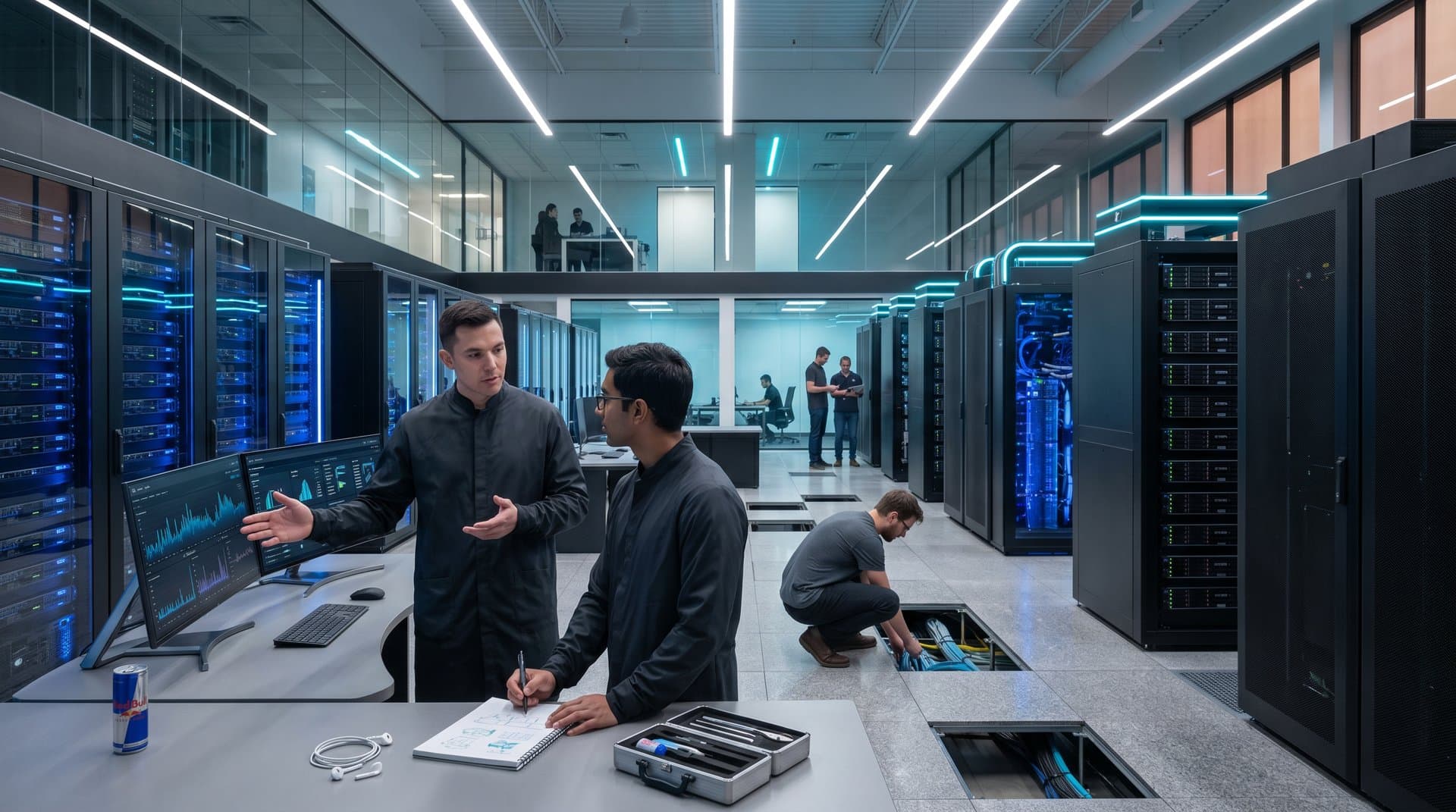
Goldman Sachs forecasts AI data center power demands will surge 160% by 2030 (Goldman Sachs report). Globe and Mail columnist Gary Mason warns of a 'Silent Spring'-like grid crisis (Globe and Mail). Lithium-ion batteries and EV vehicle-to-grid (V2G) systems stabilize peaks.
Hyperscalers like Google and Microsoft erect gigawatt-scale facilities. These create baseload amid renewable intermittency. Priya Mensah, senior analyst at Energy Storage News, stresses long-duration energy storage (LDES) needs.
IEA Forecasts Data Centers Double to 1,000 TWh by 2026
The International Energy Agency (IEA) projects data center electricity doubling to 1,000 TWh annually by 2026 (IEA report). GPU clusters draw 100 MW+ continuously per facility.
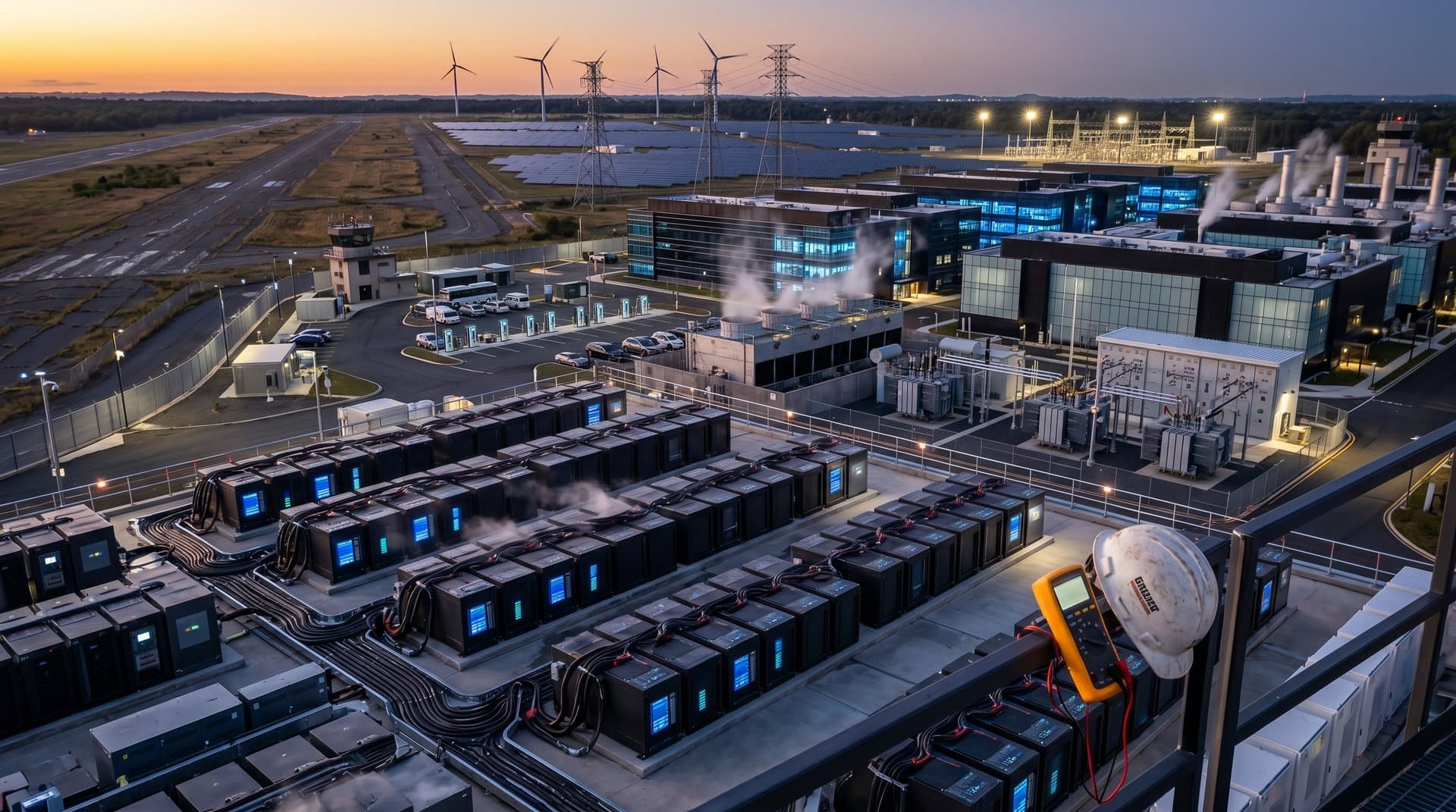
Transmission limits strain California and Texas grids at peaks. Data centers cluster near US Northwest hydropower, worsening imbalances. Tesla Megapacks deliver 85% round-trip efficiency at 1C discharge.
Developers install 4-hour lithium-ion at 200 MWh scale. Installed costs hit US$150/kWh (BloombergNEF Q2 2024). Systems smooth 20-30% daily fluctuations.
EV V2G Taps 60-100 kWh Vehicle Batteries for Gigawatt-Hours
Tesla Model Y batteries hold 60-100 kWh at 250 Wh/kg. V2G uses ISO 15118 protocols for 10 kW discharge per vehicle.
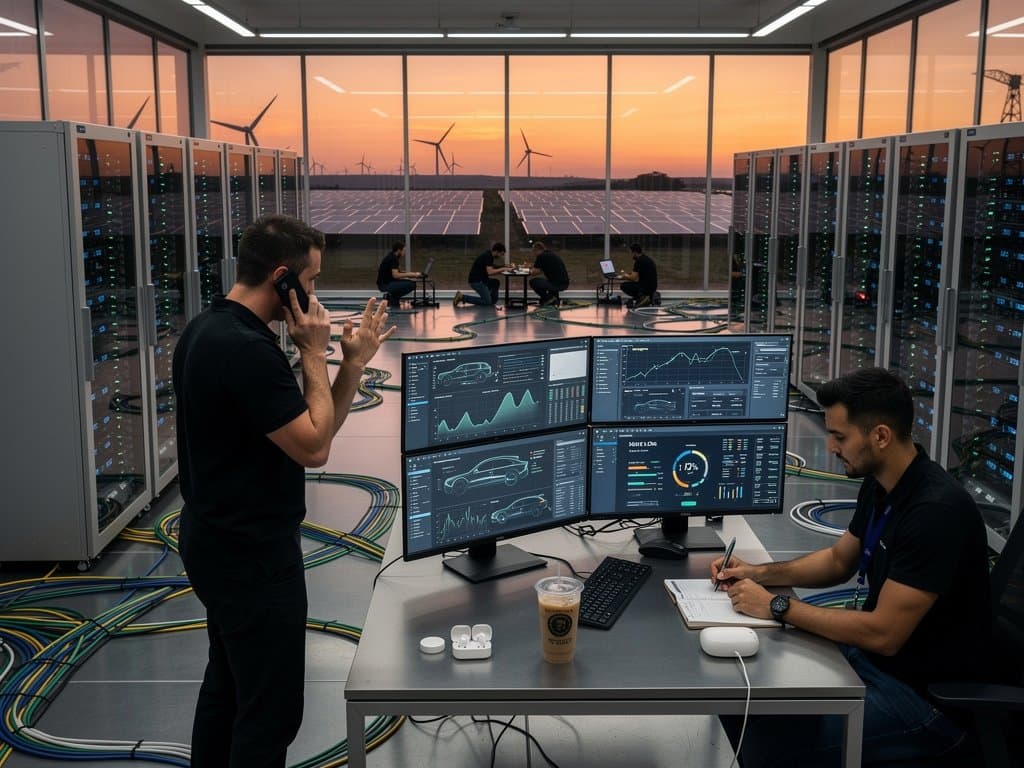
Nissan Leaf pilots in Europe aggregate 50 MW from 5,000 vehicles. Wallbox bidirectional chargers hit 22 kW peaks sans grid upgrades.
CATL second-life LFP batteries reach 4,000 cycles at 80% retention, 90% DoD. Faradion sodium-ion targets US$50/kWh packs.
FERC Order 2222 enables 5 GW distributed storage by 2030. California mandates 1 GW V2G pilots.
DOE Awards US$375M for LDES Pilots Targeting Baseload
The US Department of Energy (DOE) funds US$375 million in LDES pilots (DOE announcement). Eos Energy zinc hybrids offer 100-hour discharge at 330 Wh/L.
QuantumScape solid-state prototypes hit 500 Wh/kg, 1,000 cycles at 25°C, 1,000 Wh/L with lithium-metal anodes.
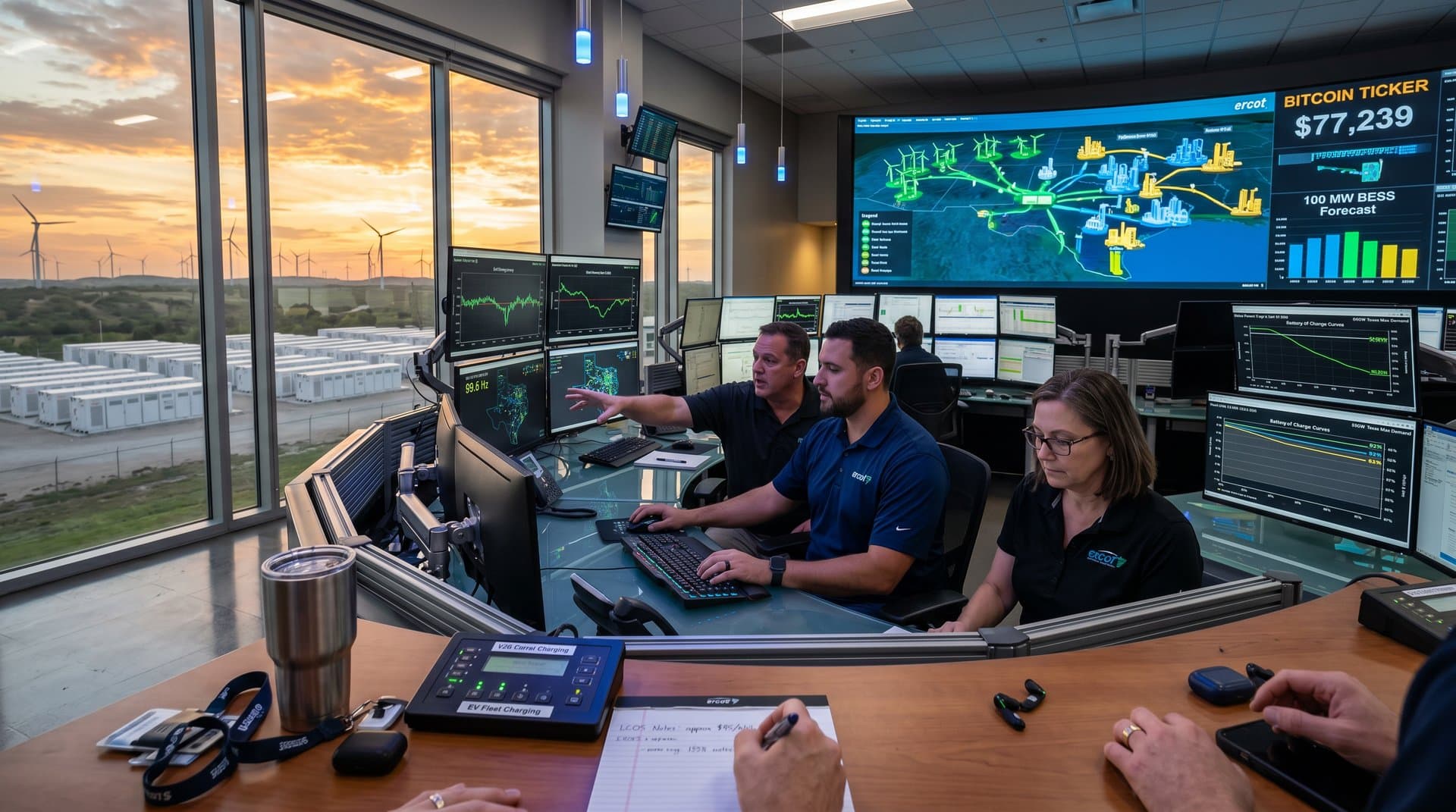
Tesla grid-forming inverters mimic 1 GW synchronous inertia. NREL AI models predict loads at 95% accuracy over 24 hours.
Hyperscalers pledge 10 GWh annual buys. CATL LFP cathodes cut cobalt below 5% mass.
LCOS Falls Below US$100/MWh as Costs Decline
4-hour lithium-ion LCOS drops to US$98/MWh (NREL ATB 2024). Flow batteries reach US$120/MWh for 10 hours.
Microsoft secures 10.8 GWh from SMR-storage hybrids. Google installs 1 GWh in Finland.
LCOS uses 15% WACC, 25-year life, 95% retention. Metrics cover Wh/kg (cell), Wh/L (pack), US$/kWh installed.
- Chemistry: LFP · Wh/kg: 180 · Cycles: 6,000 · Cost (US$/kWh): 89
- Chemistry: NMC · Wh/kg: 250 · Cycles: 2,000 · Cost (US$/kWh): 110
- Chemistry: Sodium-ion · Wh/kg: 160 · Cycles: 4,000 · Cost (US$/kWh): 50
- Chemistry: Solid-state · Wh/kg: 500 · Cycles: 1,000 · Cost (US$/kWh): 120 (proj.)
Supply Chains Shift for AI Data Center Power Demands Resilience
CATL scales LFP to 500 GWh/year. Cell prices fall 20% YoY to US$89/kWh.
US IRA credits offer US$45/kWh for domestic content. Congo cobalt risks (70% supply) boost recycling to 20% by 2030 (Benchmark Minerals).
Battery storage meets AI data center power demands at 85% efficiency today. EV V2G scales to gigawatts tomorrow. Track FERC dockets and hyperscaler PPAs.
Frequently Asked Questions
What drives AI data center power demands?
GPU clusters for training consume megawatts continuously. IEA projects sector electricity doubling to 1,000 TWh by 2026. Batteries mitigate peaks.
How do EV batteries tackle AI data center power demands?
V2G aggregates 60-100 kWh per vehicle into gigawatt-hours. ISO 15118 enables discharge. Second-life LFP packs cut costs.
What is the 'Silent Spring' warning for AI?
Globe and Mail compares unchecked AI growth to pesticide crisis. It risks grid failures without storage. Batteries enable renewables.
Do batteries prevent grid issues from AI data center power demands?
Lithium-ion achieves 85% efficiency, LDES 100 hours. LCOS under US$100/MWh. DOE pilots prove 90% DoD viability.