- Goldman Sachs projects 160% power demand growth from AI by 2030.
- IRA Section 48 delivers 30% ITC for standalone storage over 3 hours.
- Lithium-ion offers 85-95% RTE; iron-air targets USD 20/kWh LCOS.
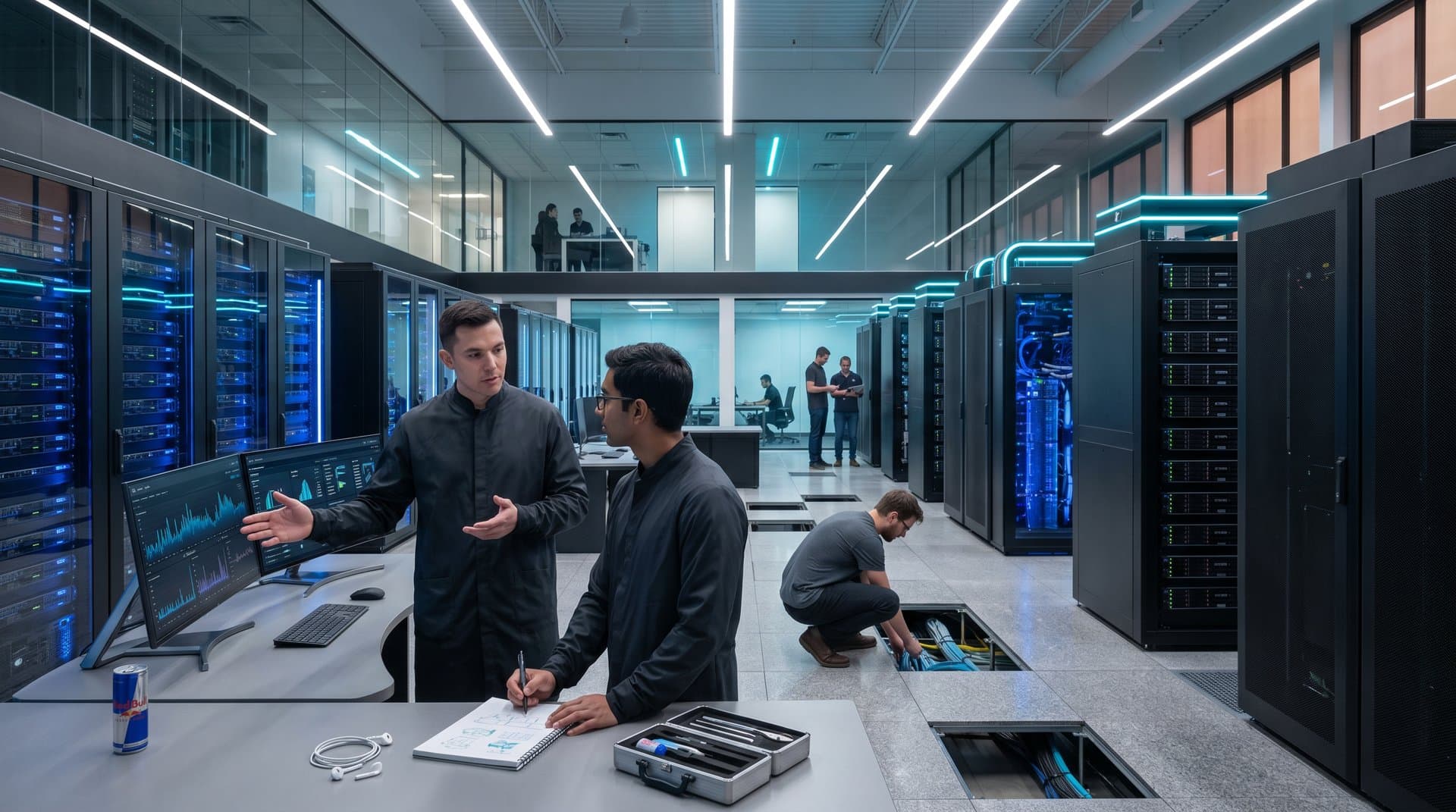
Goldman Sachs Research (2024) forecasts AI data centers will drive 160% power demand growth by 2030, intensifying AI grid storage needs. Hyperscalers like Microsoft and Google expand facilities and pressure grids. Advanced batteries buffer peaks from nonstop AI compute. Goldman Sachs report.
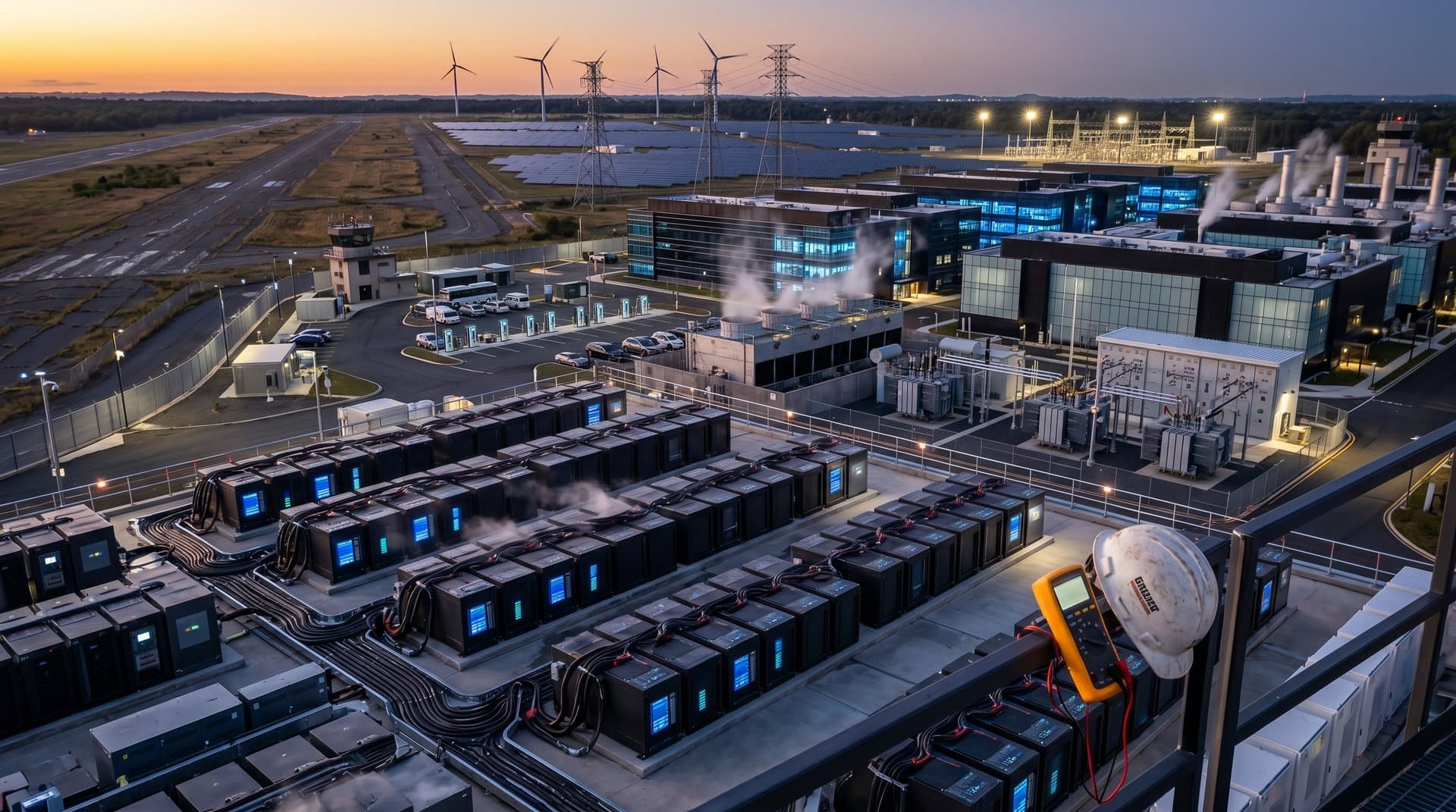
Utilities deploy lithium-ion systems with 85-95% round-trip efficiency (RTE) at 0.5C discharge rates, per NREL (2023). Developers target long-duration energy storage (LDES) for 4+ hour discharge. The Inflation Reduction Act (IRA) Section 48 offers 30% Investment Tax Credit (ITC) for standalone storage over 3 hours duration.
AI Compute Fuels Electricity Demand Spikes
GPU clusters for models like OpenAI's consume megawatts akin to small cities. Each NVIDIA H100 GPU draws 700W at full load. Training one large language model equals 1,000 US household annual usage, per IEA (2024). IEA data centres report.
Data centers run 24/7 and spike baseload during evening solar lulls. Storage averts blackouts in heatwaves. Microsoft inked 10.5GW nuclear PPAs with Constellation Energy (2024). Google secured 2.5GW carbon-free power commitments.
Core AI Grid Storage Technologies
Lithium-ion (LFP) batteries meet short-duration needs with <100ms response. Developers stack for 4-hour utility discharge at 160-180 Wh/kg density. Fluence Energy and Tesla supply turnkey BESS, tested to IEC 62619.
Vanadium flow batteries deliver 70-80% RTE over 10+ hours. Form Energy's iron-air targets 100 hours at USD 20/kWh LCOS, per company data (2024).
- Technology: Lithium-ion (LFP) · RTE (%): 85-95 · Duration (hours): 1-4 · Energy Density (Wh/kg / Wh/L): 160-180 / 400-500 · Cycle Life: 6,000+ · LCOS (USD/kWh): 150-250 · Scalability: High
- Technology: Vanadium Flow · RTE (%): 70-80 · Duration (hours): 4-12 · Energy Density (Wh/kg / Wh/L): 25-50 / 35-70 · Cycle Life: 20,000+ · LCOS (USD/kWh): 200-300 · Scalability: Medium
- Technology: Iron-Air · RTE (%): 50-60 · Duration (hours): 24-100 · Energy Density (Wh/kg / Wh/L): 100-150 / 200-300 · Cycle Life: 5,000+ · LCOS (USD/kWh): 20 target · Scalability: Emerging
Sources: NREL LCOS 2023 (IEC 62619 tested); Tesla Megapack specs; Form Energy whitepaper.
A 200MW/800MWh BESS offsets data center peaks when paired with solar, per Fluence case studies.
Policies Propel AI Grid Storage Buildout
IRA Section 48 delivers 30-50% ITC for >3-hour standalone storage, including 10% domestic content bonus, per US Treasury Notice 2024-27.
FERC Order 2023 (docket RM22-14-000) streamlines 100GW+ interconnection queues by clustering projects.
California's SB 100 mandates 5GW storage procurement by 2026 (California Energy Commission, 2024).
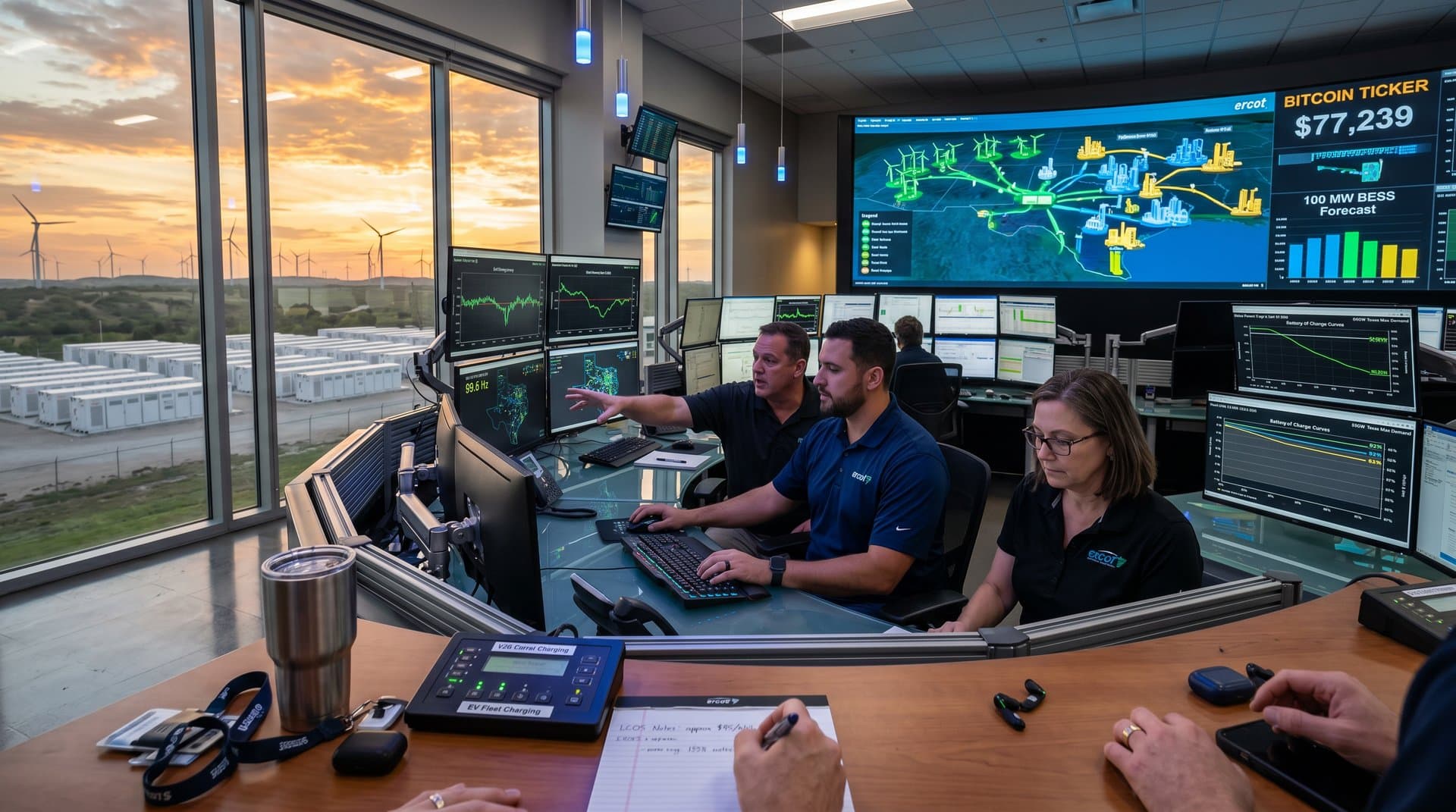
Texas ERCOT hits 10GW BESS installations voluntarily (ERCOT, Q2 2024). NERC Long-Term Reliability Assessment (2024) warns of AI-driven risks.
EU Battery Regulation 2023/1542 requires 16% recycled content by 2031 to ease lithium shortages.
LDES Tackles AI Load Volatility
AI inference creates erratic peaks. Short batteries suffer from frequent cycling. LDES enables multi-day discharge to balance supply-demand.
Ambri's liquid metal and ESS Inc.'s iron flow target 48-100 hours at <USD 100/kWh LCOS.
Hyperscalers co-locate BESS to cut transmission losses by 5-10%. CATL LFP cells reach 160 Wh/kg per IEC 62660-1 tests.
Lithium prices peaked at USD 80/kg in 2022 (S&P Global Commodity Insights). This boosts sodium-ion. Northvolt and Panasonic build US gigafactories with IRA Section 45X USD 35-45/kWh credits. Reuters/IEA.
Grid-Scale Challenges and Fixes
Interconnection delays stretch projects 2-3 years. FERC reforms slash queue times 50%, per Brattle Group (2024).
Grid models show AI triples evening peaks to 50GW in key regions (NERC 2024). BESS arbitrage yields USD 100/MWh, per Aurora Energy Research.
AI dispatch algorithms boost forecast accuracy 20% (NREL 2024). EIA models predict 20-50% household bill hikes without storage. Policymakers eye ITC extensions past 2032 to spur AI grid storage.
Frequently Asked Questions
How does AI impact grid storage needs?
AI data centers impose 24/7 baseloads and peaks, requiring storage for stability. Goldman Sachs forecasts 160% demand growth by 2030.
What policies drive AI grid storage?
IRA Section 48 ITC offers 30-50% credits. FERC Order 2023 accelerates queues. California targets 5GW by 2026.
Which batteries address AI strains?
Lithium-ion (85-95% RTE, 1-4 hours). Flow (4-12 hours). Iron-air (24-100 hours, USD 20/kWh target).
Can AI grid storage curb bill increases?
Storage arbitrage stabilizes rates. Without it, peaks raise costs 20-50%. IRA credits cut project expenses 30%.