- Goldman Sachs forecasts 160% rise in AI data center power demand through 2030.
- IEA projects data centers doubling to 945 TWh electricity use by 2026.
- BNEF identifies 100 GW+ grid-scale battery pipelines for data centers.
By Priya Mensah
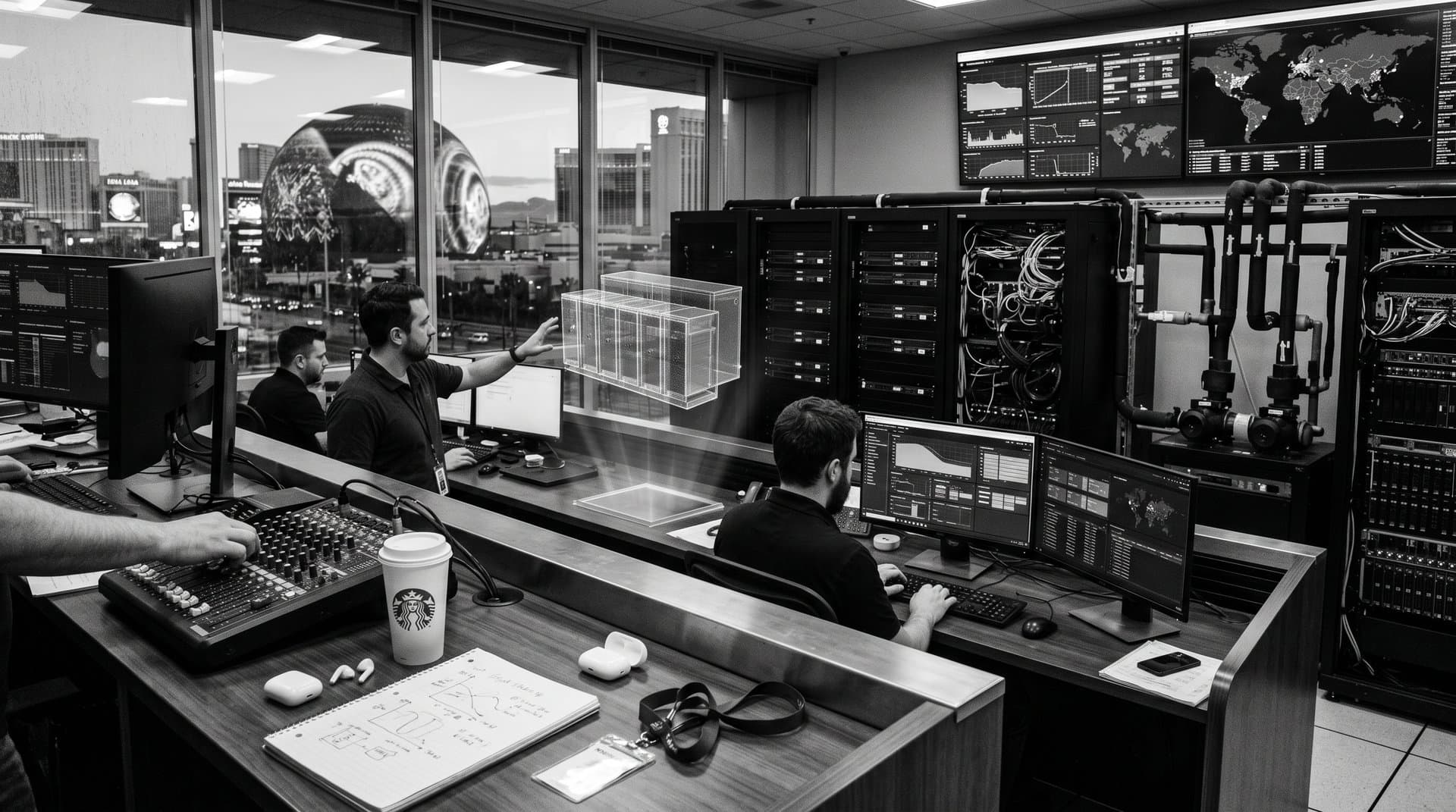
Grid-scale batteries face surging demand as AI-driven broadcast demos at NAB Show in Las Vegas drive 160% data center power growth through 2030, according to Goldman Sachs analysts (Goldman Sachs, 2024).
Hawaii News Now reported real-time AI graphics and GPU-based editing demos (Hawaii News Now, April 2024). The International Energy Agency (IEA) forecasts data centers doubling to 945 TWh annual use by 2026 due to AI (IEA, 2024).
AI Broadcast Demos at NAB Fuel Grid-Scale Battery Needs
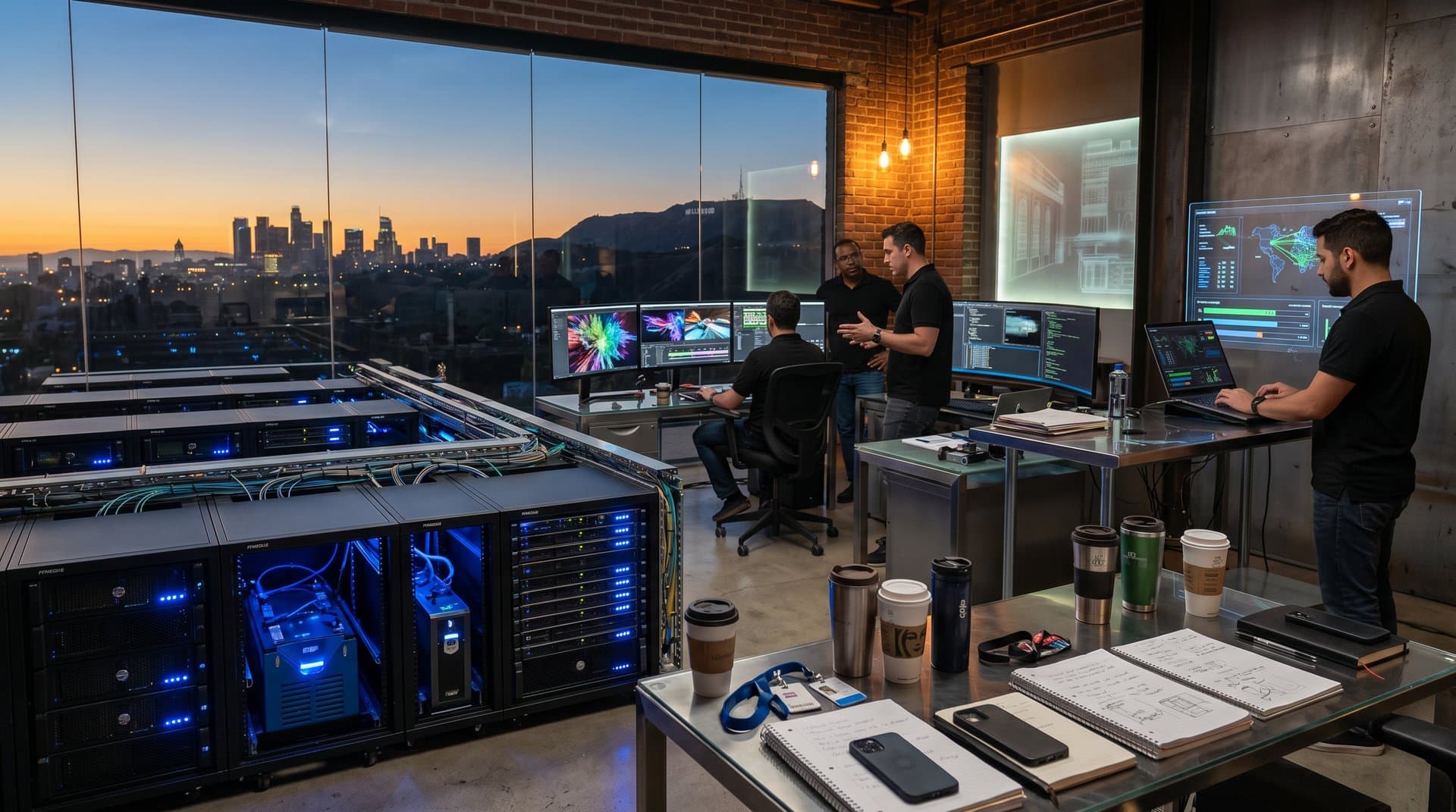
NAB Show demos featured AI algorithms processing multi-camera feeds into 4K/8K streams. NVIDIA GPU clusters delivered millisecond inference but drew megawatts at peaks, per event coverage.
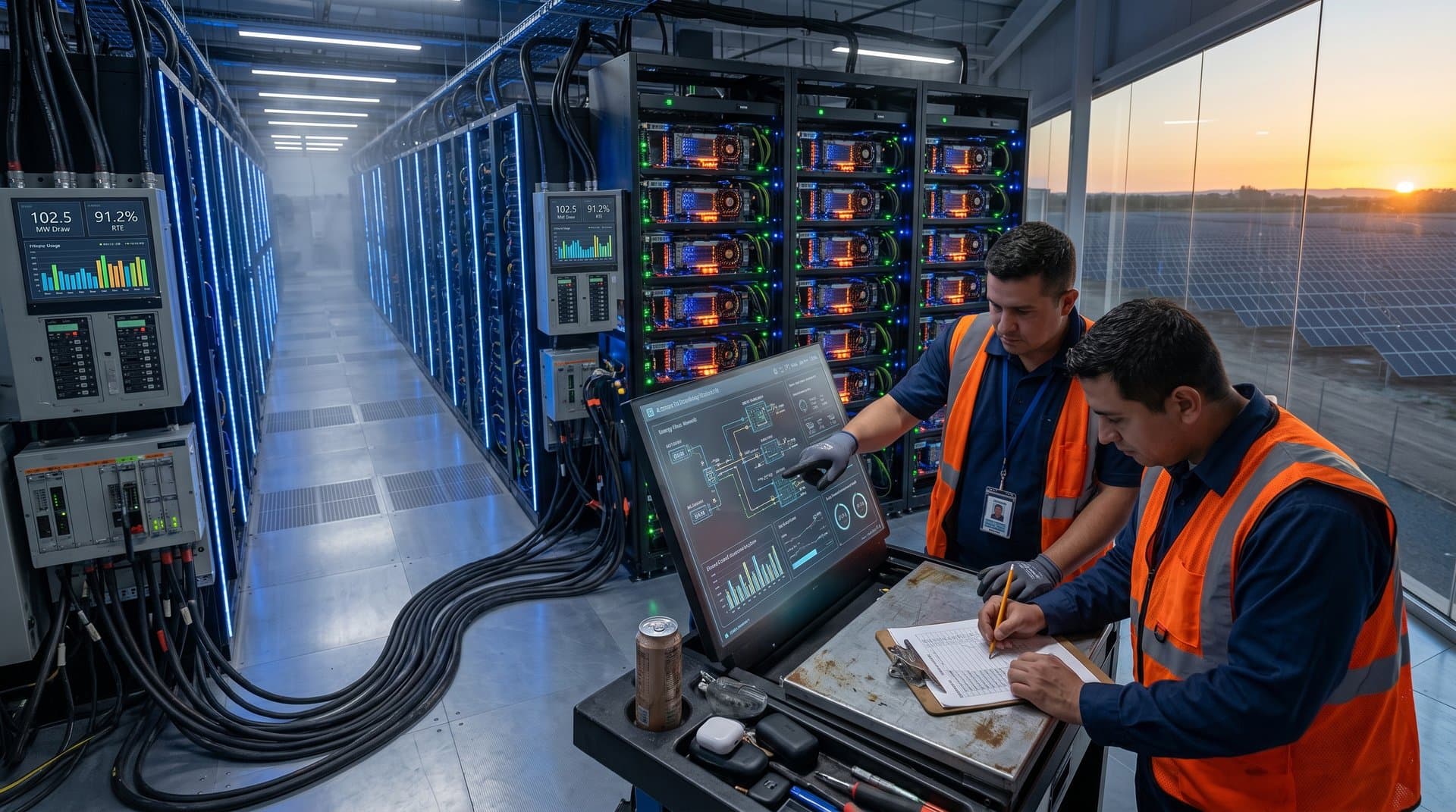
Broadcasters deploy hybrid cloud-edge setups, expanding server farms. Utilities across EMEA and Americas log AI peaks matching industrial loads. Grid-scale batteries capture off-peak renewables at 90% round-trip efficiency for lithium-ion packs, states BloombergNEF (BNEF Q3 2024).
Flow batteries offer 4-10 hour discharge at utility scale. Developers pair them with solar for 24/7 data center power, supporting EU net-zero rules.
Grid-Scale Batteries Enable AI Workload Stability
Grid-scale batteries handle frequency regulation and peak shaving for AI's variable loads. Lithium iron phosphate (LFP) dominates with 6,000 cycles at 80% depth of discharge (DoD), 160 Wh/kg gravimetric density, and 350 Wh/L volumetric density, per BNEF benchmarks (BNEF, 2024).
LFP system costs hit USD 150/kWh installed. Lithium-ion levelized cost of storage (LCOS) falls below USD 0.10/kWh, beating gas peakers, according to National Renewable Energy Laboratory (NREL) data (NREL, 2024).
Vehicle-to-grid (V2G) from EVs adds capacity. Sodium-ion rivals LFP at 150 Wh/kg and 300 Wh/L with lower costs; APAC pilots validate 10-hour profiles at 1C discharge.
Advanced Chemistries Target Long-Duration AI Support
BNEF tracks 100 GW grid-scale battery pipelines linked to AI and electrification (Reuters/BNEF, October 2024).
Solid-state batteries reach 500 Wh/kg and 800 Wh/L at manufacturing readiness level 6. Iron-air systems achieve 70% efficiency for 100-hour LDES in pilots by Form Energy.
China scales sodium-ion to 50 GWh/year by 2028. Western firms license it to dodge lithium supply risks from Australia and South America.
US IRA and EU Policies Boost Grid-Scale Deployments
US Inflation Reduction Act (IRA) tax credits drive 300% battery growth since 2022, per US Department of Energy (DOE, 2024).
Broadcasters team with AWS for co-located storage. NextEra Energy and Fluence launched 200 MW/800 MWh BESS with Texas wind, providing 4-hour duration.
EU Battery Directive enforces recycled content and sustainability by 2030, accelerating flow and sodium-ion adoption.
Battery Chemistries Dominate AI Power Alternatives
Lithium-ion claims 95% share for 2-4 hour uses. Vanadium flow batteries offer unlimited cycles at USD 200/kWh LCOS for longer durations, per BNEF.
Pumped hydro leads total capacity but limits sites. Grid-scale batteries deploy anywhere without reservoirs.
BNEF projects grid-scale batteries taking 70% of new storage by 2030 as LCOS nears USD 100/kWh.
Grid-Scale Batteries Power AI Broadcast Expansion
AI at NAB accelerates grid-scale batteries worldwide. Goldman Sachs, IEA, BNEF, and NREL analyses predict explosive growth. Lower LCOS ensures reliable AI power.
Frequently Asked Questions
How do grid-scale batteries support AI-driven broadcast technology?
Grid-scale batteries provide peak shaving and frequency regulation for GPU-heavy AI workloads. They deliver 90% round-trip efficiency from renewables. Pipelines exceed 100 GW globally.
What AI innovations at Las Vegas NAB Show impact energy storage demand?
NAB demos showed real-time AI graphics and cloud tools needing massive compute. This spurs power surges met by storage. IEA sees 945 TWh data center use by 2026.
Why are grid-scale batteries essential for AI power demands?
AI processing creates MW-scale peaks straining grids. Batteries store excess renewables, cut LCOS to USD 0.10/kWh. Goldman Sachs projects 160% demand growth.
Which battery chemistries suit broadcast AI energy needs?
LFP leads 2-4 hour storage with 6,000+ cycles (160 Wh/kg, 350 Wh/L). Flow and sodium-ion enable LDES up to 100 hours, reducing peaker reliance.