- NAB Show demos drive 1,000 TWh data center demand by 2026, per IEA.
- LFP batteries hit 160 Wh/kg, 6,000 cycles, 90-95% RTE via NREL IEC 62619.
- USD 50 billion investments by 2030, LFP at USD 80/kWh per BloombergNEF.
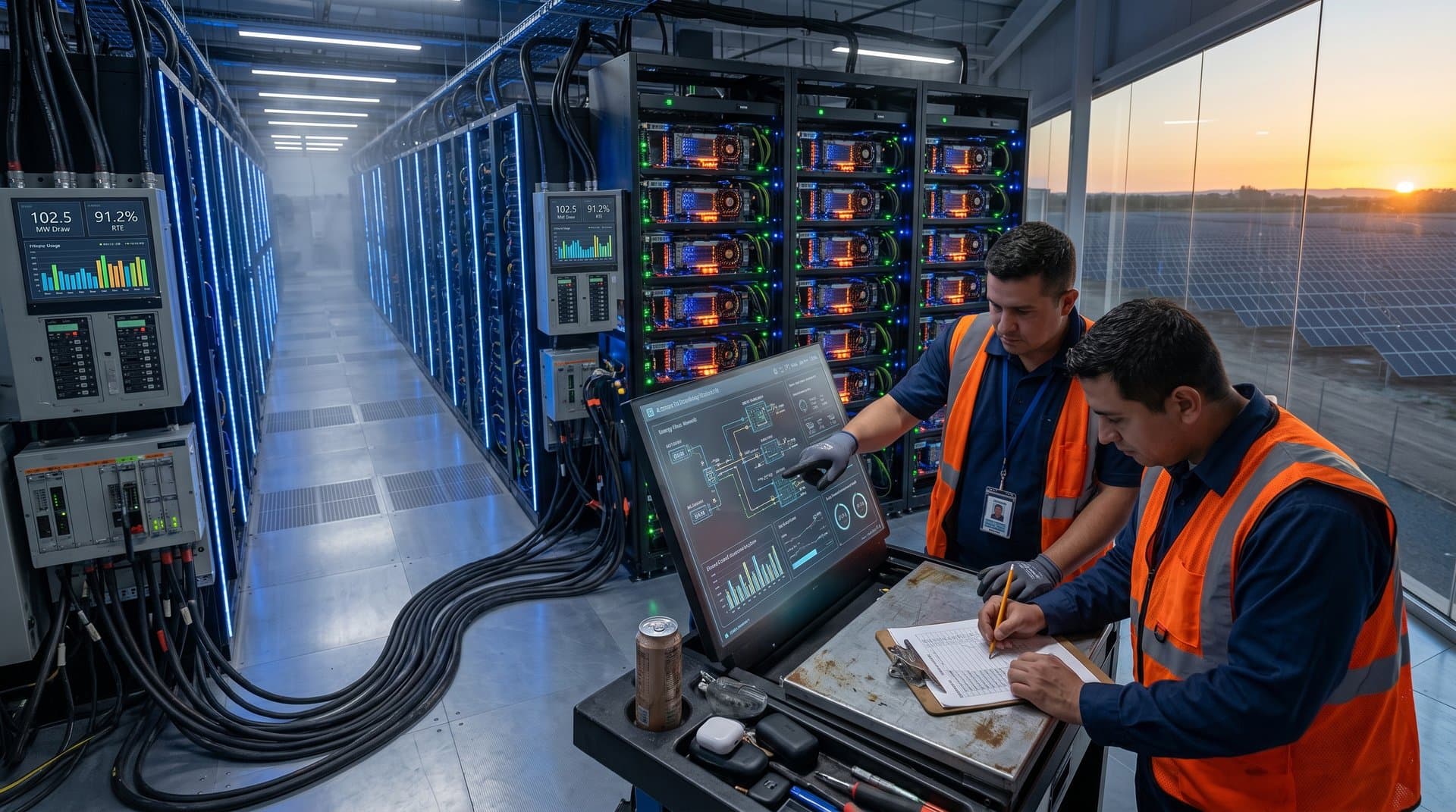
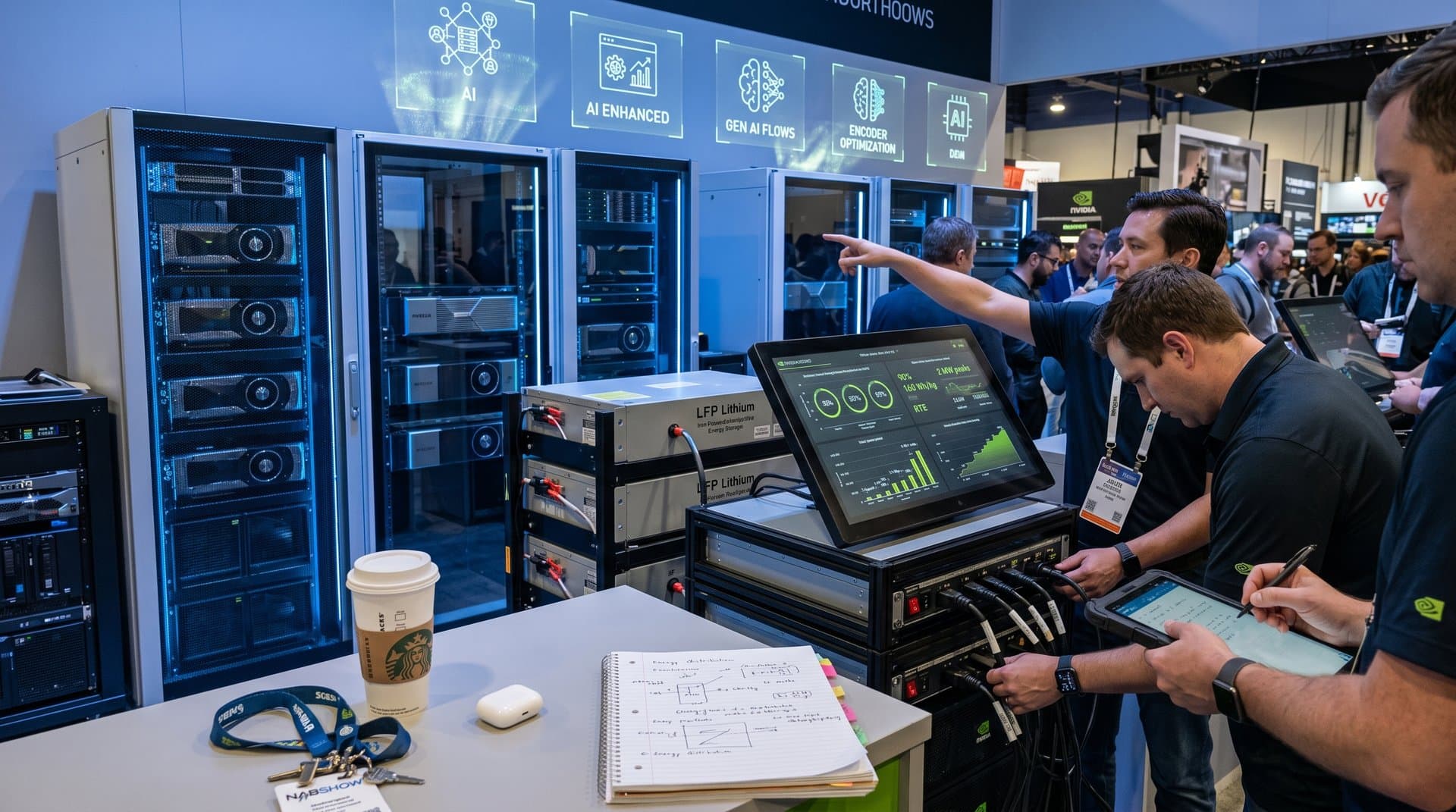
NAB Show (April 9-12, 2024) highlighted AI tools driving AI energy storage needs. Data centers will consume 1,000 TWh annually by 2026, per the International Energy Agency (IEA). Broadcasters face 10-20 MW peaks mirroring hyperscaler demands, as noted by Hawaii News Now reporters.
NAB Show AI Demos Reveal GPU Power Intensity
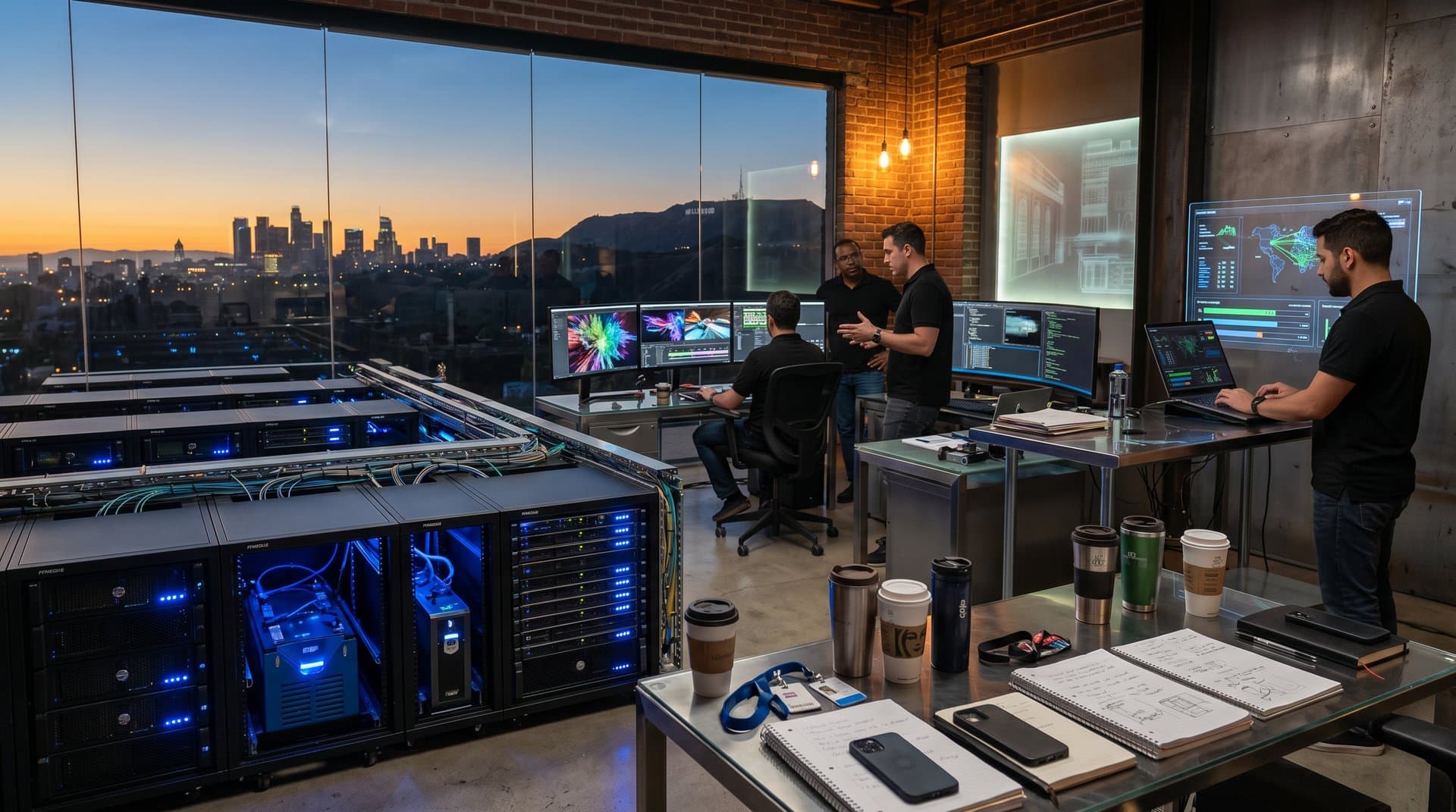
Vizrt and Ross Video showcased AI suites cutting production time by 50%. NVIDIA GPUs processed petabytes of 8K video in real-time. Energy Storage News observed parallels to 500 MW+ AI training clusters, confirmed by NAB organizers.
EMEA and APAC broadcasters hit 10-20 MW peaks during live events. These spikes stress grids with intermittent renewables. BloombergNEF's Atte Tentner projects USD 50 billion in AI-related storage investments by 2030.
LFP Batteries Dominate AI Energy Storage Solutions
Lithium iron phosphate (LFP) batteries offer 160 Wh/kg energy density and 6,000 cycles at 80% depth of discharge (DoD). They deliver 90-95% round-trip efficiency (RTE) at 0.5C, per National Renewable Energy Laboratory (NREL) tests under IEC 62619.
Tesla Megapack provides 3.9 MWh capacity and 1.9 MW power per unit for black-start and frequency services. Fluence Gridstack Pro scales to 100 MWh+ for data center peaks. Fluence case studies show 20-30% grid cost reductions via peak shaving.
Long-Duration Storage Addresses AI Sustained Loads
Vanadium redox flow batteries achieve 25 Wh/L, 20,000 cycles, and 75-85% RTE for 4-8 hours at USD 150/MWh levelized cost of storage (LCOS), per UniEnergy Technologies data.
Iron-air batteries reach 100 Wh/kg for 100-hour durations targeting USD 20/kWh, as Form Energy pilots demonstrate. Sodium-ion batteries hit 140 Wh/kg with zero cobalt, aiming for USD 50/kWh. CATL's 2024 pilots retain 90% capacity after 4,000 cycles at 1C.
Supply Chain Advances Fuel AI Energy Storage Expansion
APAC LFP production cut cell costs to USD 80/kWh, per BloombergNEF tracking. Lithium carbonate prices dropped 80% to USD 12,000/tonne in 2024. NCM cathode precursors stabilize at USD 15/kWh.
US Inflation Reduction Act (IRA) tax credits spur domestic gigafactories. Northvolt and Panasonic target 100 GWh/year output. Congo DRC cobalt risks elevate LFP to 60% market share by 2027, per Rho Motion analysts.
Policy Frameworks Boost AI Energy Storage Deployments
FERC Order 2023 (Docket No. RM22-13-000) adds storage to capacity markets, enabling USD 10 billion in US auctions. California LCFS requires 5 GW long-duration energy storage (LDES) by 2030.
Hyperscalers issue RFPs: AWS targets 1 GW behind-the-meter batteries. Google deploys 1.2 GWh with Fluence in Belgium. NAB attendees plan similar setups for broadcast facilities.
Emerging Technologies Shape AI Energy Storage Future
Solid-state batteries aim for 400 Wh/kg, 1,000 cycles, and 95% RTE. Samsung SDI pilots reach 50 MWh scale. Vehicle-to-grid (V2G) from 10 million EVs adds 20% grid capacity by 2030, per IEA.
Hybrid LFP-supercapacitor systems hit 99% efficiency for microgrids. Broadcast pilots test 100 MWh configurations to bridge renewables gaps. AI energy storage scales rapidly to meet compute growth.
Frequently Asked Questions
What AI innovations were shown at NAB Show?
Automated editing, real-time graphics, and predictive targeting via GPU clusters. Vizrt and Ross Video demos cut production time 50%, per Hawaii News Now.
How does AI energy storage support broadcast infrastructure?
LFP batteries provide 90-95% efficiency for peak shaving and regulation. Tesla Megapack scales to 3.9 MWh/unit for data centers.
Why is grid storage essential for AI broadcast tech?
Handles 10-20 MW peaks and renewables intermittency. NREL tests confirm IEC 62619 compliance for utility use.
What battery advancements address AI power needs?
LFP at 160 Wh/kg, 6,000 cycles; sodium-ion targets USD 50/kWh. BloombergNEF forecasts USD 50B investments by 2030.