- 1.4 GW/6 GWh on 35 hectares at Emmerthal cluster.
- GESI delivers 3.84 GWh LiFePO4 with 10,000+ cycles.
- Ties to 380 kV and 19 km HVDC lines for 4.3-hour duration.
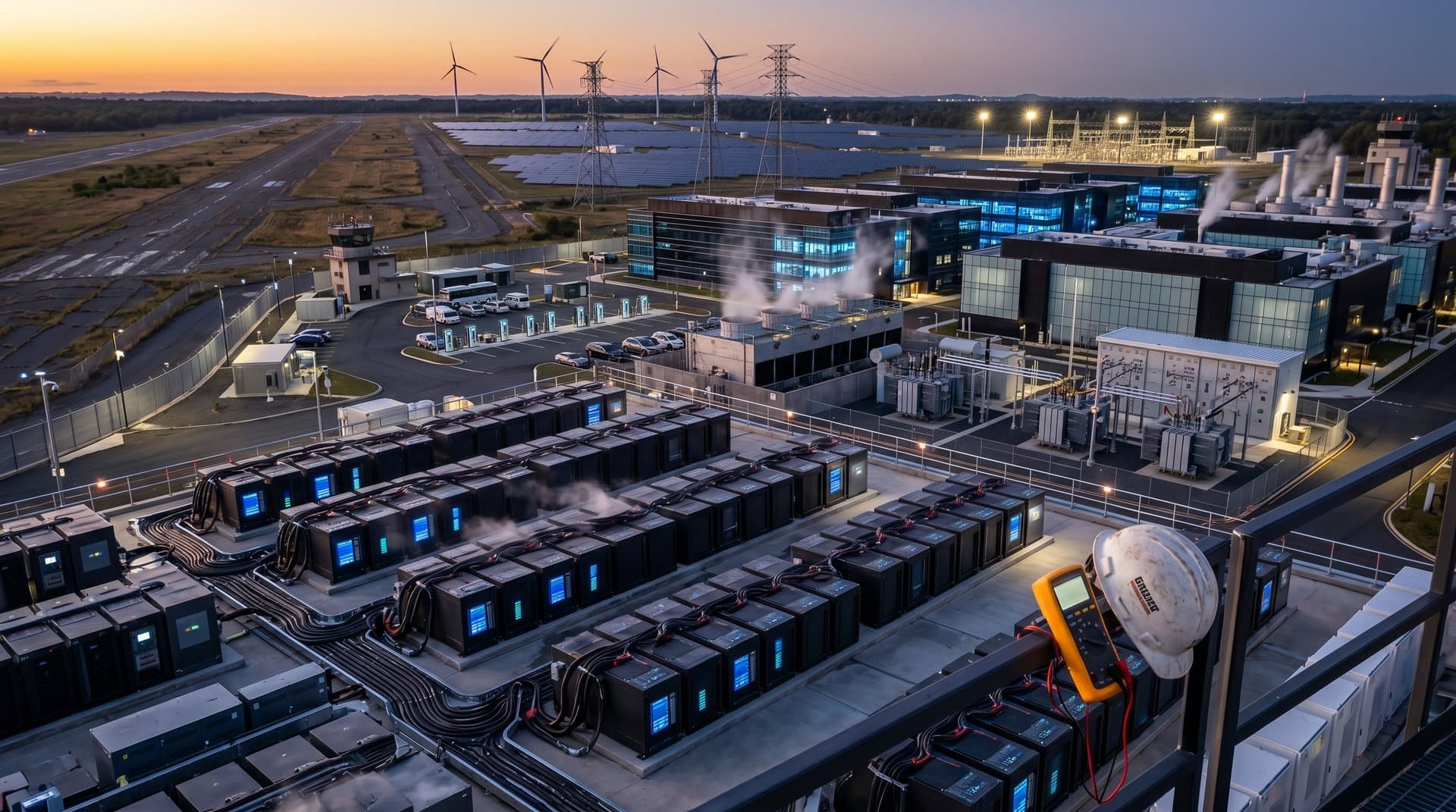
Germany's Emmerthal energy cluster develops 1.4 GW battery storage with 6 GWh total capacity at the decommissioned Grohnde nuclear power plant site. The project uses 35 hectares for up to three systems connected to Emmerthal substation's 380 kV and 110 kV lines (Heise Online, October 10, 2024).
GESI provides 3.84 GWh with lithium iron phosphate (LiFePO4) batteries. These systems strengthen grid stability near high-voltage direct current (HVDC) infrastructure.
Heise Online details the site's shift from nuclear to renewables here.
Grohnde Site Repurposing Utilizes Legacy Grid Infrastructure
Operators closed Grohnde in 2021 after 41 years of operation. The 35-hectare site now anchors the Emmerthal cluster. Batteries replace nuclear generation while reusing grid connections (Emmerthal municipality plans via Heise Online, October 10, 2024).
TenneT operates the substation's 380 kV lines from the nuclear era. Developers reduce interconnection costs by 50% using this infrastructure (TenneT grid connection reports, 2024).
GESI's LiFePO4 batteries offer 160 Wh/kg gravimetric energy density and 400 Wh/L volumetric density. They deliver over 10,000 cycles at 80% depth of discharge (DoD) with 92% round-trip efficiency under IEC 62619 standard (GESI technical datasheet, 2024).
HVDC Lines Enhance 1.4 GW Battery Storage Capabilities
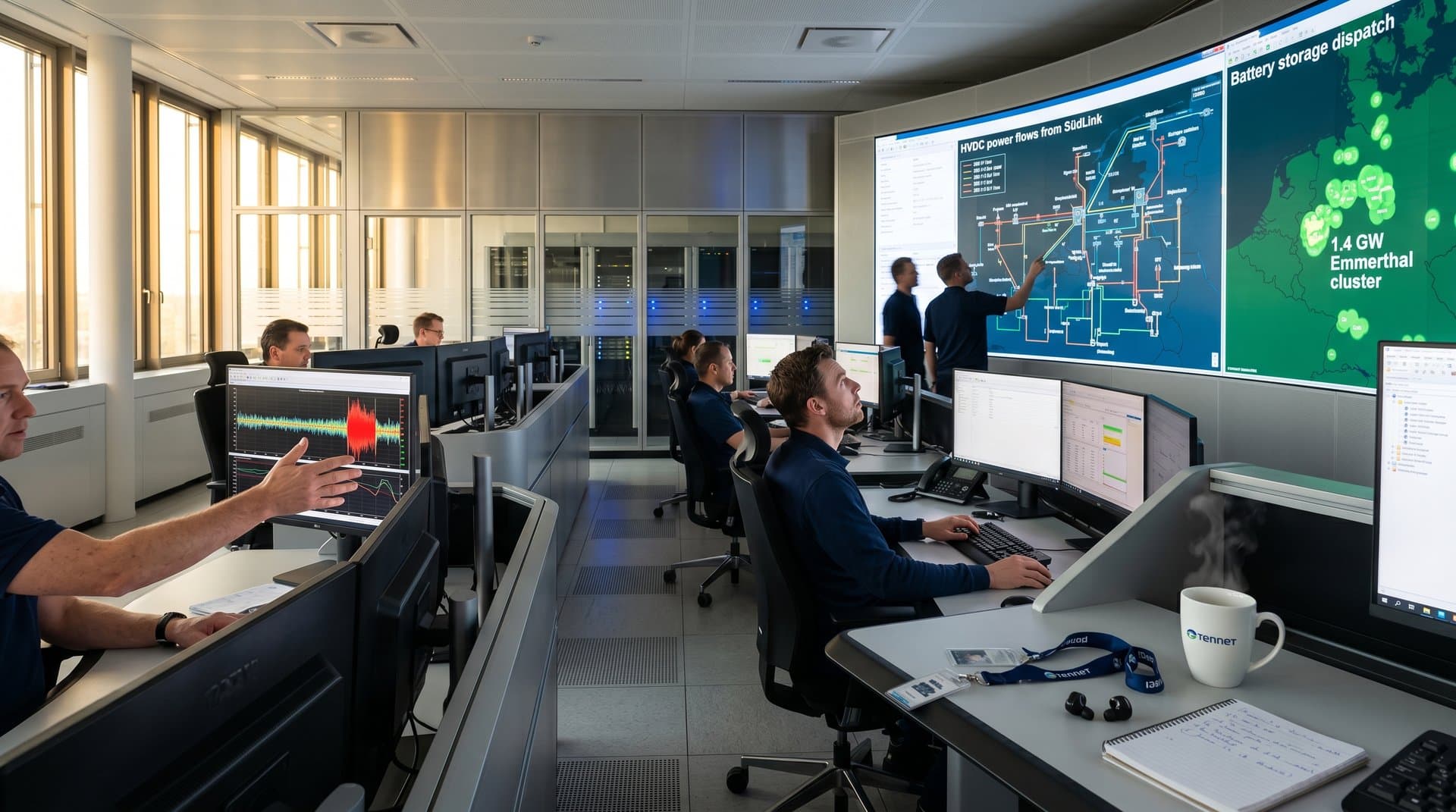
Emmerthal substation connects to SüdLink and RheinMainLink HVDC lines, 19 km apart at ±525 kV TenneT SüdLink project page. Batteries balance wind and solar fluctuations on these underground cables (TenneT, 2024).
SüdLink carries 1,400 MW north-south. The 1.4 GW power matches peak flows. The 6 GWh storage provides 4.3 hours at full discharge.
Germany aims for 80% renewables by 2030. Grid operators secure projects via auctions (Federal Network Agency, Bundesnetzagentur tender results, 2024).
35 Hectares Support Three-System 1.4 GW Battery Storage
Municipal plans allocate 35 hectares for three systems totaling 1.4 GW/6 GWh. Brownfield development skips greenfield permitting delays (Emmerthal council records, October 2024).
Proximity to 380/110 kV lines limits transmission losses below 1%. Low land costs and high grid revenues yield levelized cost of storage (LCOS) under €100/MWh (BloombergNEF Q3 2024 report).
GESI commits 3.84 GWh. Developers pursue financing via merchant sales, capacity markets, and ancillary services.
Stacked Revenues Fund 1.4 GW Battery Storage Project
Batteries supply frequency containment reserve in seconds. The 1.4 GW scale fits primary control reserve demands.
Arbitrage captures EPEX Spot price spreads from HVDC imports. The 6 GWh stores off-peak wind for daytime solar peaks (Aurora Energy Research, Germany Storage Outlook 2024).
EEG feed-in premiums and network fees improve economics. Similar projects achieve 8-10% internal rate of return (IRR) (Aurora Energy Research, 2024). TenneT upgrades unlock 380 kV capacity and defer €2 billion in reinforcements (TenneT Network Development Plan 2024-2034).
LiFePO4 Chemistry Aligns with Supply Chain Needs
GESI's cobalt-free LiFePO4 relies on abundant iron and phosphate. It exceeds 10,000 cycles at 80% DoD with 92% efficiency (GESI datasheet, 2024).
System costs dropped 89% since 2010 to €210/kWh in 2023 (BloombergNEF Battery Price Survey Q4 2023). Emmerthal targets below €200/kWh via economies of scale.
EU Battery Regulation 2023/1542 requires 95% cobalt recycling by 2031. Lithium production moves to Europe through Vulcan Energy Resources projects. Low fire risk draws financier interest.
Revenues combine €40/MWh ancillaries, €60/MWh arbitrage, and €20/MWh capacity markets. Developers recover capex within seven years (Aurora Energy Research, 2024).
Nuclear-to-Storage Repurposing Outlook
Emmerthal's 1.4 GW battery storage project models nuclear site reuse. HVDC ties boost grid flexibility. Supportive policies secure financing.
This approach suits 20+ European nuclear sites. Germany's 15 GW storage target by 2030 drives Energiewende progress (Federal Ministry for Economic Affairs and Climate Action, 2024).
Frequently Asked Questions
What is the capacity of 1.4 GW battery storage at Grohnde?
Emmerthal targets 1.4 GW power and 6 GWh energy across 35 hectares. GESI supplies 3.84 GWh LiFePO4 (Heise Online).
How does 1.4 GW battery storage integrate with HVDC?
Emmerthal substation connects 380/110 kV to ±525 kV SüdLink and RheinMainLink, 19 km apart (TenneT).
Why repurpose Grohnde for 1.4 GW battery storage?
Decommissioned site provides 380 kV infrastructure and 35 hectares, cutting costs by 50% (Emmerthal plans).
What revenues fund the 1.4 GW battery storage?
Ancillaries €40/MWh, arbitrage €60/MWh yield 8-10% IRR (Aurora Energy Research, BNEF).