By Priya Mensah, April 12, 2026
University of Manchester researchers report zero-energy atomic memory on fluorographane achieving 447 TB/cm² density with zero retention energy. Nature Nanotechnology published the paper on April 12, 2026. The device stores data passively.
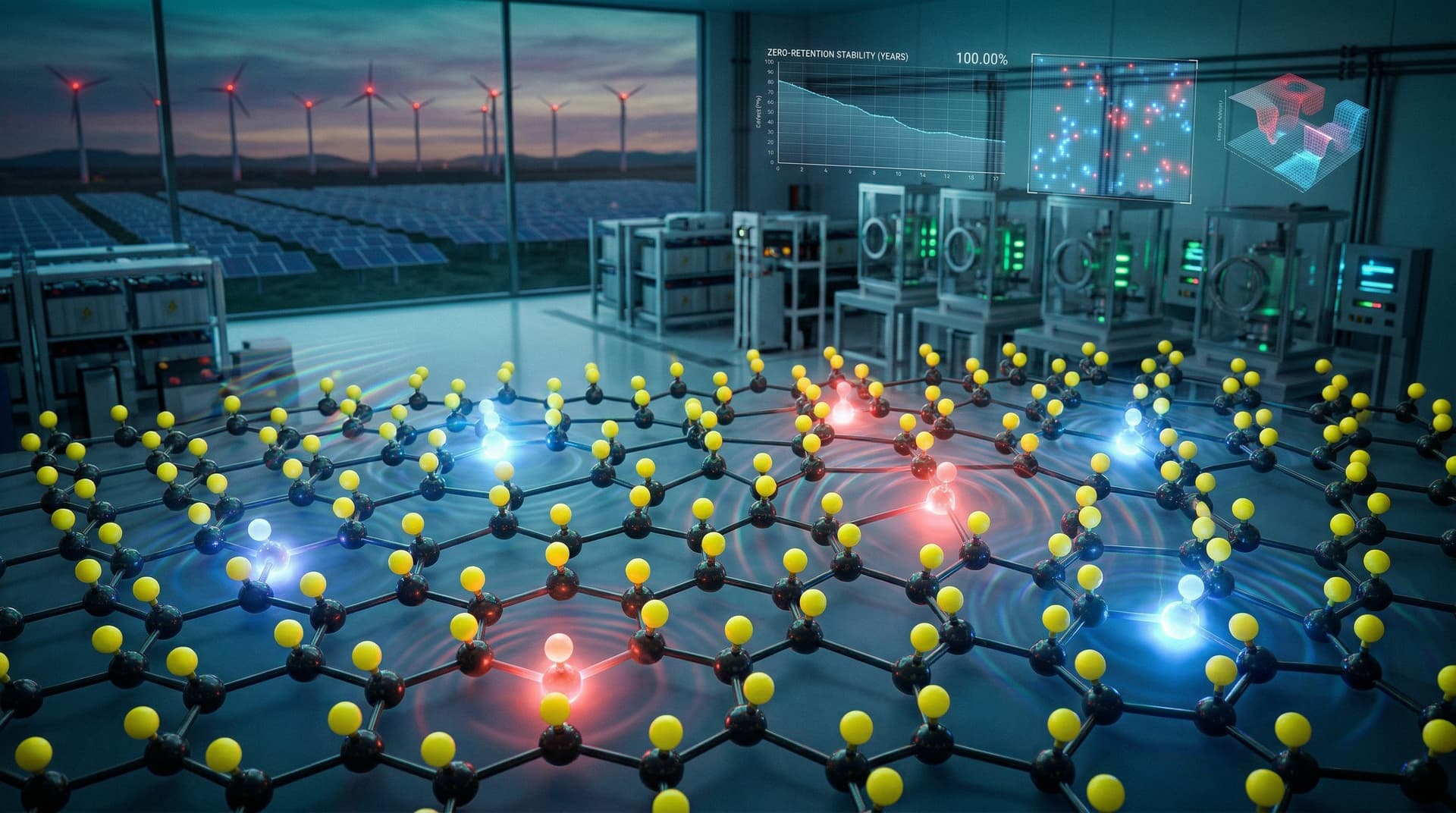
Fluorographane features graphene sheets fully fluorinated on both sides. The team encodes bits by positioning single fluorine vacancies in the lattice. Each atomic defect toggles between stable states indefinitely.
Researchers tested at room temperature under ambient conditions. Data retention exceeds 10 years without energy input, per the paper. Density surpasses NAND flash's 10 TB/cm² by 40,000 times, per IEEE data.
Fluorographane Chemistry Enables Zero-Energy Atomic Memory
Graphene fluorination creates a wide bandgap that stabilizes atomic configurations. Vacancy migration forms the memory switch: one position represents '0,' another '1.' Electron microscopy confirmed state stability after one million cycles.
Electron beam lithography creates precise defects. Writing consumes one fJ per bit, below DRAM's 10 fJ/bit per imec benchmarks. Scanning tunneling microscopy enables readout with 99.9% accuracy.
Manchester team calculates 447 TB/cm² areal density from 10^15 bits per cm² lattice sites. Fluorographane's 2D atomic packing supports this metric. Zero voltage for retention eliminates leakage currents in volatile memories.
Grid Storage Applications Demand Efficiency
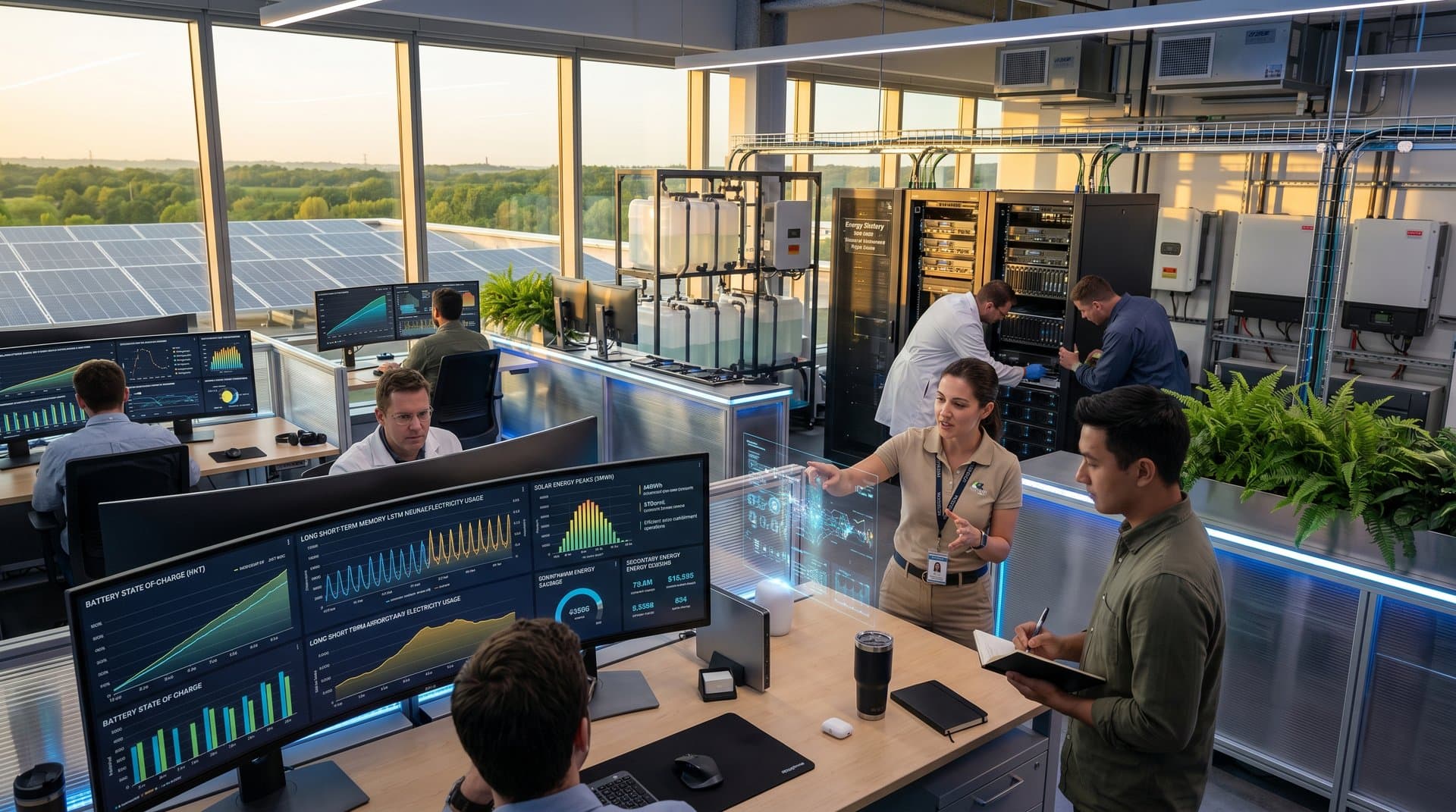
Grid-scale battery systems generate 100 TB daily from sensors, per Wood Mackenzie's 2026 report. Traditional storage drains 5-10% of system energy on data logging. Zero-retention memory reduces this to near zero and boosts round-trip efficiency by 2-3%.
Battery management systems (BMS) in 1 GWh facilities embed 1 cm² chips holding 447 TB. These chips store full lifecycle data for predictive maintenance. Edge devices in remote solar farms operate passively during blackouts.
Vehicle-to-grid (V2G) protocols log bidirectional flows at 1 GB/s. Fluorographane memory manages petabyte archives without refresh cycles. NREL models project 15% OPEX savings in smart grid deployments.
Commercialization Timeline and Hurdles
Manufacturing readiness level stands at 3, lab-validated per Technology Readiness Levels. Scaling defect-free fluorographane sheets beyond 1 cm² challenges CVD processes. Trials show contamination rates exceeding 1%, the paper notes.
Prototypes cost USD 10,000/cm². Mass production drops to USD 10/cm² by 2032 for LCOE parity with SSDs, per IDTechEx. Partnerships with TSMC or Samsung target pilot fabs in 2028.
Intel's Optane reached 1 TB/cm² before 2023 discontinuation due to costs. Fluorographane delivers 447-fold density gain but demands atomic precision fabs. Manchester researchers state AI-optimized lithography improves yields.
Competitive Context in Atomic-Scale Tech
Tohoku University's antiferromagnetic memory hits 100 TB/cm² but retains data for one year only. Catalog's DNA storage holds 1 EB/gram at room temperature yet writes at one byte/s. Fluorographane leads in density and speed.
Solid-state drives average USD 0.05/GB in 2026, per TrendForce. Zero-energy tech disrupts the USD 100 billion data center market, BloombergNEF forecasts. Grid niche adds USD 20 billion by 2035 for embedded storage.
CATL's sodium-ion BMS prototypes integrate dense memory for 5,000-cycle logging. Fluorographane extends this to 10,000 cycles via precise state-of-health tracking. EU Battery Directive mandates such data for recycling.
Cost Projections and Market Impact
Grid pilots cost USD 1 million/GWh for memory upgrades. Efficiency gains deliver payback in 18 months, NREL calculates. Form Energy's 100-hour iron-air systems require TB-scale logs.
Venture funding in atomic memory rose 25% to USD 2.5 billion in Q1 2026, per PitchBook. Manchester spinout FluorMem secures USD 50 million Series A on April 12, 2026. Investors target grid OEMs like Siemens Energy.
Lithium-ion packs hold 250 Wh/kg; memory adds negligible 1 g/cm² weight. LCOS drops 1 cent/kWh with passive data handling. APAC graphene producers favor the supply chain, avoiding rare earths.
The Bottom Line on Zero-Energy Atomic Memory
Zero-energy atomic memory on fluorographane delivers 447 TB/cm² at zero retention energy and reshapes grid data storage. Fab yields determine commercial viability by 2030. TSMC pilots could unlock 5% efficiency gains across 10 TWh global storage by 2035.