- China blocks Meta's $1B AI deal, accelerating US battery independence via $45/kWh IRA credits.
- AI data centers add 35 GW by 2030, needing 90% RTE lithium-ion with 3,000+ cycles.
- Second-life EV batteries and V2G unlock 10 GW potential for data center UPS (NREL).
US battery independence accelerates after China blocked Meta Platforms' $1 billion acquisition of Scale AI on October 1, 2024. Beijing regulators cited national security concerns, per the Los Angeles Times. This rejection spurs domestic battery production to secure AI data center power supplies.
Meta targeted Scale AI's advanced models amid the firm's Chinese investor ties. Escalating US-China tensions now prioritize onshore manufacturing.
IRA Section 45X Fuels Domestic Cell Production
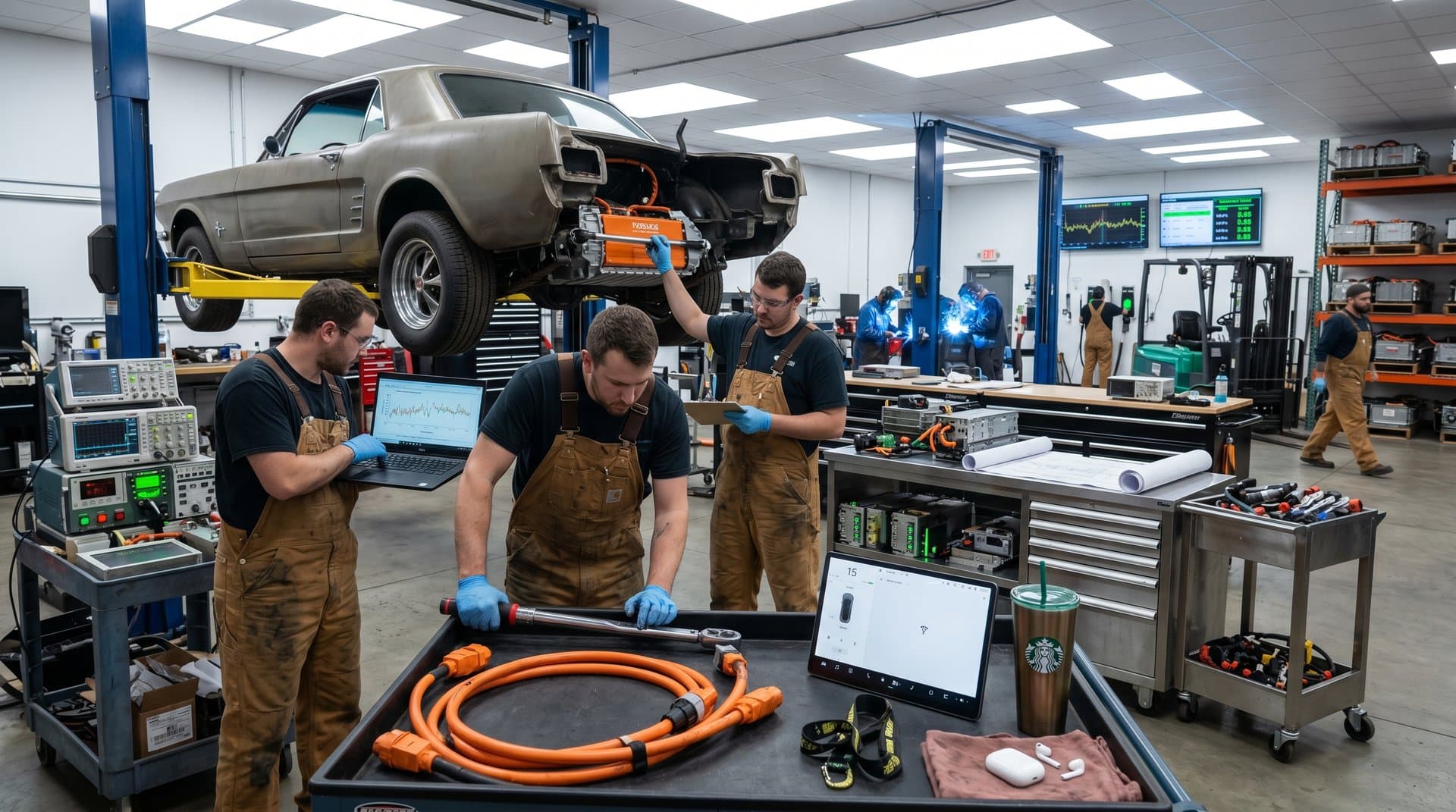
The Inflation Reduction Act's Section 45X offers $35 to $45 per kWh for US-made battery cells through 2032, as detailed on Energy.gov. Tesla Energy ramps Nevada Gigafactory output to 50 GWh annually by 2025 and plans 100 GWh across Texas sites by 2026.
Lithium nickel manganese cobalt (NMC) cells achieve 3,000 cycles at 80% depth-of-discharge (DoD) under IEC 62619 standards, according to Sandia National Laboratories' 2023 testing. Energy density reaches 260 Wh/kg at cell level with 92% round-trip efficiency (RTE) at 1C discharge.
These incentives cut levelized cost of storage (LCOS) to under $120/MWh at scale, per National Renewable Energy Laboratory (NREL) models.
FERC Order Speeds Data Center Storage Links
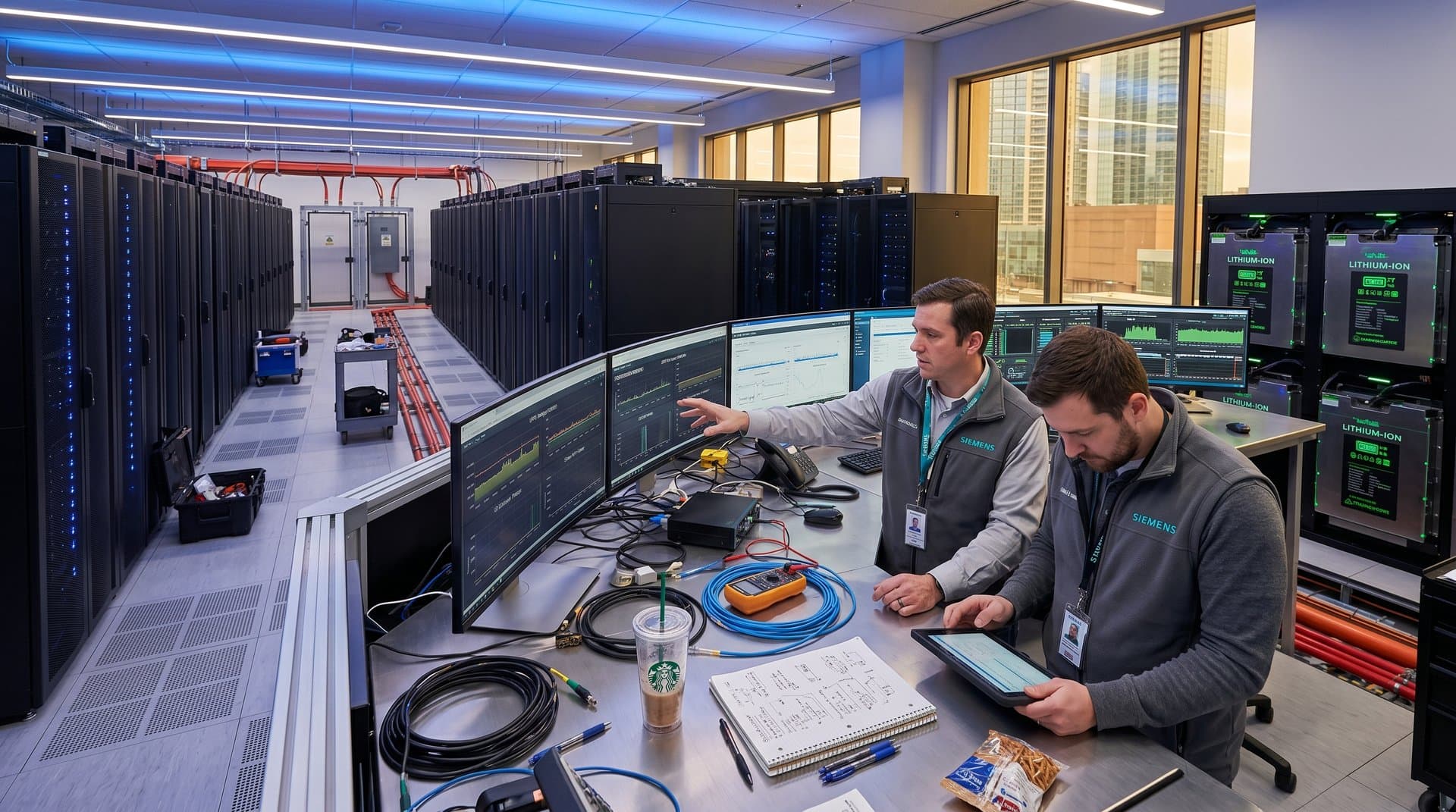
Federal Energy Regulatory Commission's (FERC) Order 2023 streamlines grid interconnections for storage. Utilities deploy 100-500 MWh behind-the-meter lithium-ion systems delivering 85-95% RTE, Sandia data confirms.
China dominates with 80% of global battery-grade lithium processing, per US Geological Survey's (USGS) 2024 Mineral Commodity Summaries. Nevada mines like Thacker Pass target 40,000 tonnes annually by 2027, reducing import reliance.
Domestic cathode production via companies like Princeton Power Systems scales NMC precursors, targeting 20 GWh capacity by 2026.
AI Data Centers Demand 35 GW New Capacity
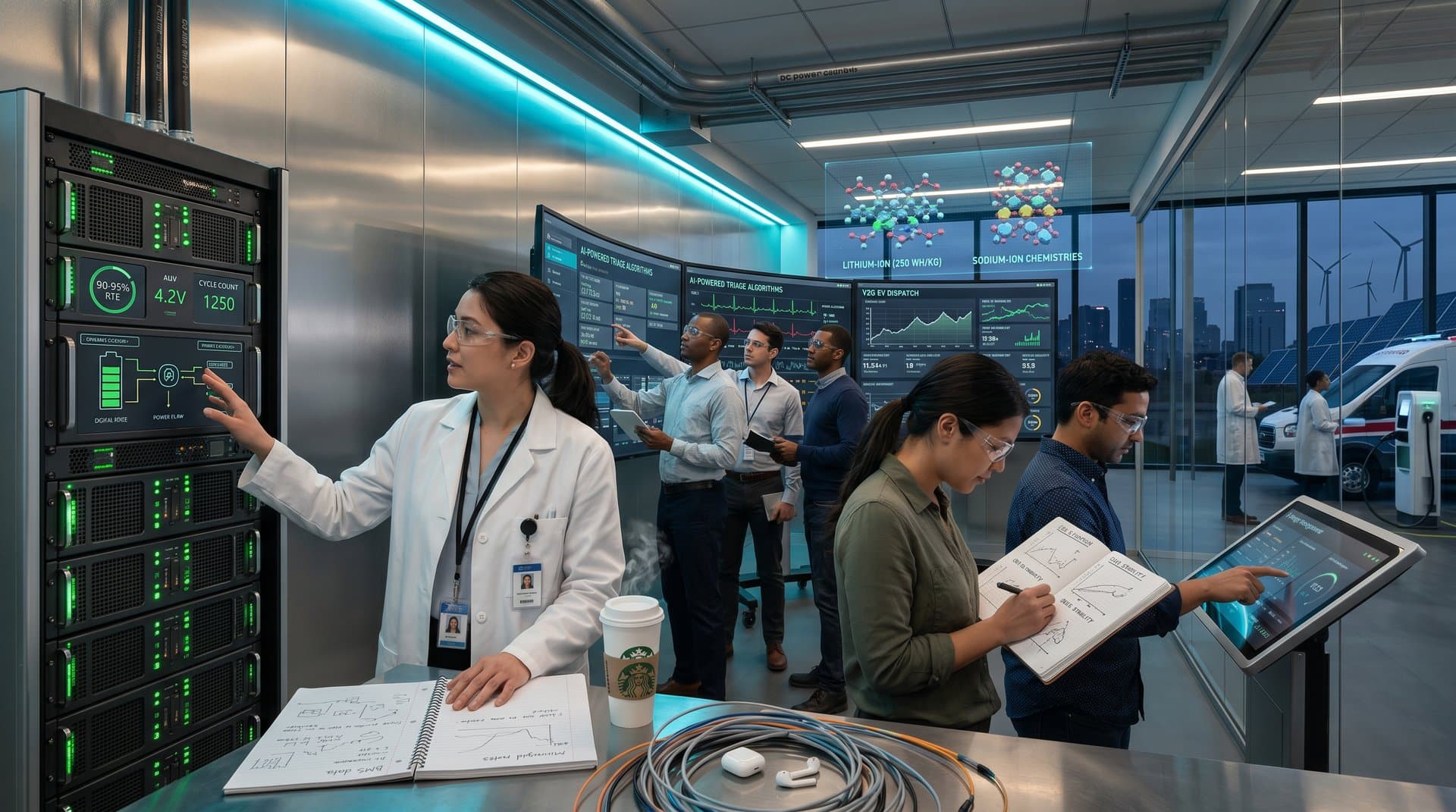
Hyperscalers including Meta plan 35 GW of US data center additions by 2030, Electric Power Research Institute (EPRI) forecasts for 2024. Batteries supply 4-hour duration at 90% RTE to support uninterrupted AI training workloads.
Grid operators battle transmission constraints. Reuters highlighted load risks on September 20, 2024.
Lithium iron phosphate (LFP) batteries deliver 180 Wh/kg energy density and 6,000 cycles at 90% DoD, per CATL's 2024 specs. US firms aim for LCOS below $150/MWh through volume production and IRA support.
LFP offers safety advantages over NMC, with lower fire risk per UL 9540A testing, enabling dense data center deployments.
Second-Life EV Batteries Power UPS Systems
Tesla's second-life packs retain 70-80% capacity after 200,000 miles or 1,500 cycles. They support 95% DoD for data center uninterruptible power supplies (UPS), Tesla engineering reports state.
Ford and General Motors pilot vehicle-to-grid (V2G) systems, discharging 50-100 kWh packs. IRA Section 30D bonuses reward batteries with over 50% recycled content, NREL's 2024 lifecycle analysis notes.
Iron-air batteries from Form Energy target 100-hour duration at $20/kWh LCOS in 2024 pilots. V2G could unlock 10 GW from idle EV fleets nationwide.
DOE Loans and Permitting Drive 2026 Timeline
The DOE Loan Programs Office allocates $2.8 billion to advanced battery projects, targeting commercial operation by 2026. FERC clears 2.5 GW in storage interconnection queues.
FAST-41 permitting reforms slash timelines to 24 months. NextEra Energy secures 1 GWh in data center power purchase agreements (PPAs) at $100/MWh fixed rates.
These measures align with DOE's goal of 15 GW annual manufacturing by 2028.
Tariffs and Incentives Cut China Reliance
US Trade Representative imposes 25% tariffs on Chinese battery cells. Fluence Energy wins 500 MWh requests for proposals (RFPs) from hyperscalers.
Sierra Club verifies cobalt sourcing under Initiative for Responsible Mining Assurance (IRMA) standards. Industry forecasts 40% LCOS reductions by 2028 via domestic scale.
Grid operators demand blackstart capabilities from storage. FERC's forthcoming orders will accelerate deployments, cementing US battery independence and energy storage leadership for AI growth.
Frequently Asked Questions
Why did China block Meta's AI startup deal?
Beijing rejected it to protect national AI tech sovereignty amid US rivalry. Los Angeles Times confirmed regulators' national security citation.
How does US battery independence support AI data centers?
Domestic production cuts China risks for grid-scale storage. IRA credits fund 4-hour lithium-ion systems at 90% RTE for hyperscaler peaks.
What US policies drive battery independence?
IRA Section 45X gives $45/kWh for cells; DOE loans $2.8B. FERC Order 2023 speeds interconnections for data centers.
Can EV batteries power AI data centers?
Second-life packs retain 70% capacity for UPS/V2G. Tesla deploys modules; NREL sees 10 GW from fleets.