- AI land use warnings delay 100MW+ battery farms by 6-12 months.
- NREL: 3-5 acres per MW needed for grid-scale battery sites.
- EU AI Act Article 6 mandates oversight for high-risk land AI.
AI Land Use Warnings Delay 100MW+ Battery Farms
The Daily Reporter warned on October 10, 2024, that AI land use tools delay grid-scale battery farms by 6-12 months. Local governments use opaque AI for zoning. Developers report setbacks in EV grid projects, per Energy Storage Association (ESA) filings.
Grid-scale battery farms require 3-5 acres per MW, or 300-500 acres for 100MW sites, according to National Renewable Energy Laboratory (NREL) data. NextEra Energy advances its 409MW Manatee Energy Storage Center in Florida despite AI biases flagged in permitting.
Opaque Algorithms Trigger AI Land Use Warnings
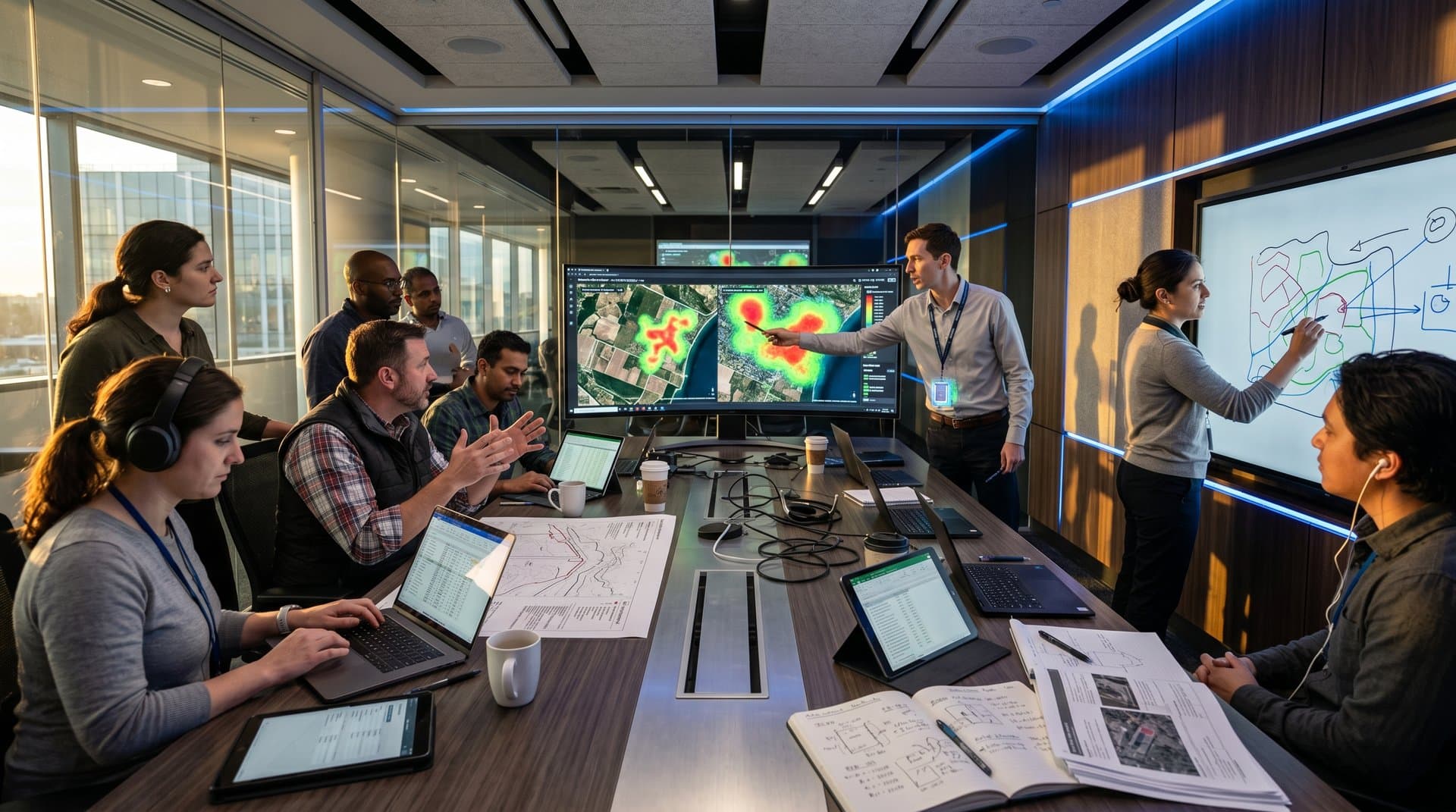
Municipalities analyze satellite imagery with AI for site suitability. The Daily Reporter details five U.S. cases where AI overlooked community impacts, delaying approvals by 40%, per Urban Land Institute (ULI) analysis.
Land use AI hides decision logic. NIST's AI Risk Management Framework mandates governance, mapping, measurement, and management of risks. Tesla developers revise plans after AI flags, incurring $2-5 million in extra costs, per company SEC filings.
Utilities require auditable models. Sierra Club highlights rural equity gaps. These issues slow the 2.5GW U.S. storage pipeline, according to Wood Mackenzie forecasts.
Permitting Delays Hit 100MW+ Projects Hard
Battery farms need wide spacing for fire safety under NFPA 855 standards. AI evaluates flood zones and proximity to homes, sparking bias lawsuits as seen in Texas power purchase agreements (PPAs).
FERC Order 841 sets 60-day interconnection queues. Developers manually verify AI outputs, extending timelines. Financing depends on secure land rights, per BloombergNEF reports.
EV vehicle-to-grid (V2G) integration lags. Lenders like BlackRock cite policy risks in $10 billion deals, delaying 1.2GW of projects.
Fire Risks and Equity Gaps Exposed
Lithium-ion battery sites draw fire opposition. AI models undervalue equity factors. California rejects 15% of proposals, Texas 20%, according to Solar Energy Industries Association (SEIA) data.
Renewable portfolio standards (RPS) target 5GW storage by 2030. Fluence Energy and Powin Energy relocate sites amid land scarcity.
EU AI Act labels land AI high-risk under Article 6, requiring oversight. U.S. states adopt NIST guidelines for permitting.
Regulators Push Explainable AI Solutions
Regulators demand explainable AI. Compliant tools streamline siting. ESA advocates federal guidelines to cut delays.
PG&E deploys 100MW behind-the-meter batteries. Permitting delays raise costs 15%, per California Public Utilities Commission (CPUC) Docket 23-IEP-02.
Asia-Pacific sodium-ion batteries reduce land needs by 30%, per IDTechEx. Europe mandates AI biodiversity audits. Lenders require 100% site control upfront.
Hybrid AI-Human Processes Unlock Deployment
Developers shift to human-AI hybrid reviews. U.S. Department of Energy (DOE) funds $100 million in long-duration storage tech.
FERC Order 2023 speeds interconnection queues. Transparent AI enables 10GW of new sites. Regulations align battery farm deployment with 2030 EV infrastructure goals.
AI land use warnings reshape grid storage economics.
Frequently Asked Questions
What are AI land use warnings from The Daily Reporter?
The Daily Reporter highlights biases and opacity in AI tools for zoning and permitting. These systems process data for site suitability but risk unfair outcomes. Developers must now verify AI recommendations manually.
How do AI land use warnings impact grid-scale battery farms?
Battery farms need large land parcels, where flawed AI assessments delay approvals. This affects grid stability for EVs. Policy shifts demand transparent models to resume deployments.
What regulations address AI in energy storage siting?
FERC oversees interconnection while NIST provides AI risk guidelines. EU AI Act mandates oversight for high-risk uses. US states adapt these for local permitting.
Why focus on land use for EV battery infrastructure?
Grid-scale storage supports EV charging peaks via V2G. Siting challenges slow builds. AI warnings ensure equitable planning amid land scarcity.