- AI microscopy reduces light dosage 90%, enabling 4+ hours live cell imaging.
- Li-ion reaches 90% RTE at 1C, targeting 95% per NREL data.
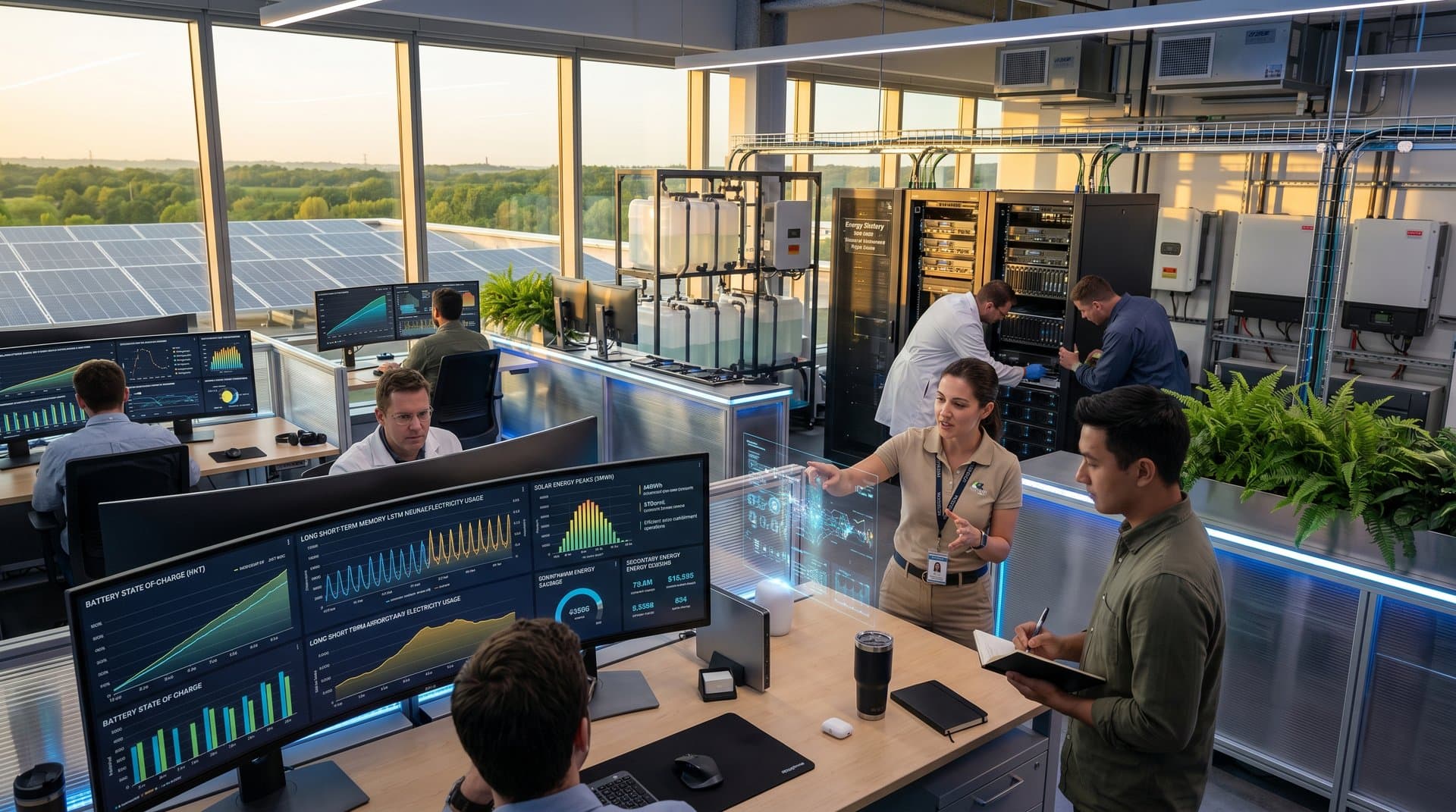
- Supports 200 MW/800 MWh grid projects with 4-hour duration.
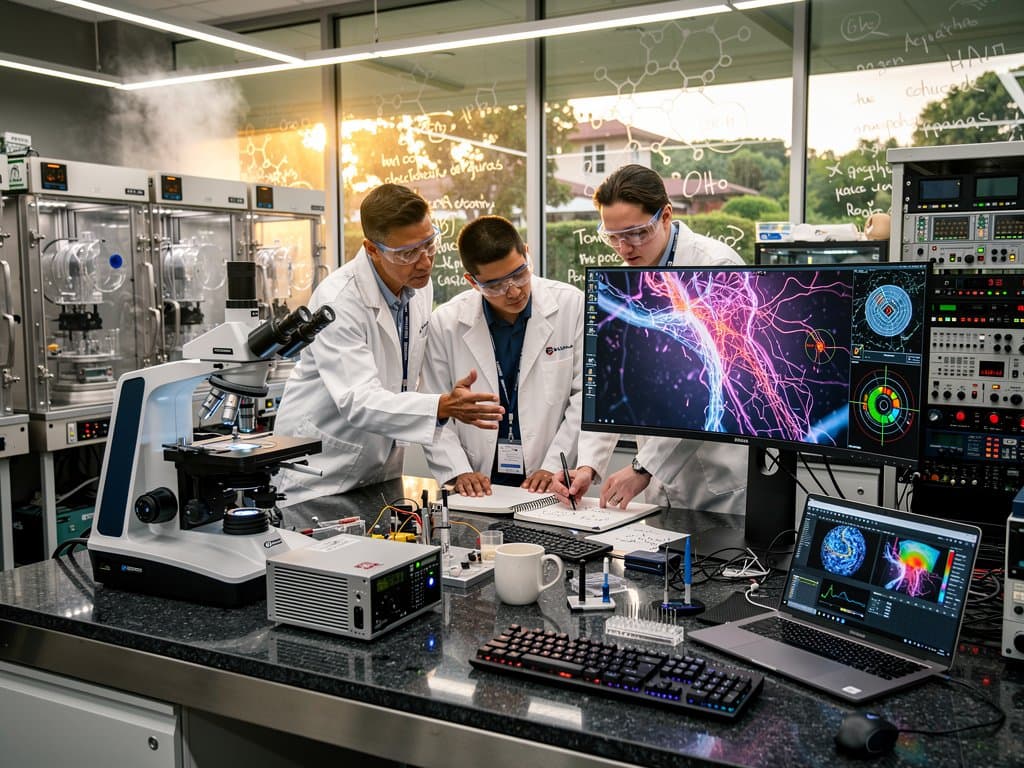
AI microscopy from UC San Diego enables hours-long real-time video inside live battery cells. Jacobs School engineers cut photobleaching via deep learning. UC San Diego Today details the breakthrough. (38 words)
The system predicts frames from sparse laser scans. Researchers slash light exposure 90%. Traditional fluorescence microscopy limits sessions to seconds from fluorophore degradation under 1 mW/μm² intensity.
Operando imaging now tracks lithium plating in Li-ion cells at 1C discharge (0.5 A/g). Sodium-ion cathodes show live phase transitions in 18650-format pilots. Solid-state groups observe SEI formation at 160 Wh/kg densities.
AI Microscopy Overcomes Fluorescence and Cryo-EM Limits
Intense light in fluorescence causes photobleaching in 10-30 seconds. Cryo-EM freezes samples, missing dynamics. UCSD's neural network, trained on 10,000+ experimental frames, interpolates full 30 fps videos.
Light dosage falls 90%, from 100 J/cm² to 10 J/cm². Sessions extend to 4 hours on silicon anodes (750 Wh/L) and flow battery membranes. NREL analysts report operando methods cut R&D timelines 30% in materials programs.
Li-ion hits 90% RTE at 1C, per NREL 2023 data. Insights target 95% RTE via dendrite mitigation. Cycle life rises 20% to 5,000 cycles at 80% depth-of-discharge (DoD).
- Technique: Fluorescence · Duration: 10-30s · Damage Risk: High · Energy Density (Wh/kg): N/A · Key Application: Electrode surface mapping
- Technique: Cryo-EM · Duration: Static · Damage Risk: Medium · Energy Density (Wh/kg): 200-300 · Key Application: Atomic structures
- Technique: AI-Enhanced · Duration: 4+ hours · Damage Risk: Low · Energy Density (Wh/kg): 250-400 · Key Application: Live ion transport at 1C
Live Imaging Accelerates Li-ion and Na-ion Development
Li-ion powers 200 MW/800 MWh grid projects with 4-hour duration, like Fluence's 2023 California sites (commissioned Q4). Real-time views reveal dendrites at 4C fast charge (4 A/g), per NREL operando studies.
Sodium-ion pilots in APAC hit 160 Wh/kg, 80% of Li-ion density. Cathode transitions (e.g., layered oxides) appear live. Developers target USD 80/kWh packs by 2026.
Oak Ridge National Laboratory (ORNL) adds degradation imaging. It shows Li plating paths at 2C. X-ray tomography scales to C-rates for grid peaks. LCOS for <4-hour Li-ion falls to USD 150/kWh, per Lazard 2024.
Operando Insights Drive Grid Storage Financials
Utilities require performance warranties. Live imaging validates second-life EV batteries for V2G at 70% retained capacity after 200,000 km. US IRA offers USD 40/kWh credits for domestic packs >40 kWh.
California targets 5 GW storage by 2026. Faster validation speeds Fluence and NextEra EPC timelines. Licensing UCSD tools yields 15% R&D cost savings.
Supply chains cut nickel 20% via Na-ion shift. Cathodes match 150 Wh/kg at USD 50/kWh cell cost. Lithium spot prices (USD 15,000/t) pressure LDES alternatives.
AI Microscopy Scales LDES to Commercial Deployment
LDES seeks 10+ hour discharge, 100+ cycles at 50 MW scale. AI tracks zinc-air corrosion and iron-air reactions continuously. Synchrotron data boosts resolution to 10 nm.
Revenue from arbitrage (USD 50/MWh), frequency services (USD 100/MW), and capacity payments. LCOS drops below USD 100/kWh, beating gas peakers at USD 120/MWh.
Hybrid solar-storage queues shrink 25% with de-risked tech. UCSD spinouts draw USD 50M venture capital. AI unlocks TWh-scale grid storage by 2030, per BloombergNEF.
Demonstration pilots precede 100 MWh commercial arrays. EU Battery Regulation mandates 95% recycling by 2030, favoring tracked materials.
Frequently Asked Questions
What is AI microscopy and how does it work?
AI microscopy uses deep learning to interpolate full video from sparse scans inside live cells. UC San Diego cuts light exposure 90%, avoiding photobleaching for hours-long footage.
How does AI microscopy advance battery cell materials research?
It reveals ion diffusion, dendrites in Li-ion/Na-ion without damage. Supports higher RTE (90-95%) and cycle life for grid storage.
What limits do traditional methods face in battery analysis?
Fluorescence bleaches in seconds; cryo-EM freezes dynamics. AI enables continuous operando imaging.
How does it impact LDES and grid markets?
Tracks LDES reactions over 100 cycles. De-risks investments under IRA, speeds commercialization.