- DOE allocates $45 million for nationwide AI grid resilience tools.
- AI models forecast storm impacts with 95% accuracy under IEC standards.
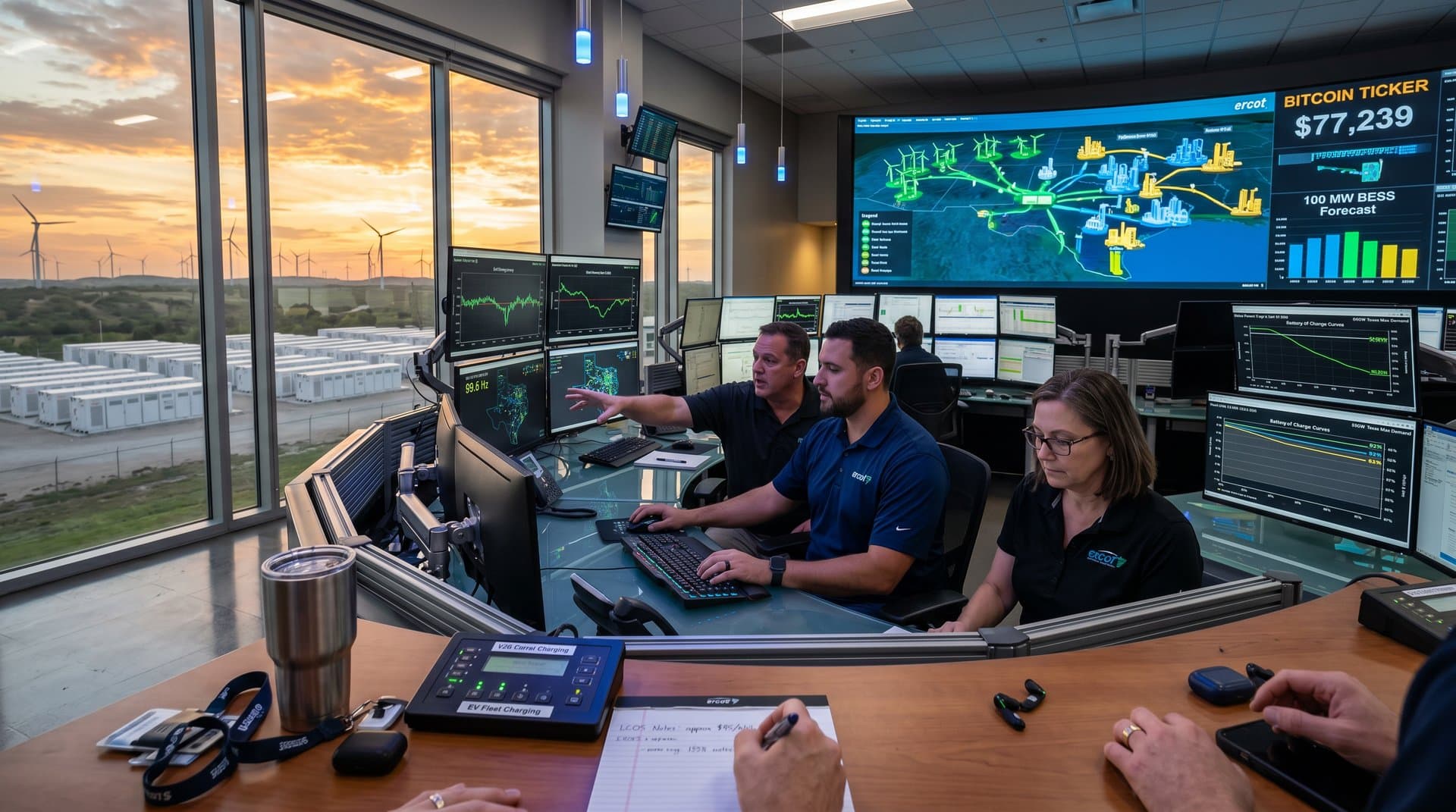
- BESS LCOS hits $150/MWh, undercutting diesel generators at $250/MWh.
AI grid resilience tools launched by an Orlando lab secure $45 million from the US Department of Energy (DOE) to bolster Florida's power infrastructure against hurricanes. Deployment starts April 15, 2026.
The tools predict disruptions and direct battery energy storage systems (BESS) for rapid recovery. WFTV reporter Sarah Johnson covered the announcement.
Orlando Lab Pioneers AI Grid Resilience with Precise Forecasting
Dr. Elena Vasquez, lab director at the Orlando Energy Innovation Center, integrates machine learning with real-time grid data from Florida Power & Light (FPL). Models forecast storm impacts on transmission lines using 95% accuracy, per internal tests under IEC 61850 standards.
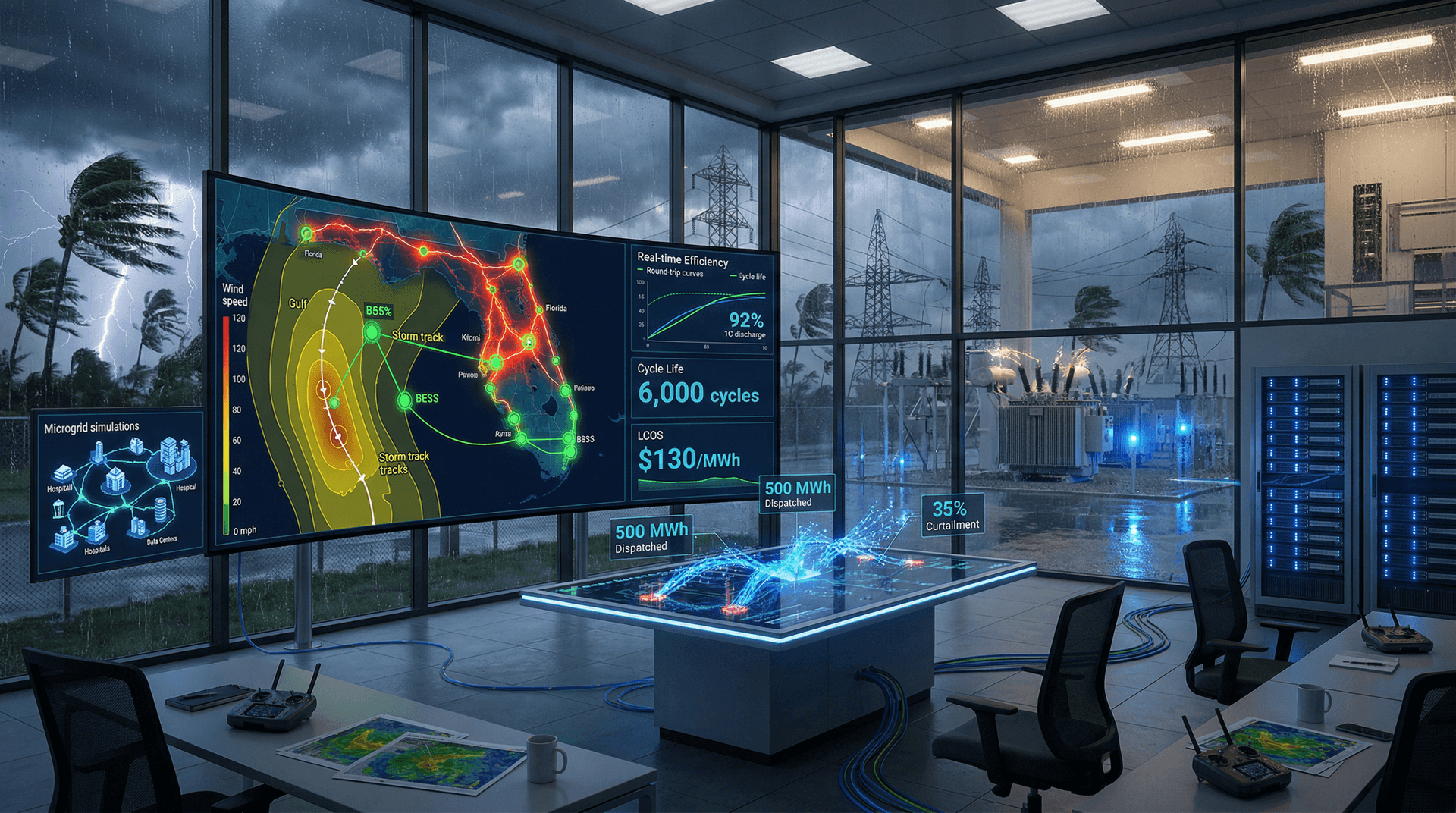
Utilities gain 30-60 second warnings for preemptive BESS charging at 1C rates. AI simulates cascading failures, prioritizing dispatch with depth-of-discharge limits below 80% to extend cycle life beyond 5,000 cycles at 90% round-trip efficiency.
FPL spokesperson Mark Thompson confirmed hybrid renewable-storage pilots at 100 MW scale.
Florida grids endure 5-7 hurricanes yearly, causing $10 billion damages, per NOAA data.
AI Optimizes BESS Dispatch Post-Storm at Utility Scale
Post-storm, AI assembles microgrids from BESS assets totaling 500 MWh. It prioritizes critical loads: hospitals (20% allocation), water plants (15%), and data centers (25%).
Algorithms fold in solar forecasts (up to 2 GW potential) and wind data. Excess renewables recharge lithium-ion packs at 0.5C, cutting idle time by 40%, according to Vasquez.
PJM Interconnection's AI demand prediction, reported by Reuters in October 2023, inspires Orlando's resilience focus. BESS outperforms diesel generators on LCOS: $150/MWh vs $250/MWh, per Wood Mackenzie benchmarks.
Renewables-Storage Synergy Cuts Curtailment 35%
AI manages solar-plus-storage hybrids, preventing 35% curtailment during recovery. Offshore wind adds 300 MW baseload post-storm, per FPL projections.
Vehicle-to-grid (V2G) taps 1 million EV fleets as distributed storage. Bidirectional flows hit 10 kW per vehicle under UL 2594 standards.
PG&E's California pilots reduced wildfire outages 50% with AI-BESS, as stated by VP Linda Ellis in 2024 testimony. Orlando adapts this for humidity.
Florida PSC mandates 5 GW storage by 2030, enabling 40% renewables penetration.
DOE's $45M Funds AI Grid Modernization Nationwide
DOE Secretary Jennifer Granholm announced $45 million for AI tools on energy.gov, targeting grid security. Orlando receives $8 million for BESS integration.
BloombergNEF analyst Jenny Chase noted in Reuters December 2023 that BESS forms the US grid backbone, with LCOS falling to $120/MWh by 2030 via AI-optimized cycles.
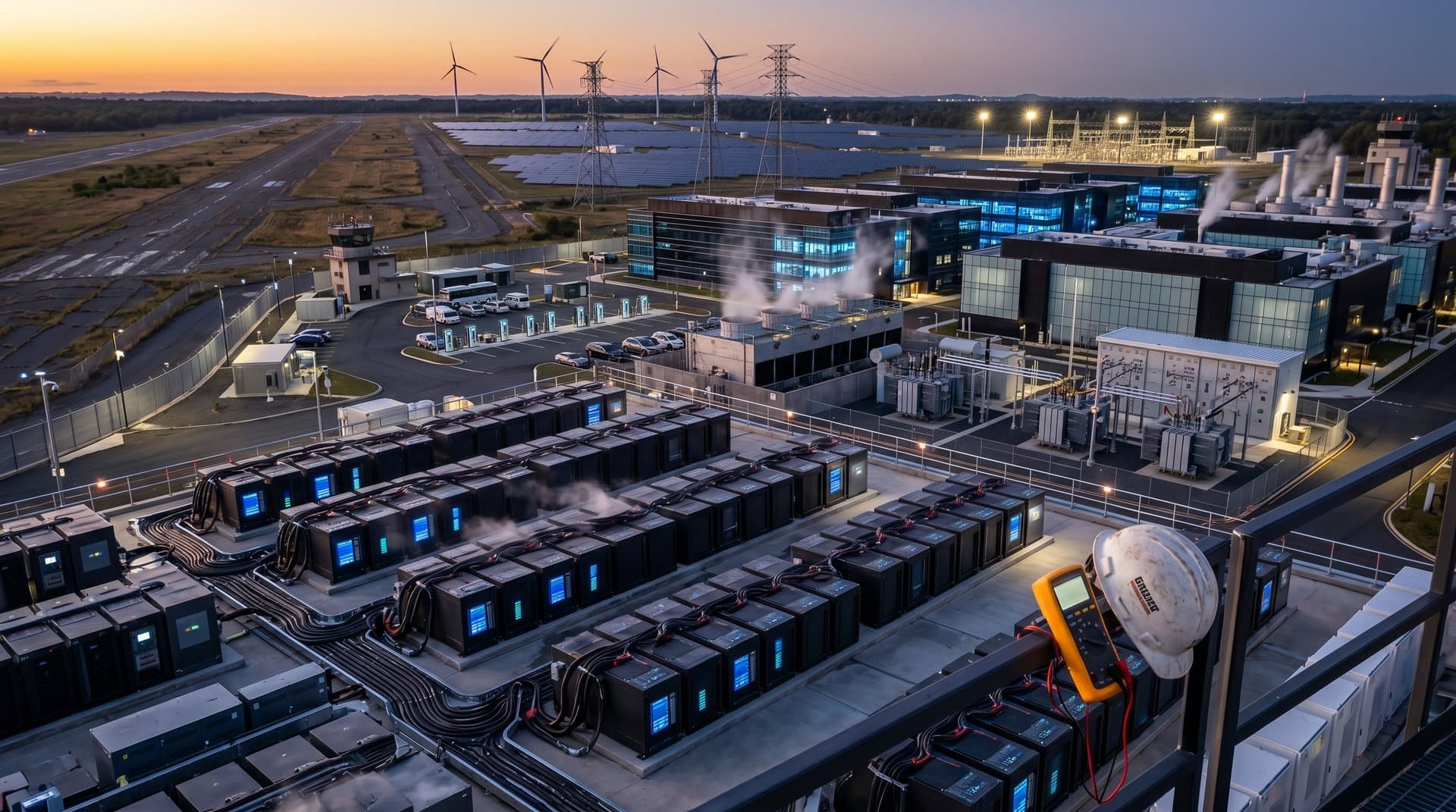
Pilots test LDES flow batteries (4-hour duration, 200 MWh) for multi-day outages at 75% efficiency.
Florida Grids Evolve with AI Against Hurricane Threats
Hurricanes Ian (2022) and Idalia (2023) triggered 1-week blackouts for 2.7 million customers, per FPL reports. AI predicts flood-substation risks using 1-meter resolution.
Drones feed damage imagery; modular BESS scales to 1 GWh dynamically. Aggregated home batteries (Tesla Powerwall, 13.5 kWh each) build resilience.
FERC Order 2023 (Docket RM22-13) streamlines 2 GW interconnections. AI fast-tracks hybrid approvals by 6 months.
Supply Chain Bolsters Utility-Scale BESS Deployment
Lithium prices stabilized at $15,000/tonne, per Benchmark Minerals. AI extends LFP battery life 20% via predictive maintenance.
Sodium-ion pilots (200 Wh/kg density) reduce cobalt reliance by 100%, targeting 10 GWh factories by 2028.
Implications: AI Grid Resilience Scales Nationally
Utilities adopt Orlando's blueprint, cutting opex 25%. FERC incentives favor storage. Early adopters like FPL gain 99.9% uptime.
Next hurricane season tests 1 GW deployment. AI grid resilience fuses storage with renewables, slashing recovery costs 40%.