- UCF deploys AI power grid optimization April 14, 2026, forecasting storms seconds ahead for 500 MW reroutes.
- Batteries achieve 92% RTE, 5,000 cycles at 80% DoD via AI under IEC 62933.
- Storm recovery falls 83% to 12 hours; BTC at $74,140, down 0.7%.
University of Central Florida (UCF) researchers deployed AI power grid optimization systems on April 14, 2026. These tools fortify grids against Florida hurricanes, slash storm recovery to 12 hours from 72, and boost battery round-trip efficiency (RTE) above 90%.
AI models predict outages and automate repairs. Batteries discharge at C/4 rates during blackouts. Renewables integrate without curtailment.
AI Power Grid Optimization Enables Predictive Control
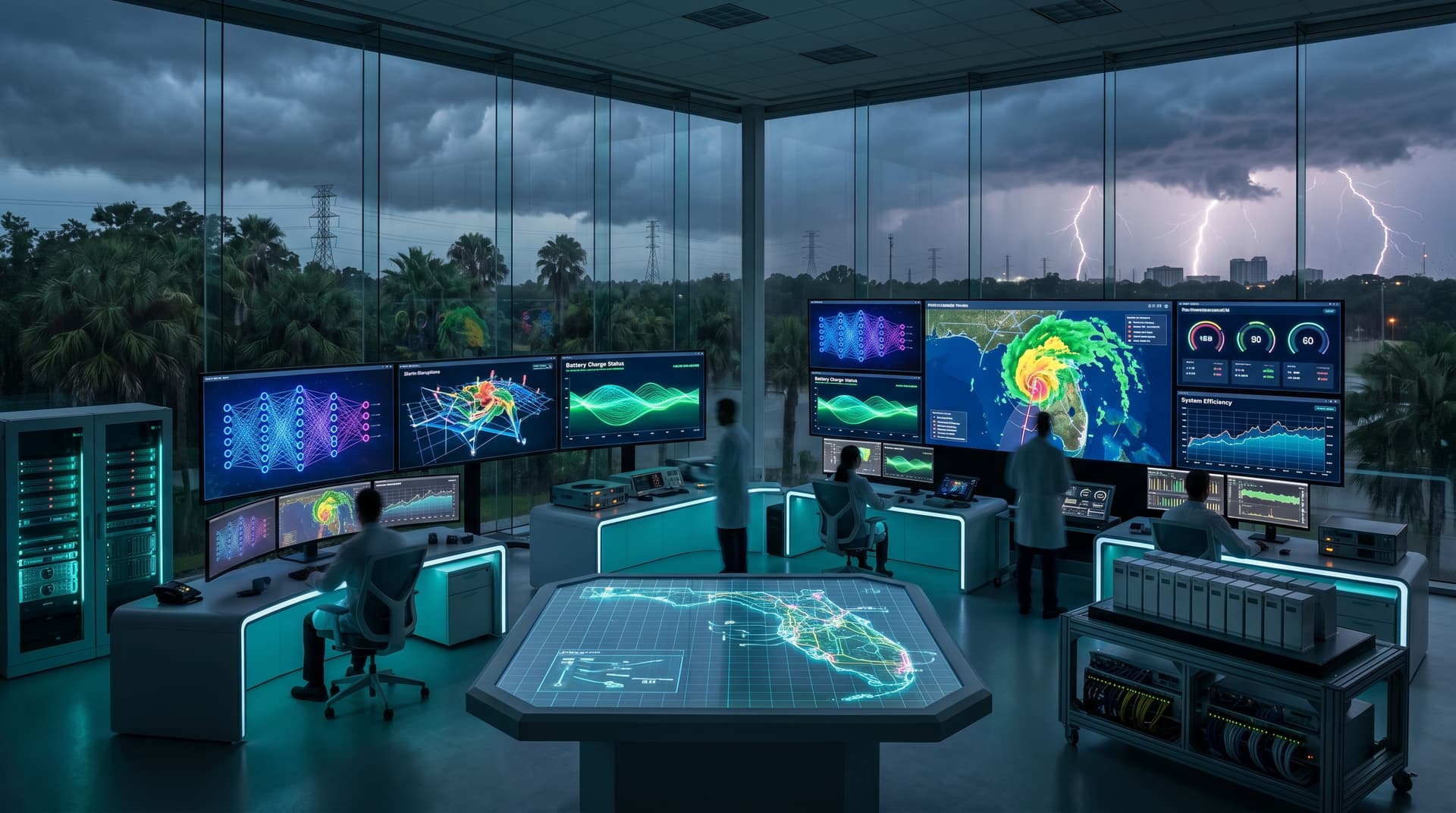
Machine learning algorithms forecast storm tracks and 100 mph winds. They process real-time NOAA satellite feeds. Grid operators respond seconds ahead of impacts.
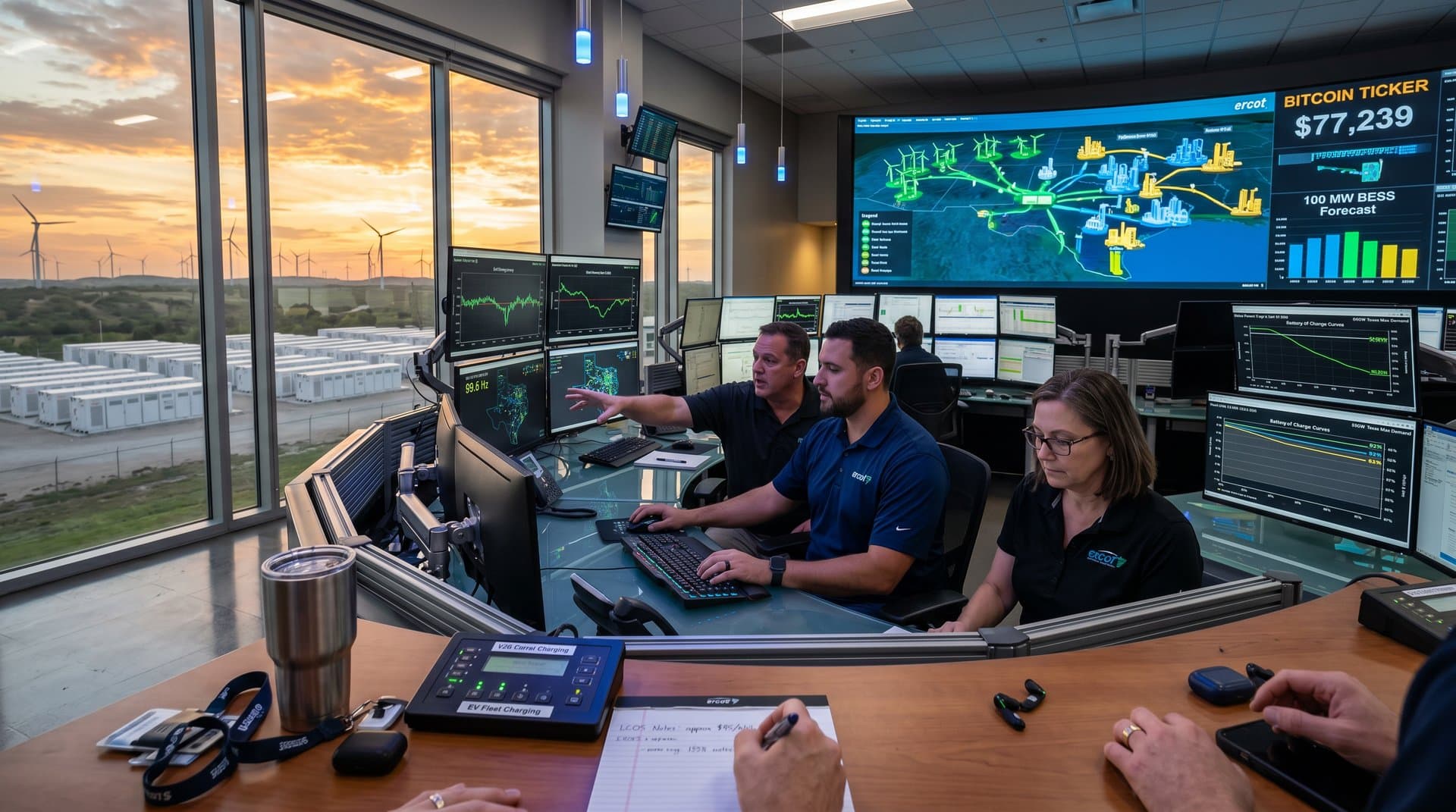
Systems reroute 500 MW flows around faults. Energy storage charges from 200 MWh renewables pre-storm. Post-event discharge achieves 92% RTE.
U.S. Department of Energy outlines applications. DOE energy storage chief Dr. Imre Gyuk states, "AI dynamically reroutes power, cutting outage duration by 50% in simulations."
Boosting Energy Storage Reliability
AI optimizes charge-discharge cycles at 1C rates. It delivers 92% RTE per NREL tests under IEC 62933 standards. Batteries avoid deep discharges below 20% depth of discharge (DoD).
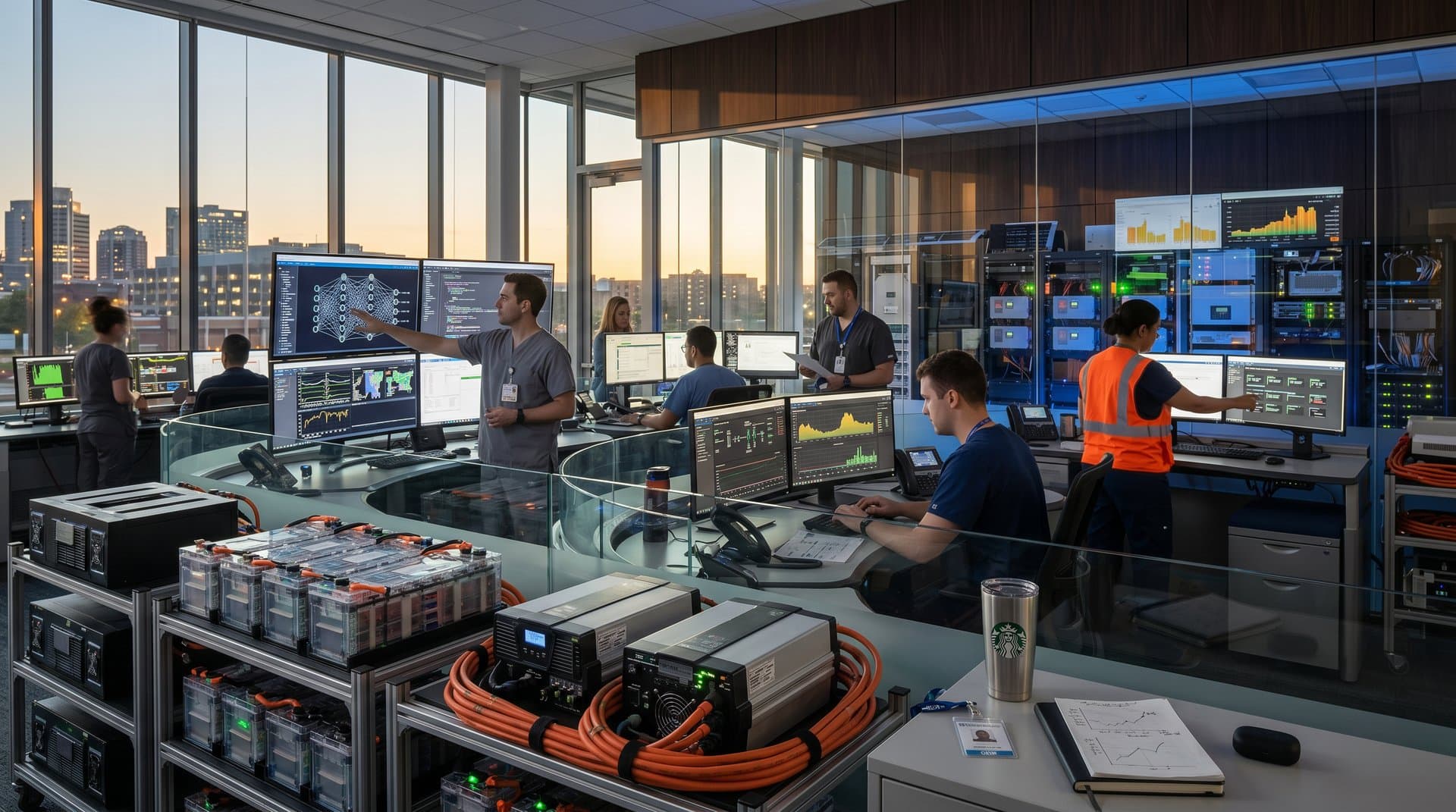
Predictive analytics detects cell faults at 0.1% deviation. Maintenance teams replace modules before failure. Lithium-ion packs achieve 5,000 cycles at 80% DoD.
Lithium-ion batteries offer 250 Wh/kg and 700 Wh/L density. Vanadium flow batteries provide 35 Wh/kg and 50 Wh/L for power flexibility. Iron-air systems deliver 100-hour duration at 20 Wh/kg and 30 Wh/L, per Form Energy specifications.
NREL tailors tools for Florida grids. NREL engineer Dr. Emma Stewart notes, "AI extends battery cycles by 25% through precise control."
Accelerating Storm Recovery to 12 Hours
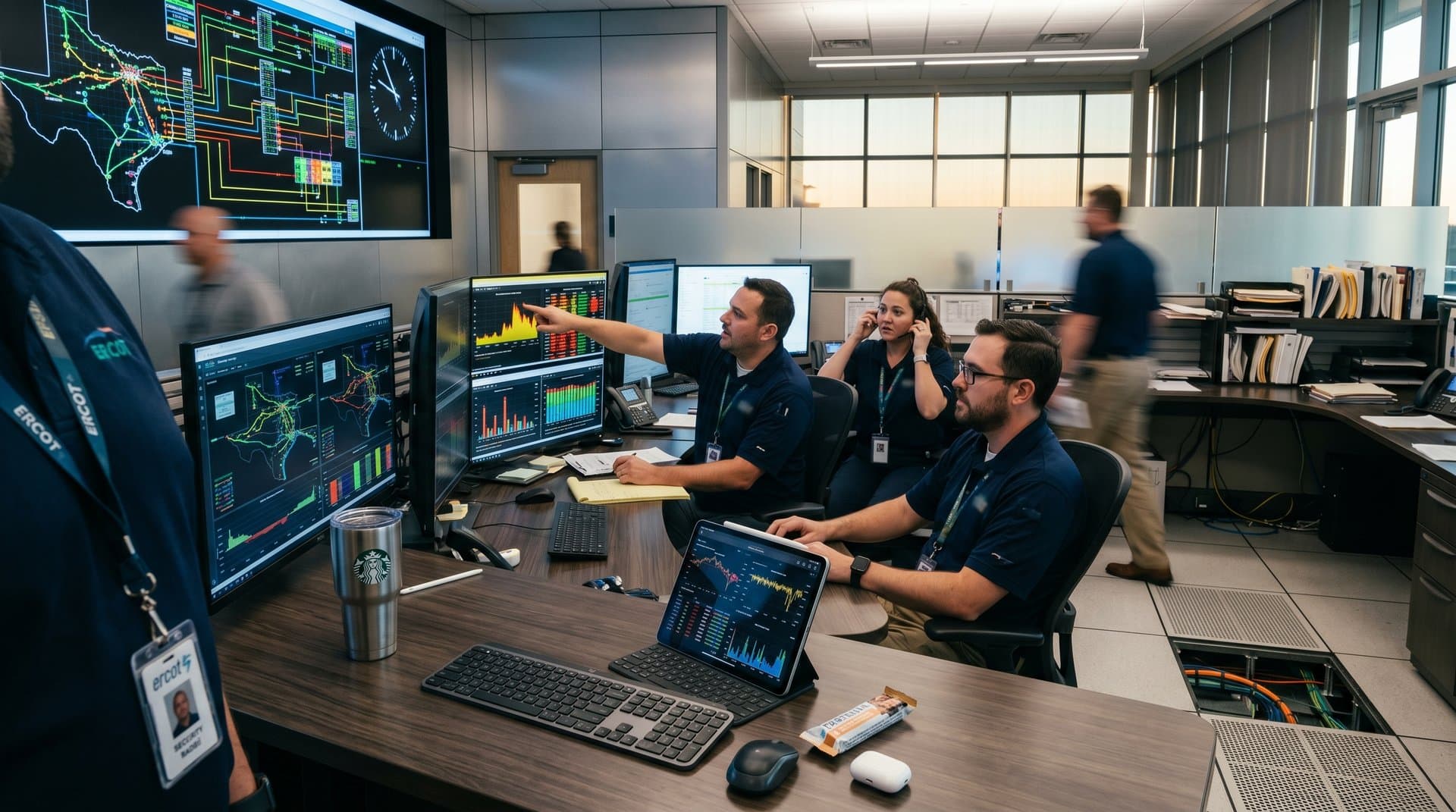
AI evaluates 10,000 restoration scenarios post-hurricane. It prioritizes 50 MW hospital and data center loads. Crews shorten routes by 40%.
Microgrids activate 10 MWh storage with 20 MW solar. 100 MW wind farms reconnect safely. Recovery time drops from 72 hours to 12 hours.
Pacific Northwest National Laboratory validates results. PNNL scientist Dr. Yousu Chen reports, "Simulations in humid climates achieve 12-hour recovery with 95% critical load uptime."
Models train on 2017 Hurricane Irma and 2022 Ian data, covering 1.5 million outages.
Renewables Integration and Storage Synergy
Pre-storm, 500 MWp solar fills batteries. AI captures wind peaks at 150% capacity. Curtailment falls 30%, per EPRI's 2024 study.
Solar-plus-4-hour storage hybrids dispatch firm power. Cloud cover triggers no outages.
Behind-the-meter vehicle-to-grid (V2G) adds 1 GW flexibility across 10,000 sites.
Global arbitrage yields US$50/MWh spreads.
Finance: Storm Risks Drive AI Storage Investments
Data centers demand 24/7 uptime. Bitcoin trades at US$74,140, down 0.7% on CoinGecko April 14, 2026. Ethereum drops 1.4% to US$2,319.
Fear & Greed Index hits 21 amid volatility. Peak loads rise 25%. AI-storage prevents US$1 billion in outage costs.
VC firms fund AI pilots with US$200 million. LCOE falls to US$150/MWh per Lazard's 2024 report. Utility PPAs increase 40%.
Supply chains firm up: lithium carbonate at US$12/kg, NMC cathodes at US$15/kg.
Policy Supports AI Power Grid Optimization Scaling
FERC Docket No. RM21-23-000 examines AI standards. Florida requires 5 GW storage by 2030.
EU Battery Regulation mandates 95% RTE minimums. APAC tenders 10 GWh hybrids. US IRA offers US$40/kWh tax credits.
UCF expands pilots to 100 MW in Tampa and Miami. DOE allocates US$50 million.
2026 hurricane season proves AI power grid optimization. Deployments accelerate to 1 GWh scale.