- AGI training demands 1 GW+ power; BESS hits 85-90% RTE.
- EV V2G exports 9.6 kW per vehicle, cuts LCOS to USD 150/MWh.
- IEA forecasts data centers double to 1,000 TWh demand by 2026.
OpenAI AGI principles, released October 9, 2024, mandate 1 GW-scale sustainable power for safe superintelligence. Battery energy storage systems (BESS) and vehicle-to-grid (V2G) firm renewables for data center demands.
Frontier models need 1 GW+ continuous power, per OpenAI's planning document. Deployment links to safety benchmarks under board oversight.
OpenAI AGI Principles Tie Compute to Safety and Storage
OpenAI defines artificial general intelligence (AGI) as systems outperforming humans in economically valuable work. Principles detail phased rollouts based on preparedness evaluations, according to OpenAI's planning document.
Safety frameworks demand iterative testing, scalable oversight, and shutdown mechanisms. OpenAI reports GPT-4 training used 10 GWh. Exponential compute scaling requires renewable firming through storage to limit fossil fuel use.
Board allocates funds to verified gigawatt-scale infrastructure. Misalignment risks prompt controlled rollouts. Lithium iron phosphate (LFP) batteries dominate BESS due to 6,000+ cycles at 80% state of health (SoH), per IEC 62619 standards tested at 25°C and 1C rate.
AGI Training Matches City Power, Boosts BESS Projects
State-of-the-art AGI training pulls 100-500 MW continuously, equaling a small city's load. The International Energy Agency (IEA) forecasts data center electricity doubling to 1,000 TWh by 2026, per IEA commentary.
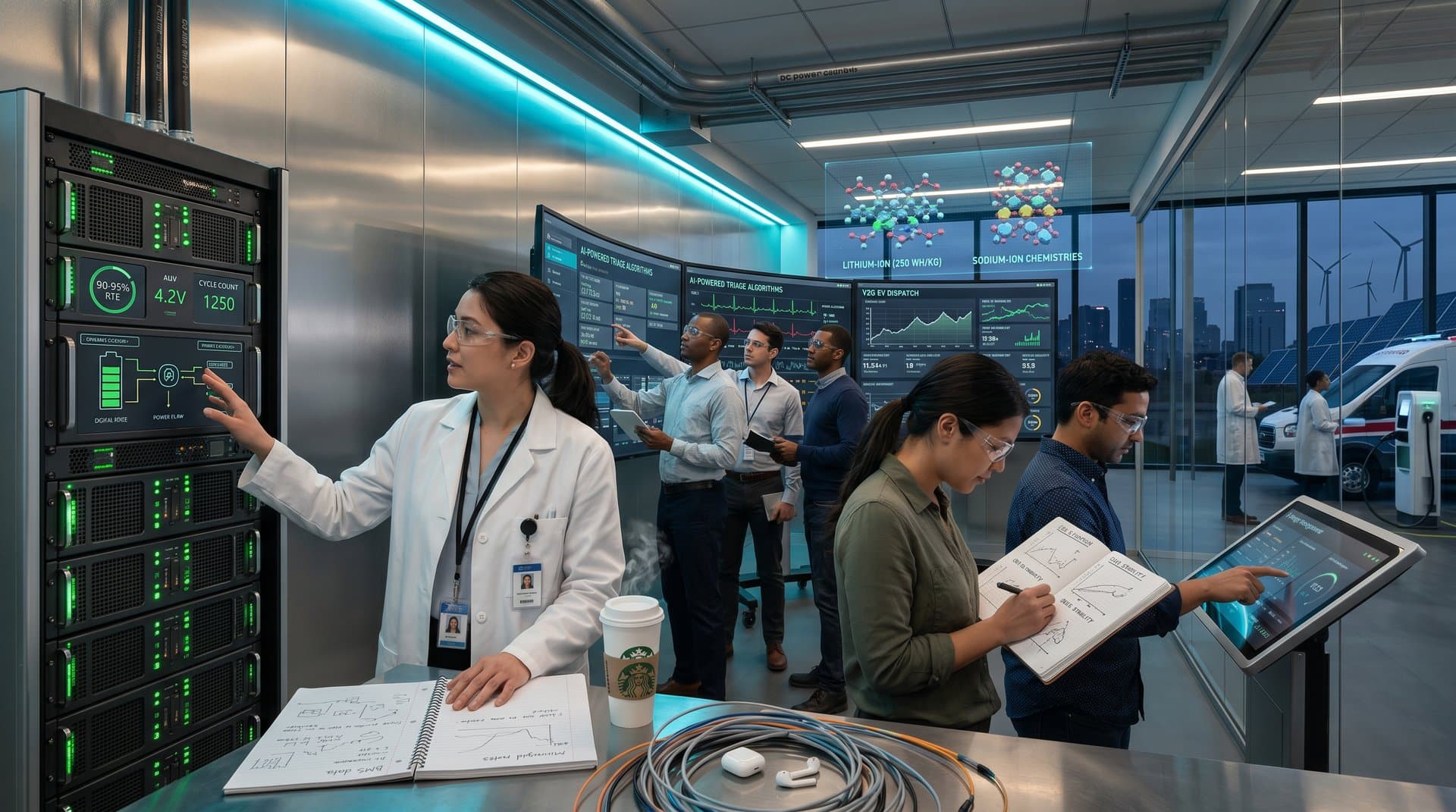
BESS achieves 85-90% round-trip efficiency (RTE) at 1C discharge, per National Renewable Energy Laboratory (NREL) benchmarks under IEEE 1547. Revenue stacks: energy arbitrage at USD 50/MWh, frequency regulation at USD 100/kW-year, and capacity markets at USD 10/kW-month.
Long-duration energy storage (LDES) targets 10-hour discharge. California ISO (CAISO) procures 5 GW BESS by 2027, including 1.9 GW operational by Q3 2024. Supply chain pressures: LFP cathode nickel sulfate prices fell 40% in 2024 to USD 12,000/t, per Benchmark Mineral Intelligence.
EV V2G Cuts Data Center LCOS to USD 150/MWh
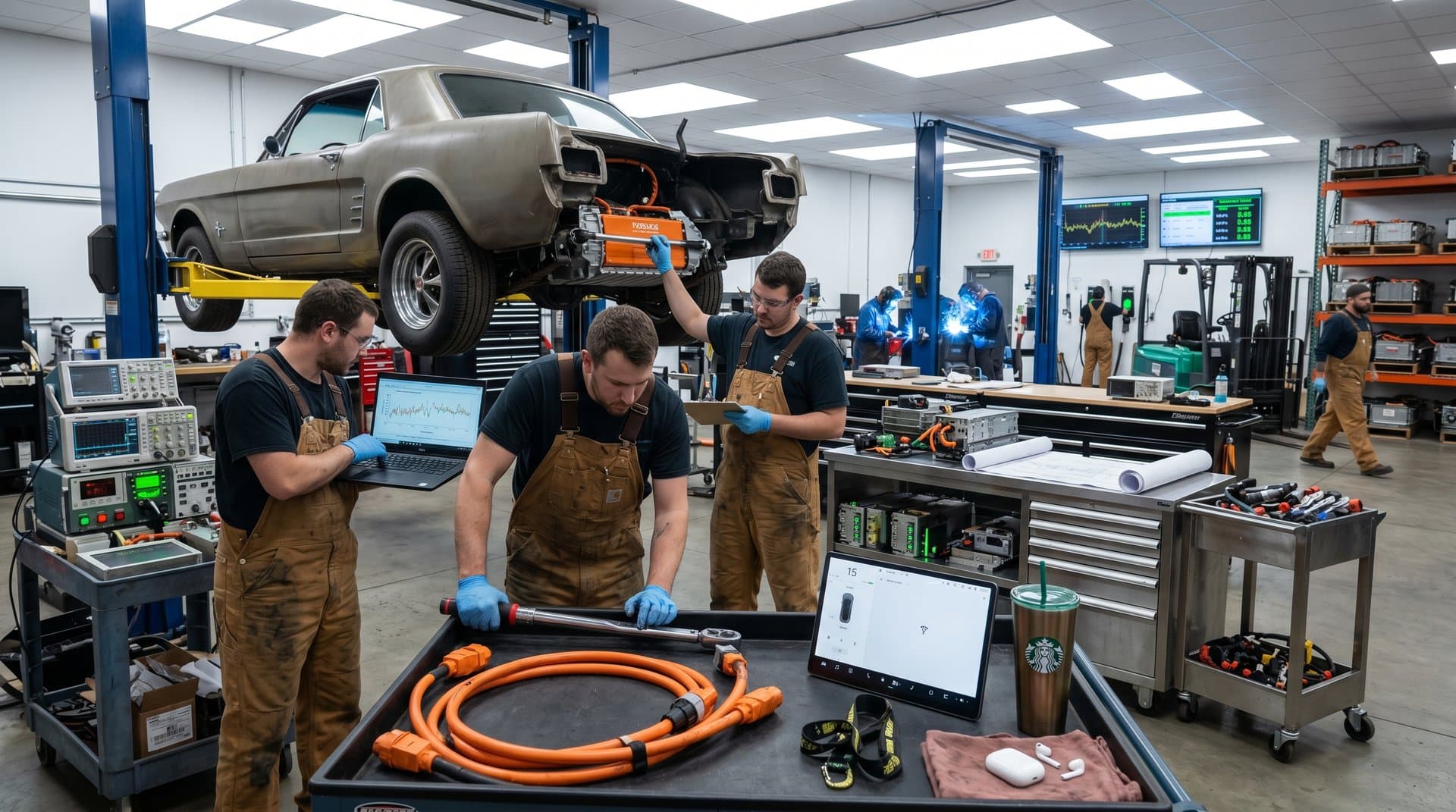
EV batteries hold 80% capacity after 300,000 km. Second-life packs deliver 4-hour duration at 90% depth of discharge (DoD), avoiding USD 200/kWh new pack costs.
Bidirectional V2G exports 9.6 kW from Ford F-150 Lightning chargers. Nvidia CEO Jensen Huang noted EVs power data centers, per CNBC interview.
Fermata Energy pilots aggregate California fleets. BloombergNEF projects V2G levelized cost of storage (LCOS) under USD 150/MWh at 1 GW scale, factoring 4,000 cycles and USD 10/kW-year O&M.
Geopolitical edge: V2G sidesteps lithium supply risks from Australia-DRC routes, using existing 2 million US EVs for 20 GWh dispatchable capacity.
FERC Order 2023 Speeds 100 MW+ BESS for AI Sites
Hyperscalers build 100 MW+ campuses with Nvidia Blackwell GPUs, doubling flops per watt versus H100s. Interconnection queues exceed 2 TW; FERC Order 2023 caps study phases at 90 days.
Behind-the-meter BESS skips USD 1M/km transmission upgrades. Solar + BESS colocation reduces LCOS 20%, per Wood Mackenzie. Form Energy's iron-air batteries aim 100-hour LDES at USD 20/kWh installed, independent of lithium volatility.
Commercial scale: Fluence delivers 460 MWh to Utah data center, 4-hour duration at 95% RTE.
V2G Provides 100 ms Response for Grid Services
Urban EV fleets sum 10 GWh capacity. V2G hits under 100 ms response per IEEE 1547-2020. PJM Interconnection pays USD 200/MW-day for fast-ramp ancillary services.
AutoGrid dispatches 1,000+ vehicles in pilots. Inflation Reduction Act (IRA) Section 45X grants USD 35-45/kWh production tax credits for LFP cells. Warranties cover 4,000 cycles at 80% SoH.
EV makers like GM Ultium integrate bidirectional charging, projecting 10 GW US V2G by 2030 per Rho Motion.
Revenue Stacks Yield 40% IRR on Storage Assets
BESS arbitrage delivers 40% internal rate of return (IRR) over 15 years, per Fluence modeling at USD 150/kWh capex. Capacity payments add USD 100/kW-year; FERC MUFL rules defer USD 500M transmission.
LFP packs handle 6,000+ daily V2G cycles. O&M runs USD 10/kW-year. Fluence and Plus Power raised USD 1.2B for 10 GW pipelines.
Developers like Recurrent Energy plan 2 GW BESS for hyperscalers.
OpenAI AGI principles elevate BESS and V2G as compute enablers. Utilities target 10 GW procurement by 2028, verifying storage scales sustainable AI.
Frequently Asked Questions
What are OpenAI AGI principles?
OpenAI AGI principles outline phased deployment tied to safety evaluations and sustainability. They benchmark superintelligence readiness with compute scaling.
How do OpenAI AGI principles impact energy storage?
Principles demand gigawatt firming for renewables. BESS and LDES support 24/7 AI training, decoupling from fossil fuels.
What role do EVs play in AGI power needs?
EVs deliver V2G at 9.6 kW per unit. Second-life batteries provide 80% DoD for 4-hour grid support.
Why is V2G key for AGI grids?
V2G aggregates GWh-scale capacity with <100 ms response. It stacks USD 200/MW-day ancillary revenue.