- NEA's 34 members run 330 GWe nuclear capacity, 85% of world total.
- Targets five AI areas including predictive maintenance and cybersecurity.
- 2026 pilots in France, Canada, US advance storage-grid synergies.
By Vivian Underwood, Policy Editor
The NEA AI regulatory framework launched an expert task force to enhance nuclear safety and licensing across 34 members' 330 GWe capacity—85% of the global total, according to NEA's 2024 report. This initiative optimizes operations amid rising renewables and storage demands. The task force delivers findings in 2026.
The group unites regulators, operators, and tech firms. It applies machine learning to risk analysis and reactor anomaly detection. NEA aligns efforts with OECD and IAEA standards to bolster baseload power for storage deployments.
AI Targets Key Areas in Nuclear Operations
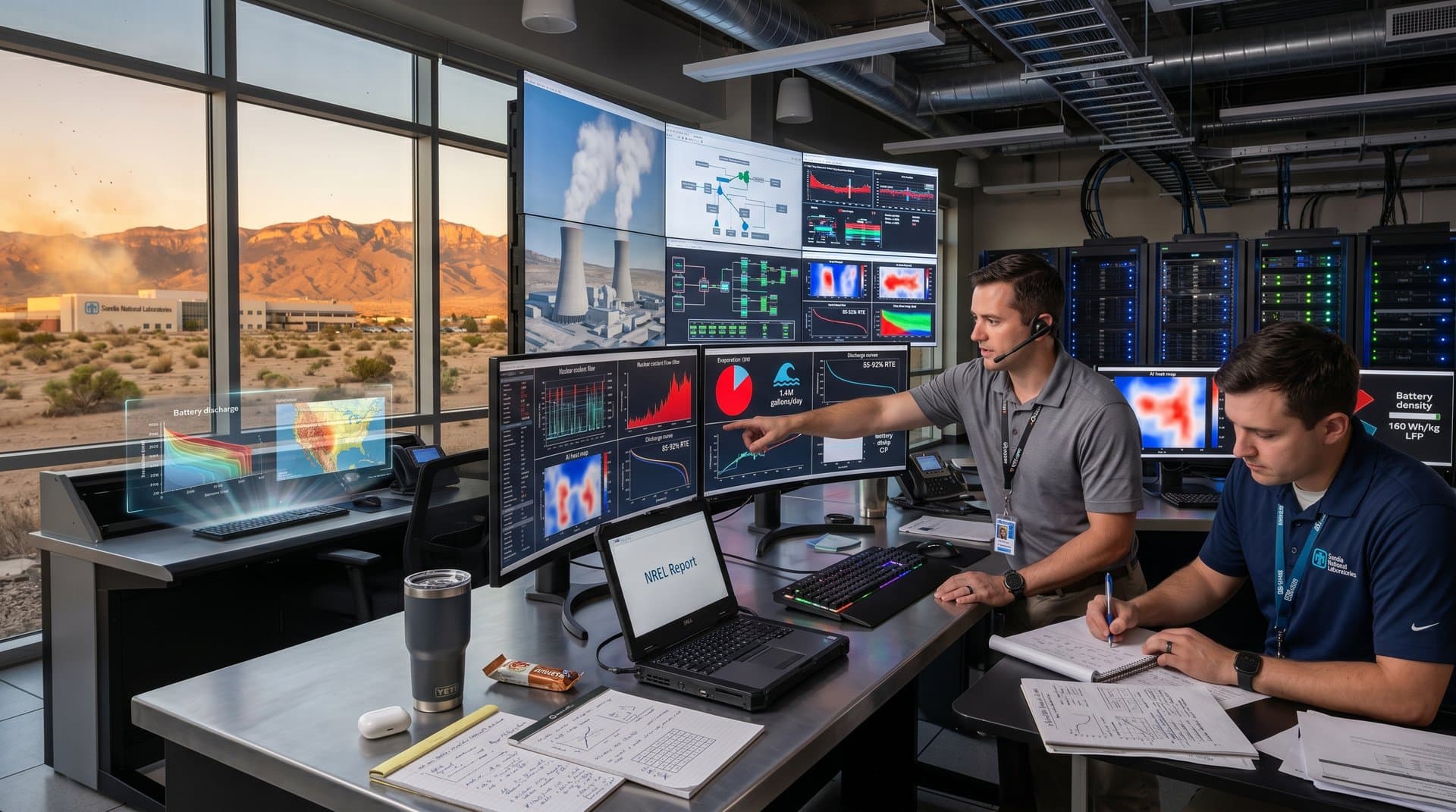
NEA outlines AI applications in five areas: predictive maintenance, human-machine interfaces, fuel cycle analytics, cybersecurity, and decision support. AI models process reactor sensor data to predict failures. Regulators fast-track licensing per IAEA Safety Standards Series No. SSG-54 (IAEA, 2023).
Operators use AI for load following synced with battery grid signals. Explainable AI meets nuclear rules. Pilots start at French and Canadian plants. See the NEA Task Force on Artificial Intelligence.
The US Nuclear Regulatory Commission (NRC) joins via bilateral pacts. Japan leads extra pilots. AI cuts outages, relieving storage depth-of-discharge limits, per NREL's 2024 analysis.
AI Bolsters Nuclear-Storage Grid Stability
Nuclear provides dispatchable power for grids over 50% renewables. AI delivers 99.9% uptime via fault prediction, NEA analysis shows. It stabilizes frequency swings from solar and wind.
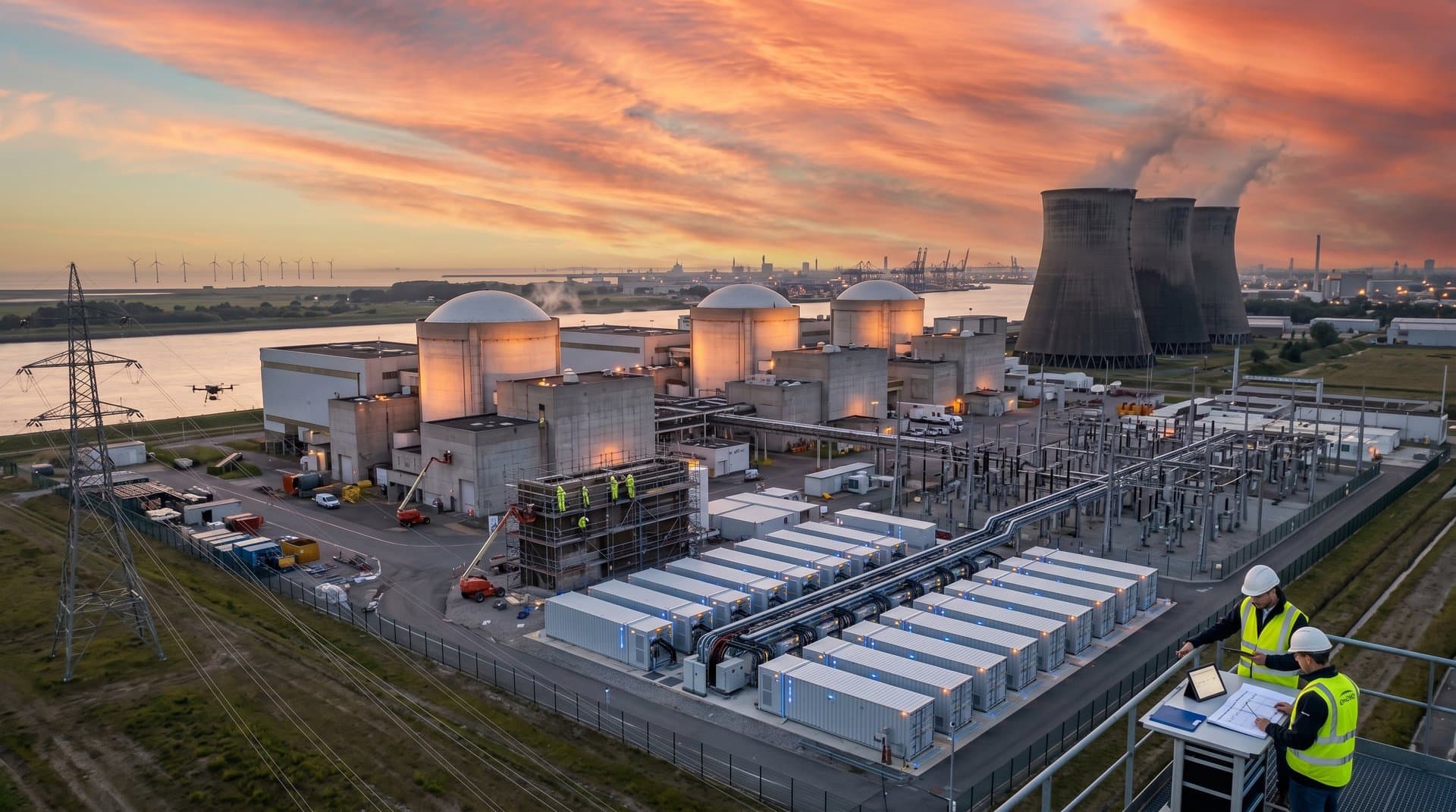
Utilities pair nuclear with storage for peak shaving. According to NREL's Energy Storage Report (2024), AI lifts lithium-ion and flow battery round-trip efficiency to 85-90%. FERC Order 2222 supports virtual power plants. Nuclear arbitrage slashes levelized cost of storage (LCOS) by 10-15%.
EU grids tackle EMEA issues. The EU Battery Directive adopts NEA AI insights for storage regulations. Nuclear-storage hybrids hit 95% reliability, per NREL report.
Storage Tech Advances with NEA Guidance
The framework covers small modular reactors (SMRs) with long-duration energy storage (LDES). Iron-air batteries (250 Wh/kWh system energy, 100+ cycles) and flow batteries store nuclear excess for 100+ hours. AI oversees sodium-ion safety at sites.
TerraPower and X-energy test AI controls. NEA sandboxes speed deployment. The US Inflation Reduction Act offers 30% investment tax credit (ITC) for nuclear-storage hybrids. Standardized validation cuts compliance costs 20%, BloombergNEF reports (2024).
AI traces supply chain minerals for battery cathodes linked to nuclear fuels. BloombergNEF projects 500 GWh LDES by 2030 via AI-nuclear ties.
Global AI Policy Comparison
- Jurisdiction: NEA/OECD · AI Focus: Safety & licensing · Storage Integration: Grid hybrids
- Jurisdiction: US NRC · AI Focus: Predictive risk · Storage Integration: ITC incentives
- Jurisdiction: EU (Euratom) · AI Focus: Cybersecurity · Storage Integration: Battery Directive
- Jurisdiction: IAEA · AI Focus: Global standards · Storage Integration: SMR-LDES integration
The US DOE awards AI prizes for nuclear apps. The EU AI Act requires high-risk audits. NEA harmonizes policies. See IAEA AI Publication (IAEA, 2023).
China develops domestic AI tools. Japan prioritizes resilience post-Fukushima. All serve the 330 GWe market.
Utilities push for swift approvals. Industry demands AI transparency. Manufacturers protect IP.
Timeline and Challenges Ahead
NEA issues draft framework in 2026. Pilots run through 2027. Full rollout aims for 2030 net-zero grids. Data silos and bias pose hurdles.
NEA trains regulators on AI ethics across 34 members. Workshops build skills. AI trims capex 5-10% on 1 GW plants (NEA, 2024).
The NEA AI regulatory framework locks in nuclear output for 1 TWh+ daily storage cycles. Developers target USD 50 billion in hybrids. Watch the 2026 report for updates.
Frequently Asked Questions
What is the NEA AI regulatory framework?
NEA AI regulatory framework integrates AI into nuclear safety and licensing for 34 members' 330 GWe capacity. Task force focuses on predictive maintenance per OECD/IAEA standards (NEA, 2024).
How does NEA AI regulatory framework affect grid stability?
Elevates nuclear uptime to 99.9% in high-renewables grids. AI aligns dispatch with storage signals in pilots across Europe and North America (NREL, 2024).
What storage technologies benefit from NEA AI regulatory framework?
LDES like iron-air (250 Wh/kWh) and flow batteries pair with SMRs for 100+ hours. AI ensures safe integration under uniform rules (BloombergNEF, 2024).
Which countries lead NEA AI regulatory framework pilots?
France, Canada, US, and Japan host pilots. NRC and Euratom support 2026-2030 rollout.