- IEA: Data centers hit 1,000 TWh by 2026 (115% rise).
- Lithium-ion BESS: 85-90% efficiency, 5,000+ cycles (NREL).
- Hybrids cut curtailment 30-50%, LCOS < USD 0.15/kWh.
Grid-Scale Battery Storage Firms Renewables for 1,000 TWh AI Demand
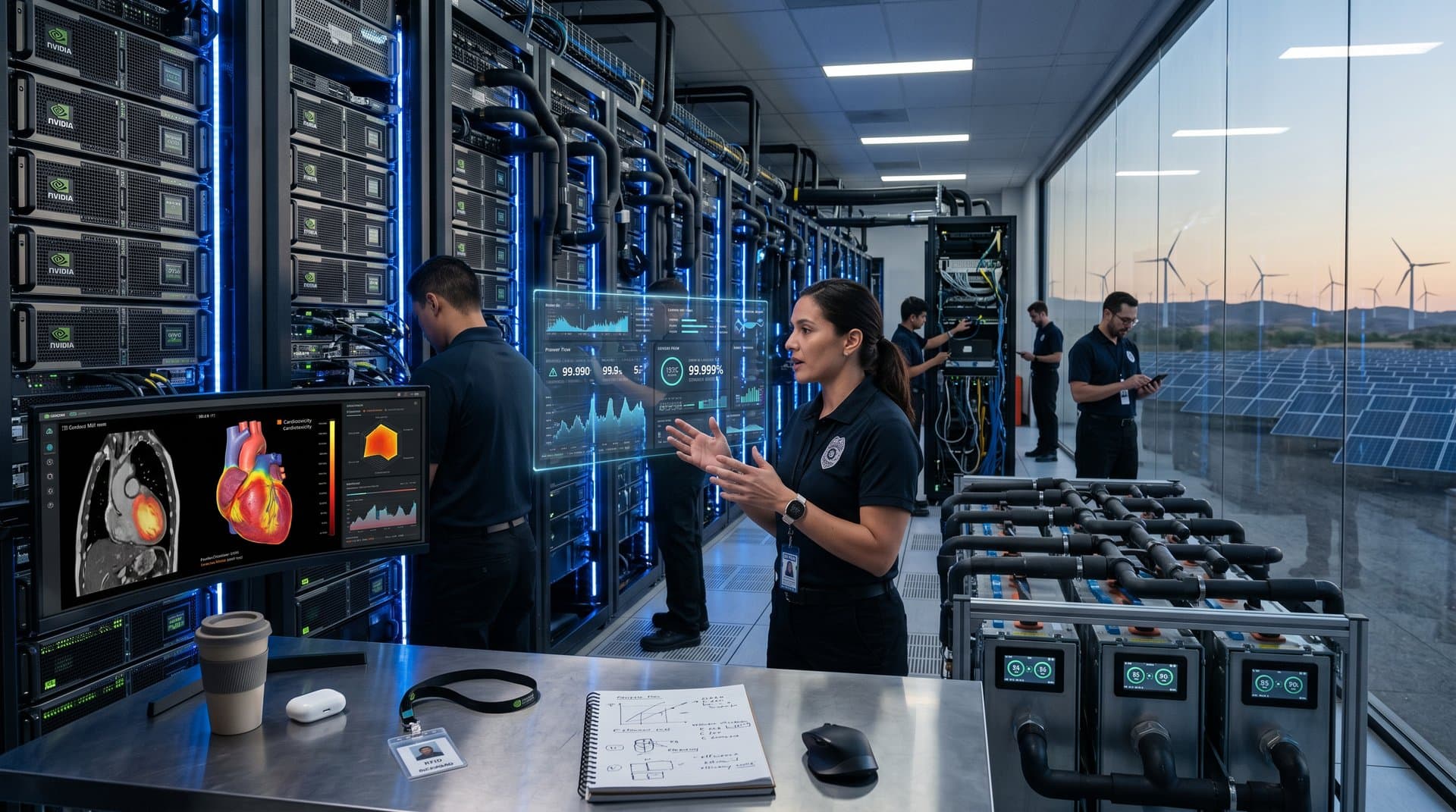
The International Energy Agency (IEA) forecasts global data center electricity demand doubling to 1,000 TWh by 2026, driven by AI. Grid-scale battery storage firms renewables for 99.999% uptime in cardio-oncology applications. IEA Special Report on Electricity 2024.
Aaron Sverdlov, cardiologist and Oncodaily contributor, notes these systems deliver constant power for GPU models predicting heart risks from cancer therapies.
Cardio-Oncology AI Requires Terabyte-Scale Compute Power
Cardio-oncology employs AI to analyze imaging, genomics, and patient records for chemotherapy-induced cardiotoxicity. Neural networks detect left ventricular ejection fraction drops, according to a 2023 American Heart Association review led by Dr. Tomas G. Neilan.
Training demands anonymized datasets from Mayo Clinic and similar institutions. One model processes terabytes, matching weather forecasting compute intensity, Sverdlov states on Oncodaily.
Diagnostics shift from weeks to hours. NVIDIA H100 GPUs, drawing 700W each with liquid cooling, power these specialized data centers.
American Heart Association review.
Data Centers Reach 1,000 TWh Amid AI Training Surge
Data centers consumed 460 TWh in 2022. IEA projects 1,000 TWh by 2026—a 115% increase. Cardio-oncology AI elevates loads 20-30% for medical hyperscalers via specialized datasets.
A GPT-4 training run uses 50 GWh. Cooling adds 40% to power draw, Lawrence Berkeley National Laboratory (LBNL) reports.
Operators demand 99.999% uptime, equating to five minutes annual downtime. Renewables require storage to meet this.
Batteries dispatch power in milliseconds during grid events, per National Renewable Energy Laboratory (NREL).
Lithium-Ion Dominates with 85-90% Round-Trip Efficiency
Lithium-ion battery energy storage systems (BESS) lead grid-scale projects. NREL benchmarks show 85-90% round-trip efficiency at 1C discharge rates.
Systems support 90% depth of discharge (DoD) and exceed 5,000 cycles at 80% DoD. Pack-level energy density hits 250 Wh/kg; deployments scale to 4-hour duration at MW levels.
Flow batteries offer 8-12 hours at 75% efficiency for longer needs. Hybrids yield levelized cost of storage (LCOS) below USD 0.15/kWh in solar-rich areas.
NREL Utility-Scale Battery Storage report.
Sverdlov warns dataset growth outpaces Moore's Law, demanding storage-backed renewables.
Renewables-Storage Hybrids Cut Curtailment by 30-50%
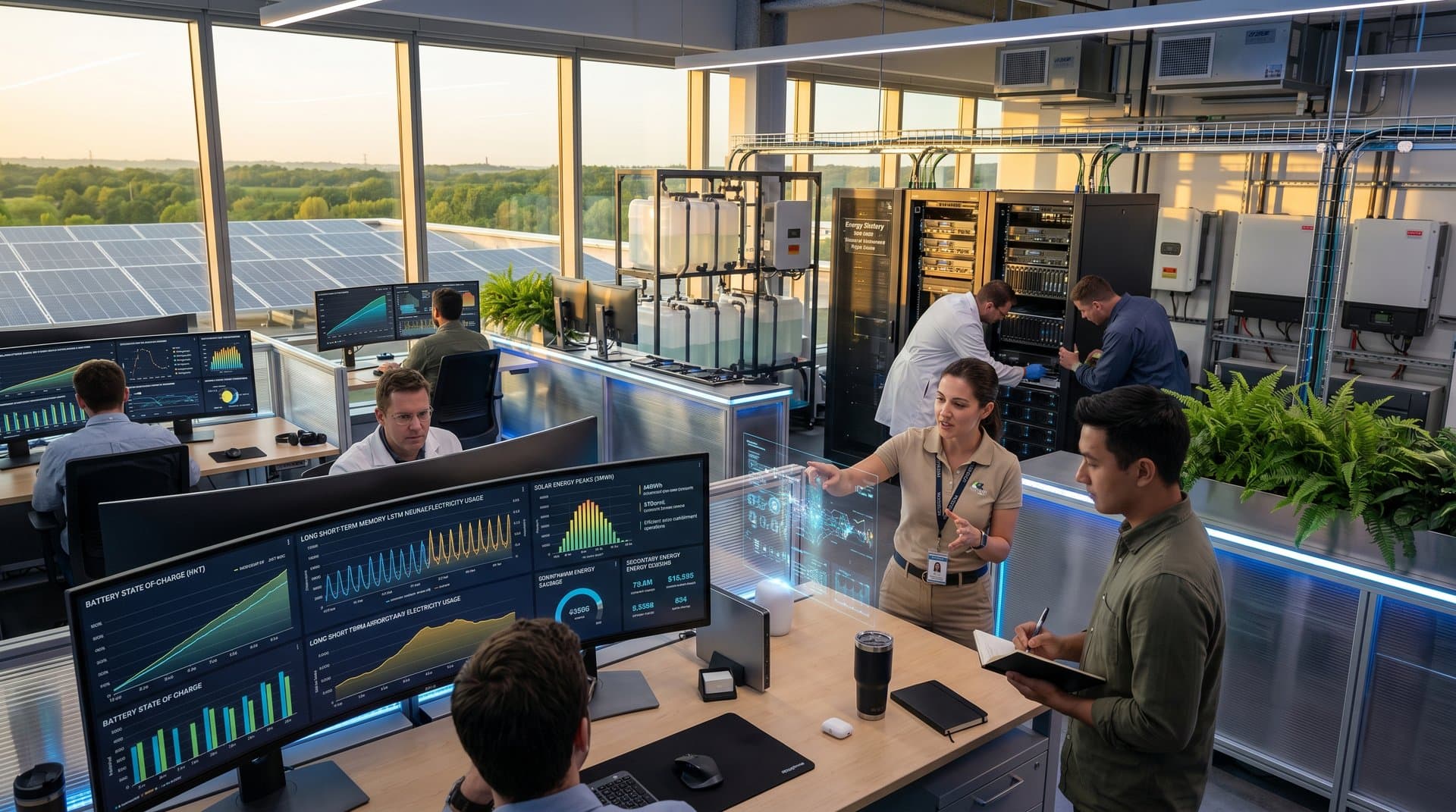
Solar-plus-storage targets data centers. NextEra Energy pairs its 1 GW Stella Nova solar farm in Texas with 300 MWh BESS, shifting midday peaks to evenings.
NREL operational data confirms hybrids reduce curtailment 30-50% and stabilize frequency.
Google's DeepMind signs 1.5 GW solar-wind-storage PPAs for AI, including medical models. Microsoft deploys 10.5 GWh BESS across U.S. sites by 2026.
Edge BESS buffers on-site solar for low-latency medical AI inference. BloombergNEF projects LCOS at USD 0.10/kWh with tax credits.
Hybrids achieve 250 Wh/kg density and 5,000 cycles, outperforming lead-acid by 3x on LCOS.
FERC Order 2023 Unlocks 100 GW U.S. BESS Pipeline
Federal Energy Regulatory Commission (FERC) Order 2023 streamlines interconnection, releasing 100 GW U.S. BESS pipeline. This bolsters AI data center growth.
Global deployments reach 50 GW in 2024, IEA states. Sverdlov forecasts cardio-oncology AI personalizing 50% of cancer therapies by 2030.
NextEra's projects demonstrate 4-hour duration at 85% efficiency under IEC 62619 standards. Microsoft sites target 90% renewable integration via BESS.
Supply Chain Realities for Scaling BESS
Lithium-ion scaling hinges on cathode pricing. NMC cathodes cost USD 100/kWh pack-level in 2024, down 20% yearly per BloombergNEF.
Geopolitical risks affect lithium from Australia (60% supply). U.S. IRA tax credits drive domestic gigafactories to 200 GWh/year by 2026.
LFP alternatives hit 200 Wh/kg at 80% lower cobalt reliance, suiting 4-hour data center needs.
Path Forward: 50 GW Global Deployments in 2024
Grid-scale battery storage cuts fossil peaker reliance by 30%, powers medical AI, and integrates renewables. IEA tracks 50 GW global additions this year.
FERC reforms and PPAs position BESS for 1,000 TWh demand. Cardio-oncology breakthroughs follow, with personalized therapies scaling via reliable green power.
Frequently Asked Questions
What is cardio-oncology?
Cardio-oncology studies cardiovascular side effects from cancer treatments like chemotherapy. It integrates heart monitoring into oncology care. AI enhances risk prediction through data analysis.
How does AI improve cardio-oncology care?
AI processes imaging and genomic data to forecast cardiotoxicity. Models detect early heart changes invisible to standard scans. This allows proactive treatment adjustments.
Why do AI data centers need grid-scale battery storage?
AI data centers require constant megawatt-scale power for GPUs. Renewables provide intermittent supply that batteries firm up. Grid-scale battery storage ensures 99.999% uptime.
What role does grid-scale battery storage play in renewables for AI?
Grid-scale battery storage shifts solar and wind output to match data center peaks. Hybrids reduce curtailment and lower LCOS. This supports sustainable medical AI expansion.