- Data centers used 1-1.5% global electricity in 2022, IEA reports.
- Goldman Sachs forecasts 8% US power from data centers by 2030.
- AI doubles data center electricity to 500-1,000 TWh by 2026, per IEA.
Google partners with Marvell Technology on custom AI inference chips. These designs boost efficiency and slash data center battery storage demands. Goldman Sachs forecasts data centers consuming 8% of US power by 2030.
Inference workloads dominate AI compute. Optimized chips use 50% less power than training GPUs, per MLPerf benchmarks. Marvell's ARM-based silicon delivers higher flops per watt in hyperscale racks.
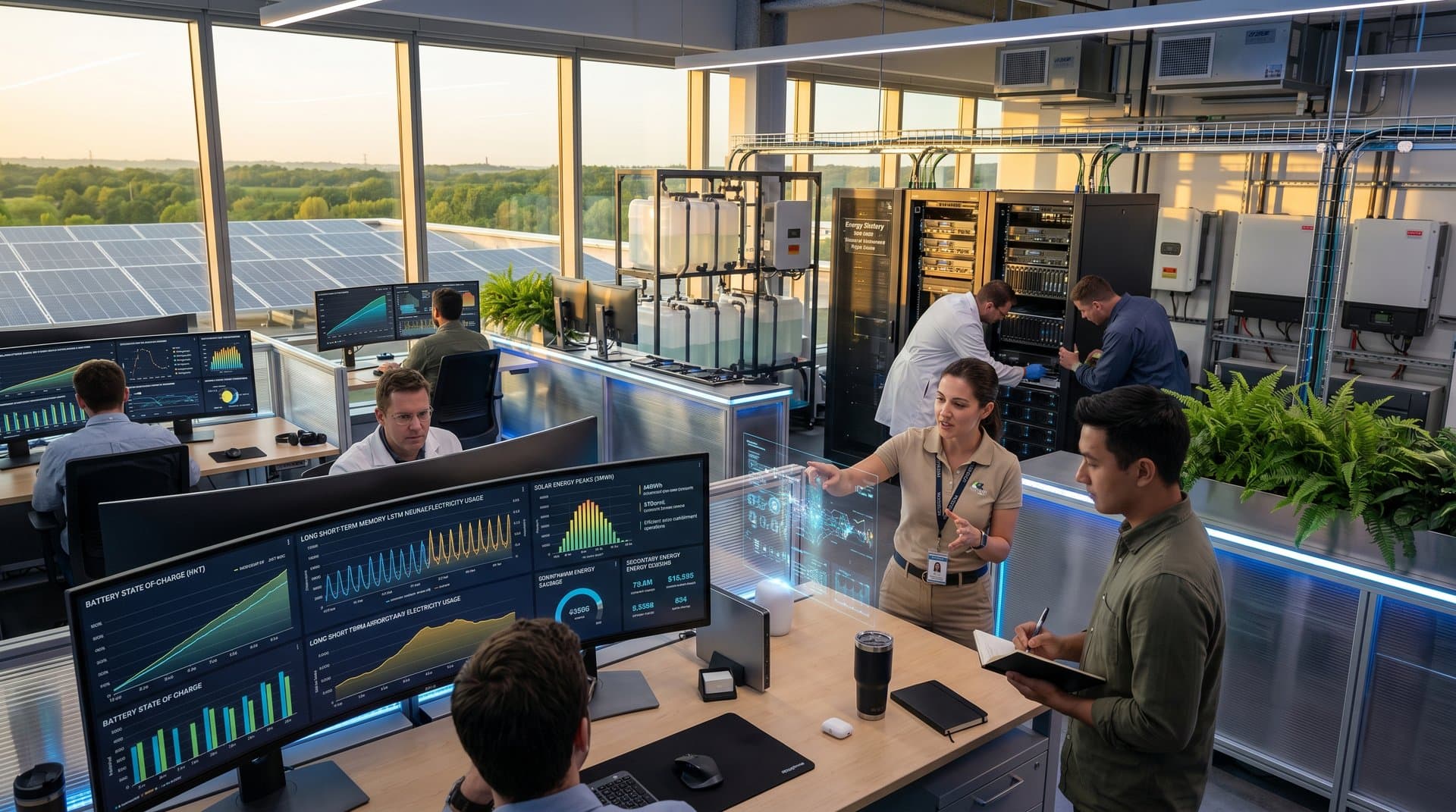
Data centers use lithium-ion batteries for UPS. LFP cathodes provide 160 Wh/kg and 400 Wh/L density with 6,000 cycles at 80% DoD, per CATL specs. Efficient chips cut peak loads 20-30%, shrinking battery banks for 15-30 minute bridging.
Google Diversifies AI Chip Suppliers Beyond Broadcom
Google deploys TPUs for AI training and inference. Broadcom supplies networking ASICs and accelerators. Taiwan risks drive Marvell's low-power options.
Marvell holds 15% custom silicon market share, per TrendForce. ThunderX ARM cores power edge inference. Google tests Marvell prototypes for TPU v6 at sub-100W TDP.
Gemini models demand constant inference. Google seeks 2-3x performance per watt. Marvell's 5nm nodes beat Nvidia H100s at 700W.
Surging AI Inference Power Requirements
AI training uses 500-1,000 kWh per model. Inference handles billions of queries at 1-5W each on optimized chips. Marvell targets <100W per accelerator.
Hyperscalers aim for PUE 1.2-1.5. AI racks push it to 1.8 from heat. Inference efficiency drops PUE below 1.3.
IEA reports data centers used 1-1.5% global electricity in 2022 (240-340 TWh). AI growth doubles it to 500-1,000 TWh by 2026.
Marvell Chips Shrink UPS Battery Footprint and Costs
Peak power sizes UPS. A 100MW center needs 50-100 MWh LFP at $200/kWh installed, per NREL. Efficiency trims to 30-70 MWh, saving $4-6 million.
LFP costs $120/kWh with 4,000 cycles. NMC reaches 250 Wh/kg but risks fire. Efficiency boosts cycle life 20%, cutting LCOS to $0.08/kWh.
Cooling takes 40% power (1.2 GW for 3 GW IT). Less heat cuts chiller loads 15%. Smaller UPS uses second-life EV batteries at $50/kWh, NREL estimates.
Global Power Crunch Elevates Storage Role
Hyperscalers seek 10 GW in Texas, Virginia. US DOE notes 35 GW queued. Goldman Sachs projects 300 TWh US share by 2030.
Batteries bridge 4-hour solar gaps at $1.5 million/MW. Chip efficiency cuts BESS capex 25%.
FERC Order 2023 speeds storage ties. Form Energy's iron-air flow batteries offer 100 hours at $20/kWh.
Battery Makers Adapt to Efficiency Gains
Data centers drove 15 GWh lithium demand in 2023, Wood Mackenzie reports. Efficiency limits growth to 10 GWh/year. Makers shift to 200 MWh grid projects.
Sodium-ion hits $80/kWh, 5,000 cycles at 150 Wh/kg.
Lithium output reaches 2 Mt/year post-2025. Cathodes drop 30% to $15/kg.
Bloomberg confirms Google-Marvell talks. TSMC ramps 3nm for 2027.
AI Efficiency Drives Storage Market Shifts
Google TPUs achieve 1.5 PUE. Supplier perf/watt metrics shape contracts.
MLPerf shows Marvell 1.2x over Nvidia A100.
EU Regulation 2023 mandates 95% recycling. US IRA gives $45/kWh BESS credits.
Google Cloud details v5e gains. Marvell inference launches 2026, cutting batteries 25%. Google Marvell AI chips reshape storage as grids expand.
Frequently Asked Questions
What do Google Marvell AI chips target?
Inference tasks with high efficiency. They diversify from Broadcom, cutting data center power for scalability.
How do they impact battery storage?
Lower peaks and heat reduce UPS sizing. Lithium-ion needs drop for same holdover time per IEA data.
Why focus on AI inference efficiency?
Dominates compute load. Goldman Sachs sees 8% US power by 2030. Eases grid and battery strain.
Which batteries fit data center UPS?
LFP for safety, NMC for density. Efficiency enables second-life EV packs.