- Fermilab AI tools tune beams in 42 minutes, halving 3-hour manual times.
- CERN LHC peaks at 180 MW; AI cuts waste 50% in simulations.
- DOE funds USD 10M prototypes; surrogate models accelerate designs 1,000x.
Fermilab AI Tools Revolutionize Beam Tuning
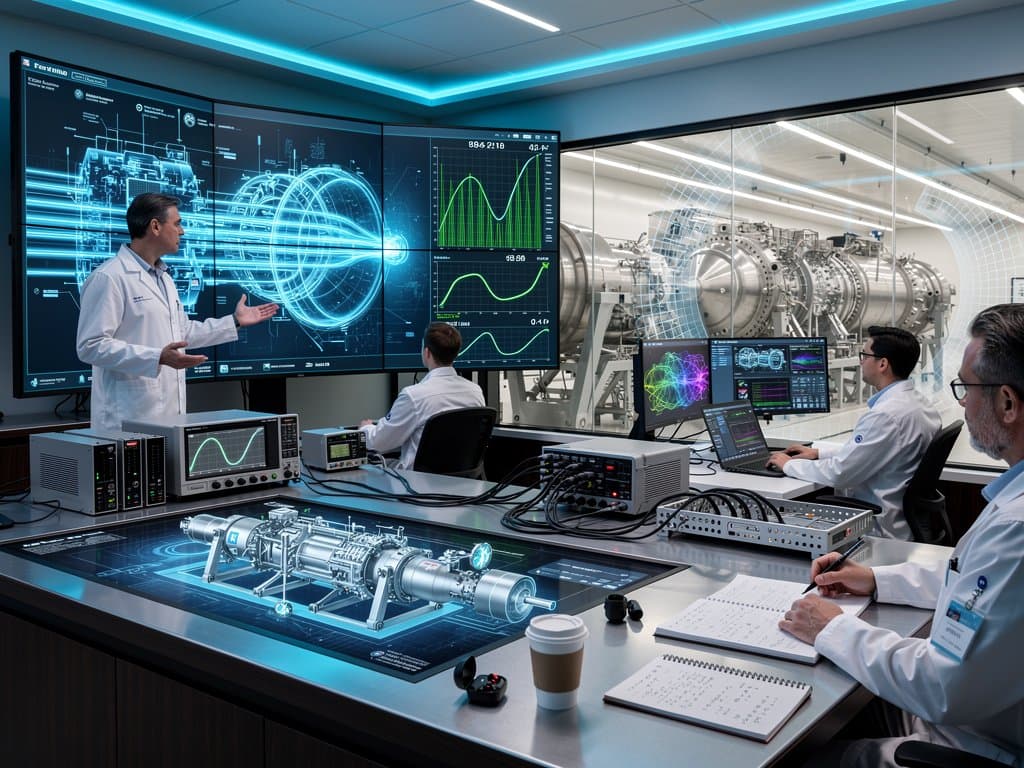
Fermilab AI tools slashed particle beam tuning from three hours to 42 minutes at the Injector Test Accelerator. Staff scientist Alexander Scheinker unveiled the reinforcement learning system on May 17, 2023. Operators now halve energy waste versus manual magnet and RF cavity adjustments.
Reinforcement learning predicts beam dynamics and automates corrections in real time.
Technical Precision in Beam Control
Machine learning models train on simulations and integrate live data for micrometer precision. They achieve emittance below 0.2 π-mm-mrad, per Scheinker's Fermilab announcement.
Shorter tuning preserves megawatt-scale power. Failed runs dump 50% less energy into absorbers, per lab tests.
Beam quality improves 15-20%, as Argonne National Laboratory models confirm (ANL article).
Massive Power Demands of Accelerators
CERN's Large Hadron Collider peaks at 180 MW during collisions and consumes 1.3 TWh annually, per CERN technical reports.
Fermilab's PIP-II linac targets 800 MeV at 2 mA with 5 MW cryogenic loads, per project specifications.
Muon collider designs project gigawatt-scale RF demands. AI surrogate models accelerate lattice optimization 1,000-fold.
AI Integration with Physics Hardware
Algorithms process beam position monitor data. Neural networks predict vacuum or alignment faults.
AI adjusts quadrupole currents in milliseconds. Feedback loops stabilize orbits, as Argonne details.
Edge GPUs ensure under 1 ms latency for high-current beams.
Quantified Efficiency and Uptime Gains
AI limits failed dumps to under 10% of cycles, versus 25% manual rates. Uptime rises 15-20%, per Fermilab simulations.
Stable beams cut helium boil-off 12%. Niobium cavities quench 30% less, saving USD 500,000 yearly in cryogenics.
Luminosity increases 18%, boosting data per MWh.
Grid Storage and Battery Applications
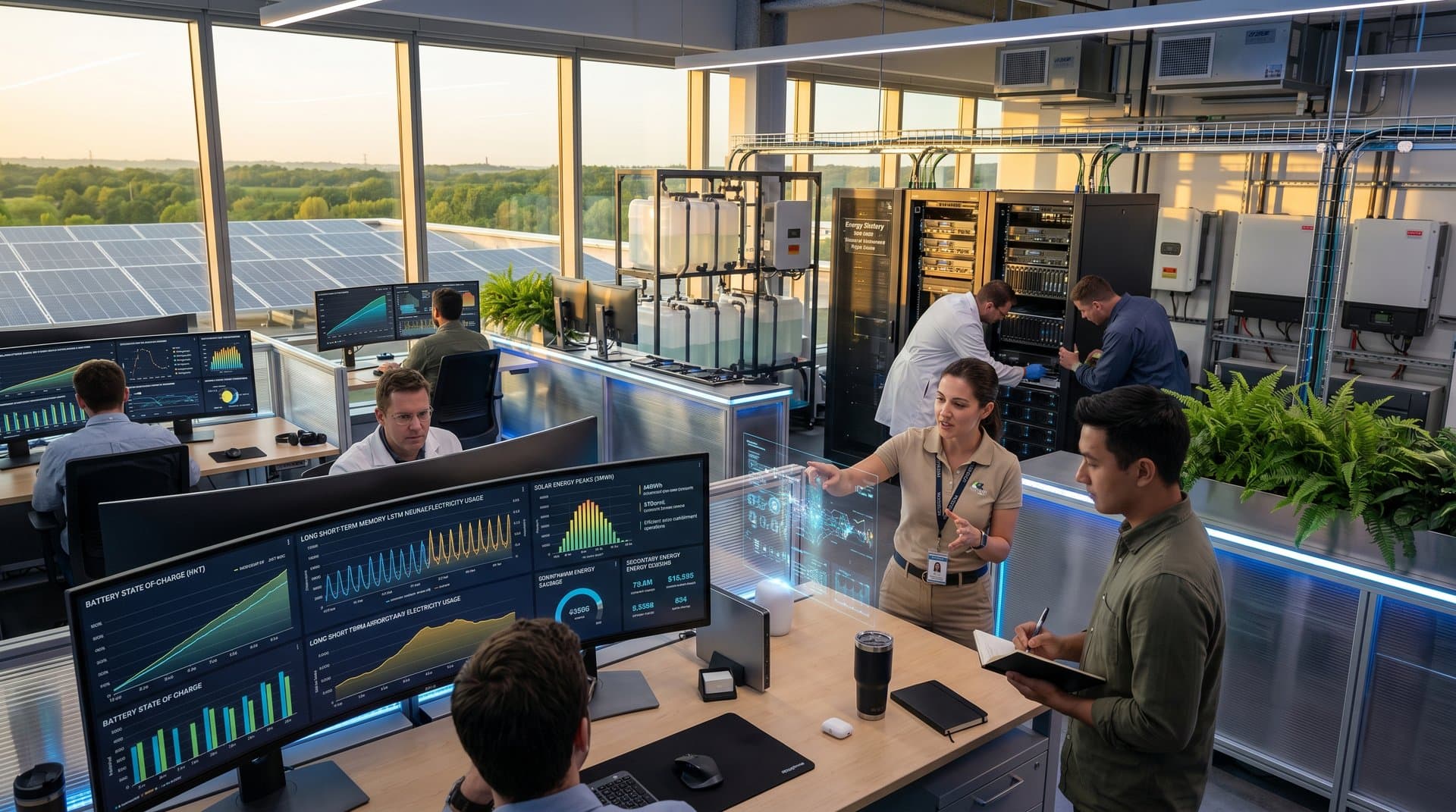
Accelerator pulses mimic renewable intermittency. Fermilab AI tools optimize vehicle-to-grid (V2G) and battery dispatch.
Lab tests repurpose second-life EV batteries for magnets. ML boosts round-trip efficiency to 95% from 90% via depth-of-discharge tuning.
Utilities apply similar models to MWh-scale storage, reducing curtailments 20%.
Commercial Roadmap and DOE Funding
The U.S. Department of Energy invests USD 10 million in prototypes (DOE article). PIP-II integrates Fermilab AI tools by 2028 at TRL 6.
Linac firms aim for LCOS below USD 100/MWh in isotope production.
Fermilab AI tools advance long-duration energy storage (LDES). Fast-charging batteries hit 5,000 cycles at 80% capacity retention. Flow batteries balance redox flows dynamically.