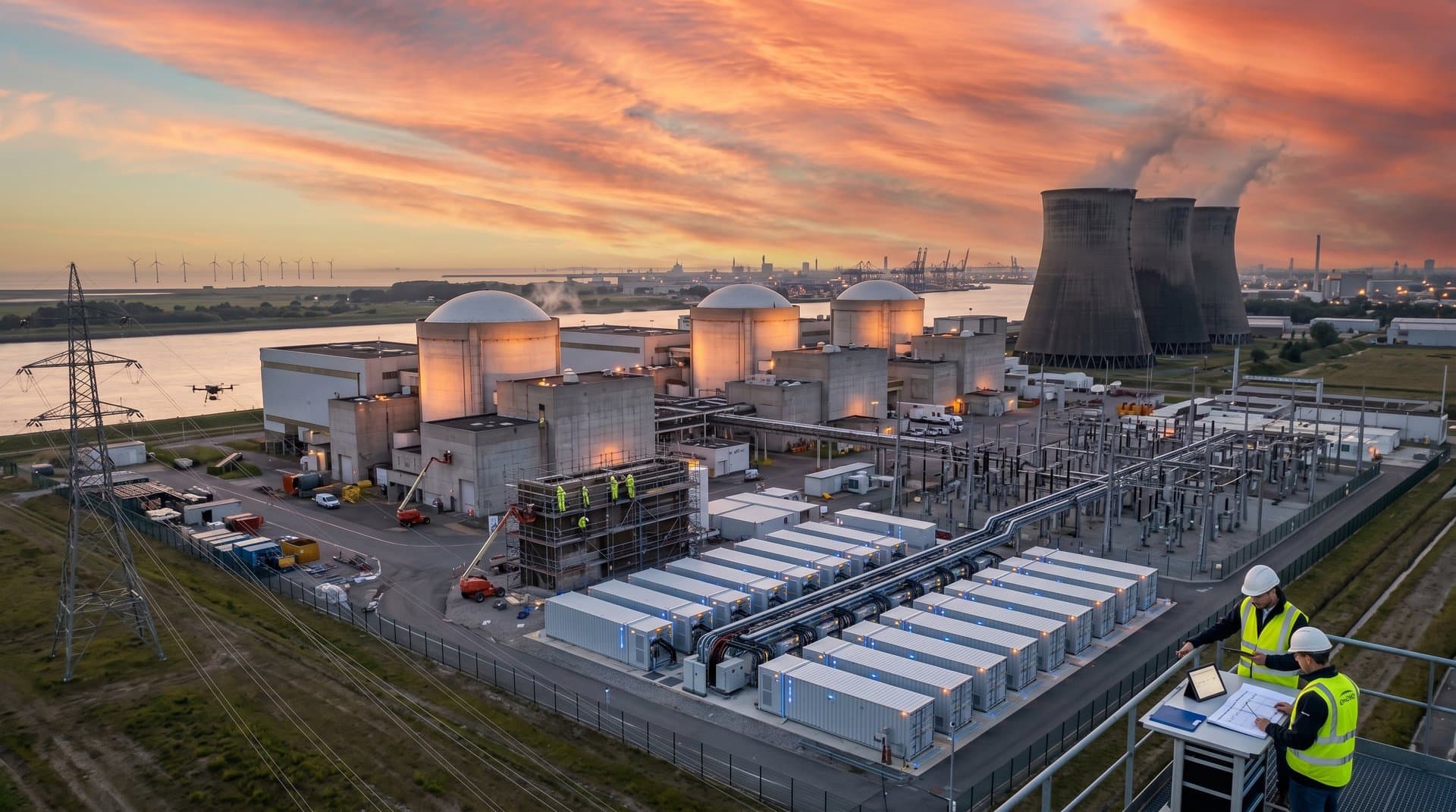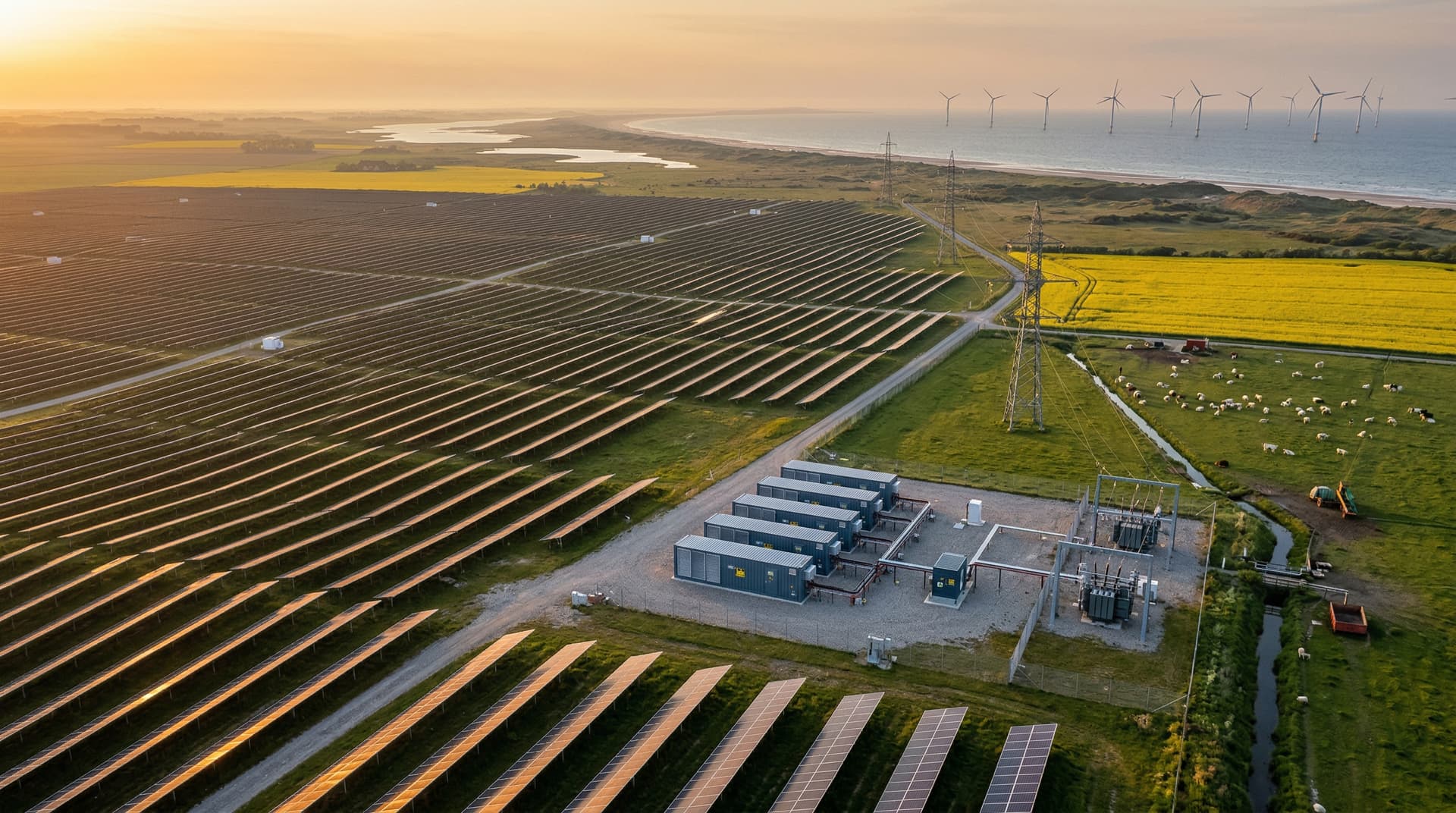
- Denmark halts 2 GW solar pipeline on April 13, 2026.
- Mandates 1.2 GW storage co-location for projects over 10 MW.
- EUR 1.2 billion sunk costs for developers, per BloombergNEF.
Denmark solar policy reversed on April 13, 2026. The Danish Energy Agency halted 2 GW of pending solar permits. It mandates 1.2 GW battery storage co-location for grid stability. Developers pair projects over 5 MW with storage at 60% of peak output.
Denmark's grid operator Energinet faces overload from 15 GW installed solar capacity.
Policy Targets Grid Congestion with Precise Storage Specs
Energinet data showed 25% solar curtailment in 2025. Danish Energy Agency figures indicate Q1 2026 peaks exceeded interconnector capacity by 1.5 GW. New rules require co-located battery storage for solar projects above 10 MW.
Qualifying storage earns EUR 50/kWh subsidies, capped at 40% of capex. Developers keep permits granted within 18 months. Lars Hansen, senior advisor at Danish Energy Agency, said: "Rules prevent blackouts during high-renewables events. Batteries need 85% RTE at 0.5C per IEC 62619 and 4-hour duration."
LFP batteries lead bids at 200 Wh/kg and 6,000 cycles to 80% SOH. Vanadium flow batteries offer 8-10 hour discharge. LCOS fell to EUR 0.08/kWh unsubsidized, per Wood Mackenzie.
Developers Forfeit 2 GW Pipeline Amid Sunk Costs
Eurowind Energy dropped 800 MW permits in Jutland. Ørsted shelved 1.2 GW near Copenhagen. This equals 15% of Denmark's 2025-2030 solar forecast, per BloombergNEF.
Anna Pedersen, BloombergNEF Nordic analyst, estimates EUR 1.2 billion sunk costs. Firms push hybrid solar-storage projects. Vestas and Northvolt test 300 MW pilots with sodium-ion at 160 Wh/kg and EUR 110/kWh.
Unsubsidized solar LCOS was EUR 0.045/kWh pre-policy. Hybrids hit EUR 0.065/kWh but gain EUR 200 million subsidies yearly through 2030. Investors seek 8-10% IRRs on hybrids, down from 12% for solar.
1.2 GW Storage Mandates Ignite Market Demand
Rules cover solar through 2030, mandating 1.2 GW storage at 20% of high-stress grid nodes. Energinet models EUR 500 million in avoided upgrades.
Jens Olsen, policy director at SolarPower Europe, called measures "divisive yet necessary for 95% renewables by 2035." The group predicts 40% co-location cost cuts by 2028.
CATL took 400 MWh orders at EUR 120/kWh from EU chains in Hungary, Poland. Fluence secured 300 MW/1.2 GWh EPC with 5 MWh blocks. Northvolt ramps LFP to 50 GWh/year by 2027.
EU Network Codes and Regional Precedents Shape Denmark Solar Policy
Denmark follows EU Network Codes requiring storage for >100 MW renewables from 2027. Germany paused 3 GW solar under 2025 EEG reforms.
Reuters noted EUR 65 billion EU grid investments in 2025. BloombergNEF sees Nordic storage doubling to 5 GW by 2028, Denmark at 25%.
Subsidies and Ancillaries Transform Hybrid Economics
Subsidies cover 30-50% storage capex, or EUR 75 million per 200 MW hybrid. Five-year tax credits phase out. Payback hits 7 years at 4% discount, 15% capacity factors.
Hybrids gain 25% more from ancillaries. Energinet pays EUR 100/MWh for frequency regulation. V2G pilots add EUR 20/kWh from 50,000 EVs.
Iron-air LDES wins 100 MWh EU grants. Form Energy tests 8-hour systems at 100 Wh/kg, EUR 20/kWh LCOS by 2030.
Accelerated Timeline Drives Rapid Hybrid Deployment
Fast-track permitting starts June 1, 2026. First hybrids grid-connect Q4 2026. Annual reviews use SCADA data.
Danish Energy Agency caps output at 20% for non-compliant sites. Full 1.2 GW targets 2029.
Wood Mackenzie forecasts EUR 2.5 billion storage investment under Denmark solar policy. Denmark leads EU hybrids at 35% of new renewables through 2030.